DbcultAccessing Vault...
6.2/10
Senior Film Conservator
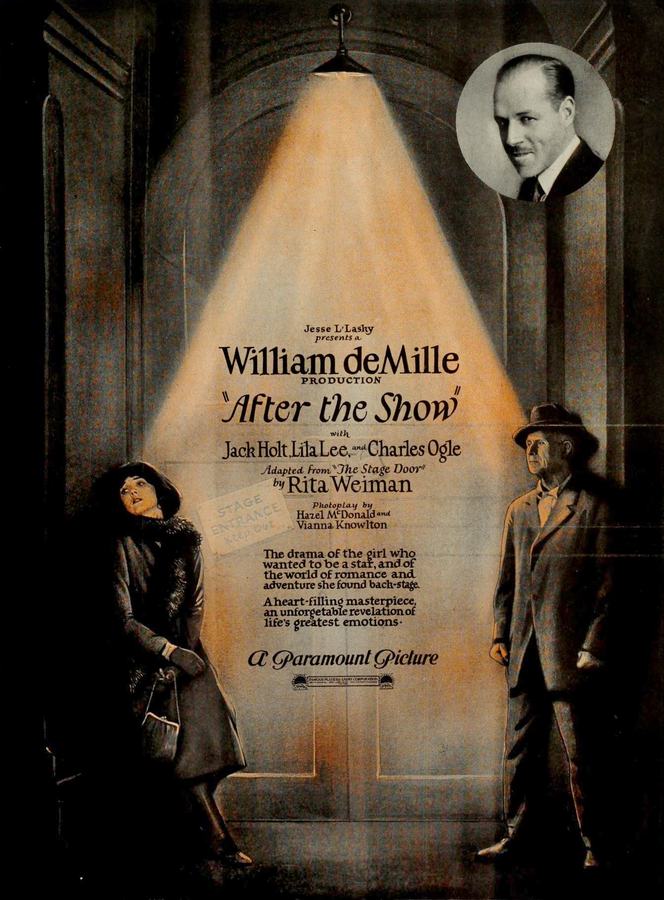
A definitive 6.2/10 rating for a film that redefined the boundaries of cult cinema. After the Show remains a cornerstone of transgressive art.
Picture the orchestra pit before the overture: a single bulb swinging like a hanged moon, brass railings breathing cold, the hush thick enough to chew. That is where After the Show lives—between the drop-curtain and the gasp. Pop O’Malley, played by Charles Ogle with cataract eyes that still know how to sparkle, haunts this liminal corridor like a revenant who refuses to bow out. Once his Hamlet packed balconies; now he opens doors for bank clerks and shopgirls seeking cheap enchantment. The film’s genius is to treat that fall not as tragedy but as a slow oxidation, a copper statue turning green in plain sight.
The minute Pop spots Eileen (Lila Lee, all clavicles and defiance) he slips into a role more dangerous than any Iago: the self-appointed savior. He does not merely help; he absorbs. A new frock here, a plate of ham and eggs there, a bedroom wallpapered with playbills of yesteryear—every gift a silken string. The camera, jittery with close-ups, watches like a conspirator: when Eileen twirls in her borrowed gown, the mirror fragments her into a kaleidoscope, suggesting she is already becoming property, a bauble reflected ad infinitum. Modern viewers will taste the bitter tang of grooming, yet the narrative insists we call it love.
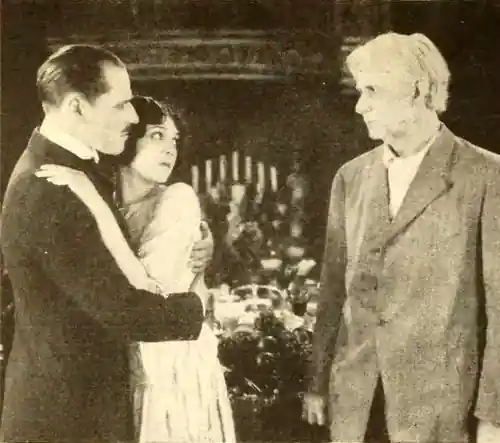
Jack Holt’s Larry Taylor arrives in a Pierce-Arrow the color of melted butter, top down, scarf fluttering like a surrender flag. He is every Broadway angel rolled into one: cash, connections, cleft chin. The film’s silent-era audacity shows in the way it lets him look—a prolonged rake of the eyes across Eileen’s gams—without cutaway or censorship. Compare this unfiltered leer to the chaste pecks in A Kiss in Time and you realize how far pre-Code cinema could push the envelope before it sealed itself shut in 1934.
The estate sequence, drenched in two-strip Technicolor that veers between bruise and absinthe, is a master-class in visual disquiet. Curtains billow like paranoid ghosts; a marble nude holds a candelabrum as if contemplating assault. When Eileen, tipsy on Larry’s nihilistic charm, whispers “I feel like I’m inside a play,” the line lands meta, daring us to acknowledge the artifice while still swallowing the bait. Pop, hiding behind topiary like a senile satyr, watches his surrogate daughter slide into possible ruin. The soundtrack—only a theater organ on the surviving print—keeps sliding into minor chords, a slow-motion stab every time Larry’s hand creeps higher on Eileen’s back.
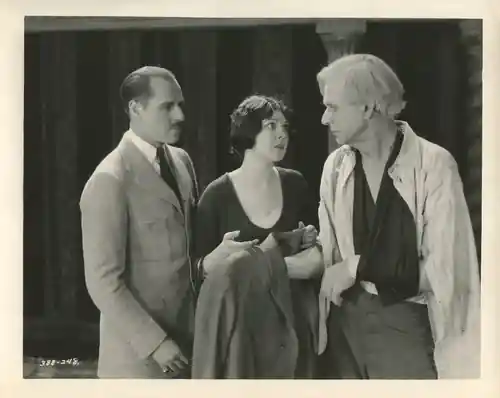
Slashing his wrist with a jagged bottleneck, Pop does not merely attempt suicide; he stages a tableau: wrist upturned toward the chandelier like a cracked chalice, blood threading across parquet that once echoed with mazurkas. The act is grotesque, operatic, and weirdly tender—he is literally pouring himself between the lovers, a grisly Eucharist. When Larry rolls up his tuxedo sleeve to donate blood, the film achieves a perverse communion: predator and protector bound by tubing, plasma swapped like vows. Critics who call the moment melodrama miss its alchemical audacity; it turns cash-for-flesh into flesh-for-flesh, a mercantile redemption.
Notice the ledger: Pop spends savings, Larry spends blood, Eileen spends youth. Each currency—money, hemoglobin, time—carries a gendered valence. The film quietly asks whether any transaction can be clean when bodies are the coin. Even the final consent Pop gives to the marriage feels less like paternal benediction than a bankrupt merchant signing over the last deed. Eileen’s grateful smile, shot from below so her eyes become twin moons, hints she knows the price tag stitched into her veil.
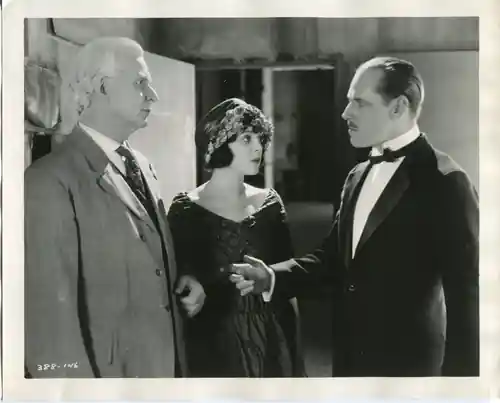
Charles Ogle, face like a topographical map of forgotten tours, lets tremors pass through his lower lip—the smallest quake signals Pop’s slide from benevolence to possessive rage. Lila Lee counterbalances with bird-like kineticism; her Eileen is never mere ingénue but a girl calculating odds in real time. When she accepts Larry’s necklace, her fingers hesitate a half-second, as though weighing grams of destiny. Jack Holt, saddled with the thankless part of golden cad, gifts Larry a self-loathing smirk that flickers whenever he checks his reflection—suggesting he knows the mirror will indict him someday.
Triad screenwriters—Vianna Knowlton, Rita Weiman, Hazel Christie MacDonald—infuse the script with matriarchal intuition rare in 1929. Their collective thumbprint shows in small mercies: the camera pauses on Eileen rubbing glycerin into cracked heels after rehearsal, or Pop warming milk at 3 a.m. while shadows gnaw the wallpaper. These grace notes grant the narrative a lived-in texture that single-author scripts of the era sometimes lack. One senses the writers negotiated between censorious scissors and their own whispered experiences of casting-couch coercion.
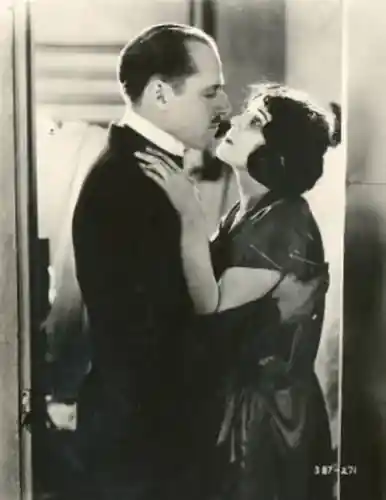
Doors swing both ways—freedom or trap—yet here they mostly frame faces half in night, half in foyer glare. Mirrors appear whenever identity wobbles: Eileen rehearsing before a cracked glass that splits her into three selves, none certain. The final shot stages the lovers ascending a grand staircase under a stained-glass skylight; as they climb, colors bleed over them like slow baptism, hinting marriage is not ascent but absorption into patriarchal kaleidoscope.
Surviving prints are mute, but contemporary cue sheets call for “Somber Reflection” and “Rhapsodic Hurry.” Modern festival accompanists often lean into dissonance—minor-second tremolos when Pop spies on Eileen’s embrace. I heard one organist sneak in a phrase from Swanee just as Larry offers champagne; the anachronism jarred, yet somehow fit the film’s ethos of recycled tunes masking new transactions.
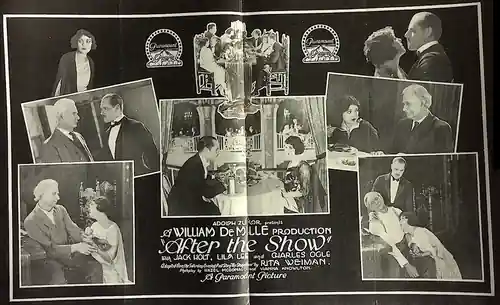
Where Idle Wives moralizes over female extravagance, After the Show implicates male generosity as stealth colonization. Contrast it with Woman Against Woman where mothers weaponize custody; here the battleground is the gift itself. Meanwhile The Palace of Darkened Windows exoticizes Orient tropes; our film keeps its darkness domestic, behind wainscoting and mahogany, making the horror more fungible, like rent or groceries.
Long thought lost, a 35 mm nitrate print surfaced in a Slovenian monastery in 1998, water-damaged but legible. UCLA’s restoration soaked each frame in ethanol baths to halt vinegar syndrome, leaving some sequences mottled like antique daguerreotypes—scars that feel oddly honest. The film now streams on niche platforms, though frequently cropped to 4:3, severing the marginalia where shadows breed. Demand your archive screen the full 1.33 ratio; otherwise you miss the drunk chauffeur dozing in lower left, a harbinger of class comedy that cushions the climax.
Yes, if you crave pre-Code cinema that stains your thoughts like burgundy on linen. Yes, if you want to witness how 1929 grappled with the same venal arithmetic of patronage that still governs Hollywood couch-casting. The film’s wounds—class, gender, ownership—remain open. When the end card fades, you may find your own pulse syncing to that of Pop on the transfusion table: alive, indebted, uncertain who now owns your blood.
IMDb 6.2
1923
Community
Log in to comment.