DbcultAccessing Vault...
7.7/10
Senior Film Conservator
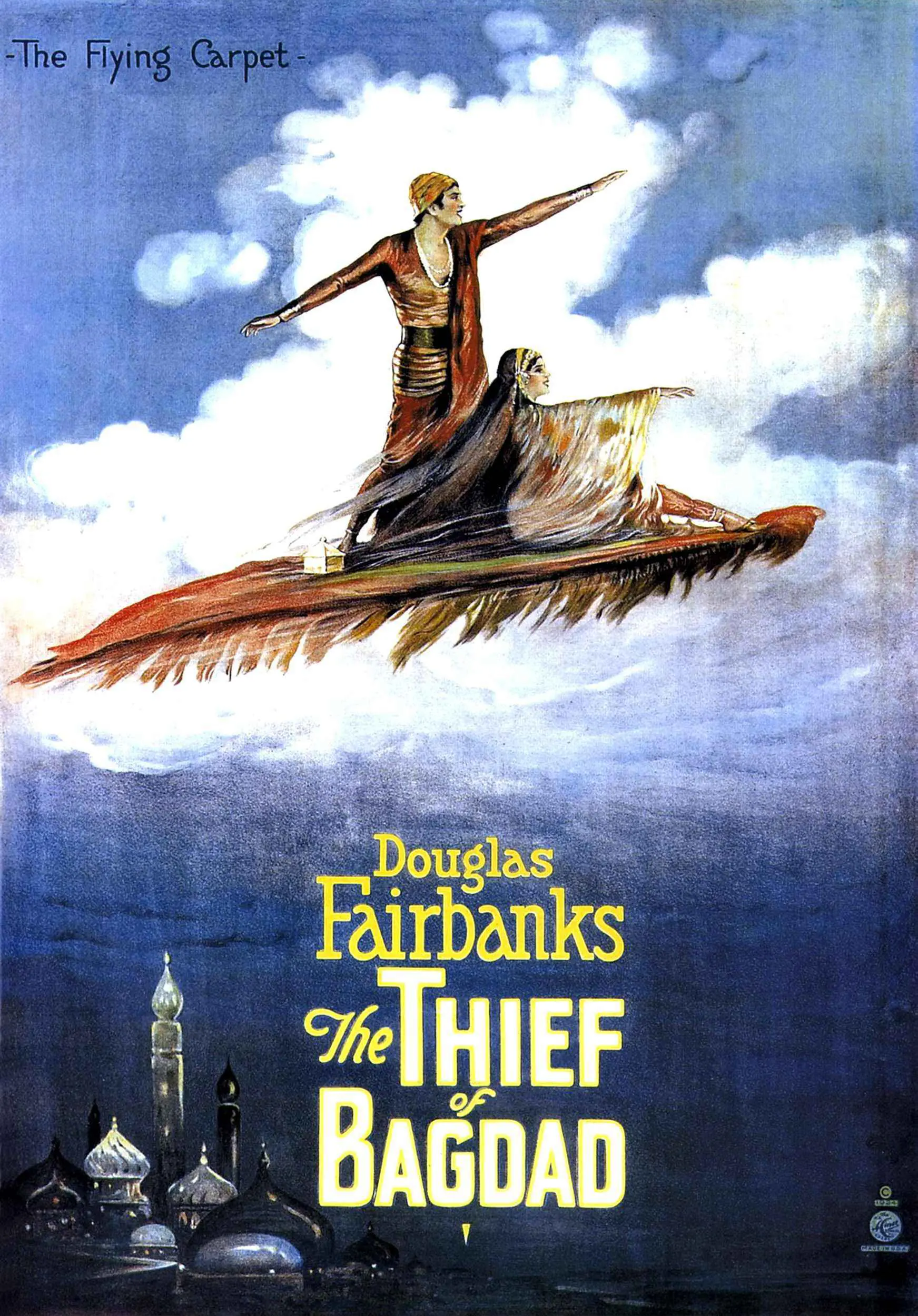
A definitive 7.7/10 rating for a film that redefined the boundaries of cult cinema. The Thief of Bagdad remains a cornerstone of transgressive art.
The 1924 iteration of The Thief of Bagdad is not merely a film; it is a gargantuan monument to the audacity of the silent era’s creative zenith. At a time when the medium was still defining its visual grammar, Douglas Fairbanks and director Raoul Walsh constructed a celluloid fever dream that remains, a century later, a staggering achievement in production design and physical performance. While modern audiences might be accustomed to the digital artifice of the 21st century, there is a tactile, breathing soul in this production that CGI can rarely replicate. It is a work of pure cinematic alchemy, blending the athletic prowess of its lead with the expressionistic architectural fantasies of William Cameron Menzies.
One cannot discuss this film without first acknowledging the sheer scale of its artifice. Bagdad is reimagined as a labyrinth of soaring minarets, polished black floors that reflect the light like still water, and geometric patterns that suggest a world of mathematical perfection. Menzies’ sets are not mere backdrops; they are active participants in the storytelling. They dwarf the human actors, emphasizing the mythical stakes of the narrative. Unlike the gritty realism found in contemporaneous works like The Indian Wars, Walsh’s Bagdad is unashamedly theatrical. It is a space where the laws of physics seem slightly altered to accommodate the bounding energy of Fairbanks.
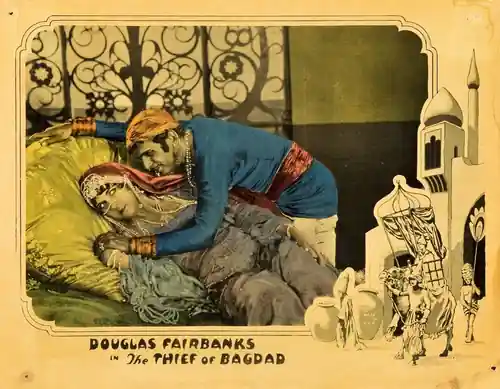
The use of vertical space is particularly striking. Ahmed’s world is one of heights and depths—from the subterranean vaults where he hides his loot to the dizzying balconies of the royal palace. This verticality mirrors Ahmed’s social and spiritual trajectory. He begins the film as a bottom-feeder, a parasite on the city’s wealth, but through his love for the Princess, he is forced to ascend, both literally and metaphorically. The visual language here is far more sophisticated than the straightforward narratives of films like Love's Redemption, opting instead for a symbolic grandeur that prefigures the epic cinema of the 1950s.
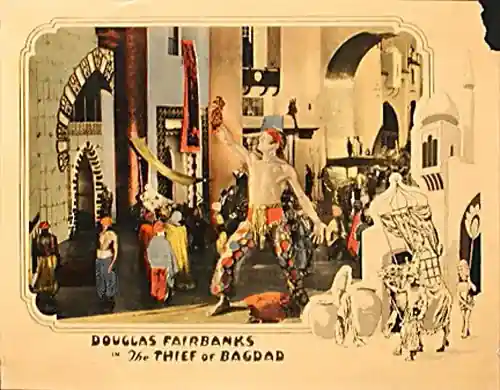
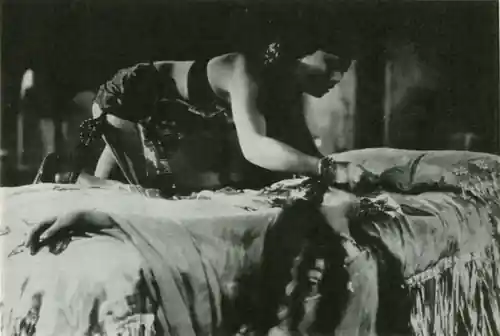
Douglas Fairbanks remains the beating heart of the spectacle. In an era where many actors relied on broad, histrionic gestures to convey emotion, Fairbanks utilized his entire body as an instrument of expression. His Ahmed is a creature of constant motion—leaping over walls, sliding down silken tapestries, and navigating the city with a feline grace. There is a joy in his movement that is infectious, a sense that the character is as delighted by his own agility as the audience is. This physicality provides a stark contrast to the rigid, almost statuesque presence of the Mongol Prince, played with chilling stillness by Sôjin Kamiyama.
The performance of Fairbanks is also a masterclass in charisma. He manages to make a character who is essentially a criminal and a liar deeply sympathetic. His transformation from a cynical rogue to a humble seeker of 'earned happiness' is the emotional anchor that keeps the film from drifting into mere spectacle. While some silent films of the period, such as Der Tänzer, focused on the internal psychological state through close-ups, Fairbanks achieves psychological depth through external action.
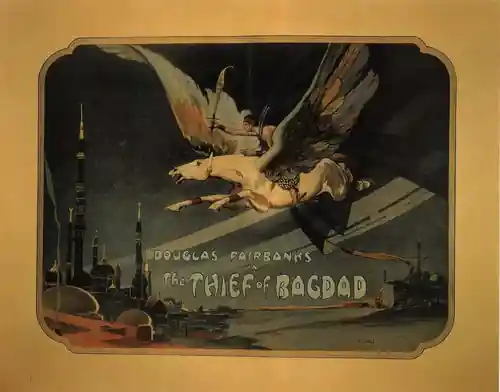
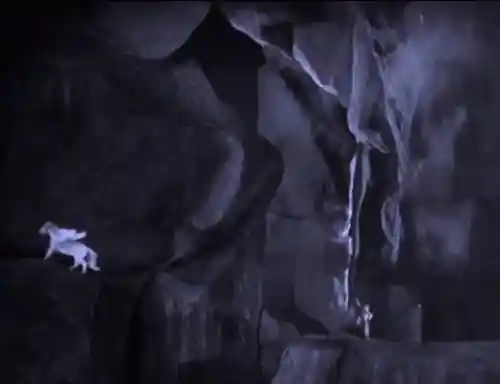
Technically, the film was decades ahead of its time. The sequences involving the flying carpet, the cloak of invisibility, and the battle with the giant spider are executed with a level of ingenuity that still impresses. These were not the results of post-production software, but of complex wire-work, double exposures, and mechanical ingenuity. The underwater sequence, in particular, possesses a haunting, ethereal quality that evokes a sense of genuine wonder. It is a far cry from the more grounded technical approaches seen in films like Railroaded, which relied on light and shadow for atmosphere rather than fantastical invention.
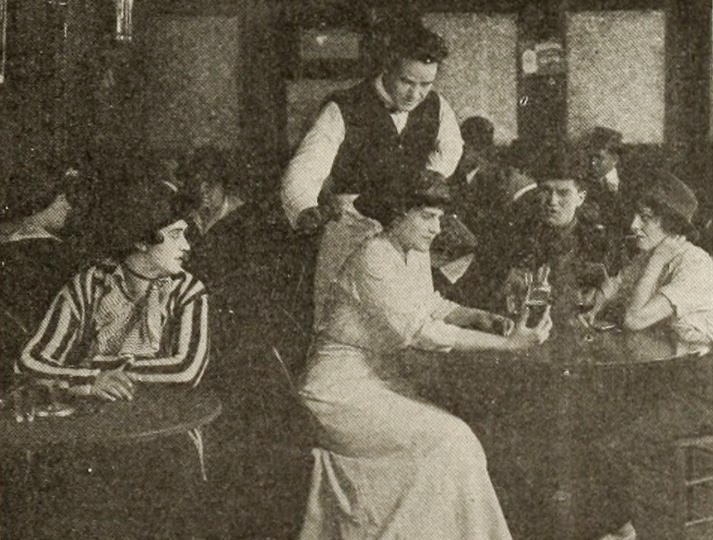
The film also serves as a fascinating historical document regarding early Hollywood’s relationship with the 'Orient.' While it falls into many of the exoticizing tropes of its time, it also features a remarkably diverse cast for 1924. Anna May Wong, in one of her early roles as the treacherous slave girl, provides a performance of subtle, simmering intensity that often steals the scenes she is in. Her presence adds a layer of complexity to the palace intrigues that might otherwise have felt one-dimensional. The contrast between her character’s calculated moves and the Princess’s passive purity creates a dynamic tension that echoes the melodrama found in European imports like Komtesse Doddy.
At its core, *The Thief of Bagdad* is a moral fable. The central theme—that 'happiness must be earned'—is a recurring motif that elevates the film above simple adventure. Ahmed’s journey is a pilgrimage of the self. He must prove his worth not just to the Caliph, but to the universe itself. This philosophical undercurrent gives the film a weight that is absent in more whimsical fantasies of the era, such as The Primrose Ring. The trials Ahmed faces—the Valley of Fire, the Sea of Dread, and the Abode of the Winged Horse—are externalizations of his internal struggle to overcome his baser instincts.
The Mongol Prince serves as the perfect foil to this philosophy. He represents the path of shortcut and conquest—the belief that power and love can be taken by force or trickery. The conflict between Ahmed and the Prince is a battle between two different ways of being in the world. This thematic depth is reminiscent of the moral dichotomies explored in Die Teufelskirche, though Walsh presents it with significantly more flair and visual dynamism. The climax, featuring an army generated from a magic powder, is a literal manifestation of the idea that a single man’s virtue can overcome the might of an empire.
To watch *The Thief of Bagdad* today is to witness the birth of the modern blockbuster. Its influence can be seen in everything from the swashbuckling adventures of the 1930s and 40s to the high-fantasy epics of the modern era. Its DNA is even present in the comedic adventure structures of much later films like Almost Heroes, though the latter obviously lacks the 1924 film’s earnestness and artistic ambition. When compared to the grim social realism of Drama na okhote or the historical struggle depicted in El último malón, Fairbanks' work stands out as a celebration of the imagination’s power to transcend the mundane.
The film’s pacing is also surprisingly modern. Despite its lengthy runtime, it rarely drags. Walsh understands the importance of visual variety, shifting from intimate character moments to sweeping vistas with a rhythm that keeps the viewer engaged. This is a contrast to some of the more plodding dramas of the early 20s, such as Forbandelsen or the somewhat static Colombine. The film is a masterclass in how to sustain a sense of wonder over an extended period, a feat that few films, silent or otherwise, have ever truly matched.
Even when viewed through the lens of modern sensibilities, the 1924 film remains a potent experience. It reminds us that cinema, at its best, is a form of collective dreaming. The artifice of the sets, the heightened reality of the performances, and the unabashed romanticism of the story all work together to create an experience that is truly transcendent. It is a far cry from the propaganda-heavy works like Crashing Through to Berlin or the lighthearted domesticity of Piccadilly Jim. This is cinema as high art, as myth-making, and as pure, unadulterated joy.
The film’s final image—Ahmed and the Princess ascending into the stars on the flying carpet—is perhaps the ultimate expression of the silent era’s optimism. It is a rejection of the earthbound, a final leap into the realm of the eternal. For any serious student of film, or indeed anyone who wishes to understand the power of visual storytelling, *The Thief of Bagdad* is essential viewing. It is a testament to what can be achieved when a visionary star, a talented director, and a brilliant designer are given the resources to build a world from scratch. It is, quite simply, magic caught on film.
Final Rating: A milestone of the silent era that remains as vibrant and enchanting today as it was in 1924. A true masterpiece of the imagination.
IMDb —
1921
Community
Log in to comment.