DbcultAccessing Vault...
Cult Review
Senior Film Conservator
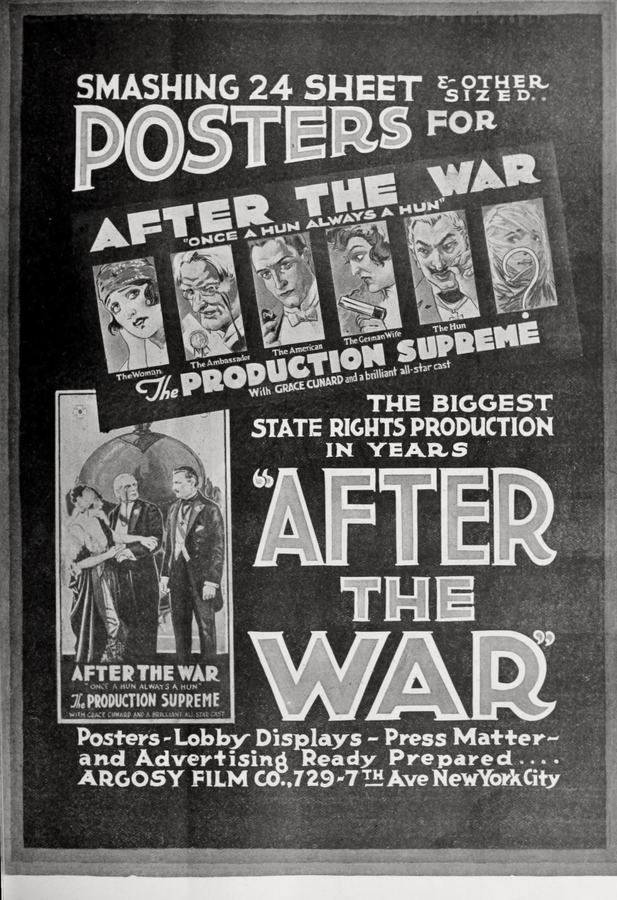
"After the War" is not merely a film; it is a profound echo chamber of a world grappling with its shattered fragments, a cinematic canvas upon which the indelible scars of conflict are painted with the nuanced brushstrokes of personal anguish and societal reconstruction. In an era when the very fabric of Europe was still mending from the ravages of the Great War, this silent masterpiece emerges as a poignant testament to the human spirit's enduring struggle with memory, forgiveness, and the relentless pursuit of peace, both internal and external. It asks us to consider the intimate cost of grand historical events, forcing us to look beyond the treaties and the parades into the very heart of individuals forever altered by the maelstrom.
At its core, the narrative revolves around Madame Gerve, portrayed with an astonishing blend of grace and raw vulnerability by the incomparable Grace Cunard. Gerve is not just an opera singer; she is a symbol of a nation's resilience, her voice a beacon of hope and beauty in a Paris still shrouded in the phantom limbs of loss. Her standing as the prima donna at the Opera Comique speaks volumes to her talent and her public persona, a meticulously crafted facade designed, perhaps, to shield a more tumultuous interior. The film opens with a testament to her elevated status: a marriage proposal from none other than the French Prime Minister himself. This is no small offer; it represents not only social ascension but a potential political alliance, a chance for national unity embodied in a celebrated figure. Yet, Gerve, with a quiet dignity that belies immense inner turmoil, refuses. This initial act of defiance immediately sets her apart, signaling that her motivations transcend mere ambition or social convention. Her heart, or perhaps her past, dictates a different path, one less concerned with the present's glittering promises and more burdened by the shadows of what has been.
Her journey then leads her to a benefit concert for war orphans, a setting charged with an almost unbearable pathos. It is here, amidst the innocent faces marked by the war's cruelest legacy, that the past—her past—erupts into her meticulously ordered present. The appearance of two men, both inextricably linked to her pre-war existence and the conflict itself, throws her world into disarray. The first is Karl Wertz, played by Harry Carter, a figure of formidable presence. He is now the German ambassador to France, a diplomatic envoy attempting to navigate the treacherous waters of post-armistice reconciliation. But to Madame Gerve, he is far more than a diplomat; he is a ghost, a living embodiment of the war's personal invasion. During the conflict, Wertz was a German officer whose unit occupied her very village, a detail that immediately imbues their reunion with layers of national animosity, personal trauma, and an unsettling familiarity. Their history is not merely one of acquaintance but of forced proximity under the most harrowing circumstances, hinting at a relationship far more complex than simple enmity.
The second man to re-enter her life is Phillippe Sardonia, portrayed by Herbert Prior, a Frenchman and her former lover. Sardonia represents a different kind of past, one of intimacy and perhaps lost innocence, a connection that predates the war's devastating interruption. His reappearance is less politically charged but no less emotionally disruptive, resurrecting a personal history that Gerve had likely buried under layers of public success. Both men, driven by their own desires and perhaps a longing for a past that can never truly be recaptured, attempt to rekindle their relationships with her. This creates a powerful dramatic tension, placing Gerve at the apex of a triangular conflict, caught between national allegiances, rekindled passions, and the ever-present weight of a hidden truth.
What truly elevates "After the War" beyond a mere melodrama is Madame Gerve's carefully guarded secret. This undisclosed truth is the film's beating heart, a narrative engine that propels the story forward with an exquisite tension. It is a secret so profound, so potentially devastating, that it threatens to dismantle everything she has painstakingly built. The audience is kept in suspense, privy only to Gerve's palpable anxiety and her desperate attempts to keep this truth concealed from both Wertz and Sardonia. This narrative device, masterfully employed by writers Kingsley Benedict and Harvey Gates, ensures that every interaction, every glance, every hesitant word is imbued with an unspoken subtext, a dramatic irony that hooks the viewer from the outset.
"The film brilliantly explores how personal histories become inextricably tangled with national narratives, creating a potent brew of love, loyalty, and lingering resentment."
The film’s exploration of secrets and their corrosive power is particularly resonant. It delves into the moral ambiguities of wartime choices and the long-lasting psychological impact on individuals. Gerve’s secret isn't just a plot device; it's a metaphor for the many unspoken truths that societies and individuals carry after a cataclysmic event. It asks: how do we reconcile our past selves with our present identities, especially when those past selves were forged in the crucible of conflict and compromise? The sheer weight of this hidden truth makes Gerve a profoundly sympathetic and complex character, far removed from the simplistic heroines often found in silent cinema. Her internal struggle is a universal one, amplified by the extraordinary circumstances of her life.
Grace Cunard delivers a performance that is nothing short of mesmerizing. Her ability to convey deep emotional turmoil, nuanced internal conflict, and an almost regal composure through gesture and expression alone is a masterclass in silent acting. She doesn't merely portray Madame Gerve; she embodies her, breathing life into a character burdened by history yet striving for agency. Cunard’s eyes, in particular, become windows into Gerve's soul, reflecting fear, longing, defiance, and a profound weariness that speaks volumes without a single intertitle. Her scenes with Harry Carter, as Karl Wertz, are charged with an undeniable tension. Their past, shrouded in wartime occupation, creates a dynamic that is both adversarial and strangely intimate, hinting at a connection that defies simple categorization. Carter, too, manages to imbue Wertz with a complexity that goes beyond the typical villain archetype. He is a man caught between his duty, his past actions, and a genuine desire to perhaps atone or rekindle a lost connection. Herbert Prior's Phillippe Sardonia offers a contrast, representing a more straightforward romantic entanglement, yet even his character is tinged with the melancholy of lost time and the unspoken resentments that arise when love is interrupted by war. The interplay between these three leads is the dramatic engine of the film, expertly choreographed to maximize emotional impact.
The supporting cast, including L.M. Wells, Frank Whitson, Edward Cecil, Joseph De Grasse, Gertrude Astor, Fontaine La Rue, and Gretchen Lederer, contribute to the rich tapestry of the film's world, creating a believable backdrop against which Gerve's personal drama unfolds. Each character, however fleeting their appearance, adds a layer of authenticity to the bustling Parisian setting and the somber undertones of a society still reeling from conflict. Their collective efforts elevate the film from a simple character study to a broader societal commentary.
The screenplay by Kingsley Benedict and Harvey Gates is a marvel of intricate plotting and character development, especially considering the constraints of the silent film medium. They deftly weave together personal romance, national politics, and the lingering trauma of war into a cohesive and compelling narrative. The decision to place Madame Gerve at the center of this maelstrom, making her choices pivotal to both her personal salvation and the symbolic reconciliation of nations, is a stroke of genius. The pacing is deliberate, allowing the emotional weight of each revelation to settle, yet never lagging. The narrative tension is sustained through clever use of dramatic irony and the gradual unveiling of Gerve's secret, ensuring the audience remains thoroughly invested in her plight.
Their writing avoids simplistic portrayals, particularly of the German ambassador. Wertz is not a caricature of wartime villainy but a man with his own complexities, a choice that adds significant depth to the film's exploration of post-war reconciliation. This nuanced approach to characterization is a hallmark of truly thoughtful storytelling. The dialogue, conveyed through intertitles, is concise yet impactful, serving to advance the plot and reveal character without over-explanation, a delicate balance that Benedict and Gates achieve with remarkable skill.
"After the War" is a profound meditation on the enduring impact of conflict, not just on geopolitical maps, but on the human heart. It explores themes of forgiveness, both self-forgiveness and the forgiveness of others, often against a backdrop of nationalistic fervor that makes such acts incredibly challenging. The film subtly questions the very nature of loyalty: is it to one's nation, one's love, or one's own conscience? Madame Gerve's internal struggle epitomizes this dilemma, forcing her to navigate a moral landscape fraught with peril.
The idea of rebuilding, both personally and societally, is central. Paris, still recovering, mirrors Gerve's own attempts to reconstruct a life shattered by the war. The presence of war orphans at the benefit concert serves as a stark reminder of the innocent victims, lending an additional layer of gravitas to Gerve's choices and her secret. This film, much like Das Tagebuch einer Verlorenen, delves into the societal pressures and moral compromises individuals face in times of immense upheaval, showcasing how the personal becomes deeply political and vice-versa. The film does not shy away from the complexities of the human condition in the face of adversity, making it a timeless piece of cinematic art.
While specific details about cinematography for a silent film can be elusive without direct viewing, one can infer from the narrative's depth and the era's best practices that the visual storytelling in "After the War" would have been paramount. The use of close-ups to capture Cunard's expressive face, the careful composition of scenes to highlight the emotional distance or proximity between characters, and the evocative set designs to convey the opulence of the opera house juxtaposed with the somber reality of post-war Paris would have been crucial. The film's atmosphere would have been meticulously crafted to reflect the underlying tension and emotional weight of the story. The costumes, too, would play a vital role, with Gerve's elegant attire perhaps symbolizing her public facade, contrasting with the more revealing moments of her private anguish.
The comparison to films like Ill Starred Babbie or Martha's Vindication, which also feature strong female protagonists navigating challenging circumstances and societal expectations, highlights a recurring motif in early cinema. These narratives often empower women to confront their pasts and forge their own destinies, even when faced with insurmountable odds. "After the War" stands proudly among them, offering a compelling portrait of a woman who, despite her public acclaim, must confront her deepest fears and make agonizing choices that will define her future.
"After the War" is more than a historical artifact; it is a timeless exploration of the human condition, an exquisite tapestry woven with threads of love, loss, secrecy, and the arduous journey towards redemption. Grace Cunard's masterful performance anchors a story that is both deeply personal and broadly resonant, reflecting the universal struggle to reconcile with a past that refuses to stay buried. The film's profound insights into the lingering shadows of conflict and the complex nature of human relationships make it a compelling watch, even a century after its creation. It reminds us that while wars may end on paper, their echoes reverberate through individual lives for generations, shaping destinies and testing the limits of the human heart. It is a powerful reminder that true peace begins not on the battlefield, but within the intricate landscapes of our own souls, demanding honesty, courage, and ultimately, a willingness to forgive. This is a film that demands to be seen, not just as a piece of cinematic history, but as a vibrant, relevant commentary on the enduring challenges of humanity.
IMDb —
1913
Community
Log in to comment.