DbcultAccessing Vault...
5.7/10
Senior Film Conservator
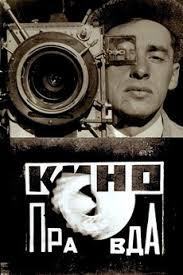
A definitive 5.7/10 rating for a film that redefined the boundaries of cult cinema. Kino-pravda no. 10 remains a cornerstone of transgressive art.
Vertov’s tenth bulletin is not a film; it is a Molotov made of nitrate, hurled through the stained-glass window of Tsarist memory.
The streets it stalks are still coughing up horsehair and iconostasis dust; the lens, however, has already declared the religion of machines. We open on a Petrograd intersection where icicles hang like frozen exclamation points above a woman selling sunflower seeds from a newspaper cone. The camera does not observe—it inhales, guzzles, mainlines. A quick iris-in reveals a child’s marble eye reflecting the same boulevard, and in that glassy speck the entire revolution pivots: from monarchy to metro rails, from onion domes to iron lungs.
Cut. A locomotive vomits soot over a May-Day banner. Cut. A bureaucrat’s pencil snaps, the splinter catapulted into extreme close-up, a cedar guillotine for pre-revolutionary ledgers. Cut. Svilova’s editorial heartbeat: four frames of a starving peasants’ breadline, then eight frames of turbines whirring, then two frames of black leader—an optical chokehold that denies the viewer any bourgeois comfort.
Vertov’s soundless symphony is scored for the eye alone, yet you swear you hear the clatter of the Eisensteinian future being bolted together. The camera boards a tram, rides the step, disembarks inside a steel foundry where molten rivulets perform their own scarlet ballet. Each worker’s face is etched with the strobe of welding arcs—every pore a miniature planet catching its first electric sunrise.
Meanwhile, capitalism’s ghosts wander in from other 1919 reels: Camping Out flaunts picnic blankets, while here blankets are stitched from funeral shrouds. Elsewhere, Little Miss Hoover peddles soap-bubble charm; Vertov answers with lye and soot.
At minute six, the film births its most ecstatic heresy: intertitles declare “THE CHURCH IS A CAMERA OBSCURA,” then we see priests dismantling an altar, plank by gilt plank, to build a platform for a film projector. The crucifix becomes a crank handle; incense smog mingles with projector carbon fumes. Salvation is now a beam of light, and the congregation—mouths agape—receive their communion in photons.
Yet Vertov refuses socialist Realism before it has a name. He lingers on a soldier’s frost-bitten toes poking through linen wraps, then juxtaposes a poster of the new man flexing iron biceps. The dialectic is not thesis-antithesis but frost-and-muscle, infection-and-utopia. You feel the itch of lice and the itch of hope in the same epidermis.
The film’s spine is data: tram schedules, grain yields, typhus counts. Numbers stutter across the screen like machine-gun Morse, then dissolve into images of women punching cards for early Soviet censuses. Cinema becomes abacus, newspaper, stethoscope.
Watch how Kaufman’s tripod becomes a political actor. When it tilts up a radio tower, the gesture feels like a salute; when it plunges downward into a puddle reflecting Red Army boots, it performs self-critique. No royal tilt ever bowed so low to the mud of history.
Minute twelve detonates a Vertovian pun: a shot of empty cinema seats, then a butcher slicing sausage. The sausage slices echo film frames, the butcher’s cleaver a meta-editor. We, the absent spectators, are digested by the very apparatus we consume. Cannibalism or communion? The film grins: they rhyme in Russian.
Compare this surgical bravado to the melodramatic ligatures in Prestuplenie i nakazanie where every psychological stab is padded with intertitle apologies. Vertov never apologizes; he incises.
There is a sequence that haunts like half-remembered scripture: a librarian wheels a cart of banned books toward a furnace. Close-up on a flaming page—Turgenev’s Fathers and Sons. The fire licks the word “fathers,” leaving “sons” momentarily unburned. A visual prophecy: the revolution will orphan itself from its own canon, filicide as policy.
Immediately after, a kindergarten orchestra saws through a militant march on half-size violins. Their bow strokes are asynchronous, a cacophony that somehow sounds more honest than any synchronized anthem. Vertov trusts the tremor of the real: if the future is off-beat, let it be.
Gender, too, is re-edited. Housewives rip up silk stockings to sew Red banners; the same hands stir industrial glue in plywood factories. No Miss Petticoats coyness here—only biceps and bandages.
The film’s climax is not a battle but a census. Cameras invade apartments at dawn, capturing citizens still tangled in quilts, their documents stamped “MEMBER OF THE VIEWER-PROLETARIAT.” Identity becomes a long shot plus a close-up plus an arithmetic sum. Vertov anticipates every future surveillance state, yet performs it with the glee of a child counting fireflies.
Finally, the epilogue: a projector is cranked by a man whose face remains unseen—only his arms enter the frame, muscle and tendon lit like cathedral buttresses. The beam shoots outward, swallowing the screen in white. Overexposure becomes eschatology: we dissolve into pure illumination, no image, no world, just the possibility of seeing again.
Contemporary viewers nursed on TikTok dopamine may call the pacing glacial. They miss the point: Vertov invented the jump-cut before your brain was trained to crave it. His tempo is the heartbeat of a nation learning to sprint while still bleeding.
Restoration notes: the 2022 Munich scan excavates cyan tones from what earlier prints mistook as slate gray, revealing that even the Leningrad sky wore revolution’s uniform. The nitrate shrinkage—those micro-stutters—has been left untouched; history’s hiccups should not be Botoxed.
Should you pair this with popcorn? Only if you’re willing to taste the salt of 1922 tears. Better to queue it after a double bill of J-U-N-K and Desert Gold 1919, letting the detritus of capital and desert mirage fertilize your eye before Vertov’s tractor of truth plows through.
Verdict: Kino-pravda no. 10 is not a relic; it is a recurring present. Every time your algorithm feeds you a ten-second vertical video of war refugees, you are living inside Vertov’s prophecy—news, montage, ideology soldered by the invisible editor. The only difference: Vertov let the seams show, and in those scars you glimpse the soul of cinema trying to rename the world faster than the world renames itself.
IMDb 6.6
1926
Community
Log in to comment.