DbcultAccessing Vault...
5.6/10
Senior Film Conservator
A definitive 5.6/10 rating for a film that redefined the boundaries of cult cinema. Aftermath remains a cornerstone of transgressive art.
Is Aftermath (1927) worth watching today? Short answer: yes, but with significant caveats. This silent-era drama offers a compelling, if sometimes ponderous, look at post-WWI geopolitical shifts, best suited for cinephiles interested in historical context and early German cinema, but likely to challenge casual viewers.
Erich Waschneck's film, known in its original German as Die Tragödie eines Verlorenen, is a stark reminder of the human cost of redrawing maps. It’s a film that demands patience, rewarding those who invest in its slow burn with a potent emotional core and surprisingly relevant themes. It works. But it’s flawed.
The year is 1927, but the film’s narrative is firmly rooted in the immediate, bitter aftermath of World War I. The Treaty of Versailles, a document of peace on paper, has carved up old empires, creating new nations and, inevitably, new conflicts. Aftermath places us precisely at one of these raw seams: the contested German territories bordering newly independent Poland.
Here, on a once-grand estate, we meet Luise, portrayed with quiet dignity by Hildegard Imhof. Her world, once stable, is crumbling under the weight of geopolitical shifts. Her land, her people, her very identity are threatened not by a declared army, but by Polish irregular troops – a shadowy, often brutal force operating in the grey areas of nascent nation-building.
The film excels in depicting this specific kind of vulnerability. It’s not about grand battles, but about the insidious terror of uncertainty, of arbitrary power, and the loss of belonging. Luise’s estate becomes a microcosm of a larger, fracturing world, a symbol of German identity under siege.
What truly elevates the narrative beyond simple melodrama is the introduction of the Polish commissioner, a figure of authority from the very nation threatening Luise. Portrayed by the always compelling Oscar Homolka, this character introduces a layer of moral complexity. He’s not a simple antagonist, nor a straightforward savior. His intervention suggests that even amidst nationalistic fervor, individual reason and a sense of justice can sometimes prevail. It’s a nuanced portrayal of a conflict that often gets painted in broad, unforgiving strokes.
The summary provided to me states that the commissioner offers 'support,' but the film’s strength lies in making this support feel earned, tentative, and born of a shared humanity rather than simple political alliance. It’s a testament to the film’s attempt at balance, even in a politically charged context.
The visual language of silent cinema is often its most enduring quality, and Aftermath is no exception. Cinematographer Willy Goldberger, working under Waschneck’s direction, crafts a world drenched in the atmospheric chiaroscuro typical of German Expressionism, yet grounded in a stark realism that prevents it from veering into pure theatricality.
There are moments of breathtaking beauty, particularly in the depiction of the estate itself. Wide shots often frame the imposing, yet vulnerable, architecture against vast, often desolate, landscapes. These compositions subtly emphasize Luise’s isolation and the overwhelming forces she faces. The natural light, filtered through heavy skies, often casts long shadows, mirroring the somber mood of the narrative.
Consider the interior scenes within the estate. Goldberger masterfully uses deep focus and careful lighting to create a sense of claustrophobia and tension. Shadows play across faces, obscuring intentions, and highlighting anxiety. A scene where Heino, in his servant's garb, silently observes the irregular troops ransacking a room is particularly effective. The low-key lighting allows his face to remain partially hidden, enhancing the audience's sense of his internal conflict and the danger he faces.
The camera work, while not overtly flashy, is purposeful. It often lingers on significant details – a clenched fist, a worried glance, the flickering flame of a candle – forcing the audience to pay closer attention to the non-verbal cues. This deliberate pacing in the visual storytelling is crucial for a silent film, demanding that every frame carry narrative weight. It avoids the theatrical overacting sometimes associated with the era, opting for a more nuanced visual grammar.
The use of close-ups is judicious, employed primarily to emphasize emotional breakthroughs or moments of intense decision. When Luise finally recognizes her son, for instance, the camera tightens, allowing Imhof’s subtle shift in expression to convey a torrent of unspoken relief and fear. This restraint makes the emotional impact all the more potent when it arrives.
In silent cinema, the burden on actors is immense. Without dialogue, every gesture, every facial expression, every subtle shift in posture must convey meaning. The cast of Aftermath largely rises to this challenge, delivering performances that feel grounded and emotionally resonant.
Hildegard Imhof as Luise is the film's unwavering anchor. Her portrayal is one of quiet strength and profound sorrow. She doesn't resort to histrionics; instead, her power comes from her stillness, her dignity in the face of escalating threats. A particularly striking moment is her silent confrontation with the Polish troops, where her gaze alone conveys a mix of defiance and despair. It's a performance that speaks volumes without a single intertitle.
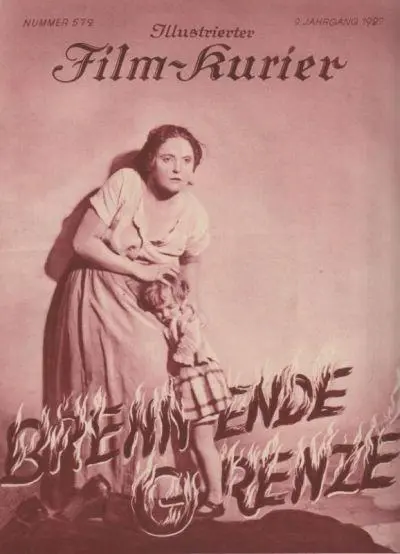
Hans Adalbert Schlettow, as Heino, manages to convey the inner turmoil of a man forced to live a lie for the sake of his family. His interactions with his disguised mother are fraught with unspoken tension, a delicate dance between familial recognition and the necessity of maintaining his cover. His physicality as a servant, initially awkward, then growing into a convincing facade, is well-observed. The audience feels his constant internal struggle.
But it is Oscar Homolka, even in a supporting role as the Polish commissioner, who truly stands out. Homolka, who would later become a celebrated character actor in Hollywood, brings a compelling gravitas to the screen. His character is complex: a man caught between duty and morality. Homolka’s eyes convey a deep weariness, a sense of having seen too much conflict. His decision to aid Luise feels less like a plot convenience and more like the action of a man driven by a personal code, despite the nationalistic pressures surrounding him. His presence elevates every scene he is in. It’s a masterclass in understated authority.
The ensemble cast, including Camilla Spira and Gustav Trautschold, provides solid support, creating a believable community under duress. Their reactions, their fear, their quiet resistance all contribute to the film’s immersive atmosphere. The film's depiction of the irregular troops, while perhaps lacking individual depth, is effective in creating a palpable sense of menace through their unified, often brutal, actions.
Erich Waschneck’s direction in Aftermath is characterized by a deliberate, almost meditative pace. This is not a film that rushes its story; rather, it allows events to unfold gradually, building tension through accumulation rather than sudden shocks. This approach, while potentially challenging for modern viewers accustomed to quicker cuts and faster narratives, is a strength for those willing to lean into it.
Waschneck uses long takes and carefully composed tableaux to establish mood and convey the passage of time. The film’s rhythm feels organic, mirroring the slow, grinding nature of post-war recovery and political instability. He understands that the silent medium often thrives on atmosphere and emotional resonance over rapid-fire plot developments.
However, this deliberate pacing is also the film's biggest potential hurdle. There are sequences that feel unnecessarily protracted, where a scene could have achieved its emotional or narrative goal with greater economy. A modern editor would undoubtedly tighten many of these moments. Yet, to judge it solely by modern standards would be unfair; it’s a product of its time, reflecting a different cinematic language.
Waschneck’s ability to orchestrate complex crowd scenes, particularly those involving the irregular troops, is commendable. The chaos and menace are palpable, conveyed through the sheer number of bodies and their aggressive movements, creating a genuine sense of threat. He manages to make the estate feel like a truly besieged location.
The tonal balance is another directorial achievement. Despite the grim subject matter, the film never descends into pure despair. There are moments of quiet resilience, of human connection, and ultimately, a glimmer of hope. This prevents the film from becoming an unrelentingly bleak experience, allowing the audience to engage with its characters on a deeper, more empathetic level.
At its core, Aftermath is a profound meditation on identity and belonging in a world violently reshaped by war. The redrawing of borders isn't just a political act; it's a deeply personal one, tearing apart communities and forcing individuals to confront who they are and where they truly belong.
Luise’s struggle to maintain her estate is not merely about property; it’s about preserving a way of life, a heritage, a German identity that feels under attack. Her defiance is born of a refusal to be erased, to have her roots severed by political decree. Her character embodies the quiet resistance of those caught in the crossfire of larger nationalistic ambitions.
Heino’s disguise as a servant is a powerful symbol of displaced identity. He sacrifices his social standing and his very name to protect what remains of his family's legacy. This act underscores the idea that identity, when threatened, can become fluid, adaptable, and fiercely defended through unconventional means. He is both a son and a stranger, a master and a serf, embodying the fractured sense of self that defined many in post-WWI Europe.
“The film asks, quite pointedly, what defines a nation, a home, or even a person, when the lines on the map shift and allegiances are forced to choose.”
The presence of the Polish commissioner further complicates these themes. He represents the new order, yet his actions suggest a recognition of shared humanity that transcends nationalistic divides. This offers a nuanced perspective rarely seen in films dealing with such sensitive historical contexts, especially from a nation still grappling with its own losses. It posits that empathy can exist even across the most hostile of borders. This is a genuinely surprising observation for a film of this era, which could easily have devolved into propaganda.
The film also subtly explores the idea of collective trauma. The characters, regardless of their nationality, bear the invisible scars of the war. Their actions, their anxieties, their desperate hopes are all filtered through the lens of recent, devastating conflict. It's a powerful, if unspoken, undercurrent that gives the film its enduring emotional weight.
Aftermath (1927) is more than just a historical artifact; it's a potent, if challenging, piece of cinema that speaks to enduring human struggles. It’s a film that demands patience and an open mind, but rewards those who offer it with a rich tapestry of emotion, history, and the quiet resilience of the human spirit. While its pacing is undeniably slow by today's standards, its thematic depth and strong performances, particularly by Homolka, elevate it beyond a mere curiosity.
This is not a film for a casual Friday night, but rather for a dedicated deep dive. It’s a crucial entry in the canon of German silent cinema, offering a perspective on post-war Europe that feels remarkably relevant today, especially in a world still grappling with shifting borders and national identities. It reminds us that the human cost of political decisions is always borne by individuals, and that even in the most tumultuous times, glimmers of empathy can break through the darkness. For those willing to engage with its unique rhythm, Aftermath offers a profound and memorable experience. It’s a film that leaves a mark, lingering long after the final fade to black.
For those interested in exploring similar themes of post-war reconstruction and human resilience, I might suggest The Mysteries of Souls, or perhaps even Autour de la roue, though the latter leans more into experimental narrative. Aftermath stands distinct in its grounded, historical drama, a testament to the power of silent storytelling.
IMDb —
1926
Community
Log in to comment.