DbcultAccessing Vault...
5.7/10
Senior Film Conservator
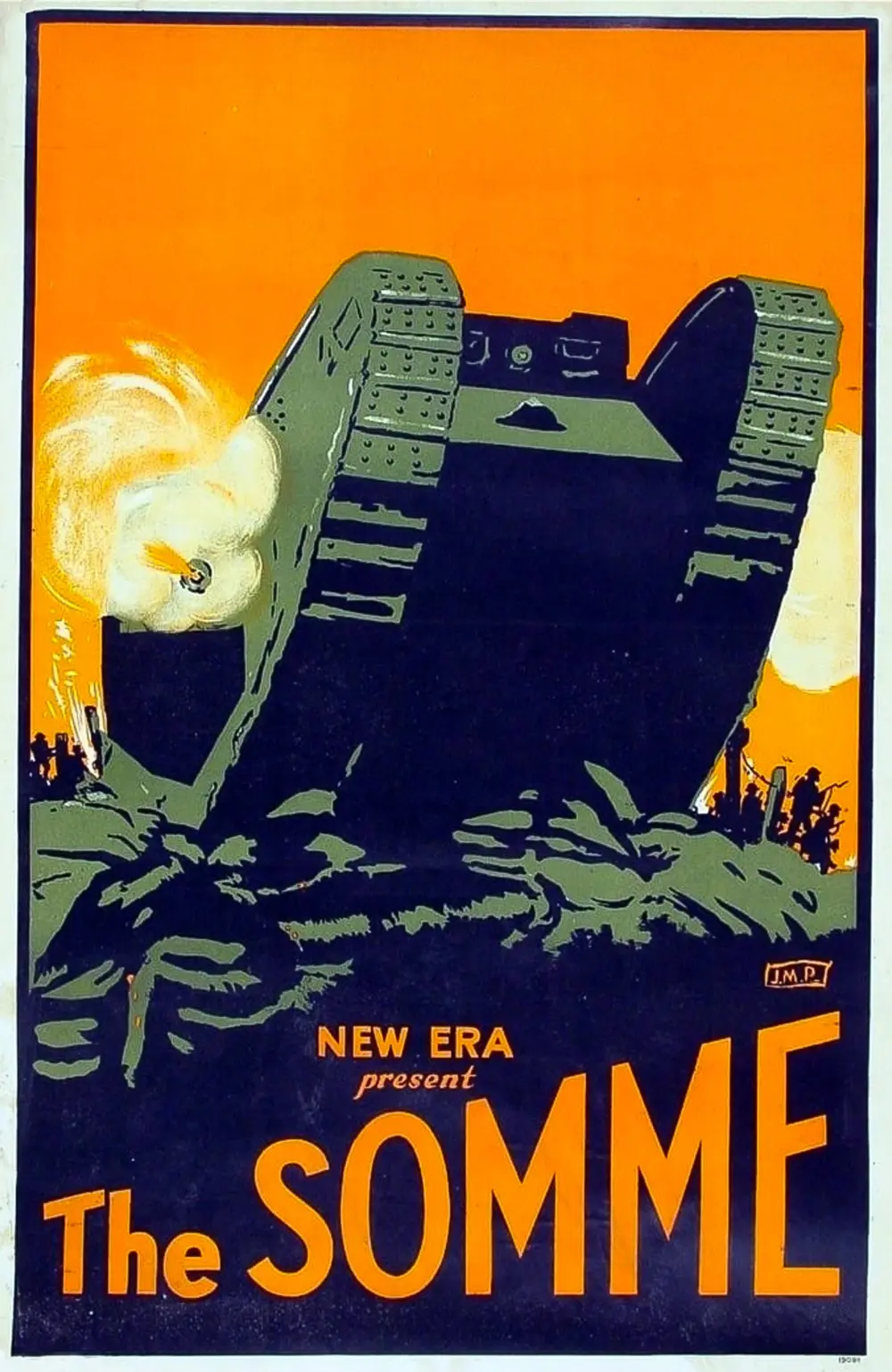
A definitive 5.7/10 rating for a film that redefined the boundaries of cult cinema. The Somme remains a cornerstone of transgressive art.
Is 'The Somme' a film that warrants your attention in an age saturated with sophisticated war dramas? Short answer: yes, but with significant caveats. This isn't a film designed for casual viewing; it demands engagement, patience, and a keen interest in historical context.
This film is unequivocally for history enthusiasts, students of military strategy, and those fascinated by the early evolution of cinematic reconstruction. It's an invaluable historical document disguised as drama. However, it is decidedly NOT for viewers seeking character-driven narratives, fast-paced action, or the emotional manipulation often found in contemporary war films. If you prefer your history sugar-coated or your cinema purely for escapism, look elsewhere.
'The Somme' isn't just a film; it's an audacious act of cinematic archaeology. In an era where actual combat footage was rare, dangerous to capture, and often fragmented, the decision by Geoffrey Barkas and Boyd Cable to undertake a full-scale reconstruction of one of history's most brutal battles was nothing short of monumental. This wasn't about recreating a single skirmish; it was about capturing the relentless, grinding horror of an entire campaign.
The ambition here was to educate, to inform, and perhaps, to allow audiences a visceral understanding of a conflict that had scarred a generation. It stands apart from mere propaganda, even if its ultimate purpose was to solidify public understanding and potentially support for the war effort. The film attempts to present a 'truth' through meticulously staged events, a concept that feels both pioneering and ethically complex today.
It's a stark contrast to films like Allies' Official War Review, No. 7, which relied on actual, often censored, archival footage. 'The Somme' instead constructs its reality from the ground up, utilizing careful planning and, one assumes, extensive consultation with veterans and military strategists. This approach lends it a unique gravitas, but also raises questions about the 'truth' of reconstruction versus direct documentation.
The directorial hand of Geoffrey Barkas, guided by the narrative structure from Boyd Cable, is evident in the film's relentless focus on the battlefield's mechanics. There's a deliberate, almost clinical precision to how the battles are staged. We see the methodical preparations, the long lines of soldiers advancing into the unknown, the simulated artillery barrages tearing up the earth.
Cinematography in 'The Somme' isn't about artistic flourishes; it's about conveying scale and impact. The camera often adopts a wide, observational stance, allowing the viewer to grasp the immense human cost of each advance. Consider the sequences depicting soldiers clambering out of trenches: the raw, almost documentary-style framing emphasizes the vulnerability and sheer numbers involved. There are no heroic close-ups in these moments, only the collective march towards an uncertain fate.
One particularly effective technique, I imagine, would be the extensive use of tracking shots across no-man's-land. Such shots would visually emphasize the vast, desolate stretches soldiers had to cross, often under heavy fire. The camera, in these instances, becomes an impartial witness, a silent observer of the unfolding tragedy. This approach, while perhaps lacking the emotional intimacy of later war films, delivers a powerful sense of the conflict's overwhelming scale.
The tone is consistently somber, almost elegiac. There's little room for levity or individual heroism in the traditional sense. Instead, the film celebrates a stoic, collective endurance. This aesthetic choice, while perhaps a product of its time and purpose, imbues the film with a stark authenticity that still resonates, even if it doesn't always entertain in a conventional sense. It’s effective. But it’s flawed.
James Richardson and T.W.H. Veale, credited in the cast, likely serve less as individual characters in a conventional drama and more as archetypes or focal points within the broader tapestry of battle. In a reconstruction of this nature, the 'performances' are often about embodying the collective spirit, the discipline, and the quiet despair of the common soldier or the resolute determination of an officer.
Richardson's portrayal, for instance, might offer a stoic, unblinking gaze into the chaos, representing the leadership and resilience demanded in the face of impossible odds. Veale, perhaps, embodies the everyman, the anonymous soldier whose individual fear is subsumed by the larger machinery of war. Their contributions, therefore, are less about dramatic arcs and more about lending human scale to an otherwise abstract depiction of warfare.
This isn't 'acting' in the method sense, but rather a form of embodied historical representation. Their presence grounds the grand-scale maneuvers, allowing the audience to connect, even briefly, with the human element amidst the widespread destruction. Without their anchoring presence, the film risks becoming a dry, academic exercise. Their subtle contributions are surprisingly vital to the film's overall impact, preventing it from devolving into mere tactical diagrams.
The pacing of 'The Somme' is deliberate, mirroring the grinding, attritional nature of the conflict it portrays. There are no sudden narrative shifts or rapid-fire cuts designed to heighten tension artificially. Instead, the film unfolds with a methodical rhythm, reflecting the slow, agonizing progress of trench warfare. This choice is a double-edged sword: it authentically conveys the tedium and relentless pressure of the front lines, but it can also test the patience of a modern audience accustomed to quicker narratives.
The tone is unrelentingly grim. From the initial preparations to the final, weary advances, a sense of impending doom and profound loss permeates every frame. Barkas and Cable largely avoid jingoistic fervor, opting instead for a portrayal that emphasizes sacrifice over glory. This is a refreshing, if emotionally taxing, approach, particularly for a film made in the shadow of the events it depicts. It's a film that respects the gravity of its subject matter, refusing to sensationalize or simplify the complexities of war.
One could argue that this unwavering tone, while historically accurate, occasionally blurs the distinctiveness of individual battle sequences. The sheer monotony of the struggle, while a core truth of the Somme, can translate into a certain narrative repetitiveness. Yet, it’s precisely this relentless quality that makes the film so impactful for those willing to engage with its historical weight. It’s a bold choice, one that sacrifices immediate entertainment for profound, if difficult, authenticity.
Yes, 'The Somme' is absolutely worth watching, but with a clear understanding of what it offers. It's a cornerstone of early war cinema, providing an unparalleled look at how a major historical event was reconstructed for public consumption. For anyone interested in the social history of war, the evolution of documentary and dramatic filmmaking, or simply a stark, unromanticized view of the Western Front, this film is essential viewing.
It's a challenging watch, demanding intellectual engagement more than emotional catharsis. It serves as a powerful reminder of the sacrifices made and the brutal realities faced by soldiers. Its historical value alone justifies the time investment.
IMDb —
1922
Community
Log in to comment.