DbcultAccessing Vault...
Cult Review
Senior Film Conservator
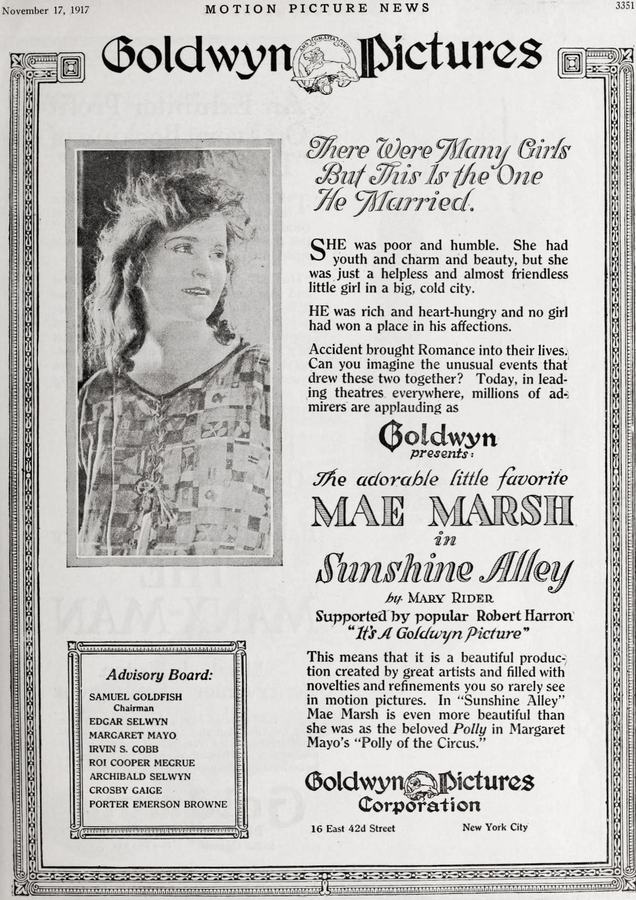
The silent era, often maligned by modern sensibilities for its perceived lack of sophistication, frequently gifted audiences with narratives of profound emotional resonance and stark social commentary. Among these, Sunshine Alley, a 1917 production, stands as a testament to the period's enduring power, a poignant drama that transcends its simple premise to explore themes of class, compassion, and the surprising pathways to human connection. Directed with a keen eye for human frailty and resilience, and penned by the insightful Mary Rider, this film manages to distill the complexities of life in an unforgiving urban landscape into a story that is both deeply moving and ultimately uplifting.
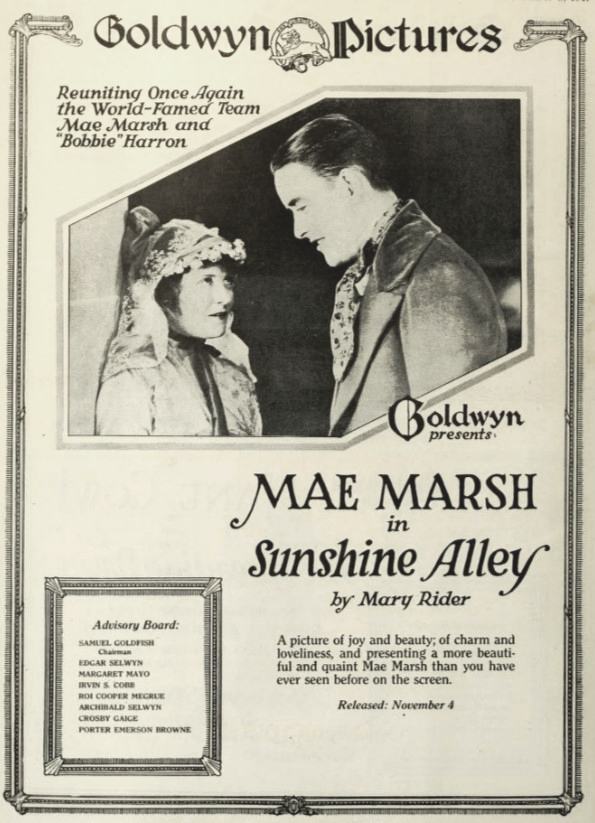
At its core, Sunshine Alley is a Cinderella story, but one stripped of overt fairy-tale trappings, grounded instead in the grit and grime of early 20th-century poverty. Our protagonist, Nell, portrayed with a delicate yet resolute grace by the incomparable Mae Marsh, inhabits the city's most impoverished district. Her days are spent in the humble confines of her grandfather's bird store, a sanctuary where the vibrant chirps and fluttering wings of her feathered companions offer a vibrant counterpoint to the drabness of her surroundings. Marsh, a silent film icon, imbues Nell with an innocence that never veers into naiveté, a quiet strength that suggests a profound inner world. Her performance is a masterclass in subtlety, conveying volumes through a mere glance or the slight tremor of a hand.
The narrative's inciting incident is a stark collision of worlds: a wealthy magnate, Mr. Morris, whose opulent automobile symbolizes the vast chasm between the city's haves and have-nots, inadvertently strikes Nell's grandfather. This accident, rather than merely a plot device, serves as a crucial catalyst, forcing the disparate social strata into an uncomfortable, yet ultimately transformative, interaction. Mr. Morris, seeking to mitigate potential legal repercussions, offers a substantial sum for a particular bullfinch, a beloved pet of Nell's. The grandfather's steadfast refusal, driven by an unwavering loyalty to his granddaughter's affections over monetary gain, is a powerful moment. It highlights the film's subtle critique of a society where human value is often equated with financial worth, contrasting it with the inherent dignity of simple, heartfelt attachment. This refusal resonates with the moral integrity explored in films like The Absentee, where character is tested against material temptation.
It is in this fraught moment that we are introduced to Ned, Mr. Morris's son, whose character provides the narrative's romantic fulcrum. Played by Robert Harron, Ned is depicted as a figure distinct from his father's more pragmatic, almost transactional approach to problem-solving. Impressed by Nell's unassuming charm and the grandfather's principled stand, Ned extends an offer of assistance, a gesture born not of obligation but of genuine empathy. Harron's portrayal captures the nascent stirrings of a compassionate heart, setting the stage for a romance that defies societal expectations. The casting of Harron alongside Marsh was a common, and often successful, pairing in this era, capitalizing on their undeniable on-screen chemistry.
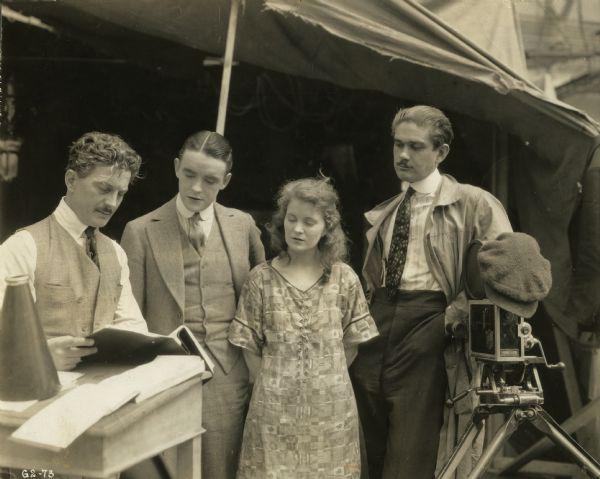
As the grandfather's condition worsens, necessitating expensive medical intervention, Nell finds herself in an impossible bind. Her initial refusal to part with her cherished companion gives way to the harsh realities of survival. The scene where Nell, swallowing her pride and sacrificing her beloved bird, contacts Ned, is imbued with a quiet desperation that Marsh conveys with heartbreaking authenticity. It's a moment that speaks to the profound sacrifices individuals make for those they love, a theme echoed in other silent era dramas such as As a Woman Sows, where the consequences of choices made under duress are meticulously explored.
The narrative then takes a charming turn, intertwining the fate of the bullfinch with the burgeoning romance between Nell and Ned. When the finch falls ill, Nell is summoned to the opulent Morris residence, ostensibly to tend to the bird, but in reality, to allow the seeds of affection to blossom. The contrast between Nell's humble origins and the Morris's grandeur is visually striking, yet the film deftly navigates these social disparities, suggesting that true connection transcends such superficial boundaries. The evolution of their relationship, from initial politeness to genuine affection, is handled with a delicate touch, characteristic of the period's romantic sensibilities. The supporting performances by Dion Titheradge, James A. Furey, William T. Carleton, John Charles, Jack Grey, Isabel Berwin, and Edward See, though sometimes brief, contribute to the rich tapestry of the world Nell inhabits, from the working-class denizens to the more affluent characters.
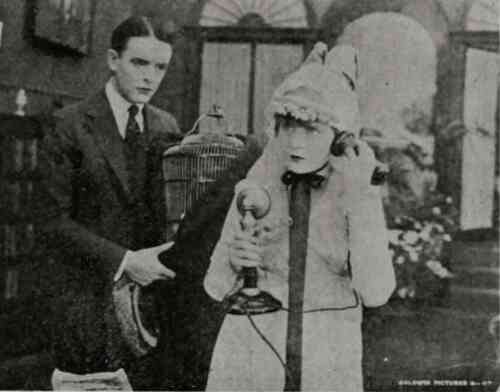
Just as happiness seems within Nell's grasp, a shadow emerges in the form of her misguided brother, Carlo. His desperate attempt to rob the Morris house introduces a dramatic tension that momentarily threatens to unravel the delicate fabric of Nell's newfound joy. This subplot serves a crucial purpose, reminding us that even amidst burgeoning romance, the harsh realities of poverty and the temptations it breeds linger. Carlo's actions, while criminal, are presented not as pure villainy but as a tragic consequence of his circumstances, a common trope in melodramas of the era, where moral failings are often linked to societal pressures. This exploration of desperation and its consequences finds parallels in films like The Plunderer, which often delves into the ethical quagmires brought about by greed or need.
The resolution of Carlo's predicament, achieved through the unwavering devotion of Nell and Ned, is perhaps the film's most overtly idealistic gesture. Their combined efforts not only prevent a deeper tragedy but also lead to Carlo's eventual reformation. This emphasis on redemption through love and personal connection, rather than punitive justice, is a hallmark of the era's more optimistic narratives. It suggests that even the most wayward individuals can be guided back to a path of righteousness through empathy and unwavering support. This theme of moral awakening through the influence of a good woman, or a powerful love, is a recurring motif in silent cinema, seen in various forms from The Turmoil to A Soul Enslaved.
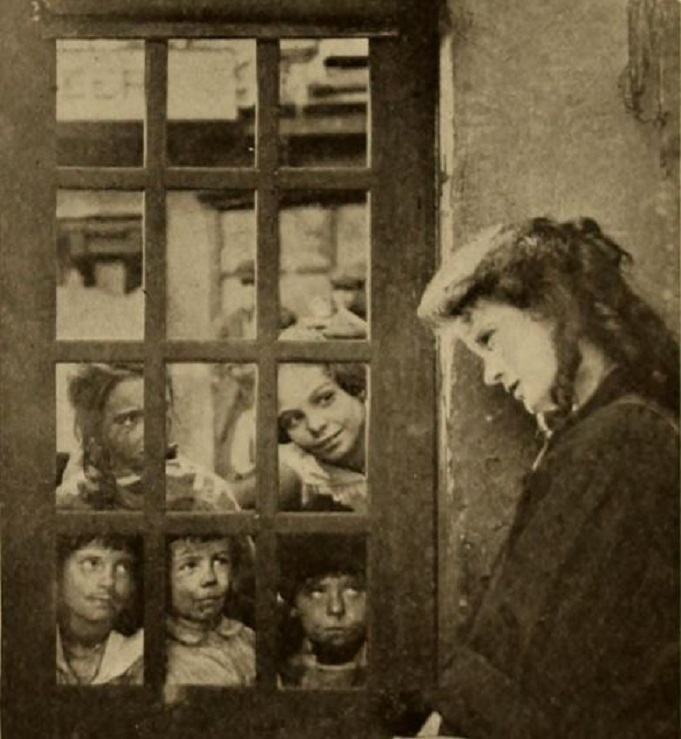
Cinematically, Sunshine Alley, like many films of its time, relies heavily on visual storytelling. The stark contrast between the squalor of Nell's neighborhood and the opulence of the Morris estate is not merely a backdrop but an active participant in the narrative, highlighting the social stratification that defined the period. The use of intertitles, while a necessity, is handled with a poetic sensibility, advancing the plot while also providing glimpses into the characters' inner thoughts and emotions. The performances, particularly Marsh's, are characterized by a theatrical expressiveness that was the lingua franca of silent acting, yet she manages to convey a nuanced range of feelings without ever descending into melodrama.
Mary Rider's screenplay is notable for its construction of character arcs that feel earned, even within the confines of a relatively straightforward plot. The transformation of Nell from a quiet, duty-bound girl to a woman who finds love and helps reform her brother is compelling. Ned's character avoids the pitfall of being merely a wealthy rescuer; his empathy and genuine affection for Nell are consistently portrayed, making their romance believable. Even Carlo, the errant brother, is given a trajectory that offers hope and a sense of closure, rather than condemnation.
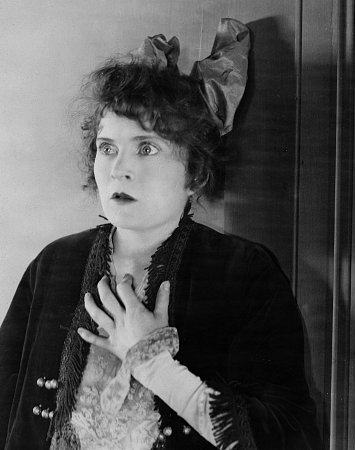
The film's ultimate message is one of optimism, positing that love, compassion, and personal integrity can overcome even the most daunting social and economic barriers. It's a gentle reminder that true wealth lies not in material possessions but in the richness of human relationships and the capacity for forgiveness and growth. In an era grappling with rapid industrialization and widening class divides, such narratives offered a comforting vision of reconciliation and hope. While not as grand in scope as Napoleon or as overtly dramatic as Sin, its quiet power resides in its relatable human drama.
Revisiting Sunshine Alley today offers more than just a glimpse into cinematic history; it provides a window into timeless human experiences. The themes of social injustice, the power of sacrifice, the blossoming of unexpected love, and the possibility of redemption remain as relevant now as they were over a century ago. It’s a film that, despite its silent nature, speaks volumes about the human condition. The simplicity of its storytelling is its strength, allowing the emotional core of the narrative to shine through without distraction.
The film's title itself, Sunshine Alley, is emblematic of its spirit. It suggests that even in the darkest, most overlooked corners of society, there exists the potential for light, warmth, and joy. Nell's journey from the 'alley' of poverty to a life illuminated by love and security is a testament to this inherent optimism. It’s a narrative that, while perhaps not groundbreaking in its plot mechanics for its time, executes its familiar beats with such genuine feeling and strong performances that it elevates itself above mere melodrama. For those interested in the evolution of cinema and the enduring power of a well-told story, Sunshine Alley remains a compelling watch, a quiet beacon of hope from a bygone era that continues to resonate with contemporary audiences seeking tales of resilience and human connection.
IMDb 6.7
1930
Community
Log in to comment.