DbcultAccessing Vault...
Cult Review
Senior Film Conservator
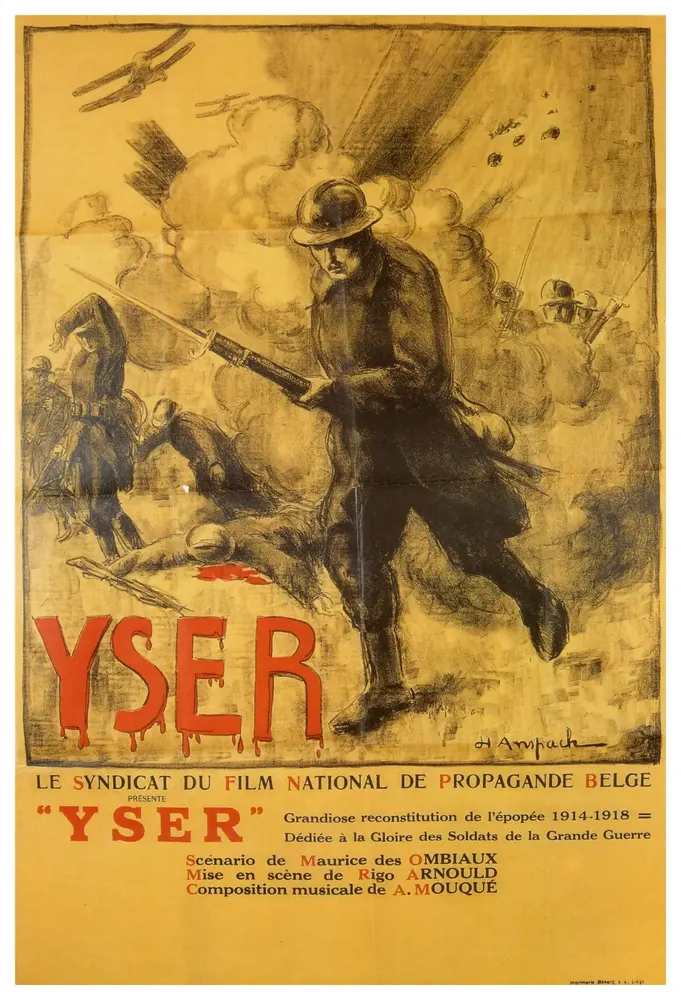
Is Yser worth watching today? Short answer: yes, but with significant caveats that demand a specific kind of viewer. This is a film explicitly for those who appreciate unflinching historical realism and character-driven war narratives over explosive action, and absolutely not for anyone seeking a light, escapist cinematic experience or a traditional heroic arc.
It is a tough watch. But its impact is undeniable, resonating with a quiet power that few contemporary war films manage to achieve. It works. But it’s flawed.
Early in the content, it's crucial to establish expectations. Yser doesn't aim to entertain in the conventional sense; it seeks to immerse and inform, to make the viewer feel the cold, the mud, and the terror. It succeeds admirably in that ambition, even if its deliberate pace might test the patience of some.
This film works because of its raw, uncompromising realism, its commitment to psychological depth over spectacle, and its masterful creation of atmospheric tension that truly transports you to the trenches.
This film fails because its deliberate, often bleak, pacing can alienate viewers seeking a more dynamic narrative, and its refusal to offer easy answers or clear character arcs might leave some feeling emotionally adrift.
You should watch it if you value historical accuracy, psychological immersion, and challenging, thought-provoking cinema that prioritizes the human cost of war over jingoistic heroism. It’s a profound experience for the right audience.
Yser, penned by Maurice des Ombiaux and Rigo Arnould, doesn't just depict a battle; it meticulously reconstructs a descent into a particular kind of hell – the waterlogged, muddy purgatory of the Yser Front in 1914. The film’s narrative is less about strategic maneuvers and more about the visceral, moment-to-moment experience of survival for a small Belgian infantry squad.
At its core is Sergeant Henri Delannoy, portrayed with a haunting weariness by Henri Delannoy himself, a man burdened by command and the constant threat of annihilation. His internal struggle to maintain order and morale amongst his dwindling men forms the emotional backbone of the story.
We witness the naive idealism of young recruit Purnode, played by Purnode, slowly erode under the relentless artillery barrages and the grim realities of trench life. His transformation from wide-eyed patriotism to numb resignation is one of the film's most affecting character arcs, albeit one told through subtle shifts rather than overt declarations.
Complementing them is Georges De Veylder, a cynical veteran whose pragmatic worldview offers a stark contrast to Purnode's fading innocence. De Veylder, embodied by Georges De Veylder, injects moments of dark humor and brutal honesty, reminding us that even in the darkest corners, human nature finds ways to cope, however grimly.
The strategic flooding of the polders, a desperate Belgian gambit to halt the German advance, isn't just a plot point; it's a transformative force. The rising waters become an antagonist as formidable as any enemy soldier, turning the battlefield into a treacherous, inescapable quagmire. This environmental detail is crucial, distinguishing Yser from many other WWI narratives.
The strength of Yser lies unequivocally in its ensemble. These aren't flashy, Oscar-bait performances; they are raw, understated portrayals that capture the quiet desperation of men facing an unimaginable ordeal. Henri Delannoy's Sergeant is a masterclass in controlled agony. There's a particular scene where he receives orders for a seemingly futile counter-attack, and his face, etched with fatigue, conveys more about the futility of war than any dialogue could. His eyes, heavy with unspoken grief and responsibility, become a window into the soul of a man on the brink.
Purnode, as the greenhorn, manages to convey the rapid erosion of youth. His initial wide-eyed terror, evident in a sequence during the first heavy shelling, gradually gives way to a hollow, distant stare by the film’s midpoint. It’s a subtle evolution, perhaps best exemplified by his reaction to a casualty – initially shock and revulsion, later just a weary, almost mechanical, acceptance.
Georges De Veylder, on the other hand, provides the film with its cynical backbone. His character’s gallows humor, often delivered with a wry, almost dismissive shrug after a close call, serves as a vital coping mechanism. There’s a moment where he casually lights a cigarette amidst the distant thud of artillery, a defiant gesture against the encroaching chaos that speaks volumes about his hardened resolve.
The supporting cast, including Axel Delafont, Léo Adel, and Frans Cappoen, contribute significantly to the film's immersive quality. They embody the diverse faces of the Belgian ranks – the stoic, the fearful, the resigned – creating a rich tapestry of human experience under duress. Raymonde Demay and Gaby Dalmah, though appearing in more limited roles, provide fleeting glimpses of the civilian world irrevocably altered by the conflict, reminding us of the life left behind.
The performances here are less about individual heroism and more about collective endurance. There's a palpable sense of camaraderie forged in shared suffering, a silent understanding between men who know their fate is inextricably linked. This isn't a film about grand speeches, but about the profound weight of silence and the raw, unfiltered expressions of fear and solidarity.
Rigo Arnould’s direction of Yser is a testament to restraint and atmosphere. He doesn't glorify combat; he strips it bare. The camera often lingers, not on explosions, but on the aftermath: the mud, the water, the vacant stares of soldiers. This approach, while challenging, is what gives the film its potent, almost documentary-like feel.
Arnould masterfully uses the environment as a character. The relentless rain, the ever-present mud, and the slowly rising waters are not mere backdrops but active participants in the drama. One particularly striking sequence involves the men attempting to sleep in their dugouts as the water level inexorably rises, the claustrophobia and the chilling threat of drowning becoming almost unbearable. It’s a brilliant piece of environmental storytelling.
The screenplay by Maurice des Ombiaux and Arnould is sparse, yet impactful. Dialogue is kept to a minimum, often overshadowed by the sounds of the battlefield or the internal monologues implied through the actors' expressions. This deliberate choice forces the audience to engage more deeply, to read between the lines, and to infer the profound psychological toll on the characters.
This directorial choice to focus on the 'unseen war' – the psychological and environmental aspects – distinguishes Yser from many of its contemporaries and even modern war films. While a film like 1917 offers a visceral, immersive experience through its technical prowess, Yser achieves its immersion through a more contemplative, almost suffocating, sense of dread. It's less about the bullet's trajectory and more about the impact of its absence, the constant threat.
The cinematography of Yser is stark, muted, and utterly effective. The color palette is dominated by grays, browns, and the dull sheen of water, perfectly reflecting the bleak, desolate landscape. There are no vibrant sunsets or heroic panoramas; only an endless expanse of mud, sky, and desolation. This visual style is not merely aesthetic; it is integral to the film's thematic exploration of the dehumanizing nature of war.
One memorable visual is a long, slow tracking shot across the waterlogged trenches after a particularly heavy bombardment. The camera doesn't show gore; instead, it focuses on the debris, the shattered planks, and the silent, still water, conveying the destructive power of artillery more powerfully than any explosion could. This shot, devoid of human presence, speaks volumes about the indifference of the battlefield.
The sound design is equally crucial. Instead of a bombastic score, Yser relies heavily on ambient sounds: the distant rumble of artillery, the incessant drip of water, the mournful cry of the wind, and the strained breathing of the soldiers. These elements combine to create an auditory landscape that is both unsettling and deeply immersive. The absence of a traditional musical score in many scenes amplifies the sense of isolation and raw vulnerability. It’s a bold choice that pays off, forcing the audience to confront the quiet horrors.
There's a scene where the sound of shelling gradually fades into the almost unbearable silence of a foggy morning. The sudden quiet is more terrifying than the explosions, leaving the audience, much like the soldiers, on edge, anticipating the next horror. This masterful manipulation of sound and silence underscores the film’s commitment to psychological realism.
Yser is not a film for those accustomed to rapid-fire editing or constant narrative propulsion. Its pacing is deliberate, almost meditative, mirroring the agonizing slowness of trench warfare itself. This slow burn allows the psychological weight of the situation to gradually build, pressing down on the viewer just as it does on the characters.
The tone is relentlessly grim. Hope is a scarce commodity in Yser, and when it appears, it's often fleeting or cruelly snatched away. This unwavering commitment to bleakness can be challenging. I'd argue that Yser's true power lies not in its grand battle sequences, but in its relentless focus on the individual's crumbling spirit, a choice some might find tedious or even depressing.
While critics often laud its stark realism, I find moments where its dedication to bleakness borders on self-indulgence, risking viewer fatigue. There’s a fine line between immersive realism and an almost oppressive lack of narrative momentum, and Yser occasionally dances on that edge. However, this very aspect is also what makes it unique; it doesn’t sugarcoat anything.
It demands patience, rewarding those who are willing to sink into its despairing rhythm. The film’s refusal to offer easy catharsis or heroic triumphs is a powerful statement, arguing that in this particular theater of war, mere survival was the only victory one could hope for. This tone is a deliberate artistic choice, one that solidifies its message, even if it limits its appeal to a broader audience.
In the vast landscape of war cinema, Yser carves out a distinct, albeit niche, position. It stands apart from the more action-oriented epics and even from other contemplative war dramas by its singular focus on the Belgian experience of WWI and the environmental horror of the flooded front. It lacks the sweeping romanticism of some earlier war films, or the intricate tactical focus of others. Instead, it offers a raw, ground-level perspective that feels deeply personal.
It doesn't seek to make a grand political statement as explicitly as some films, but rather to illustrate the universal human cost. Compared to something like The Lion's Den, which might explore the confinement of leadership, Yser is about the confinement of the common soldier, trapped by both enemy and environment. It certainly doesn't share the lighthearted tone of a film like The Early Bird.
Its influence might be subtle, but its commitment to historical accuracy and its particular brand of stark realism paved the way for later, more acclaimed WWI films that similarly emphasized the brutal realities over heroic fantasy. It reminds us that there are countless untold stories from the Great War, each with its own unique flavor of tragedy.
While it may not be as widely recognized as films like All Quiet on the Western Front, Yser offers a valuable and distinct contribution to the genre, particularly for its unflinching portrayal of a specific, often overlooked, aspect of the conflict. It serves as a powerful historical document as much as it is a dramatic narrative, offering lessons that remain disturbingly relevant.
Yser is not a film that attempts to win you over with grand gestures or thrilling escapades. Instead, it slowly, deliberately, pulls you into the cold, muddy despair of its setting, leaving an indelible mark long after the credits roll. It’s a powerful, often brutal, testament to the human spirit's capacity for endurance in the face of unimaginable horror. While its challenging pace and relentless grimness might not appeal to everyone, for those willing to commit, it offers an incredibly rich, authentic, and ultimately moving experience.
This is a film that demands your attention, your patience, and your empathy. It’s a significant piece of war cinema that deserves to be seen, not just for its historical importance, but for its unflinching artistic vision. It reminds us that courage isn't always about charging forward; sometimes, it's simply about surviving another day in a world that has gone mad. A truly unique and resonant film, if you have the fortitude for it.
IMDb —
1917
Community
Log in to comment.