DbcultAccessing Vault...
4.9/10
Senior Film Conservator
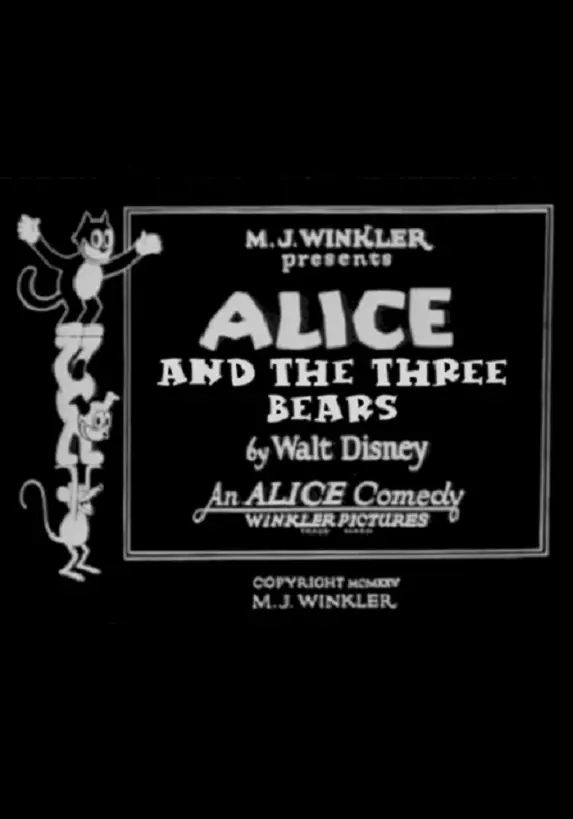
A definitive 4.9/10 rating for a film that redefined the boundaries of cult cinema. Alice and the Three Bears remains a cornerstone of transgressive art.
The Dawn of Hybridity
In the nascent days of the 1920s, long before the monolithic dominance of the mouse, Walt Disney and Ub Iwerks were experimenting with a radical form of cinematic alchemy. Alice and the Three Bears (1924) stands as a testament to this period of unbridled creativity. Unlike the contemporary The City of Masks, which relied on the traditional masquerades of live-action drama, this Alice Comedy dares to merge the tangible presence of Virginia Davis with the fluid, hand-drawn reality of the Three Bears. It is a collision of worlds that feels both primitive and hauntingly modern.
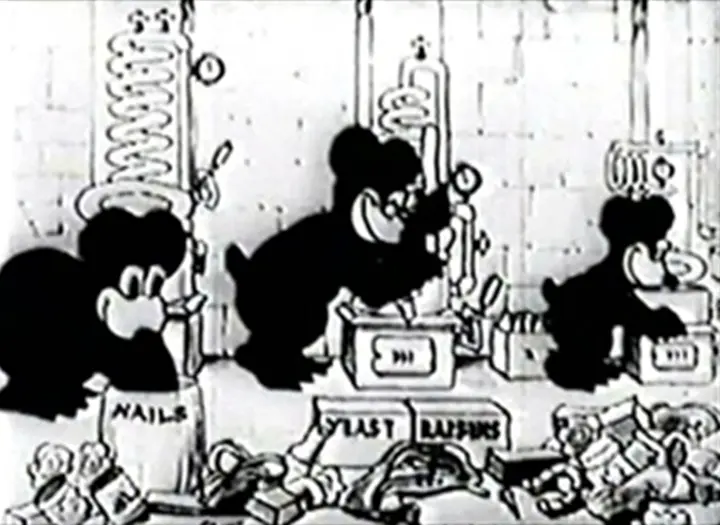
The film opens with a sequence that exemplifies the 'cartoon logic' that would eventually define the medium. We see the Three Bears engaged in the quintessential domestic act of cooking—a trope that humanizes the wild only to subvert it. The Baby Bear, discovering a lack of 'hops' for his recipe, does not seek a botanical solution but a biological one. His pursuit of frogs is a masterful play on words, a visual pun that highlights the whimsical linguistic elasticity of the silent era. This sequence, though brief, sets the stage for the surrealist trajectory the film follows.
The Intrusion of Alice
Alice’s entry into the bears' home is handled with a nonchalance that borders on the transgressive. Accompanied by her cat, she wanders into the void left by the bears' absence. This is not the Goldilocks of moralistic fables; this is Alice as an agent of chaos. The domestic space, while familiar, becomes a playground for curiosity and eventual conflict. When Baby Bear returns, the shift from culinary exploration to pugilistic encounter is instantaneous. The feline protagonist, often overlooked in analyses of this period, emerges as the primary defender of Alice’s honor, engaging in a kinetic struggle that defies the physical laws of the 1920s frame.
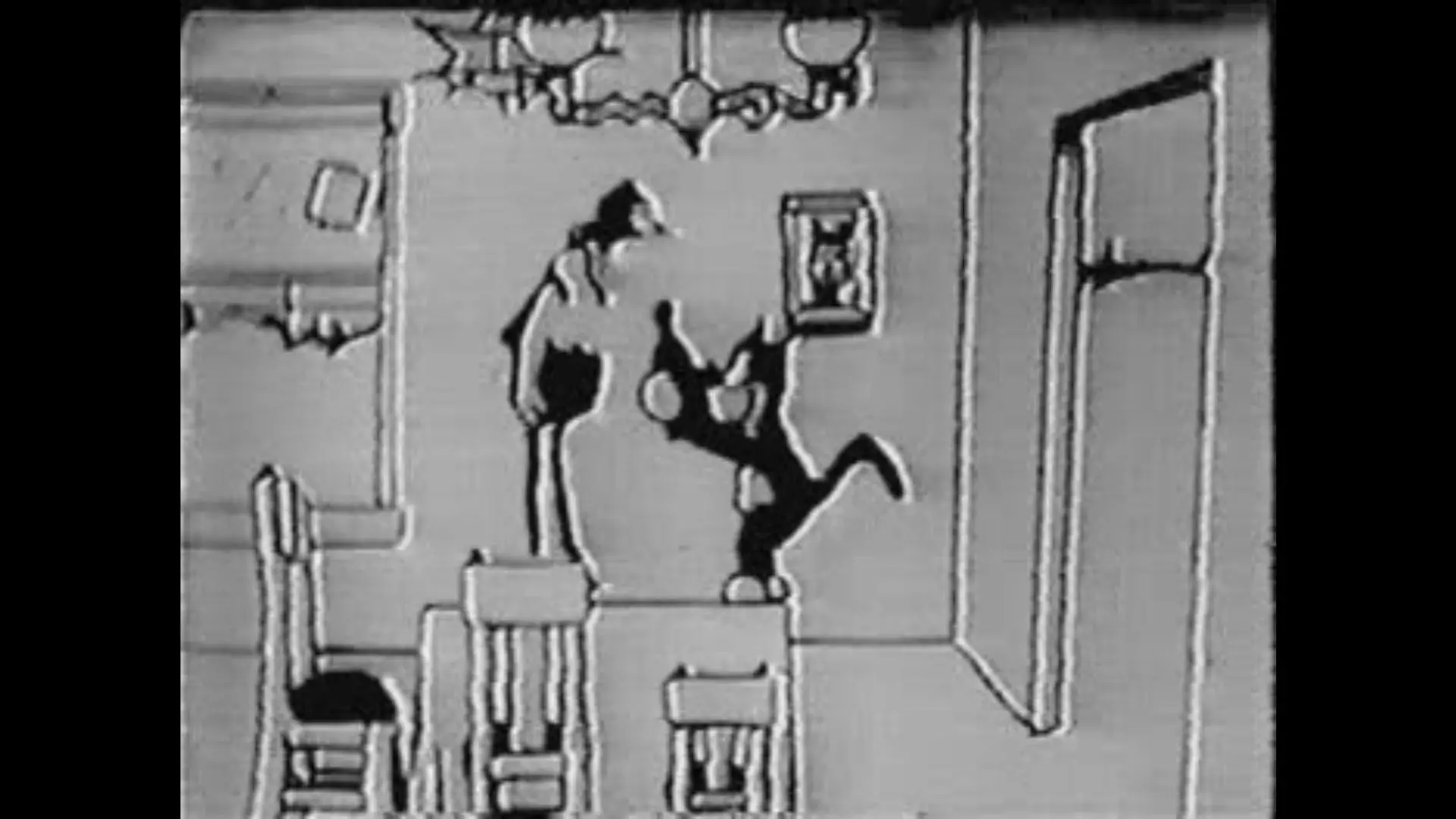
The ensuing battle is not merely a slapstick routine. It carries a weight of desperation. When the cat is initially defeated and the parents—Ma and Pa Bear—are summoned, the stakes elevate from a playground scuffle to a genuine peril. The bears, depicted with a rough-hewn charm that contrasts sharply with the polished animation of later decades, represent a primal force that Alice and her cat are ill-equipped to handle through conventional means. This reflects a certain darkness found in other works of the time, such as During the Plague, where the environment itself feels predatory.
Metaphysical Warfare: The Nine Lives
Perhaps the most intellectually stimulating sequence occurs when the cat, having been bested, calls upon reinforcements. In a moment of pure metaphysical brilliance, he summons his nine lives. These specters, identical to their progenitor, represent a literalization of feline mythos. They charge into battle with a fervor that reminds one of the stoic heroism in The Honor of His House, yet they are ultimately insufficient. There is a profound melancholy in watching these eight auxiliary lives fall to the bears, leaving only the original and a singular remaining spirit.
The resolution of this conflict introduces a trope that would later become a hallmark of early animation: the transformative power of the 'jug.' In a move that reflects the pre-Code sensibilities of the era, the cat liquors up one of his lives. This spectral 'drunk' becomes an unstoppable force, a whirlwind of liquid courage that decimates the ursine trio. It is a fascinating cultural artifact; in an era of Prohibition, the film suggests that the ultimate source of power—the key to overcoming overwhelming odds—is found at the bottom of a bottle. This thematic thread creates a strange dissonance when compared to the more wholesome morality of Be a Little Sport.
The Sawmill and the Melodramatic Climax
The climax takes us to a sawmill, a setting synonymous with early cinematic tension. Alice, stuffed into a sack and tied to the machinery, is the quintessential damsel in distress. However, the context here is uniquely bizarre. The threat is not a mustache-twirling villain from The White Masks, but a family of bears whose culinary quest went awry. The mechanical peril of the sawmill introduces a rhythmic, industrial dread to the film, contrasting with the fluid, organic movements of the animated characters.
Virginia Davis’s performance in these scenes is remarkably poised for a child actor of her time. She maintains a sense of wonder and genuine fear that bridges the gap between the live-action world and the ink-drawn threats. When the cat finally effects his rescue, her proclamation of him as her hero is more than a narrative beat; it is the culmination of a surreal journey that has seen them traverse through domesticity, metaphysics, and industrial danger. It is a moment of catharsis that rivals the emotional peaks of The Faded Flower, albeit in a much more fantastical context.
Historical Significance and Artistic Legacy
To view Alice and the Three Bears today is to peer into the primordial soup of the Disney empire. The technical hurdles overcome by Disney and Iwerks are palpable in every frame. The way the animated bears interact with the physical furniture, or how Alice seems to exist within the same light-space as her cartoon counterparts, was a marvel in 1924. While films like Der Mann ohne Namen - 1. Der Millionendieb were pushing the boundaries of European narrative, Disney was redefining the visual vocabulary of the American screen.
The film also serves as a reminder of the sheer eccentricity of early animation. There was no established playbook, no focus groups to sanitize the content. The result is a film that feels unpredictable and occasionally unsettling. The Nine Lives sequence alone is a masterpiece of surrealist imagery that predates the more celebrated avant-garde movements of the late 20s. It captures a sense of 'otherness' that is often lost in the polished, focus-tested world of modern family entertainment.
In conclusion, Alice and the Three Bears is not merely a historical curiosity. It is a vibrant, chaotic, and intellectually stimulating piece of cinema that demands to be seen by anyone interested in the evolution of visual storytelling. It occupies a unique space alongside other 1924 releases like Queens Are Trumps or Somebody Lied, offering a glimpse into a world where the boundaries between reality and imagination were just beginning to dissolve. It is a film of hops, frogs, spirits, and sawmills—a fever dream that somehow paved the way for the most significant animation studio in history.
IMDb —
1917
Community
Log in to comment.