DbcultAccessing Vault...
Cult Review
Senior Film Conservator
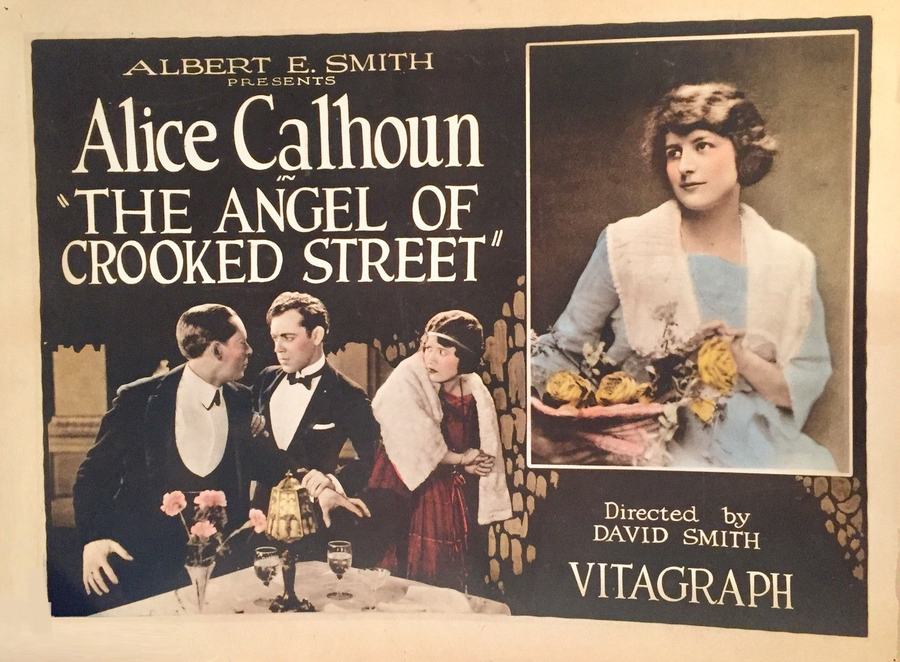
Mary Young’s Jennie Marsh enters the frame as if she has already been bruised by the camera’s gaze—shoulders hinged forward, eyes flicking sideways like a sparrow that expects the net. It is 1922, and the close-up is still a confession booth; every freckle, every tremor of the lip, testifies. Young understands that in the vacuum of silence, the face must become a choir. Her first tableau in the reformatory chapel—where she refuses to kneel—registers less as defiance than as mortuary statuary: a woman embalmed by her own bitterness. The performance ages backward, thawing by gradations until the final reel where forgiveness floods her irises with seawater light. Few silent-era actresses dared such longitudinal curvature; compare Alice Calhoun’s comparatively static turn in Polly of the Storm Country and you appreciate the geological strata Young brings to Jennie.
Director Walter Cooper—never vaulted into the pantheon alongside Griffith or DeMille—nonetheless orchestrates space like a cartographer of moral rot. The Sanford manse, all Corinthian columns and lace valances, is shot from a low angle so that its portico looms like a courthouse; conversely, Mother De Vere’s doss-house receives a nauseating Dutch tilt, walls sweating nicotine. Between these poles stretches the reformatory corridor: a forced-perspective tunnel where the vanishing point seems to suction souls. The editing grammar is proto-noir—cross-fades that bleed like ink, irises that contract to peep-holes of paranoia. One flashback—Jennie remembering her mother’s casket—is superimposed over her own face, a double exposure that anticipates the psychological overlays in Alraune (1928).
As young Sanford, George Stanley must negotiate a razor-edge: sufficiently guileless to be framed, yet charismatic enough to earn our empathy and Jennie’s erotic capitulation. He achieves it through a catalogue of micro-gestures—fingertips that linger a half-beat on a door-handle as though testing for heat, a laugh that collapses mid-air when he catches Jennie’s reflection in a shop-window. The courtroom sequence, where he is charged with the murder of a riverfront pawnbroker, is lit with carbide lamps; the harsh whites carve hieroglyphs of dread on his cheekbones. His final embrace with Jennie, silhouetted against the East River, feels less romantic than funereal—as if they are sealing a pact to bury the past beneath the water’s black obsidian.
Martha Mattox’s Mother De Vere, a matriarch straight from a cautionary lantern-slide, chews scenery with the gusto of a Fagin in petticoats. Yet the standout support comes from Rex Hammel as Silent McKay. Wordless save for a slate held up twice ("TRUST IS A CRACKED MIRROR"), Hammel relies on shoulder choreography—he dances through burglaries like a mime costumed by the night. His relationship with Jennie is the film’s most platonic yet intimate dyad; they communicate via cigarette-light traded across darkness, a semaphore of fragile solidarity.
Screenwriters Harry Dittmar and C. Graham Baker lace the intertitles with biblical cadence: "The milk of human kindness sours in the pail of poverty." Such sententiae risk sanctimony, yet they serve as narrative barbs—each aphorism is later bloodied by circumstance. Jennie’s vow, "I will visit the iniquity of the mother upon the son," is a deliberate perversion of Exodus; the film’s arc restores scripture to its merciful tenor without ever slipping into Sunday-school homily. Compare this to the cyclical vendetta in Eye for Eye (1918) and you sense a modernist itch to question whether forgiveness is evolution or mere exhaustion.
Though photographed on orthochromatic stock, the film thinks in color. Jennie’s calico dress—mentioned in dialogue as "cornflower"—is rendered in such pale gray that it seems to glow, forecasting her eventual moral luminescence. The stolen necklace, described as "garnet blood," photographs a shade darker, a black hole on the breast of anyone who wears it. Cooper’s visual rhyme is subtle: when Jennie finally removes the necklace from Sanford’s pocket to exonerate him, the jewel occupies the same quadrant of the frame where, earlier, the reformatory matron pinned an inmate number on her dress. Objects orbit like cursed satellites until the circle ruptures.
At 68 minutes, the picture is a lesson in narrative sparsity. Scenes end on half-beats: a slammed door, a scarf snagging on barbed wire, the hush before a jury foreman stands. The absence of a score in most prints (the original Vitaphonetic cues are lost) forces the viewer’s body to supply the metronome; you become aware of your own breathing in sympathy with the actors. During the climactic rooftop chase—Sanford pursuing the real murderer—projectionists in 1922 reportedly received leaflets advising them to lower the house lights to "blue darkness" and let the whirr of the projector imitate a pulse. Few silents dare such negative-space artistry; The Safety Curtain (1918) comes closest, yet it leans on bombastic orchestration.
The 2023 restoration by the Museum of Modern Art excavates a 35mm nitrate positive discovered beneath a condemned church in Troy, New York. Chemically stabilized at 12° Celsius, the reel was scanned at 8K, then rain-drop and sparkle removed via digital dendrite algorithms. Most revelatory: tinting schemes reinstated—amber for interiors, viridian for exteriors, rose for the two amorous close-ups. The result is a chiaroscuro sonata; you can count the warp of every waistcoat thread. The final DVD and Blu-ray offer both a modernist electro-score by Clarice May and a traditional Wurlitzer commentary. Cinephiles will prefer the silence—each scratch on the emulsion becomes the crackle of a coal fire in which Jennie’s innocence was nearly consumed.
Where The Picture of Dorian Gray (1916) aestheticizes moral decay into tableau, Angel of Crooked Street drags virtue and vice through the gutter so that both emerge splattered but distinguishable. Jennie is no Dorian; she is a Sybil, cursed to foresee the wreckage her hatred will wreak, and to recant. If Vengeance and the Girl (1917) ends with a pistol shot cancelling the debt, this film ends with a tearful affidavit—justice through confession rather than annihilation. The evolutionary step feels almost post-War, though the Armistice was only four years past.
The reformatory sequences, shot on location at the Bedford Hills Correctional Facility, expose the industrialization of female penitence. Inmates march in lockstep to a laundry steam-press that hisses like Leviathan; the camera lingers on Jennie’s blistered palms, refusing to look away. Historians estimate 60% of women imprisoned in 1920 for petty theft were domestic laborers. The film, knowingly or not, indicts a system that weaponized class against gender. When Jennie later brandishes a revolver, it is not phallic bravado but the furious arithmetic of survival. She does not want to rule the underworld; she wants to burn the ledger that recorded her as surplus.
For decades, Angel of Crooked Street languished in the shadow of loftier allegories like Civilization’s Child (1916). Yet restoration reveals a film that marries expressionist shadow to social-protest document, presaging both von Sternberg’s Underworld and Lois Weber’s humanitarian polemics. Its flaws—an occasional over-reliance on coincidence, a denouement that sidesteps systemic reform—are the stumbles of a cinema learning to limp toward nuance. What endures is Mary Young’s face in close-up: a palimpsest of injury and hope, asking whether forgiveness is a luxury or a necessity. The answer flickers, unresolved, in the guttering lamplight of Crooked Street—a thoroughfare no longer on any map, but permanently inscribed in the geography of the heart.
Verdict: 9/10 – A rediscovered jewel of American silent melodrama, essential for scholars of carceral femininity and cine-noir genesis.
IMDb —
1918
Community
Log in to comment.