DbcultAccessing Vault...
Cult Review
Senior Film Conservator
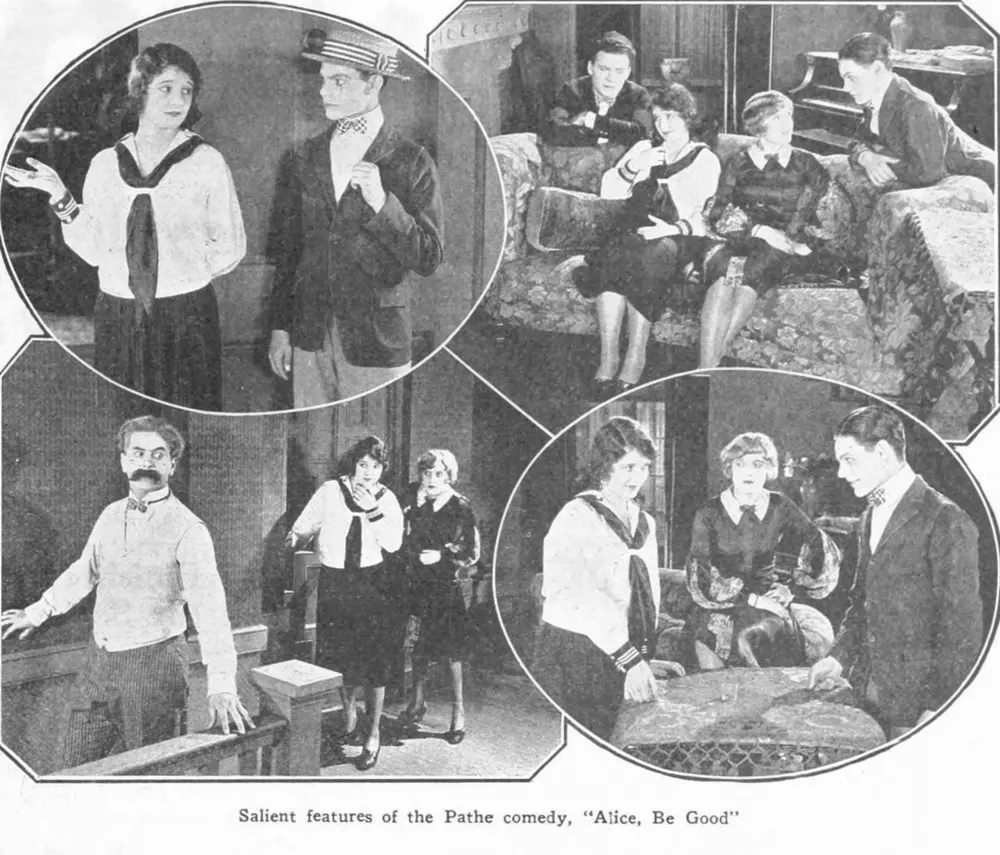
Is Alice Be Good worth watching today? Short answer: yes, but with a significant asterisk. This 1926 silent comedy is less a timeless piece of entertainment and more a fascinating historical artifact, offering a window into the nascent days of cinematic storytelling and the burgeoning youth culture of the Roaring Twenties.
It's a film for those with a genuine interest in silent cinema, film history, or a curiosity about the comedic sensibilities of nearly a century ago. It is emphatically not for viewers seeking modern pacing, sophisticated humor, or a deep, character-driven narrative.
This film works because it captures a raw, unpolished energy of youthful rebellion, anchored by relatable themes of defiance and consequence.
This film fails because its comedic beats are often broad and simplistic, struggling to translate effectively to a contemporary audience without the benefit of historical context or a particular fondness for the era's slapstick.
You should watch it if you appreciate the foundational elements of cinema, enjoy tracing the evolution of comedic timing, or simply want to see early performances from actors who would later gain more prominence.
Alice Be Good, directed by a collective including James Gruen and Harry McCoy, is a straightforward narrative of adolescent mischief. The plot, as simple as it is, taps into a universal theme: the desire for freedom and the inevitable clash with authority. Alice, played by Alice Day, embodies the quintessential flapper spirit, eager to shed the constraints of her father's rules for the thrill of a dance.
Her conspirators, Eddie (Eddie Quillan), Ruth (Ruth Taylor), and Danny (Danny O'Shea), form a mischievous quartet. Their plan to sneak out, steal the father's 'flivver' (an endearing term for a Ford Model T), and head to the dance hall is a classic setup for silent comedy, relying heavily on visual gags and the escalating chaos of their actions.
The film, brief as it is, manages to convey the exuberance of youth against the backdrop of parental disapproval. The 'flivver' itself becomes a character, a symbol of freedom that gradually deteriorates under the quartet's reckless joyride. This transformation from proud possession to battered wreck is where much of the film's physical comedy resides.
It’s a snapshot of a specific cultural moment, where the automobile was still a relatively new symbol of independence, and the generational gap felt particularly wide. The film doesn't delve deep into character psychology, but rather presents archetypes: the stern father, the rebellious daughter, the mischievous friends.
The direction in Alice Be Good is typical of early silent comedies, prioritizing clear visual storytelling and rapid-fire gags over nuanced camera work. The pacing is brisk, almost breathless, moving from the girls' bedtime to their escape, the car theft, the journey, and finally the dance hall with an episodic rhythm that keeps the energy high.
One of the standout sequences involves the boys helping the girls sneak out. The exaggerated tiptoeing, the clandestine signals, and the near-misses with the sleeping father are all classic silent film tropes executed with a certain charm. The humor stems from the visual irony and the audience's anticipation of discovery.
The journey with the flivver is where the film truly leans into its physical comedy. While the specifics of the 'considerably the worse for wear' damage are left to the imagination in the plot summary, silent films often depicted such destruction through increasingly frantic driving, near-collisions, and the gradual disintegration of the vehicle's parts. This culminates in a visual punchline as the battered car finally limps to the dance.
This focus on physical comedy, or slapstick, was a hallmark of the era. Directors like Mack Sennett, whose influence is palpable even in films not directly associated with Keystone, perfected this style. Here, the collective of writers and directors successfully orchestrate a series of escalating mishaps that are designed to elicit immediate, visceral laughter from the audience.
However, this reliance on broad physical humor can also be the film's undoing for modern audiences. The gags, while historically significant, often lack the layers or cleverness that later comedic forms would develop. It’s simple, direct, and sometimes, a little too predictable. The 'excitement in the place' at the dance hall, for instance, likely involves more chaos, perhaps a brawl or a chase, before the father's arrival – a standard comedic escalation.
The cast of Alice Be Good delivers performances in the broad, expressive style characteristic of silent cinema. Dialogue being absent, actors relied heavily on exaggerated facial expressions, body language, and pantomime to convey emotion and drive the narrative. Alice Day, in the titular role, is particularly engaging.
Day’s Alice is a spirited presence. Her expressions shift rapidly from mischievous delight to apprehension, and finally, to the mortification of being caught. She embodies the youthful energy required for such a role, making her a sympathetic, if somewhat reckless, protagonist. Her performance, even without words, clearly communicates her defiance and subsequent regret.
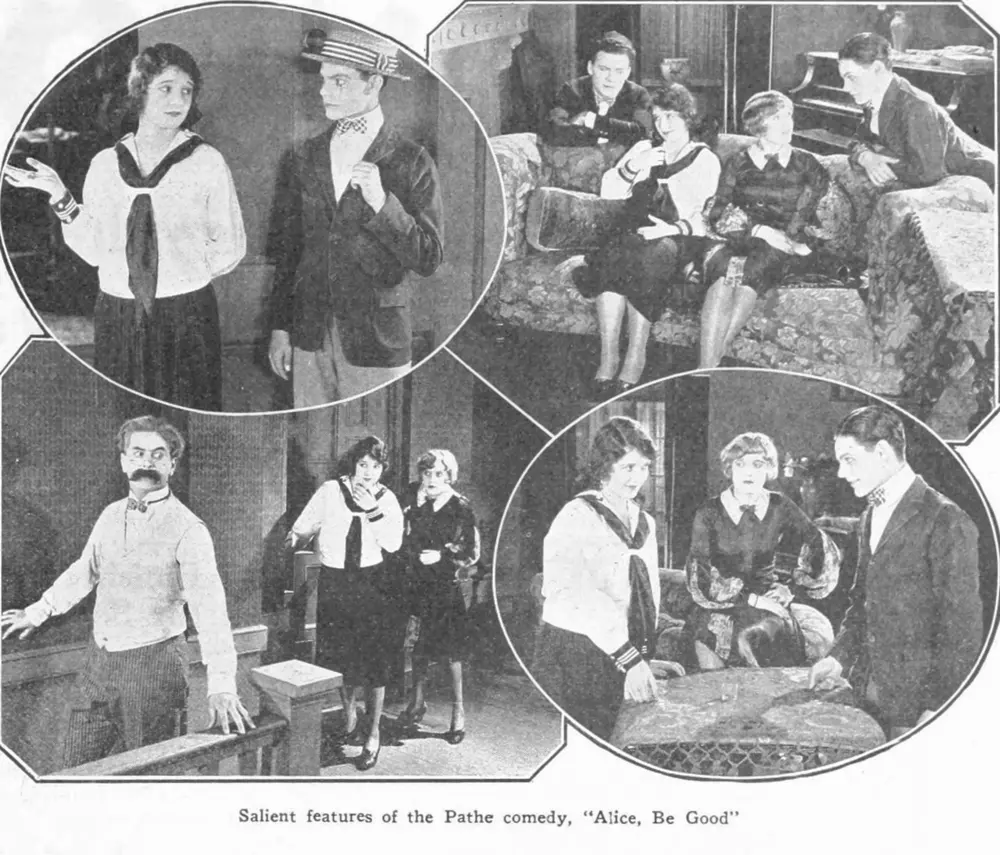
Eddie Quillan, as Eddie, provides a good foil, bringing a boisterous energy to the male contingent. Ruth Taylor and Danny O'Shea complete the quartet, each contributing to the ensemble's dynamic. Their collective portrayal of youthful exuberance is believable, even if their characters are not deeply explored.
Billy Gilbert and Irving Bacon, both of whom would go on to have extensive careers in sound films (Gilbert famous for his sneezes and Bacon for his common man roles), likely play supporting or cameo parts here. Their presence, even in minor roles, adds a layer of professionalism that elevates the overall quality. For instance, Gilbert's distinctive physicality might be used for a quick, memorable visual gag at the dance hall.
The father figure, likely played by William Searby or a similar character actor, is the archetypal stern patriarch. His anger upon discovering his wrecked car and his swift, decisive action in marching Alice home is a moment of pure, unadulterated silent film drama, conveyed through furious gestures and a stern countenance. This kind of over-the-top reaction was not merely acceptable but expected in the era.
One could argue that the performances, while effective for their time, occasionally feel a little too theatrical for modern tastes. The lack of subtle nuance can be jarring if one is not accustomed to the conventions of silent acting. However, for those willing to engage on its own terms, there's a certain charm in the directness of their expressions.
The cinematography in Alice Be Good is functional and straightforward, typical of the mid-1920s. Cameras were largely static, capturing scenes in wide or medium shots that allowed the physical comedy and expressive acting to take center stage. Close-ups would have been used sparingly, primarily for emotional emphasis during key moments, such as Alice's look of fear or her father's rage.
Lighting would have been basic, aiming for clarity rather than mood, often utilizing bright, even illumination. The sets, whether Alice’s bedroom or the dance hall, would be relatively simple, designed to provide a backdrop for the action without distracting from it. The focus is squarely on the characters and their antics.
The film's tone is overtly comedic, lighthearted for the most part, even with the looming threat of parental wrath. The humor is derived from the situational absurdity and the physical gags. There's a playful spirit that permeates the film, even as it builds towards the inevitable moment of reckoning.
Intertitles would have been crucial, providing exposition, dialogue, and setting the scene. They serve as the narrative glue, guiding the audience through the events and ensuring the plot remains comprehensible despite the absence of spoken words. The effectiveness of these intertitles would heavily influence the audience's engagement.
An unconventional observation: the true star of this film isn't Alice, but the ill-fated flivver. It undergoes a more dramatic and visible transformation than any human character, serving as both a vehicle for freedom and the ultimate evidence of youthful transgression. Its gradual destruction is, in a way, the film's most consistent visual gag.
Silent films occupy a unique, often challenging, space in modern viewing habits. For many, the lack of synchronized sound, the reliance on intertitles, and the often-exaggerated acting styles can be a barrier to entry. Alice Be Good, like many of its contemporaries, requires a certain amount of patience and an adjusted viewing lens.
Its enduring appeal lies primarily in its historical significance. It offers a direct lineage to the comedic forms that would evolve into the screwball comedies and farces of the sound era. Watching it is like examining the DNA of cinematic humor, seeing the foundational elements before they were refined and diversified.
However, the frustrations are equally palpable. The humor can feel dated, the narrative simplistic, and the pace, while brisk for a silent film, might still feel slow to an audience accustomed to rapid-fire editing and complex storylines. The absence of a musical score (unless a modern one is added) can also make the experience feel incomplete or less immersive.
I maintain a strong, debatable opinion: Silent films like Alice Be Good are more valuable as historical documents and academic studies than as pure entertainment for a casual, modern audience. While they hold immense charm for cinephiles, expecting a general viewer to derive the same level of enjoyment as they would from a contemporary blockbuster is unrealistic.
Yet, there's an undeniable magic in witnessing these early efforts. They showcase the ingenuity of filmmakers working within severe technical constraints, using pure visual storytelling to evoke laughter and emotion. It’s a testament to the power of the moving image itself.
Yes, Alice Be Good is worth watching for specific audiences. It is a valuable piece of film history. It demonstrates early comedic techniques. It is best for film students and silent film enthusiasts. Casual viewers might find it challenging.
Alice Be Good is a charming, if undeniably dated, piece of silent cinema. It stands as a valuable document of early American comedy and the burgeoning youth culture of the 1920s. While it might not deliver belly laughs to a modern audience, its historical significance and the raw energy of its performances offer a unique viewing experience.
It works. But it’s flawed. For those who approach it as an archaeological find rather than a direct competitor to modern entertainment, there's genuine value to be found. It’s a testament to the enduring power of simple stories and the foundational art of visual storytelling. A historical curio, not a timeless classic, but one worth unearthing if you have the inclination.
IMDb 4.8
1916
Community
Log in to comment.