DbcultAccessing Vault...
4.4/10
Senior Film Conservator
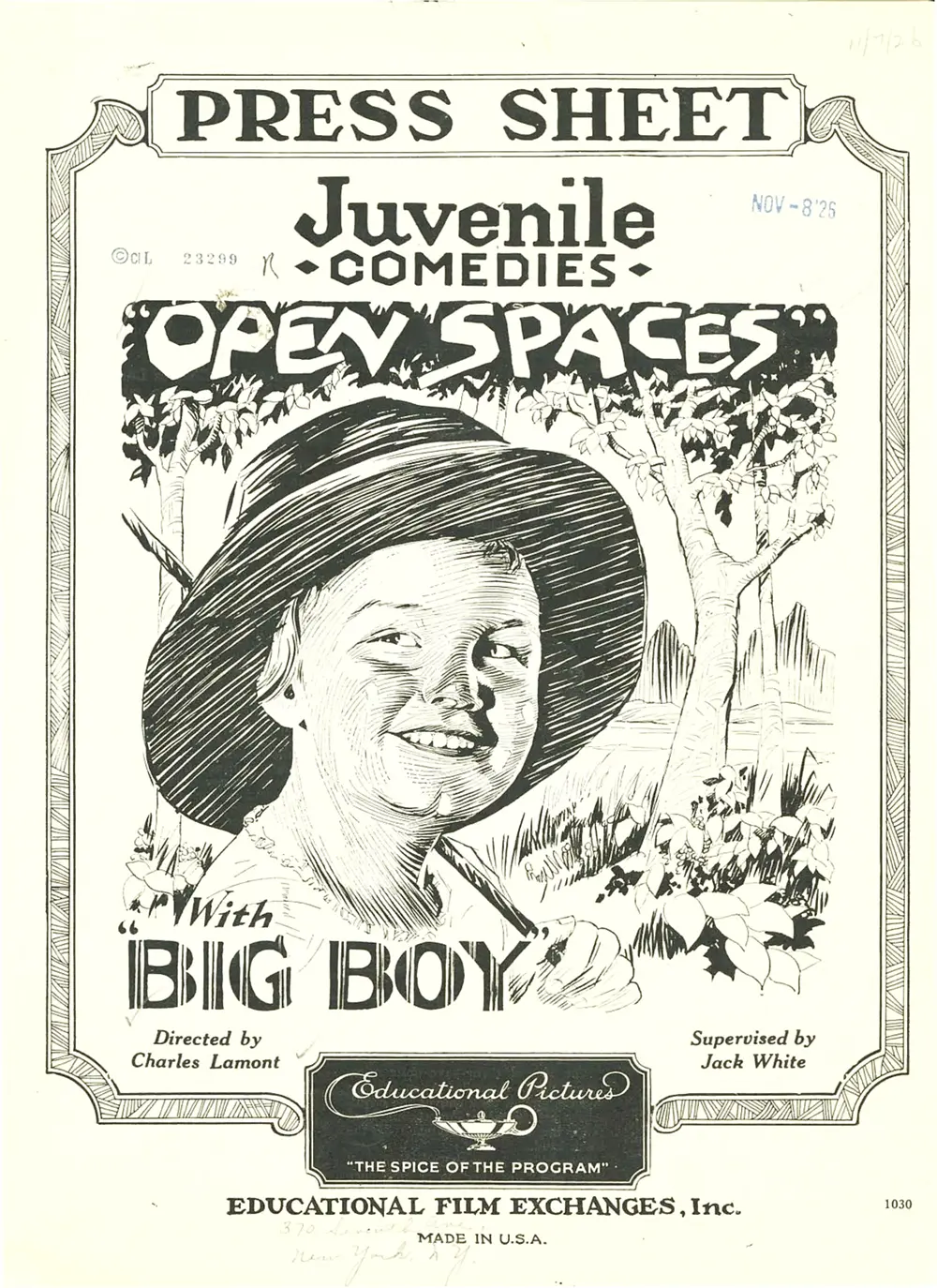
A definitive 4.4/10 rating for a film that redefined the boundaries of cult cinema. Open Spaces remains a cornerstone of transgressive art.
Is Open Spaces a silent comedy worth seeking out today? Short answer: yes, but only if you possess a deep-seated affection for the primitive, unpolished energy of early child-led comedies. This film is specifically for historians of the 'kid-com' genre and those who find charm in the low-stakes slapstick of the 1920s; it is decidedly not for anyone who requires a coherent narrative or high-definition visual storytelling.
The film exists in a strange cultural pocket. It lacks the sophisticated gag-construction of a Buster Keaton feature, yet it predates the more refined sentimentality of the later Our Gang shorts. It is raw, occasionally mean-spirited, and surprisingly surreal in its logic. If you are looking for a polished masterpiece, look elsewhere. If you want to see a kid catch a basket of fish using cheese in the middle of a road, you are in the right place.
1) This film works because Jack McHugh (Big Boy) has a remarkably expressive face that conveys a sense of existential exhaustion far beyond his years. Unlike many child actors of the era who overact to the point of distraction, McHugh plays the 'middle-child' angst with a grounded, relatable frustration.
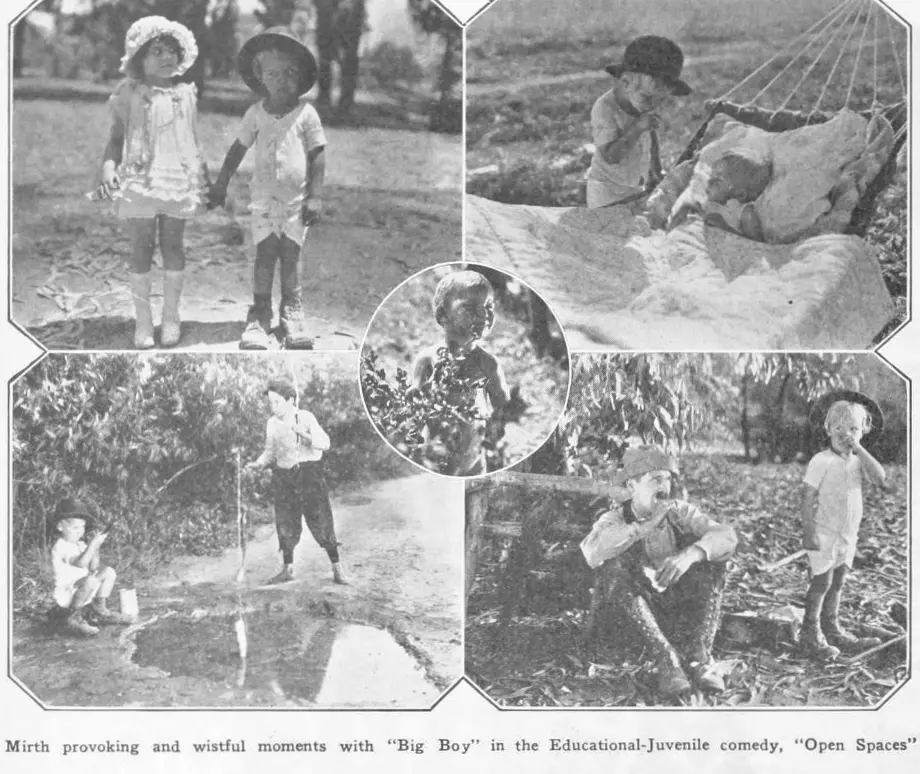
2) This film fails because the third act is a cluttered mess of unrelated tropes, including a loose circus animal and a shoehorned romance that feels entirely disconnected from the earlier, more effective character work established at the camp.
3) You should watch it if you are fascinated by the evolution of the 'underdog' archetype in American cinema or if you enjoy seeing how early filmmakers handled animal actors like Pal the Dog.
The most striking element of Open Spaces is its willingness to abandon reality for the sake of a punchline. In a sequence that feels more like a fever dream than a 1920s short, Big Boy decides to fish in the center of a dirt road. In any other film, this would be a visual metaphor for his stupidity. Here, it becomes a showcase for his accidental genius. The use of Limburger cheese as bait is a classic silent-era trope—smell as a visual medium—but the way the fish literally leap from the earth into his basket is a moment of pure, unadulterated surrealism.
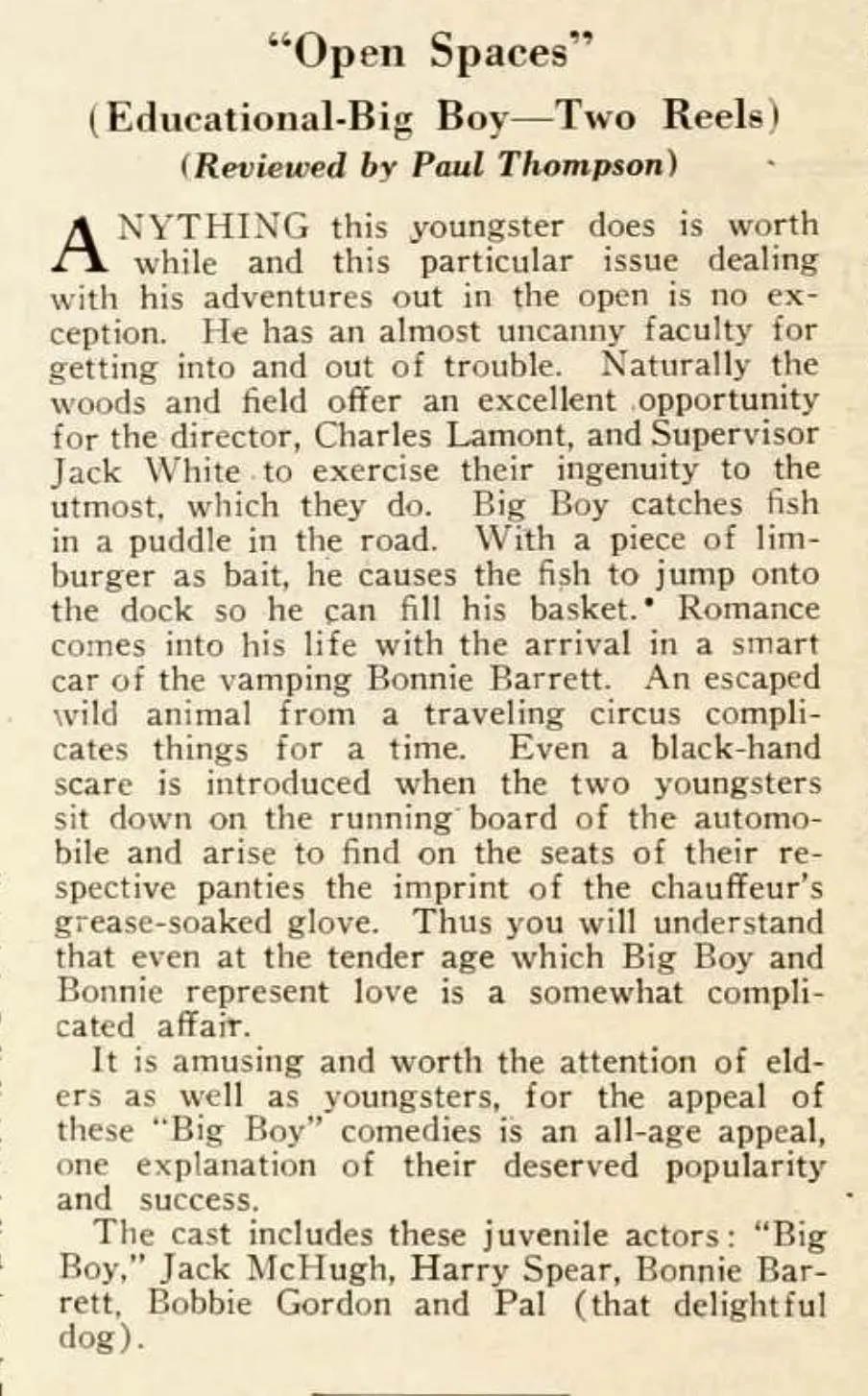
It works. But it’s flawed. The film struggles to maintain this level of creative absurdity, often falling back on tired tropes like the 'fat boy' being used as a literal target for a spear. While modern sensibilities might recoil at the physical abuse leveled at the character of the 'prize fat boy,' it serves as a reminder of the era's brutal approach to physical comedy. This isn't the soft, sanitized humor of modern children's media; it is a comedy of errors where the world is actively hostile to the protagonist.
Jack McHugh’s 'Big Boy' was a competitor to the more famous child stars of the time, and watching Open Spaces, one can see why he had a following. He doesn't beg for the audience's sympathy. When he is left behind to watch the baby, he doesn't cry; he enlists a dog to do the job for him. This pragmatism is refreshing. It stands in stark contrast to the overly theatrical performances found in films like Kaliya Mardan or even some of the more dramatic child roles in The Avalanche.
The cinematography is predictably static, yet the director makes excellent use of the 'open spaces' mentioned in the title. The contrast between the cramped, implied tenements of the city and the wide, chaotic camp provides a visual breath of air that the film desperately needs. However, the pacing is frantic to a fault. Scenes don't so much transition as they collide into one another. One moment we are discussing the 'Black Hand' threat, and the next, everything is 'peaches and cream' because a millionaire’s daughter smiled.
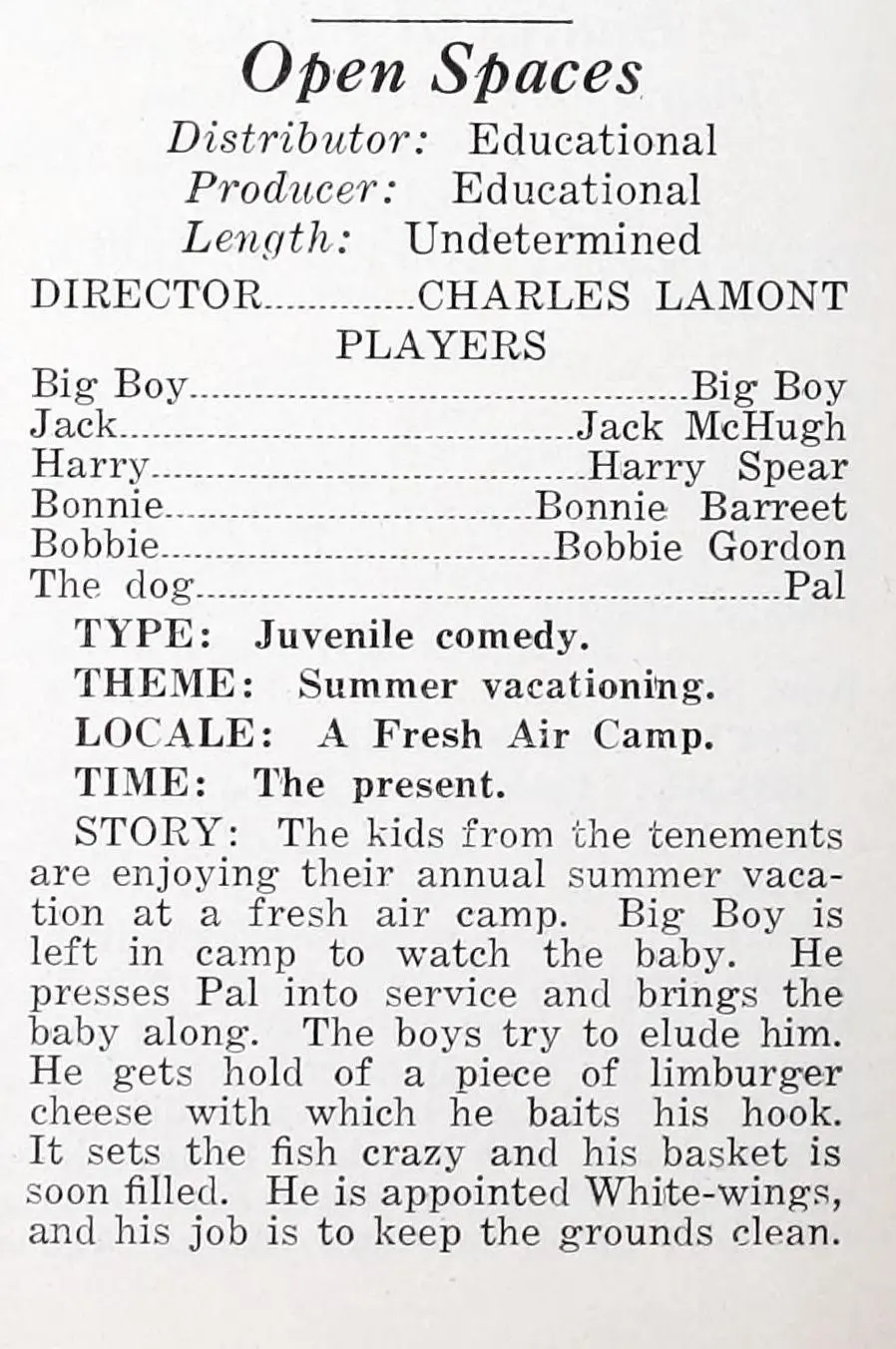
Directly speaking, Open Spaces is a historical curiosity rather than a timeless classic. It provides a fascinating window into the 'fresh air' movement of the early 20th century, where urban children were sent to the countryside to improve their health. As a film, it is a collection of moderately successful gags held together by the charisma of a child and a dog. If you enjoy the rhythmic, percussive nature of silent slapstick, you will find value here. If you find the lack of dialogue a barrier, this film will do nothing to change your mind.
Pros:
The chemistry between Jack McHugh and Pal the Dog is genuine and carries the film through its slower moments. The location shooting provides a genuine sense of time and place that studio sets of the era often lacked. The film also avoids the excessive sentimentality that plagued many silent films like Lights of London.
Cons:
The 'circus animal' subplot is a massive distraction that adds nothing to the character arc. The romance with Bonnie feels unearned and serves only to provide a 'happy ending' that the film didn't quite work for. Some of the physical gags are repetitive, relying too heavily on characters falling over for the sake of a laugh.
The direction in Open Spaces is functional, bordering on invisible. The goal was clearly to capture the stunts and the dog's reactions with as little interference as possible. This results in a film that feels more like a documentary of a chaotic summer camp than a directed piece of fiction. While this gives it an authentic energy, it lacks the visual flair seen in contemporary works like La Gioconda or the atmospheric tension of Das Todesgeheimnis.
"The film is a chaotic relic that proves that even in 1924, being a middle child was a cosmic joke that only a dog and a block of stinky cheese could fix."
The tone shifts wildly. It begins as a social commentary on the lives of tenement kids, moves into a surrealist comedy, and ends as a romantic farce. This lack of tonal consistency is common in short-form silent comedy, but here it feels particularly jarring because the 'Big Boy' character is so grounded. You want to stay with him in his struggle against the older boys, but the film keeps dragging him into circus-animal-related hijinks.
Open Spaces is a mid-tier silent comedy that is elevated by a strong lead performance and a few genuinely bizarre gags. It is a messy, loud (spiritually, if not literally), and occasionally brilliant short that captures the frantic energy of 1920s childhood. It isn't a masterpiece, but it is a fascinating artifact. If you have twenty minutes and an interest in the roots of the American underdog story, give it a watch. Just don't expect it to make much sense.
IMDb —
1918
Community
Log in to comment.