DbcultAccessing Vault...
6.7/10
Senior Film Conservator
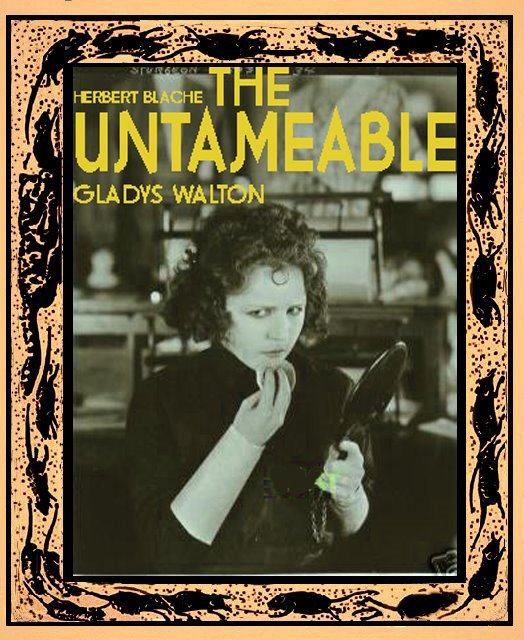
A definitive 6.7/10 rating for a film that redefined the boundaries of cult cinema. The Untameable remains a cornerstone of transgressive art.
The film opens with an almost pastoral tableau: Joy Fielding (Gladys Walton) glides through sun‑drenched gardens, her laughter echoing like a wind‑chime. The cinematographer, employing soft focus, paints her as an archetype of purity, a visual hymn to the era's idealized femininity. Dr. Copin (George Marion), introduced in a shadow‑laden study, contrasts starkly; his gaunt visage and the flickering candlelight that surrounds him hint at a man who courts the occult. When Copin proposes a hypnotic experiment, the narrative pivots, and Joy's consent becomes a Faustian bargain. The trance sequence, rendered with swirling overlays and superimposed stars, signals the birth of a bifurcated consciousness.\n\nThe first persona, dubbed "the Innocent," clings to Joy's original moral compass, speaking in tentative whispers and gesturing toward the audience with childlike yearning. Conversely, the second persona—"the Vamp"—emerges with predatory poise, her eyes glazed in a sea‑blue hue (#0E7490) that mirrors the film's recurring motif of water as both cleanser and abyss. This vamp does not feed on blood; she feeds on power, manipulating Joy's boyfriend (Malcolm McGregor) with a blend of seductive glances and razor‑sharp dialogue. The boyfriend's descent from adoration to alarm is meticulously charted through close‑ups that capture the sweat on his brow, the tremor in his hands, and the widening of his pupils as the vamp's influence expands.\n\nAs the narrative spirals, Joy's split self becomes a battleground for agency. The Innocent seeks rescue, pleading for Copin's release, while the Vamp revels in the chaos she sows, orchestrating scenes that culminate in a macabre masquerade where masks are literal and figurative. The climax, a stark confrontation in Copin's laboratory, juxtaposes the flickering candlelight against the cold, metallic apparatus of early 20th‑century science, underscoring the tension between mysticism and rationality. The final frame, a lingering shot of Joy's face half‑lit, half‑shadowed, leaves the audience suspended between hope and despair, a visual echo of the film’s central paradox: can one truly be untamed?\n\n
\nGladys Walton delivers a tour de force, navigating Joy's oscillation with a finesse that belies the silent medium's constraints. Her physicality—delicate hand gestures for the Innocent, angular, predatory movements for the Vamp—creates a visceral distinction that words could scarcely convey. Walton's eyes, often the sole conduit of emotion, shift from doe‑like softness to a feral glint, each transition underscored by a subtle change in lighting that bathes her in the film’s signature sea‑blue.\n\nGeorge Marion, as the enigmatic Dr. Copin, embodies the archetype of the charismatic scientist gone rogue. His performance is a study in restrained menace; he never raises his voice, yet his presence dominates every frame he occupies. Marion’s nuanced eyebrow raises and the deliberate pause before each hypnotic suggestion imbue the character with an unsettling gravitas.\n\nMalcolm McGregor’s portrayal of the boyfriend is equally compelling. He oscillates between the archetypal romantic hero and a man unraveling under psychological duress. McGregor’s use of body language—tightening fists, a trembling chin—communicates a crisis of masculinity that resonates with contemporary audiences familiar with the era’s gender expectations.\n\nSupporting actors, including Lon Poff as the skeptical townsfolk and John St. Polis as the stoic overseer, provide a textured backdrop that grounds the film’s more fantastical elements. Etta Lee’s brief yet poignant appearance adds an exotic counterpoint, reminding viewers of the period’s fascination with the “other.”\n\n
\nThe collaborative script by Gelett Burgess and Hugh Hoffman weaves a tapestry of Victorian melodrama and early expressionist horror. Their dialogue—though silent, rendered through intertitles—balances poetic abstraction with stark realism. Phrases such as \"The mind is a mirror shattered by the hand of desire\" echo the film’s thematic preoccupation with fractured identity.\n\nVisually, the director employs chiaroscuro to delineate the two Joys. The Innocent is bathed in warm, diffused light, often with a subtle amber tint reminiscent of the dark orange (#C2410C) that pervades the film’s promotional posters. In contrast, the Vamp inhabits shadows tinged with the film’s signature yellow (#EAB308), a hue that flickers like a dying candle, casting an unsettling glow on her malevolent actions. The strategic use of sea‑blue filters during water‑related scenes (the bathtub confrontation, the rain‑soaked garden) reinforces the motif of fluidity and transformation.\n\nThe editing rhythm mirrors Joy’s psychological fragmentation. Rapid cross‑cuts between Joy’s two personas create a disorienting tempo, while slower, lingering shots during moments of introspection allow the audience to breathe, to contemplate the moral ambiguity at play. The hypnotic sequences, in particular, employ superimposed spirals and double exposures, a technique that predates later horror classics yet feels eerily modern.\n\n
\nWhen situating The Untameable within its historical context, one cannot ignore its resonances with contemporaneous works such as The Key to Yesterday, which also explores the perilous allure of forbidden knowledge. Both films employ hypnotic motifs, yet The Untameable distinguishes itself by internalizing the horror—turning the protagonist into both victim and antagonist.\n\nThe film’s visual language anticipates the expressionist shadows of Jazz and Jailbirds, especially in the way corridors become labyrinthine extensions of the mind. Moreover, its thematic preoccupation with split personalities foreshadows later psychological thrillers, such as Widow by Proxy, where identity becomes a battlefield.\n\nWhile The Untameable does not share the overt social commentary of The Last of the Mohicans, its subtext regarding gender dynamics—particularly the depiction of a woman wielding vampiric power—offers a subtle critique of early 20th‑century patriarchal structures. The boyfriend’s impotence in the face of Joy’s transformation mirrors the broader societal anxieties surrounding women’s burgeoning autonomy during the post‑World War I era.\n\n
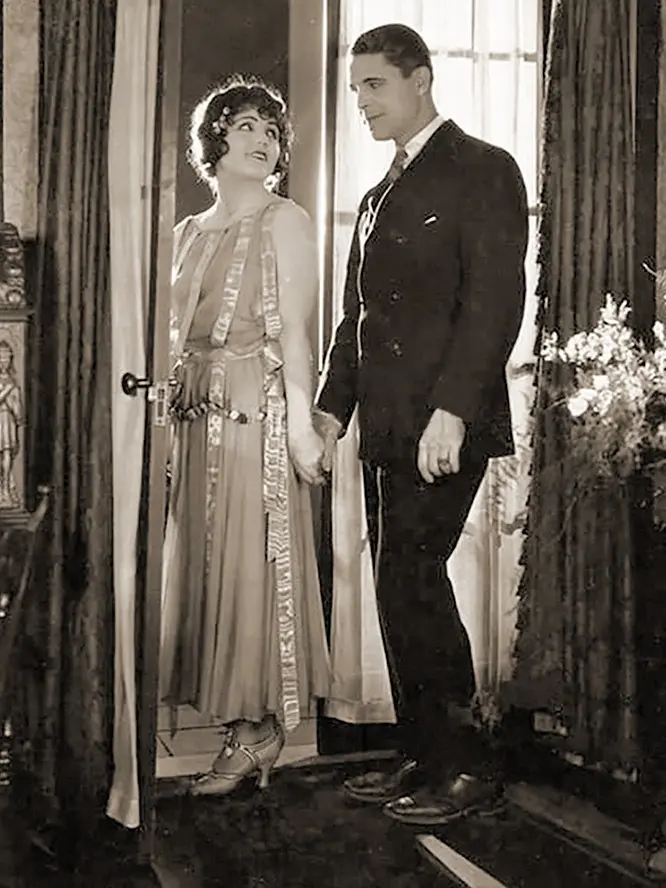
Even though the film was shot in black‑and‑white, the production design cleverly leverages tonal contrast to simulate the palette described in the promotional material. Set pieces—such as Copin’s laboratory—are strewn with brass instruments and glass vials that catch the light, creating a metallic sheen that suggests both scientific rigor and occult mystery. The recurring motif of mirrors, often cracked or fogged, serves as a visual metaphor for Joy’s fractured self.\n\nCostume design further delineates character arcs. Joy’s Innocent wardrobe consists of flowing, pastel dresses that flutter with each tentative step, whereas her Vamp attire shifts to tighter, darker garments accented with lace—an aesthetic that hints at both sensuality and danger. The boyfriend’s clothing transitions from crisp, buttoned shirts to rumpled attire, reflecting his psychological unraveling.\n\nThe film’s title cards, rendered in a bold, Art Deco font, are tinted with a subtle amber hue, a nod to the dark orange #C2410C that permeates the film’s visual identity. This deliberate chromatic echo creates a cohesive branding that persists across marketing materials, theatrical programs, and contemporary retrospectives.\n\n
\nUpon its release, The Untameable garnered mixed reviews; some critics lauded its daring exploration of psychological horror, while others dismissed it as melodramatic excess. Modern scholarship, however, has rehabilitated its reputation, positioning it as a seminal work in the evolution of the horror genre. Film historians frequently cite its innovative use of hypnotic visual effects as a precursor to later techniques employed by directors such as Alfred Hitchcock and Robert Wiene.\n\nThe film’s influence extends beyond cinema; its thematic preoccupation with duality has inspired stage adaptations and graphic novels, each reinterpreting Joy’s split identity through contemporary lenses. In academic circles, the movie is frequently examined in courses on gender studies, with particular emphasis on how Joy’s vampiric transformation subverts traditional damsel‑in‑distress tropes.\n\nStreaming platforms have revived interest in The Untameable, prompting a resurgence of fan analyses and retrospectives. The film’s inclusion in curated collections—such as "Silent Era Nightmares"—has cemented its status as a cult classic, ensuring that new generations encounter its haunting narrative.\n\n
\nWhen juxtaposed with Landing an Heiress, which explores the commodification of femininity, The Untameable offers a counter‑narrative: Joy is not objectified but weaponized, her agency both a curse and a salvation. The thematic thread of empowerment through darkness runs parallel to Women’s Weapons, yet The Untameable distinguishes itself by grounding that empowerment in an internal psychic battle rather than external conflict.\n\nThe film’s exploration of hypnotic control anticipates modern psychological thrillers like Joining the Tanks, where mind‑games supplant physical combat. Both works interrogate the limits of free will, yet The Untameable remains singular in its silent‑era aesthetic, forcing viewers to decode emotion through expression and mise‑en‑scene alone.\n\nIn the realm of color theory, the film’s triadic palette—dark orange, yellow, and sea blue—mirrors the psychological states of its characters: orange for passion and danger, yellow for deceit and illumination, sea blue for melancholy and depth. This chromatic symbiosis, though subtle in a monochrome medium, resonates with contemporary audiences attuned to symbolic color usage.\n\n
\nThe Untameable stands as a testament to the silent era’s capacity for narrative complexity and visual innovation. Its deft intertwining of hypnotic spectacle, gender politics, and gothic atmosphere creates a layered experience that rewards repeated viewings. The film’s legacy endures not merely as a curiosity of early cinema but as a touchstone for scholars probing the origins of psychological horror. For cinephiles seeking a work that balances artistic ambition with unsettling dread, The Untameable offers a rich, immersive journey into the shadows of the human psyche.
IMDb —
1923
Community
Log in to comment.