DbcultAccessing Vault...
Cult Review
Senior Film Conservator
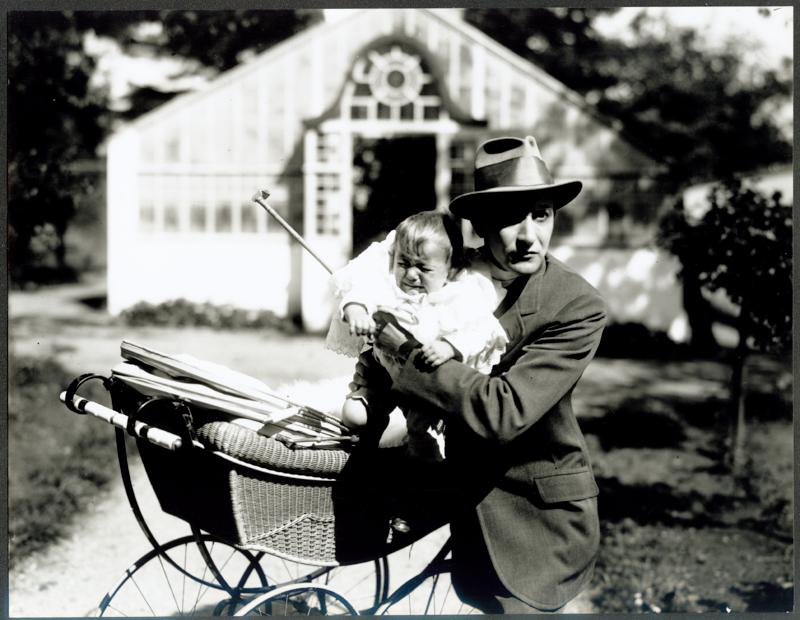
There’s an undeniable allure to the silent era, a period where storytelling transcended spoken dialogue, relying instead on the visceral power of visual spectacle and the nuanced artistry of pantomime. Among the many forgotten or underappreciated gems of this epoch, "Manden med Staalnerverne" (The Man with Nerves of Steel) stands as a testament to Danish cinema's early prowess in crafting gripping thrillers. To label it merely a 'thriller' feels reductive, however; it’s a masterclass in tension, character study, and the intricate dance between good and evil, all conveyed through the potent language of the moving image. The film, a dazzling display of early cinematic technique, plunges its audience into a world of industrial espionage and personal vindication, where the stakes are not merely financial but deeply existential.
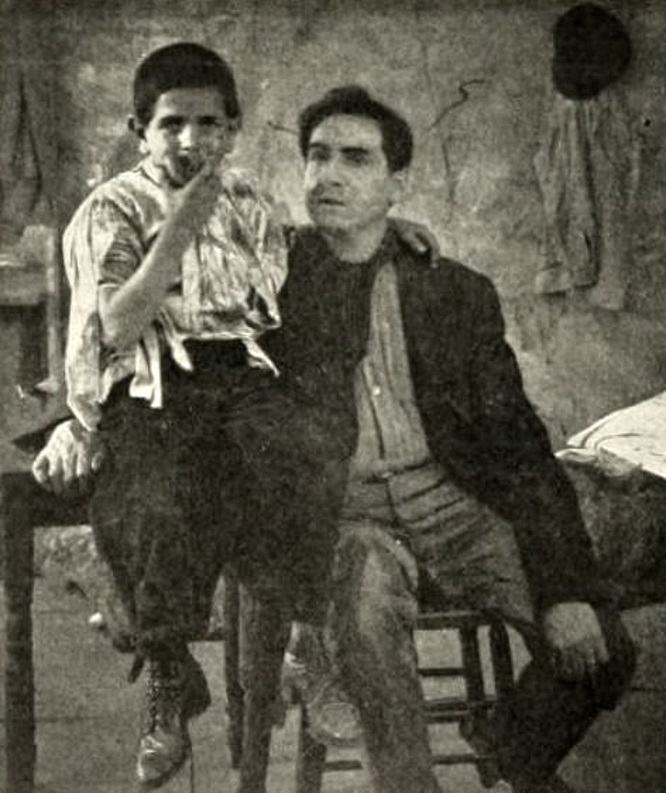
The narrative, a robust framework upon which the film's artistry is draped, introduces us to Erik Holm, portrayed with a compelling blend of quiet intellect and burgeoning resolve by Kai Lind. Holm is no swashbuckling hero from the outset; he is an engineer, a man of blueprints and calculations, whose brilliance in designing a revolutionary, silent-running engine unwittingly thrusts him into a maelstrom of international intrigue. His invention, a device capable of transforming naval power or global transport, becomes the object of covetous desire for the nefarious Baron von Harten, a character embodied with chilling precision by Philip Bech. Bech's portrayal of von Harten is a marvel of silent villainy, his every gesture, every cold stare, conveying a depth of malevolence that needs no spoken word. He is not merely a thief of intellectual property, but a puppeteer of circumstances, meticulously framing Holm for the very crime he himself orchestrates.
The initial injustice meted out to Holm, a man wrongly accused and publicly disgraced, forms the emotional core of the film. We witness his transformation from a bewildered victim to a determined fugitive, a journey that demands not just physical endurance but an extraordinary psychological fortitude. This metamorphosis is where the film earns its evocative title. Holm’s 'nerves of steel' are not a pre-existing trait but rather a quality forged in the crucible of adversity. His escape from custody, a sequence executed with admirable pace and ingenuity for its time, marks the true beginning of his odyssey. It is a moment reminiscent of the high-stakes escapes seen in later action films, yet here, it is imbued with a raw, almost desperate urgency that feels profoundly human.
Amidst the escalating danger, Holm finds solace and strength in his fiancée, Elin, brought to life by the luminous Marie Dinesen. Dinesen’s performance is a delicate balance of vulnerability and fierce loyalty. She is not a damsel in distress, but an active participant in Holm’s struggle, her unwavering belief in his innocence serving as a vital counterpoint to the world's condemnation. Her quiet acts of defiance and her resourceful aid to Holm underscore the film's subtle exploration of companionship and trust under duress. Their romance, depicted through tender glances and shared anxieties rather than overt declarations, feels authentic and deeply moving, providing much-needed emotional warmth against the film's darker undertones.
The supporting cast further enriches the tapestry of the narrative. Alma Hinding, as the enigmatic Lena, von Harten’s accomplice, adds a compelling layer of moral ambiguity. Her character is a fascinating study in conflicting loyalties, her actions often suggesting a deeper, more complex motivation than mere villainy. Is she a victim of circumstances, a pawn in von Harten's game, or a willing participant with her own hidden agenda? Hinding’s nuanced portrayal keeps the audience guessing, her expressive eyes conveying a multitude of unspoken thoughts. Similarly, Robert Schmidt, as Inspector Petersen, offers a delightful portrayal of a lawman who, despite his initial pursuit of Holm, possesses an innate sense of justice. His slow dawning realization of Holm’s innocence and his gradual shift from antagonist to unwitting ally provides moments of both tension and understated humor, a common, effective trope in silent thrillers that often humanizes the authorities.
The film’s direction, while not attributed to specific writers in the provided information, demonstrates a sophisticated understanding of visual storytelling. The use of carefully composed shots, dramatic lighting, and dynamic editing creates an immersive experience. Consider the chase sequences: from daring rooftop leaps across the urban sprawl to tense confrontations in dimly lit back alleys, each scene is meticulously choreographed to maximize suspense. The camera work, even in its nascent form, manages to convey a sense of rapid movement and impending peril. One particular highlight, the climactic showdown aboard a speeding train, is a masterstroke of early action filmmaking. The confined spaces, the relentless motion, and the ticking clock elements combine to create an almost unbearable tension. It’s a sequence that could stand proudly alongside later, more technologically advanced thrillers, showcasing the enduring power of well-executed narrative and visual ingenuity.
The thematic resonance of "Manden med Staalnerverne" extends beyond its thrilling plot. It delves into universal themes of justice, betrayal, technological ethics, and the indomitable human spirit. Holm’s struggle is not just to clear his name, but to reclaim his identity and his place in a society that has wrongfully condemned him. The film subtly questions the unchecked ambition of industrial power and the moral compromises made in the pursuit of wealth and influence, a theme that remains profoundly relevant today. The silent film medium, in its reliance on visual metaphor and symbolic action, often excelled at conveying such grand themes without resorting to heavy-handed exposition.
Comparing it to other films of its era, one might draw parallels to the psychological intensity found in The Student of Prague, though "Manden med Staalnerverne" grounds its internal struggles in external, tangible threats rather than doppelgänger anxieties. The sense of a man against overwhelming odds, fighting for his reputation and survival, echoes the rugged individualism often explored in American Westerns like The Love Route or even the wilderness survival narratives of The Chechako, albeit transposed to an urban, industrial setting. There's a certain epic scope to Holm's journey, much like the broader societal critiques found in films such as The Jungle, but here, the focus remains tightly on the personal struggle of the individual against systemic corruption.
The performances, as noted, are central to the film’s lasting impact. Kai Lind, with his expressive face and controlled physicality, perfectly embodies the quiet hero. His transformation from an earnest intellectual to a man capable of extraordinary feats of courage is utterly convincing. Marie Dinesen, as Elin, radiates an inner strength that makes her a formidable, yet entirely believable, partner to Holm. Her scenes, often played with a subtle intensity, highlight the emotional stakes of the narrative. And Philip Bech, as the Baron, crafts a villain of memorable stature, his menacing presence a constant shadow over Holm's every move. The interplay between these actors, achieved through gesture and facial expression, creates a rich emotional landscape that modern audiences, accustomed to dialogue, might find surprisingly potent.
The film's technical achievements, particularly in its set design and cinematography, deserve special mention. The industrial backdrops, the grand interiors of von Harten's estate, and the gritty realism of the city streets all contribute to a believable, immersive world. The lighting, often stark and dramatic, enhances the mood of suspense and danger, casting long shadows that mirror the moral ambiguity of certain characters. The train sequence, in particular, showcases a remarkable command of practical effects and location shooting for its time, lending an authentic sense of scale and urgency to the climax. It's easy to overlook the complexities involved in staging such a sequence in the early days of cinema, but its execution here is nothing short of brilliant.
Indeed, the enduring appeal of "Manden med Staalnerverne" lies in its ability to transcend its historical context. While it offers a fascinating glimpse into the filmmaking conventions and societal concerns of the early 20th century, its core narrative of a man fighting for justice against overwhelming odds is timeless. It is a story that resonates across generations, reminding us of the human capacity for resilience, courage, and the unwavering pursuit of truth. For cinephiles and casual viewers alike, it serves as a powerful reminder that compelling storytelling knows no temporal bounds and requires no spoken word to stir the soul.
The film's pacing, another crucial element, is remarkably effective. It builds suspense gradually, interspersing moments of intense action with quieter, character-driven scenes that allow the audience to connect with Holm's plight. This ebb and flow prevents the narrative from becoming exhausting, ensuring that each peak of excitement feels earned and impactful. Unlike some contemporaries that struggled with maintaining narrative coherence or consistent rhythm, "Manden med Staalnerverne" demonstrates a sophisticated understanding of cinematic tempo. One might even argue that its narrative structure, with its clear build-up, escalating stakes, and satisfying resolution, could serve as a blueprint for thrillers many decades its junior.
Ultimately, "Manden med Staalnerverne" is more than just a historical artifact; it is a vibrant, engaging piece of cinema that continues to captivate. It’s a testament to the power of silent film to convey complex emotions and thrilling narratives with a unique elegance. For those seeking to explore the rich tapestry of early European cinema, or simply to immerse themselves in a well-crafted story of heroism and redemption, this film is an essential viewing experience. Its legacy, though perhaps not as widely celebrated as some of its contemporaries, is etched in the enduring quality of its storytelling and the powerful performances that bring its characters to life. It stands as a proud example of the foundational strength of Danish filmmaking, a thrilling journey into a bygone era, yet one that speaks with clarity and power to the present day.
IMDb —
1935
Community
Log in to comment.