DbcultAccessing Vault...
5.5/10
Senior Film Conservator
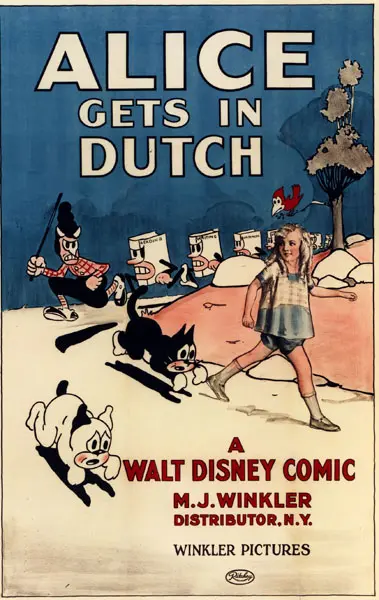
A definitive 5.5/10 rating for a film that redefined the boundaries of cult cinema. Alice Gets in Dutch remains a cornerstone of transgressive art.
Stepping back into the nascent years of cinematic artistry, one encounters 'Alice Gets in Dutch' (1924), a delightful artifact from the burgeoning imagination of a young Walt Disney. This particular entry in the 'Alice Comedies' series stands as more than mere entertainment; it's a fascinating historical document, a testament to the audacious experimentation that defined early filmmaking. Far from being a mere curiosity, the film offers a rare glimpse into the foundational techniques that would eventually shape the animation industry, blending live-action footage with hand-drawn characters in a manner that was truly revolutionary for its time. It invites us to consider the boundless potential seen by those pioneers, crafting narratives that defied the constraints of reality through the magic of the moving image. The film, unburdened by modern expectations of seamless CGI or complex narrative arcs, instead thrives on its raw ingenuity and the sheer charm of its premise.
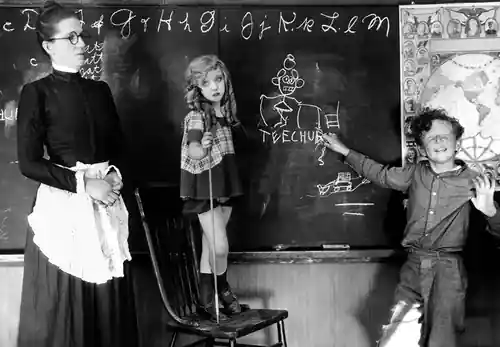
The narrative, simple yet profoundly resonant, begins with a familiar scene of childhood transgression. Alice, portrayed with captivating vivacity by Virginia Davis, finds herself in the unenviable position of a classroom outcast, relegated to the corner with the infamous dunce's cap. This mundane punishment, however, serves as a catalyst for an extraordinary flight of fancy. As the tedium of her imposed solitude sets in, Alice's mind, untethered by the strictures of the classroom, embarks on a fantastical reverie. Her surroundings dissolve, replaced by a vibrant, animated world where she cavorts freely with a whimsical assortment of animal companions. This seamless transition from the stark reality of the classroom to the exuberant realm of imagination is where the film truly shines, showcasing the nascent power of animation to transport audiences to impossible places. Virginia Davis, a child star of considerable talent, navigates this dual reality with an endearing innocence, her expressions conveying both the initial boredom and the subsequent joy of her dream world.
The dream quickly takes a dramatic turn as her stern teacher, Mrs. Hunt, intrudes upon this idyllic scene, transformed into an animated antagonist. With a wave of her hand, she summons a formidable 'book army' – an ingenious visual metaphor for the oppressive weight of academic authority – to pursue Alice and her animal friends. This sequence is a masterclass in early animated chase scenes, imbued with a kinetic energy that belies the rudimentary techniques of the era. The ensuing pursuit is both exhilarating and amusing, a testament to the creative minds behind the production. The animators imbue each book with a distinct personality, transforming what could have been a static element into a dynamic and somewhat menacing force. It's a delightful subversion of the typical classroom environment, where knowledge itself becomes an instrument of control, a theme that resonates even today.
Alice, demonstrating remarkable pluck and leadership, rallies her animal companions, forming them into an impromptu army to defend against the teacher's literary legion. The conflict escalates further with the introduction of a cannon – an unexpected, yet perfectly logical, escalation within the dream logic of the film. The teacher's animated cannon seems to gain the upper hand, but Alice's resourceful animal friends, with a touch of classic slapstick ingenuity, construct their own counter-weapon from a junk heap. Their chosen ammunition? Pepper. This moment, both humorous and inventive, highlights the film's playful spirit and its willingness to embrace the absurd. The battle, waged with such peculiar weaponry, is a delightful spectacle, a joyous symphony of animated chaos that pits youthful imagination against rigid authority. The performances, particularly from Mrs. Hunt as the formidable, if animated, teacher, and the uncredited voice work (if any existed, which is unlikely for early silent animation) and physical comedy of the animal characters, elevate these simple gags into memorable moments.
'Alice Gets in Dutch' is not merely an isolated film; it is a crucial chapter in the origin story of Walt Disney and his burgeoning studio. The 'Alice Comedies' series, initiated in 1923, provided a vital testing ground for Disney's innovative blend of live-action and animation, a technique he would refine and eventually transcend. These films, produced by the fledgling Laugh-O-Gram Studio and later by the Disney Brothers Studio, were instrumental in establishing Disney's reputation for creativity and technical ambition. While films like The Fortune Teller or even the early serialized thrillers like Fantomas - On the Stroke of Nine were exploring different narrative frontiers, Disney was carving out a niche in whimsical fantasy, pushing the boundaries of what cinematic storytelling could achieve with limited resources. The series was a stepping stone, a proof of concept that demonstrated the viability and appeal of animated characters interacting with a real world, a concept that would later be perfected in projects like 'Who Framed Roger Rabbit?' decades later.
The technical challenges of integrating live-action footage with cel animation in the 1920s were immense. Each frame required painstaking attention, aligning the drawn characters with the filmed background and foreground elements. The animators, including the likes of Ub Iwerks, were pioneers in every sense of the word, developing techniques that would become standard practice in the industry. The seamlessness, or rather, the charmingly apparent effort, of these integrations in 'Alice Gets in Dutch' speaks volumes about their dedication. It’s a far cry from the sophisticated visual effects we see in modern cinema, but its charm lies precisely in this handcrafted quality. Comparing it to the more straightforward documentary style of a film like Armenia, the Cradle of Humanity under the Shadow of Mount Ararat, which aimed for realism, 'Alice Gets in Dutch' deliberately embraced artifice to create a new kind of reality. The film's aesthetic, a blend of the familiar and the fantastic, creates a unique visual language that captures the essence of childhood imagination – where the ordinary can suddenly become extraordinary.
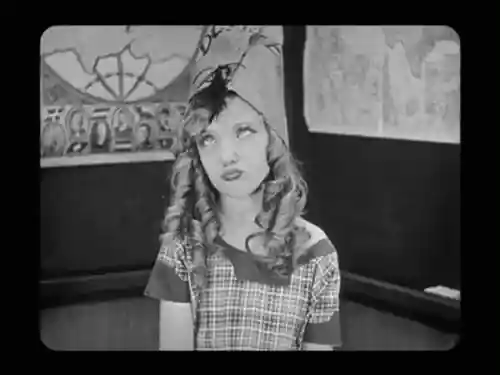
The live-action component of 'Alice Gets in Dutch' is anchored by Virginia Davis's captivating performance as Alice. Her ability to convey emotion and interact convincingly with unseen animated characters is crucial to the film's success. In an era where silent film acting relied heavily on exaggerated gestures and facial expressions, Davis delivers a remarkably nuanced portrayal of a child's inner world. Her expressions of boredom, mischief, joy, and eventual determination are all clearly articulated, providing a relatable human core to the fantastical proceedings. The casting of child actors in early cinema was often a hit-or-miss affair, but Davis clearly possessed a natural charisma that Disney recognized and leveraged throughout the 'Alice Comedies' series.
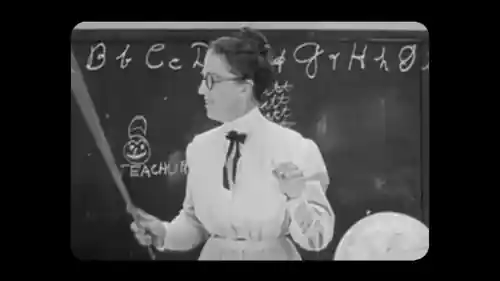
Mrs. Hunt, as the teacher, also plays a pivotal role, even if her on-screen time is limited before her animated transformation. Her stern demeanor sets the stage for Alice's rebellion, embodying the very authority figure from whom Alice seeks escape. The transformation of Mrs. Hunt into an animated, cannon-wielding antagonist is a brilliant visual representation of how a child's perception can magnify and distort adult figures within their imaginative landscape. While other cast members like Tommy Hicks, David F. Hollander, Marjorie Sewell, Spec O'Donnell, and Leon Holmes are listed, their specific contributions are often less prominent, a common characteristic of early short films focusing on a central protagonist. Their presence, however, adds to the authentic classroom setting that grounds Alice's subsequent fantastical journey. The uncredited writers, a common practice in the nascent film industry, crafted a simple yet effective premise that allowed for maximum visual creativity, a hallmark of these early animated shorts.
'Alice Gets in Dutch' is, at its heart, a celebration of childhood imagination and a subtle commentary on the often-conflicting worlds of children and adults. Alice's daydream is not merely a flight of fancy; it's an act of mental rebellion against the dullness and discipline of the classroom. Her transformation of the teacher into a cartoon villain and the books into an army symbolizes the child's perception of authority figures and the often-overwhelming nature of academic demands. This theme of imaginative escape finds echoes in other forms of popular entertainment of the era, though perhaps not with the same visual flair. While a film like Le peripezie dell'emulo di Fortunello e compagni might offer its own brand of whimsical adventure, 'Alice Gets in Dutch' grounds its fantasy in a relatable, everyday scenario, making Alice's journey all the more poignant.
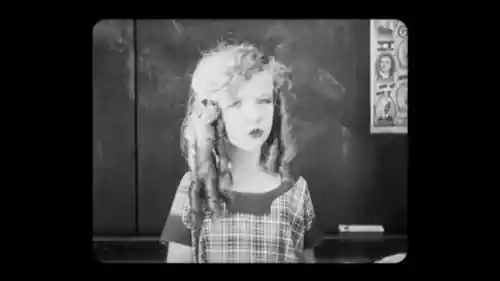
The film also subtly explores the power dynamic between child and adult. In her dream, Alice is not a passive victim but an active participant, a leader who organizes her animal friends to confront the animated teacher. This agency is empowering, allowing Alice to momentarily invert the power structure she experiences in real life. The pepper cannon, a weapon of playful irritation rather than destruction, further emphasizes the child's approach to conflict resolution – a desire to annoy and deter rather than truly harm. This playful subversion of serious battle tactics aligns with the innocent nature of childhood fantasies. It provides a stark contrast to the more serious, often violent, conflicts depicted in contemporary Westerns like Bull Arizona - The Legacy of the Prairie (Das Vermachtnis der Prarie) or Pure Grit, which operated in an entirely different thematic universe.
To fully appreciate 'Alice Gets in Dutch,' it's essential to place it within the broader context of 1920s cinema. This was an era of immense innovation, where filmmakers were still discovering the language of the medium. While narrative features like A Pair of Sixes were refining comedic structures and melodramas such as Her Moment or What Love Will Do explored human emotion, Disney was pushing the boundaries of visual effects and character animation. The 'Alice Comedies' were a precursor to the fully animated shorts that would eventually define the studio, demonstrating Disney's early grasp of character personality and visual storytelling. Even seemingly mundane films like Call a Taxi or Monty Works the Wires, though operating in a different genre, shared the same silent film conventions of visual storytelling, relying on pantomime and visual gags to convey meaning.
The film's abrupt return to reality at the end serves as a poignant reminder of the ephemeral nature of childhood daydreams. Alice is awakened, and the fantastical battle dissolves, leaving her once again in the quiet, mundane corner of her classroom. This ending, rather than diminishing the preceding adventure, highlights its significance as an internal journey. It underscores the idea that imagination is a powerful tool for coping with reality, a private sanctuary where the ordinary can be transformed into the extraordinary. This narrative structure, where a dream sequence resolves back into reality, was a common trope, but its execution here feels particularly fresh due to the innovative animation.
The legacy of 'Alice Gets in Dutch' and the entire 'Alice Comedies' series is immense. They were foundational for Walt Disney, providing him with the experience, the technical understanding, and the creative confidence to move on to greater projects, eventually leading to the creation of Mickey Mouse and the golden age of animation. Without these early experiments, it's difficult to imagine the trajectory of the Disney studio. These films are not just historical footnotes; they are vibrant, engaging pieces of cinema that continue to charm and impress with their ingenuity. They remind us that even in the simplest of stories, told with the most rudimentary of tools, profound creativity can shine through. Films exploring more serious themes, like the dramatic serial Beatrice Fairfax Episode 9: Outside the Law or the social commentary of Don't Call Me Little Girl, occupied a different space in the cinematic landscape, but all contributed to the rich tapestry of early film.
Revisiting 'Alice Gets in Dutch' today offers more than just a historical curiosity; it provides genuine delight. The film’s charm lies in its unpretentious ambition and its pure, unadulterated joy in storytelling. It speaks to the universal experience of childhood, of finding wonder and adventure in the most unexpected places. The blend of live-action and animation, while primitive by today's standards, possesses a unique aesthetic appeal, a handmade quality that is often lost in the digital age. It's a reminder of a time when cinema was still very much an experimental art form, constantly pushing boundaries and inventing new visual languages. Even films like June Madness, a romantic drama, or the epic historical narrative of Michael Strogoff, while vastly different in scope and genre, shared the silent film's reliance on visual storytelling and the audience's active engagement to fill in the narrative gaps.
In conclusion, 'Alice Gets in Dutch' is a captivating piece of cinematic history, a testament to the power of imagination and the pioneering spirit of early animators. It’s a film that, despite its age, retains a vibrant energy and a timeless appeal. For anyone interested in the origins of animation, the early career of Walt Disney, or simply a charming, imaginative short film, 'Alice Gets in Dutch' is an essential viewing experience. It reminds us that even the simplest stories, when told with ingenuity and heart, can leave an indelible mark on the cultural consciousness and pave the way for entirely new forms of artistic expression. It's a foundational text in the canon of animated cinema, a delightful little gem that continues to sparkle brightly almost a century after its creation.
IMDb —
1927
Community
Log in to comment.