DbcultAccessing Vault...
6.7/10
Senior Film Conservator
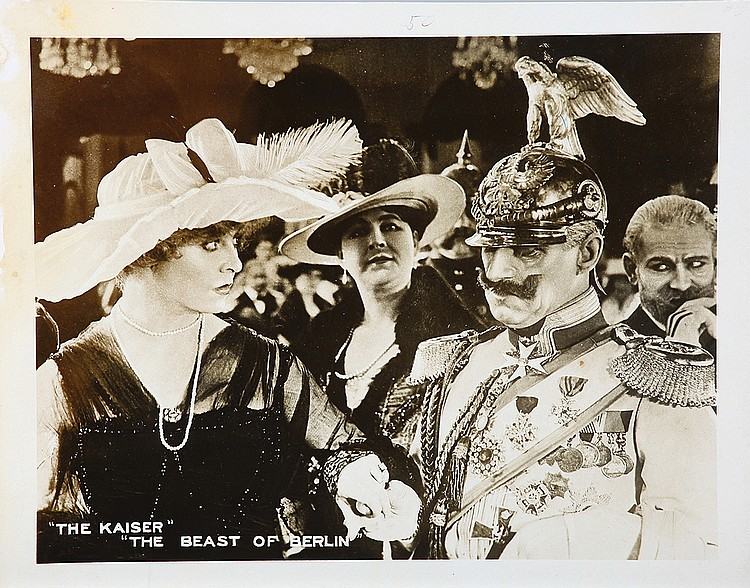
A definitive 6.7/10 rating for a film that redefined the boundaries of cult cinema. The Kaiser, the Beast of Berlin remains a cornerstone of transgressive art.
In the annals of cinematic history, few films encapsulate the raw, unbridled fervor of wartime propaganda quite like Rupert Julian's 1918 epic, The Kaiser, the Beast of Berlin. Released at the height of American involvement in the First World War, this motion picture was not merely entertainment; it was a potent instrument of national morale, a visual broadside aimed squarely at galvanizing public opinion against the German Empire and its titular leader, Kaiser Wilhelm II. Far from a nuanced historical drama, it presented a vivid, often sensationalized, narrative designed to paint a clear picture of good versus evil, with the Allied forces occupying the moral high ground and the Kaiser embodying an almost supernatural malevolence. Its theatrical run was not just a series of screenings, but a communal experience, a rallying cry for a nation embroiled in a conflict that demanded unwavering resolve.
The film’s very existence speaks volumes about the power of nascent cinema as a tool for mass communication and persuasion. In an era before widespread radio and television, the silver screen offered an unparalleled platform to disseminate messages, shape perceptions, and incite patriotic sentiment. The Kaiser, the Beast of Berlin masterfully exploited this potential, transforming complex geopolitical realities into a digestible, emotionally charged spectacle. It wasn't concerned with historical accuracy in the academic sense, but rather with emotional truth, with fostering a collective identity rooted in opposition to a clearly defined enemy. This approach, while perhaps jarring to modern sensibilities accustomed to more subtle forms of storytelling, was remarkably effective in its contemporary context.
Perhaps the most compelling aspect of The Kaiser, the Beast of Berlin is the audacious decision by Rupert Julian to not only direct the film but also to portray the central antagonist, Kaiser Wilhelm II. This dual role granted him an unparalleled degree of control over the film's message and aesthetic, allowing him to imbue the character with a specific, deeply menacing quality that resonated powerfully with contemporary audiences. Julian’s performance as the Kaiser is a masterclass in melodramatic villainy, a caricature crafted with meticulous attention to detail designed to elicit visceral reactions of disgust and hatred. He eschews any semblance of historical complexity, opting instead for a portrayal that emphasizes the Kaiser's perceived arrogance, cruelty, and insatiable lust for power.
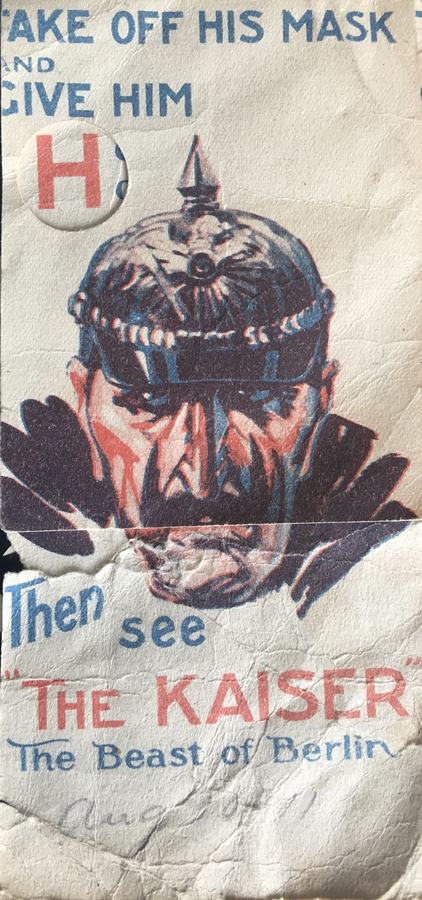
Julian’s Wilhelm II is not a statesman wrestling with difficult decisions, but a theatrical despot, prone to dramatic pronouncements and self-aggrandizing gestures. His facial expressions are often contorted into sneers or fits of rage, his posture stiff and imperious, signifying a man consumed by his own delusions of grandeur. This portrayal was not merely an artistic choice; it was a deliberate political statement, intended to dehumanize the enemy and simplify the moral stakes of the war. By presenting the Kaiser as a singular, identifiable source of evil, the film provided a tangible target for the collective anxieties and frustrations of the American public. This direct, unambiguous characterization was a hallmark of propaganda cinema of the era, much like the clear-cut heroes and villains often depicted in adventure serials or patriotic dramas of the period. Julian’s own direction undoubtedly guided this performance, ensuring every gesture and every glare served the overarching narrative of villainization.
The script, co-written by Elliott J. Clawson and Julian himself, further solidified this one-dimensional depiction. It presented the Kaiser as the ultimate puppet master, pulling the strings of global conflict from his opulent, yet morally bankrupt, Berlin palace. This narrative strategy effectively absolved the German people, to some extent, by shifting the blame onto a single, monstrous figure, thereby making the enemy more comprehensible and, crucially, more defeatable in the public imagination. It was a shrewd tactical move, simplifying a complex geopolitical conflict into a personal vendetta against a 'beast'.
One of the more intriguing, if largely fanciful, narrative threads woven into The Kaiser, the Beast of Berlin is the depiction of internal dissent within the German military and populace. While the film’s primary objective was to demonize the Kaiser, it also ventured into the idea that not all Germans were complicit in his perceived atrocities. This element served a dual purpose: it highlighted the moral bankruptcy of Wilhelm's regime by showing even his own soldiers questioning his motives, and it subtly suggested that the true enemy was the Kaiser and his inner circle, rather than the entire German nation. This wasn't a call for nuanced understanding, but rather a strategic differentiation, painting a picture of a populace potentially misled or forced into service, allowing for a more focused condemnation of the leadership.
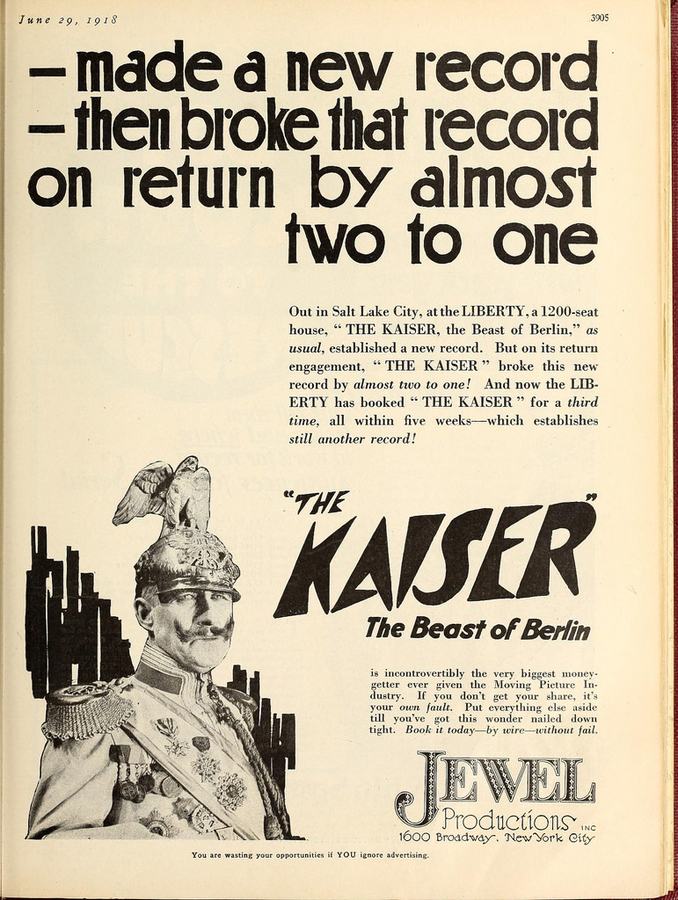
Characters like Zoe Rae's character, or soldiers portrayed by Mark Fenton and Walter Belasco, occasionally exhibit moments of moral conflict or outright resistance against the Kaiser's brutal directives. These instances, though brief, were crucial in establishing a moral counterpoint within the enemy's ranks. They served to humanize a segment of the German population, even as the film relentlessly demonized their leader. It’s a sophisticated propagandistic tactic, suggesting that the war was not against a monolithic evil, but against a corrupt system spearheaded by a singular, malevolent force. This allowed American audiences to believe that their fight was just and, perhaps, that some Germans could be redeemed from the Kaiser's influence.
The film’s portrayal of these dissenting voices, though often simplistic, resonated with the idea that tyranny inevitably breeds opposition, even from within. It fed into the American ideal of freedom and individual conscience, suggesting that even under the most oppressive regimes, the human spirit yearns for justice. This narrative element, while perhaps not historically accurate in its specific dramatic instances, served a powerful thematic role, reinforcing the moral righteousness of the Allied cause by contrasting it with the perceived internal rot of the German system. It’s a testament to the writers, Elliott J. Clawson and Rupert Julian, that they understood the psychological impact of such a narrative device, offering a glimmer of hope for a post-war world where the distinction between the 'beast' and the 'people' could be maintained.
Perhaps the most audacious and, in hindsight, fascinating aspect of The Kaiser, the Beast of Berlin is its imaginative, almost prophetic, depiction of the war's ultimate conclusion. Released in 1918, before the actual armistice, the film dared to envision a decisive Allied victory, complete with the downfall and punishment of Kaiser Wilhelm II. This was not merely a hopeful projection but a narrative device intended to instill confidence and unwavering conviction in the American public. It offered a tangible, triumphant vision of the future, a powerful antidote to the anxieties and uncertainties of prolonged conflict.
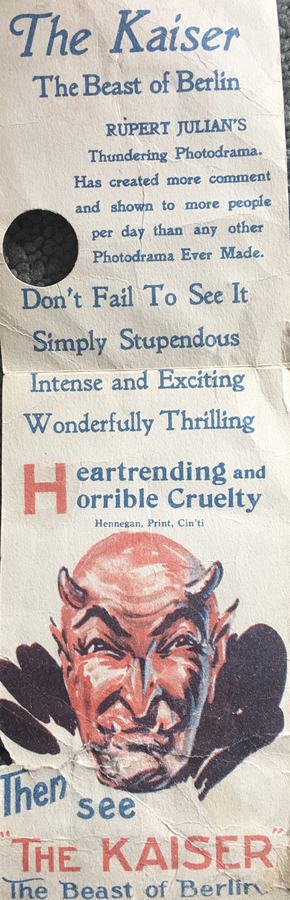
The film’s conclusion, while entirely a product of wartime fantasy, serves as a powerful example of cinema’s capacity to shape expectations and bolster morale. It shows the Kaiser facing justice, his imperial ambitions shattered, and the world restored to a state of peace and freedom. This dramatic prognostication was a bold move, effectively telling audiences what they wanted to believe would happen, thereby reinforcing their commitment to the war effort. It transformed the war from a grueling, indeterminate struggle into a narrative with a clear, morally satisfying resolution.
This narrative bravery distinguishes The Kaiser, the Beast of Berlin from many other contemporary films which might have focused solely on the present conflict. By peering into a desired future, it offered a psychological balm, a reassurance that the sacrifices being made were leading to a just and inevitable triumph. The film’s ability to project such a definitive outcome, even before it occurred, speaks to its role as a potent form of aspirational propaganda, shaping not just perceptions of the enemy, but also hopes for the future. It’s a remarkable instance of a film not just reflecting its time, but actively attempting to guide its audience's emotional and political trajectory.
As a product of the silent era, The Kaiser, the Beast of Berlin relied heavily on visual storytelling, intertitles, and the expressive power of its actors to convey its potent message. The cinematography, while perhaps lacking the sophisticated camera movements of later eras, effectively utilized close-ups to emphasize the Kaiser's villainy and wide shots to depict the scale of destruction or the solemnity of Allied resolve. The editing, though often straightforward, was designed to build tension and underscore the dramatic shifts in allegiance or the unfolding of the Kaiser's schemes.
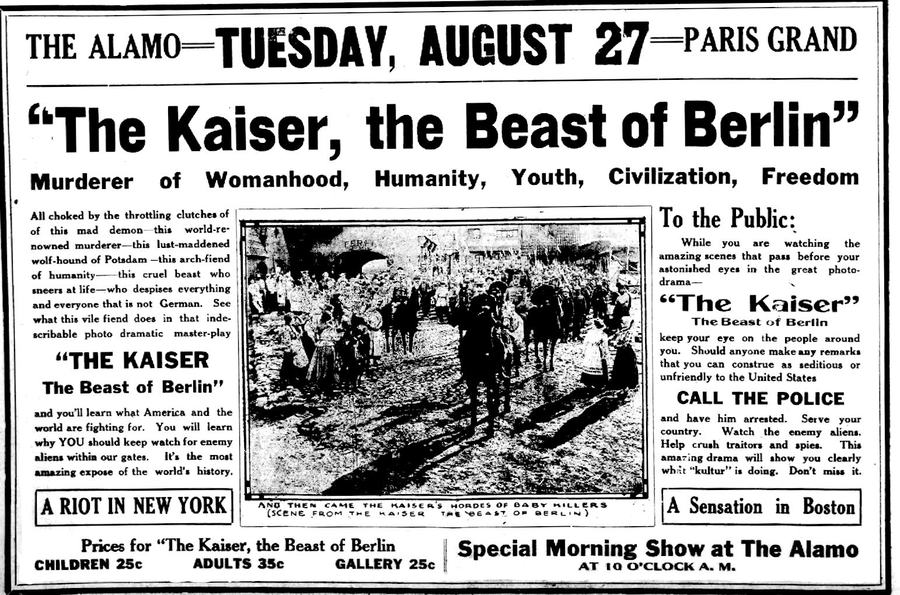
The acting, characteristic of the period, leaned heavily into melodrama. Performances were often exaggerated, with grand gestures and overt facial expressions necessary to communicate emotions and intentions without spoken dialogue. Rupert Julian's portrayal of the Kaiser is the prime example, a theatrical tour de force of villainy. Similarly, the performances of actors like Lon Chaney, even in what might have been a smaller role, would have contributed to the film’s overall dramatic impact. Chaney, known for his transformative characterizations, undoubtedly brought his unique intensity to whatever part he played, adding another layer to the film's ensemble. Other key players, such as Ruth Clifford and Nigel De Brulier, would have similarly embraced the expressive conventions of silent cinema to convey their characters' plights or convictions.
This style of performance, while perhaps appearing overwrought to a modern audience, was the lingua franca of silent film, a necessary component for clear communication. Much like the heightened emotional performances seen in contemporary dramas such as The Heart of a Hero or the dramatic flair of Vengeance Is Mine, The Kaiser relies on overt expressions to convey its message. The use of elaborate sets and costumes also played a crucial role in establishing the visual grandeur of the Kaiser's court and the stark realities of the battlefield, further immersing audiences in its carefully constructed reality.
The film's visual rhetoric was a direct appeal to emotion, employing stark contrasts between the opulence of the Kaiser's life and the suffering he supposedly inflicted. This deliberate manipulation of imagery, combined with the emotionally charged intertitles, created a powerful and persuasive experience that left little room for ambiguity regarding the film's moral stance. It was a masterclass in using the nascent medium to its full propagandistic potential, shaping perceptions through a carefully curated sequence of images and text.
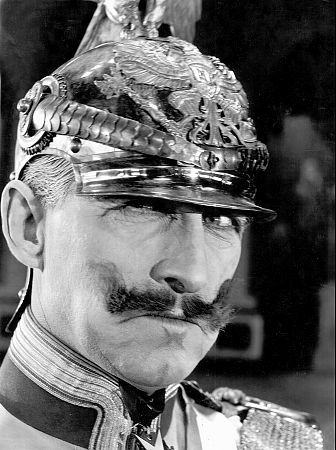
While Rupert Julian’s towering performance as the titular 'Beast' undeniably anchors the film, the effectiveness of The Kaiser, the Beast of Berlin also rests on the shoulders of its substantial supporting cast. Each actor, from the most prominent to the briefest cameo, contributed to the tapestry of emotional appeals and moral contrasts that defined the film. Figures like Zoe Rae, a child actress of considerable talent, provided a poignant counterpoint to the adult world of war and politics, often embodying innocence threatened or suffering endured. Her presence served to amplify the emotional stakes, making the Kaiser’s villainy all the more heinous when contrasted with the vulnerability of the young.
Veteran performers such as Mark Fenton and Walter Belasco, likely portraying figures of authority or disillusioned German citizens/soldiers, lent credibility to the film’s depiction of internal conflict. Their nuanced, albeit melodramatic, performances would have been crucial in selling the idea that even within the enemy's ranks, there existed a moral compass. The extensive cast list, including names like Allan Sears, F. Corcoran, Joseph W. Girard, Harry von Meter, and Winter Hall, speaks to the ambitious scale of the production. Each actor, through their specific roles, contributed to the film’s expansive narrative, populating its world with characters that either affirmed the Kaiser’s tyranny or suffered under it.
The presence of Lon Chaney, already a rising star known for his versatility and mastery of grotesque characterizations, is particularly noteworthy. While his specific role might be minor, his inclusion added a layer of gravitas and theatricality. Chaney possessed a unique ability to transform himself, to embody characters both sympathetic and terrifying, and his contribution, however brief, would have undoubtedly left an impression. The cumulative effect of this diverse ensemble was to create a believable, if ideologically skewed, world, one where the stakes of the global conflict were rendered in stark, human terms. They were not just actors; they were conduits for a powerful national message, each playing their part in the grand theatrical indictment of the 'Beast of Berlin'.
Today, The Kaiser, the Beast of Berlin stands as more than just a historical curiosity; it is a vital document of a specific moment in American history and the evolution of cinema as a medium. It offers invaluable insights into the methods and effectiveness of wartime propaganda, revealing how deeply national sentiment could be shaped by the visual arts. Viewing it now, one can dissect the techniques employed to foster unity, demonize an enemy, and rally a populace to a cause. It serves as a stark reminder of the power of media, for better or worse, in times of national crisis.
The film’s legacy lies not just in its initial impact but in its continued ability to provoke thought and discussion about the ethics of propaganda, the construction of national narratives, and the role of art in shaping public consciousness. It compels us to consider how historical figures are portrayed, how enemies are defined, and how the 'truth' can be molded to serve political ends. For film historians, it’s a crucial artifact demonstrating the burgeoning power of Hollywood and its willingness to engage directly with pressing national issues.
While its overt melodramatic style and unambiguous moralizing might seem quaint to contemporary viewers, its underlying principles of persuasion remain remarkably relevant. The techniques of simplification, emotional appeal, and clear villainization seen in The Kaiser, the Beast of Berlin continue to find echoes in modern media, albeit in more sophisticated forms. This film, therefore, is not merely a relic of the past; it is a timeless case study in the art of influence, a testament to cinema's enduring capacity to reflect, and indeed, to shape the world around it. It is a powerful, if uncomfortable, mirror reflecting humanity’s capacity for both fervent patriotism and the dangers of unchecked demonization.
IMDb —
1927
Community
Log in to comment.