DbcultAccessing Vault...
5.4/10
Senior Film Conservator
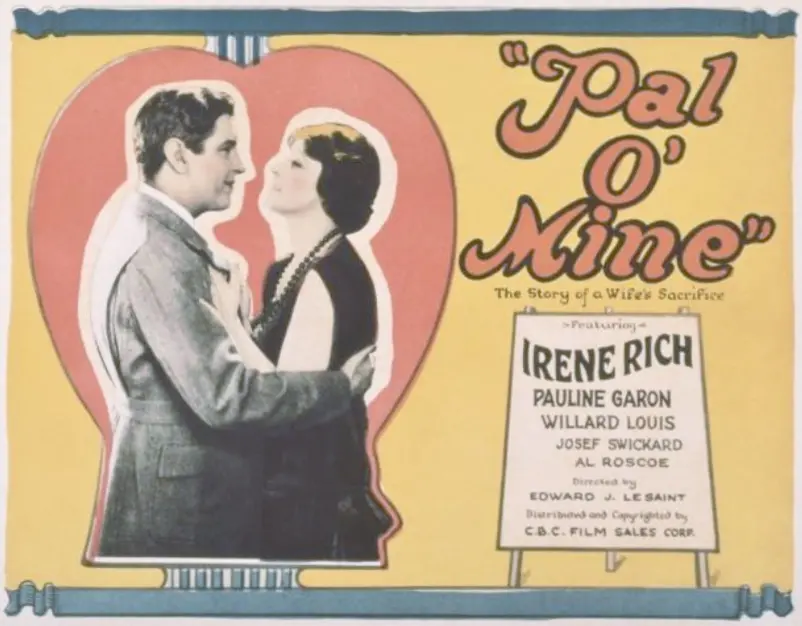
A definitive 5.4/10 rating for a film that redefined the boundaries of cult cinema. Pal o' Mine remains a cornerstone of transgressive art.
In the realm of silent cinema, few films capture the intricate dance of human emotions as poignantly as Pal o' Mine. This 1926 silent film, directed by Jean De Briac, introduces us to the tempestuous journey of Julia Montfort (Irene Rich), a distinguished opera singer who finds herself entangled in a web of deception and disillusionment. Her husband, Verdugo Montford (Josef Swickard), who is unexpectedly unemployed, is offered financial assistance by Julia, an act of love she keeps hidden from him. This covert support sets the stage for a series of misunderstandings that threaten to unravel the fabric of their relationship.
The narrative unfolds in a series of visually rich scenes, each one meticulously crafted to evoke a sense of tension and emotional upheaval. Julia, a character of profound depth, is torn between her public persona as a celebrated artist and her private struggles as a supportive spouse. Her performance on stage serves as a powerful metaphor for the facade she maintains both professionally and personally, masking the turmoil she feels within.
At the center of the plot is the introduction of Babette Hermann (Pauline Garon), a volatile and enigmatic character who challenges the status quo. Her presence serves as a catalyst, bringing to light the secret Julia has been keeping. This revelation tests the limits of Verdugo's trust and faith in his wife, leading to a series of confrontations that are both emotionally charged and visually striking.
Despite the challenges, the film’s conclusion offers a glimmer of hope. Julia’s resolve to maintain her marriage, coupled with a renewed understanding between the couple, provides a fitting resolution. The final scenes are a testament to the enduring power of love and the unwavering commitment of a true partner.
Comparatively, Crime and Punishment and Not Guilty, both showcasing themes of moral ambiguity and societal judgment, offer a stark contrast to the intimate and personal drama of Pal o' Mine. While these films explore broader societal issues, Pal o' Mine focuses on the private lives of its characters, delving deep into the complexities of human relationships and the delicate balance between public and private identities.
The performances in Pal o' Mine are particularly noteworthy. Irene Rich, in her role as Julia, brings a nuanced and layered portrayal to the screen. Her ability to convey a range of emotions without the aid of dialogue is a testament to her skill as an actress. Josef Swickard, as Verdugo, provides a strong counterpoint, his expressions and gestures adding depth to his character’s arc. The supporting cast, including Willard Louis, Stanhope Wheatcroft, and Alan Roscoe, also contribute to the film’s overall richness, each character playing a crucial role in the unfolding drama.
Technically, the film is a marvel of silent cinema. The cinematography, by Willard Louis and Stanhope Wheatcroft, is both visually stunning and evocative. The use of shadow and light, combined with the expressive movements of the actors, creates a cinematic experience that is both immersive and deeply moving. The musical score, while not as prominent as in talkies, enhances the emotional resonance of the film, providing a soundtrack that is both haunting and beautiful.
In conclusion, Pal o' Mine stands as a testament to the power of silent cinema to convey complex human emotions and relationships. It is a film that invites the viewer to reflect on the nature of trust, ambition, and the enduring bonds of love. For those interested in exploring the depths of human psychology and the intricacies of relationships, this film offers a profound and moving experience.
IMDb 6
1932
Community
Log in to comment.