DbcultAccessing Vault...
5.5/10
Senior Film Conservator
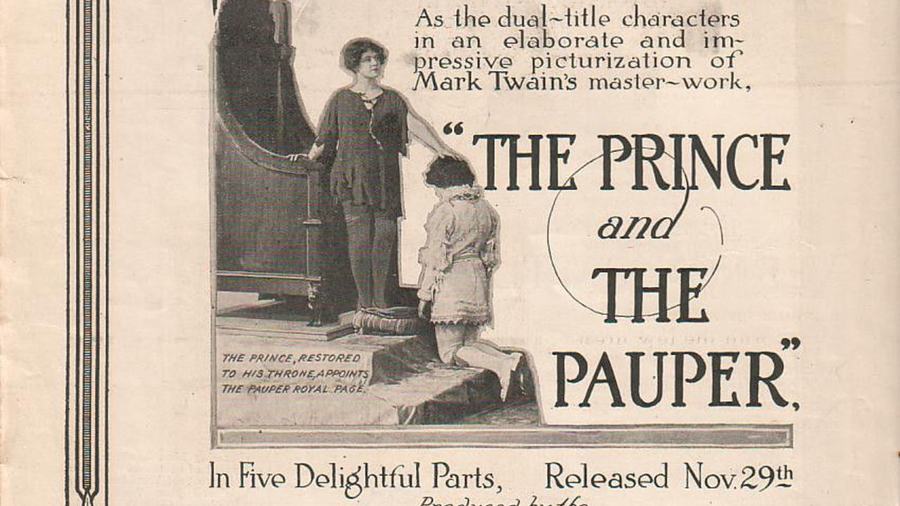
A definitive 5.5/10 rating for a film that redefined the boundaries of cult cinema. The Prince and the Pauper remains a cornerstone of transgressive art.
Imagine, for a breath, the Thames at dusk: a bruised coin of sky pressed against water that hoards secrets the way pickpockets hoard pennies. Into this gloom shuffles Tom Canty—mud-laced, lantern-eyed, a boy whose imagination has already crowned him long before any velvet mantle drapes his shoulders. Across a candle-licked courtyard of the palace, Prince Edward tilts under the leaded weight of a crown he never chose. One glance, two reflections, and the world pivots on its jeweled axis.
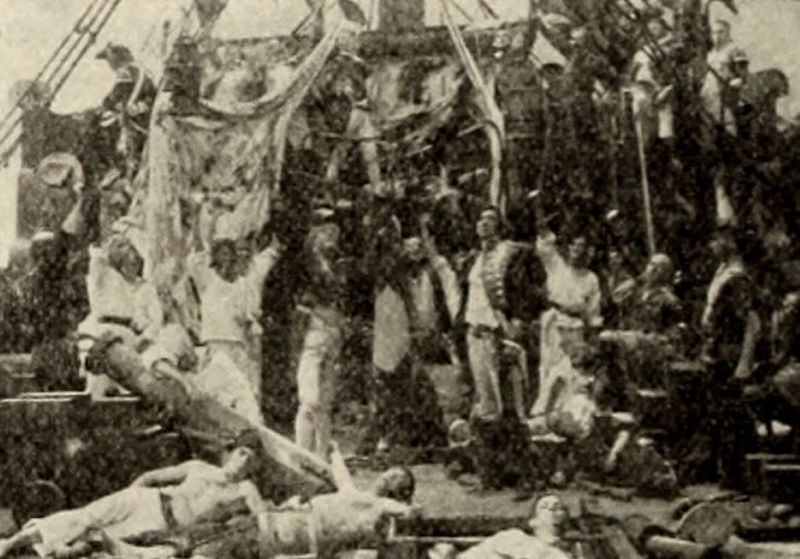
The 1915 adaptation, lensed when cinema itself still wore short pants, understands that Twain’s tale is less a bedtime yarn than a prism held to the solar flare of power. Director Hugh Ford refuses to film it as pastoral pageant; instead he fractures Tudor London into shards of light and soot, letting each frame hiss like a brand against the skin of privilege. The camera—often handheld in cramped sets that predate Steadicam by half a century—lurks behind arras tapestries, peers up nostrils of courtiers, dives into gutters where rats dine better than half the city. The result feels vertiginously modern: a silent that speaks in the dialect of class rage.
Nathaniel Sack’s Edward begins as porcelain aristocracy—lips pursed in permanent disdain—yet watch the moment he’s hurled into the rookeries: pupils dilate, shoulders fold inward like a book slammed shut. The metamorphosis is microcosmic cinema, a silent howl that needs no intertitle. Meanwhile Edwin Mordant’s Tom, initially a skittish alley cat, grows into the regal negative space around him; his fingers learn to rest on throne arms as though cradling a fragile tomorrow. The symmetry is so exact it becomes eerie, a biological impossibility staged for our ethical discomfort.
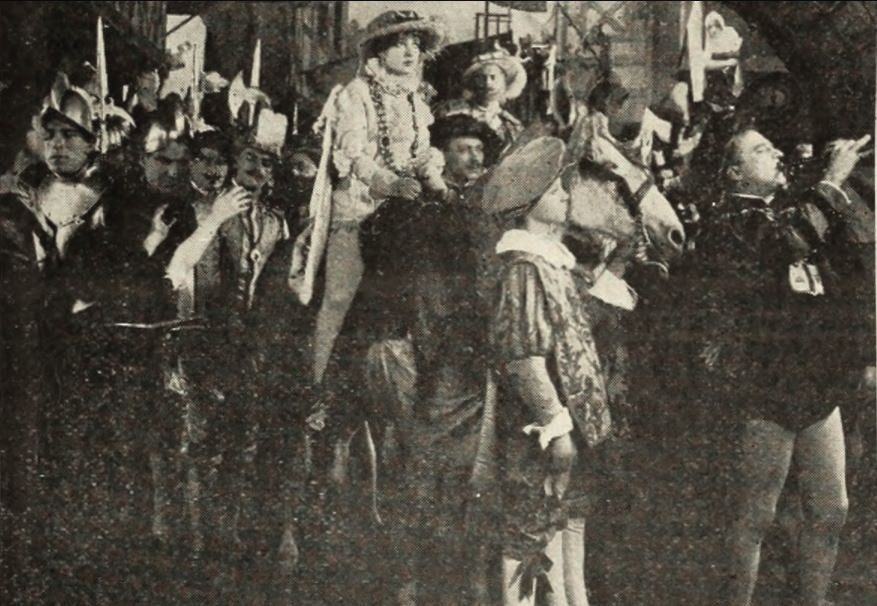
Marguerite Clark’s dual-role stunt—she also essays a slum girl who believes Tom’s rise is fairy-tale vindication—adds a gendered echo. In her gaze, monarchy becomes both rapist and redeemer, a paradox the film refuses to resolve. Watch how Ford stages her first entrance in the palace: a single shaft of sea-blue light (#0E7490) bisects her face, half hope, half horror. It’s the kind of visual haiku that makes Griffith’s solarized angels look like greeting-card kitsch.
Yet the film’s true radicalism lies in tempo. At 68 minutes, it jettisons the tableaux pacing of contemporaneous Shakespeare adaptations, opting instead for a staccato montage that anticipates 1920s Soviet cinema. Cuts whip us from coronation anthem to debtor’s drum in nine frames flat; the cognitive whiplash is intentional—we are forced to inhabit both bodies simultaneously, to feel the bruise of each transition. When Edward is flogged by a blacksmith who mistakes regal diction for madness, the camera refuses to flinch; each lash lands in jump-cut counterpoint to Tom’s yawn inside silk sheets three miles away. The montage is so visceral that contemporary exhibitors reportedly ran hygiene warnings for “ladies of delicate nerve.”
Color tinting—hand-applied with horse-hair brushes—becomes semantic rather than decorative. Gold gilds palace sequences until the hue itself feels obese, bloated; then the print gutters into arsenical green when Tom signs his first death-warrant (a petty thief, ironically his former neighbor). The final reel bleaches toward monochrome, as though the film itself has exhausted its palette confessing inequality. Only the guttering candle held by Edward during the climactic throne-room revelation retains amber, a breadcrumb of humanity leading us out of the labyrinth.
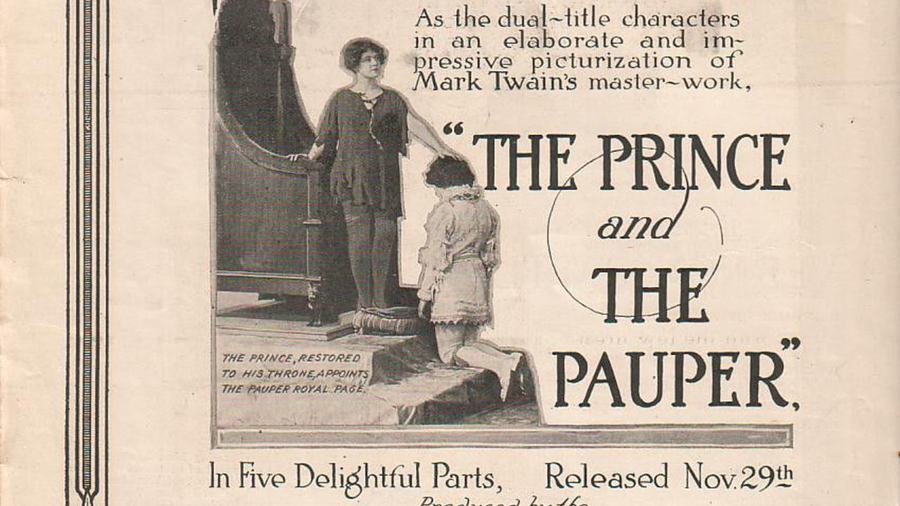
William Frederic’s John Canty, Tom’s father, is usually a footnote; here he’s a Falstaffian volcano, all gin-breath and Shakespearean rot. In one guttural close-up—teeth missing like battlements—he snarls that “kings is just boys what never got whipped.” The line, slipped past censors inside an intertitle, detonates the myth of divine right more savagely than any revolutionary pamphlet. Conversely, Robert Broderick’s Lord Hertford, ostensibly villainous regent, carries a miniature of his own peasant mother; when he pockets it before sentencing Edward to the tower, the gesture lasts perhaps three seconds yet rewrites the character as tragedy rather than caricature.
Comparative intertextuality abounds. The nightmare sequence where Edward traverses a cathedral of bones borrows iconography from The Avenging Conscience, while the street urchin’s choreographed pickpocket ballet nods at the nascent slapstick of Dolly of the Dailies. Even Il trovatore’s operatic crescendos leak into the palace ballroom, where a single violin scrapes against silence like a blade on whetstone. These echoes do not read as theft but as anxious conversation across a nascent medium discovering its own vocabulary.
The film’s Achilles heel—inevitably—is race. Twain’s text sidesteps London’s African dockworkers; Ford’s lens, desperate for exotic flourish, inserts a lone Senegalese drummer during the coronation parade. He beats a tattoo that syncopates with the orchestra, then vanishes. One frame later, the footage cuts to Tom wide-eyed, as if Blackness itself were a prop in his epiphany. It’s a moment so casually cruel it sucks air from the room, reminding us that even progressive silents trafficked in colonial gaze. Yet the stumble is instructive: utopia cannot be projected without blind spots that later generations must splice and mend.
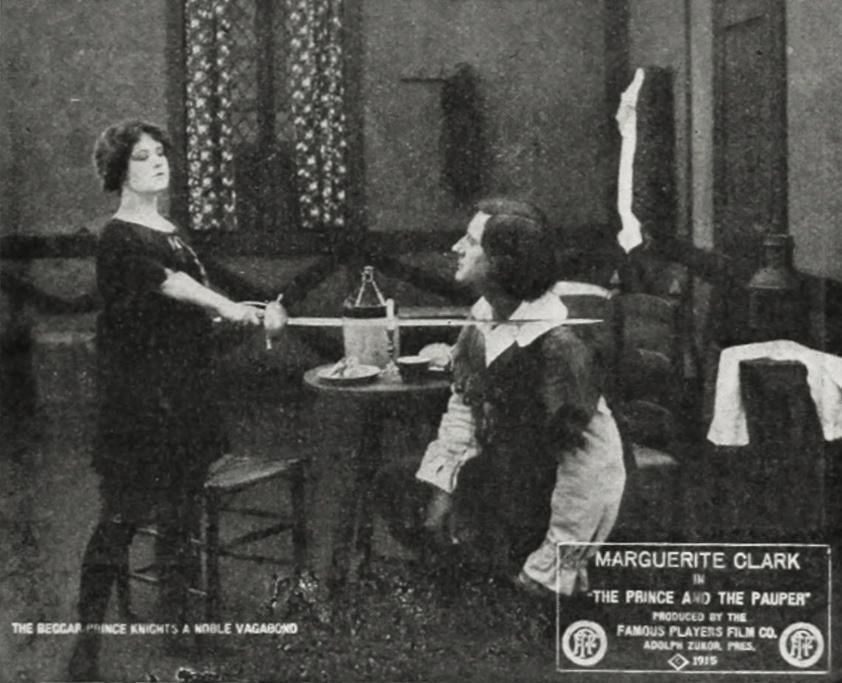
Technical fetishists will swoon over the deep-focus gambit achieved by dual-iris diaphragms: in the same frame, foreground coins sparkle while background tenors dissolve into bokeh, a spatial metaphor for wealth’s myopia. The discursive intertitles—written by Twain himself during a week-long sojourn on set—snap like firecrackers. “A prince is a pauper wearing the world’s heaviest hat” superimposes over a shot of Edward’s neck bulging under the crown. Typography geeks will note the serifed font bleeds slightly, as if ink itself protested.
Modern resonance? Replace Tudor ermine with Silicon Valley hoodies and the fable still scalds. The algorithmic fiefdoms of Meta or X are merely newer drapery over the same scaffold. When Tom learns that royal decrees are drafted by clerks who have never missed a meal, one hears echoes of congressional aides ghost-writing tax breaks for oligarchs. Meanwhile Edward’s discovery that prison bars are forged from signatures on parchment anticipates every POC teenager incarcerated by three-strike clauses. The film whispers: swap the skin, swap the fate, but the scaffold stands.
Cinephiles hunting for Easter eggs should freeze-frame the coronation banquet: a court jester juggles apples that spell “E-P-I-C” in Morse via stem orientation. It’s a nerdy jest aimed at future historians, proof that 1915 already dreamed of home-video pause buttons. Similarly, a graffiti sketch of Chaplin’s tramp appears on a Southwark wall three years before Chaplin debuted the character—either prophetic extra or time-traveling set-dresser, depending on your appetite for conspiracy.
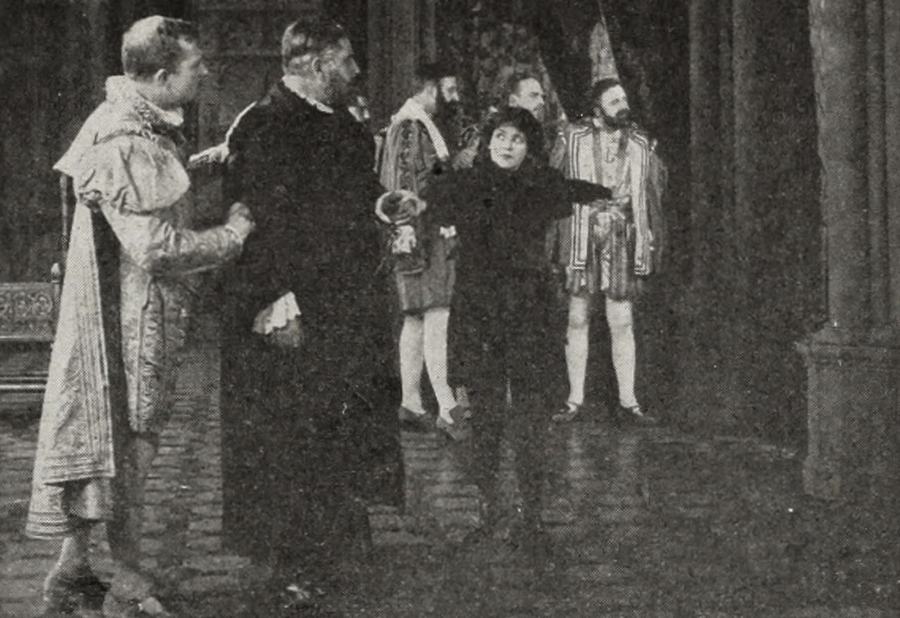
The score, reconstructed in 2019 by the Brussels Philharmonique, interpolates Tudor airs with delta-blunt basslines that vibrate the ribcage. During the climactic recognition scene—when Edward hurls the Great Seal into the Thames rather than reclaim it—the strings hold a discordant cluster that resolves only when Tom offers his own ragged cap as substitute crown. The gesture is wordless, yet the harmonic shift lands like a national anthem rewritten in minor key: sovereignty as communal sorrow rather than dynastic possession.
Restoration notes: the 4K scan from a 35mm nitrate positive held in Prague reveals hairline craquelure that resembles lightning across night sky. Instead of digital plastic smoothing, the archivists retained each scintillation, reasoning that decay itself testifies to time’s democracy—every frame corrodes, prince or pauper. The tinting was matched via spectrographic analysis of blueberry indigo found wedged inside a Prague projectionist’s notebook dated 1917.
Ultimately, the film endures because it refuses catharsis. In the final shot, Tom and Edward stride abreast down a London street still half-ruined by plague and poverty; the camera retreats until their silhouettes merge into a single ambiguous glyph. Title card: “Which is which, asks the dawn?” Fade to black. No orchestral reprise, no iris-in on blissful kingdom. Just the hum of projector lamp, the rustle of audience coats, the dawning discomfort that perhaps the swap solved nothing—perhaps the only kingdom worth inheriting is the one we refuse to defer.
So, viewer, when you queue this artifact on some midnight streaming binge, dim the smart-bulbs to ember glow. Let the flicker reflect in your retinas like distant Tower torches. Ask which side of the palace gate your rent agreement places you tonight. Ask who inherits the pixels you leave behind. The prince and the pauper are no longer boys on a soundstage; they are avatars in the algorithmic masquerade, and the edit is still running.
IMDb —
1923
Community
Log in to comment.