DbcultAccessing Vault...
5.5/10
Senior Film Conservator

A definitive 5.5/10 rating for a film that redefined the boundaries of cult cinema. Jess remains a cornerstone of transgressive art.
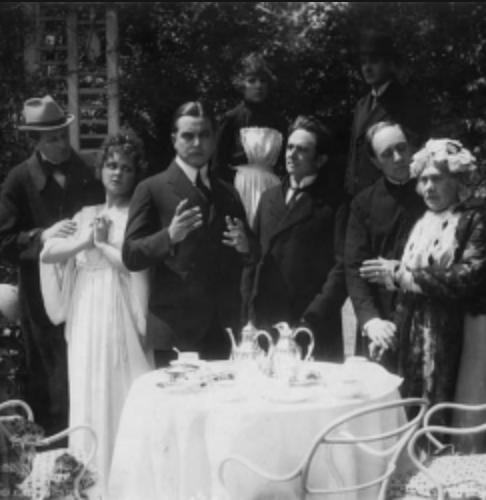
Stepping back into the nascent days of cinematic storytelling, "Jess" emerges not merely as a relic of its era but as a profoundly affecting melodrama, a testament to the enduring power of sacrifice and the intricate dance of human affections. Adapted from H. Rider Haggard’s seminal novel, this 1912 production plunges viewers into the sun-drenched, yet politically volatile, landscapes of South Africa, where personal dramas unfold with the same intensity as the looming geopolitical conflicts. It’s a narrative tapestry woven with threads of selfless love, treacherous ambition, and the unforgiving hand of fate, presenting a rich tableau of emotional complexity that belies its silent film origins. The film, starring the evocative Florence La Badie in the titular role, endeavors to capture the grand sweep of Haggard's romantic adventure, imbuing it with a visual poetry that was characteristic of the period's most ambitious productions.
At the heart of this poignant drama is Jess, a character of extraordinary intellect and profound emotional depth, residing on a South African farm with her kindly uncle, Silas Croft, and her younger sister, Bess. Jess, the elder, carries herself with a quiet dignity, her keen mind and nurturing spirit making her a formidable, if understated, presence. Bess, in stark contrast, is defined by her radiant beauty and an innocent, almost guileless charm. The bond between these sisters is palpable, a tender affection that sees Jess assume a quasi-maternal role, guiding and protecting Bess with an unwavering devotion. This familial idyll is disrupted, or rather, irrevocably altered, by the arrival of Captain John Neil, an English army officer seeking a partnership in Croft's farming enterprise. Neil, portrayed with a compelling blend of gallantry and earnestness by William Russell, is precisely the sort of dashing figure designed to stir the hearts of young women.
What follows is a meticulously orchestrated tragedy of the heart. Jess, despite her intellectual prowess and seemingly unimpressionable nature, finds herself irresistibly drawn to Neil. Her sharp intuition, a recurring motif throughout the narrative, signals a mutual fascination, a nascent romance poised to blossom. Yet, this fragile hope is shattered by a devastating realization: Bess, too, has fallen deeply, innocently in love with Captain Neil. For Jess, this discovery presents an agonizing dilemma. Her happiness, she understands with a clarity born of selfless love, would inevitably mean profound, perhaps lifelong, sorrow for her cherished sister. In a decision that defines her character and propels the film's central conflict, Jess chooses the path of ultimate sacrifice. She engineers a temporary departure from the farm, feigning a visit to an old school friend, knowing with painful certainty that her absence will create the perfect vacuum for Neil and Bess's affections to intertwine. It is a calculated act of self-immolation, a deliberate extinguishing of her own romantic prospects to ensure her sister's joy.

The expected, yet no less heartbreaking, outcome materializes. Neil, initially drawn to Jess's intellect and quiet strength, is, in her absence, thrown into daily companionship with the vivacious Bess. Her beauty and amiable nature quickly captivate him, and soon, he proposes, sealing a union born of circumstance and genuine affection. Bess, utterly oblivious to the profound emotional architecture underlying her newfound happiness, pens a joyous letter to Jess, sharing the glorious news. Jess, sequestered in her refuge, receives this missive with a complex blend of profound satisfaction and crushing despair. Her mission is accomplished; Bess is happy. But the cost is her own romantic future, a void that echoes with the silent screams of a love denied. This moment, conveyed through the expressive pantomime of silent cinema, is a masterclass in conveying internal anguish without a single spoken word. The emotional weight here is comparable to the profound sacrifices seen in narratives like "Les Misérables" or the quiet stoicism in "Oliver Twist", where individual suffering often underpins a larger, seemingly happier outcome for others.
As the personal drama reaches its agonizing peak, the political landscape of South Africa erupts. The Transvaal rebellion, a historical flashpoint for British colonial rule, begins to simmer, then boil. Silas Croft, initially dismissive of the brewing unrest, eventually grasps the gravity of the situation. Neil, ever the gallant soldier, volunteers to ride to Pretoria to bring Jess home before the escalating conflict makes travel impossible. This journey, however, traps him within the besieged city, effectively severing his connection to the farm and his beloved Bess. It is here that the film introduces its primary antagonist, Frank Muller, a character whose villainy is as pronounced as Jess’s virtue. Muller, the rejected suitor of Bess and a prominent leader in the Boer revolt, learns of Neil’s predicament. Seizing an opportunity for both revenge and to eliminate his rival, he concocts a sinister scheme.
Muller, feigning friendliness, provides Neil with a fabricated pass, supposedly signed by Oom Paul Kruger himself, for safe passage for both Jess and Neil out of Pretoria. The unsuspecting Englishman falls into this trap, departing with Jess under the escort of Boer soldiers furnished by Muller. These men, cruelly deceived into believing Kruger has ordered the couple’s execution, ambush them during a river crossing. Miraculously, Jess and Neil survive the hail of gunfire, a dramatic sequence that showcases the early cinema's flair for thrilling action. This escape, however, comes at a further cost: they become separated. Jess, through sheer will and resilience, manages to make her arduous way back to the farm, only to find a scene of utter desolation and injustice.

Muller, having anticipated her return, has already been there. He has unjustly imprisoned Silas Croft on a trumped-up charge of treason. As the military head of the district, Muller presents Bess with a cruel ultimatum: marry him, or her uncle will be convicted and hanged. Bess, demonstrating a strength of character that perhaps Jess instilled in her, defiantly refuses. The court-martial proceeds, and Jess arrives just hours before dawn, only to find her beloved uncle under sentence of death. With no legal recourse, no appeal possible, Jess is propelled into a final, desperate act of vengeance. This narrative arc, where a protagonist confronts an overwhelming injustice through personal sacrifice, resonates with the thematic intensity of films like "The Redemption of White Hawk", albeit with a darker, more fatalistic conclusion.
The climax of "Jess" is a masterful stroke of psychological terror, perfectly suited for the silent screen where atmosphere and visual suggestion could amplify dread. Muller, awaiting the dawn that would separate Bess from her last protector, sleeps in his tent, oblivious to the spectral presence that approaches. He awakens with a chilling jolt to find Jess bending over him. Her appearance, a ghostly apparition to his traumatized mind, is amplified by his certainty that he had witnessed her brutal death. Striken with an unimaginable terror, utterly paralyzed by fear, Muller is unable to speak or move. He succumbs to a heart attack, or perhaps sheer fright, his final thoughts consumed by the horrifying realization of a life beyond the grave and the inescapable karmic retribution for his evil deeds. Jess, her vengeance exacted, her spirit utterly broken by the cumulative weight of her sacrifices and the horrors she has endured, wanders into the vast, indifferent desert, where she eventually perishes.
Neil, having finally made his way back and searching desperately, ultimately discovers Jess’s lifeless body. The conflicts and dangers are finally swept away, leaving only the profound loss of Jess. In a final, bittersweet resolution, Neil and Bess return to England, where they live many contented years together. Crucially, and perhaps most tragically, they never fully comprehend the monumental extent of Jess’s self-sacrifice, the intricate web of personal agony she wove to secure their happiness. They mourn her, sincerely missing her presence, but the true depth of their debt remains an unspoken, unknown burden carried only by the silent sands of the South African veld. This ending, while offering a form of resolution for the surviving couple, leaves a lingering ache for the audience, a powerful commentary on the often-unseen costs of heroism and devotion.
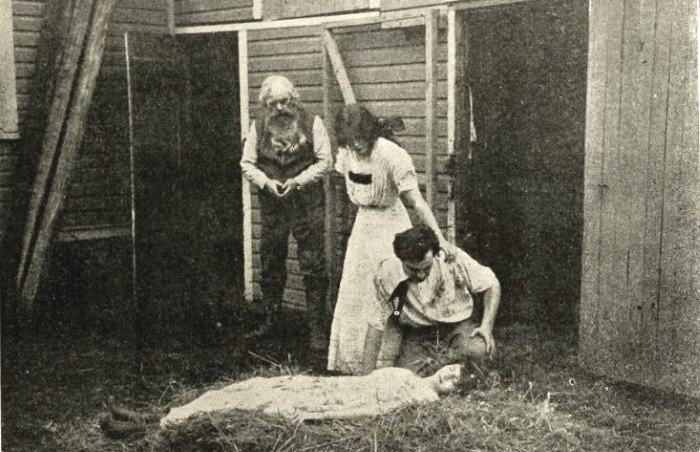
Character Portrayal and Emotional Resonance: Florence La Badie’s portrayal of Jess is nothing short of captivating. In the absence of dialogue, her expressive eyes and nuanced body language convey a vast spectrum of emotion—from intellectual curiosity and budding love to profound despair and resolute vengeance. Her performance anchors the film, making Jess a figure of immense pathos and strength. William Russell’s Captain Neil is suitably heroic, if somewhat less complex, embodying the ideal English gentleman caught in circumstances beyond his control. Marguerite Snow's Bess, while beautiful and amiable, serves primarily as the innocent catalyst for Jess's sacrifice, her character arc less about internal struggle and more about receiving the benefits of others' devotion. James Cruze, as the villainous Frank Muller, delivers a performance steeped in a theatrical malevolence that would have resonated strongly with silent film audiences, his eventual death by terror a satisfying, if melodramatic, comeuppance. The ensemble works in concert to maintain the heightened emotional stakes.
Cinematic Techniques and Visual Storytelling: For a film of its vintage, "Jess" demonstrates a remarkable grasp of visual storytelling. The South African landscape itself becomes a character, its vastness and untamed beauty providing a stark contrast to the intimate human drama unfolding within it. Directors of the era, operating without synchronized sound, relied heavily on intertitles to convey dialogue and exposition, but also on powerful visual compositions, dramatic close-ups (though perhaps less frequently than later silent films), and the exaggerated yet effective pantomime of its actors. The river crossing ambush, for example, would have been a thrilling sequence, relying on rapid cuts and dynamic staging to build tension. The final confrontation between Jess and Muller, a scene steeped in supernatural dread, exemplifies how silent cinema could evoke psychological horror through lighting, performance, and the sheer power of suggestion. It’s a testament to the filmmakers’ ingenuity that they could craft such a complex narrative with the limited technological means available, drawing the audience into the emotional core of the story through pure visual artistry. One might even draw parallels to the early narrative ambition of films like "The Story of the Kelly Gang", which similarly used vast landscapes and compelling personal dramas to anchor its historical context.
Themes of Duty, Love, and Colonialism: Beyond the central romance, "Jess" delves into deeper thematic territory. The concept of duty—both personal and national—is paramount. Neil's military background, Jess's devotion to her family, and even Muller's twisted loyalty to the Boer cause all highlight different facets of this theme. The film also subtly touches upon the complexities of colonialism, presenting the Transvaal rebellion not just as a backdrop for adventure, but as a genuine conflict with real human stakes. While not overtly political, the struggle for independence and the clash of cultures add a layer of authenticity and gravitas to the otherwise intensely personal narrative. The film, in its depiction of Jess's ultimate sacrifice, elevates the narrative beyond mere melodrama, transforming it into an exploration of the highest forms of altruism. This thematic depth positions it alongside other early films that sought to explore profound moral questions, such as "The Eternal Law" or "Heroes of the Cross", albeit with a more secular lens.
Historical Context and Legacy: "Jess" arrived at a pivotal moment in cinema history, where films were rapidly evolving from simple actualities to complex, multi-reel narratives. Its ambition to adapt a well-known literary work like Haggard's speaks to the industry's growing confidence in its storytelling capabilities. While perhaps not as widely remembered today as some of its contemporaries, its influence on the development of dramatic narrative and character-driven plots within silent cinema is undeniable. It stands as a powerful example of how early filmmakers grappled with weighty themes and epic scope, laying the groundwork for the more sophisticated productions that would follow. The film's enduring appeal lies in its timeless exploration of selfless love and tragic heroism, proving that even without spoken words, a story of such emotional magnitude can resonate across generations. For those interested in the evolution of melodrama and the adaptation of classic literature in early cinema, "Jess" offers a rich and rewarding viewing experience, a vibrant piece of cinematic archaeology.
The tragedy of Jess’s ultimate fate, her quiet disappearance into the desert after such a monumental act of revenge and self-sacrifice, serves as a haunting coda to a life defined by unwavering devotion. Her death, unwitnessed by those she loved most, underscores the cruel irony of her existence: a life lived entirely for others, culminating in a lonely end, her true heroism forever unacknowledged by the beneficiaries of her love. It's a stark reminder that not all heroes receive accolades, and some of the most profound acts of love are performed in silence, leaving only ripples in the lives of those they touch. The final image of Neil finding her body, a poignant discovery that closes the chapter on her earthly suffering, is imbued with a sense of solemnity and irreparable loss, even as life moves on for Bess and Neil. This film, therefore, is not just a story of romance and rebellion; it is a profound meditation on the nature of love, sacrifice, and the often-unseen architects of human happiness.
IMDb —
1923
Community
Log in to comment.