DbcultAccessing Vault...
5.8/10
Senior Film Conservator
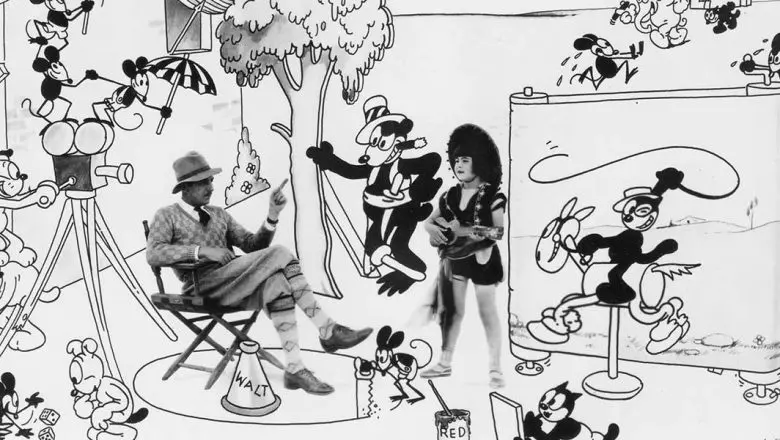
A definitive 5.8/10 rating for a film that redefined the boundaries of cult cinema. Alice in the Alps remains a cornerstone of transgressive art.
Is this nearly century-old short worth your attention in the age of CGI saturation? Short answer: yes, but only if you view it as a historical artifact rather than a narrative powerhouse. It is a fascinating glimpse into the primitive DNA of what would become the Disney empire.
This film is for animation historians, silent film enthusiasts, and those who appreciate the 'rubber-hose' style of the 1920s. It is absolutely not for viewers who require high-definition immersion or a complex, character-driven plot. It is a series of gags, pure and simple.
This film works because it pushes the boundaries of 1920s compositing, placing a real child in a world that ignores the laws of gravity and logic.
This film fails because the narrative is virtually non-existent, serving only as a flimsy clothesline to hang a series of repetitive slapstick sequences.
You should watch it if you want to see the exact moment where Walt Disney and Ub Iwerks began to master the synchronization of live-action and animation, a technique that would later define films like Mary Poppins.
In 1925, the technical hurdles of layering a live-action Margie Gay over hand-drawn backgrounds were immense. Unlike the more grounded drama of The Silence of Dean Maitland from the same era, Alice in the Alps embraces the impossible. When Alice skates across the frozen pond, there is a jittery, kinetic energy that feels more alive than many of its contemporary counterparts.
The directing by Walt Disney shows an early obsession with physical comedy. There is a specific moment where Julius the Cat uses his own tail as a climbing hook. It’s a simple gag, but it demonstrates a level of creative freedom that live-action films like Back to Yellow Jacket simply couldn't touch. The animation isn't just a background; it’s an active participant in the chaos.
However, the pacing is frantic to a fault. Compared to the more deliberate character studies found in Disraeli, this short feels like it’s running a race against its own runtime. It doesn't breathe. It just happens. It works. But it's flawed.
Margie Gay, taking over the role from Virginia Davis, brings a different energy to Alice. While Davis was often more reactive, Gay feels like a seasoned professional in a world of ink. She interacts with the animated Pete and Julius with a level of confidence that belies her age. In one scene, she has to look up at a mountain peak that isn't there, and her eyeline is remarkably consistent.
Contrast this with the performances in Soul Mates, where the acting relies heavily on intertitles and theatrical gestures. Gay’s performance is largely physical. She is the 'straight man' to Julius’s clown. Without her grounded presence, the film would float away into total abstraction. She provides the necessary contrast that makes the animation pop.
Yet, one must admit that the character of Alice is secondary to the cat. Julius is the real star here. He gets the best lines (via intertitles) and the most creative physical moments. Alice is often just a spectator to her own adventure. It’s a strange dynamic that we see in other shorts like I'm the Sheriff, where the human lead is often overshadowed by the animated sidekick.
The depiction of the Alps in this film is hilarious in its inaccuracy. This isn't the majestic, snowy landscape of Le rêve. This is a California animator's fever dream of what a mountain might look like. The peaks are sharp, jagged, and seemingly made of rubber. The snow behaves like white ink because, well, it is.
The mountain-climbing sequence is the highlight of the film. Pete, the bear, acts as a primitive version of the villain we would later see in Mickey Mouse cartoons. His sabotage of the climbing rope is genuinely tense for a split second before it dissolves back into a gag. The physics of the fall are handled with a surrealist touch that reminds me of the experimental nature of Menschen und Masken, 2. Teil - Ein gefährliches Spiel.
There is a surprising lack of sentimentality here. Unlike the melodramatic beats of Cheated Hearts, Alice in the Alps is cynical. Characters fall, they are crushed, they are chased by predators, and they simply bounce back. It’s a violent, frantic world. It’s exhausting, but never boring.
If you are looking for a cohesive story, look elsewhere. If you want to see the foundations of modern visual effects, this is a goldmine. It represents a time when cinema was still figuring out its own rules. It lacks the polish of The Conquest of Canaan, but it possesses a raw, inventive spirit that is often missing from modern blockbusters.
The film is a relic of a transition period. It’s the bridge between the simple line drawings of the early 1900s and the sophisticated storytelling of the 1930s. Watching it today feels like looking at an architect's first rough sketches for a cathedral. It’s messy, but the genius is visible in the margins.
Pros:
Cons:
The tone of Alice in the Alps is surprisingly aggressive. There is no 'Disney magic' here yet; instead, there is a gritty, Vaudeville-style humor. When compared to social comedies like Monkeys Prefer Blondes, this short feels primitive, yet more visually daring. It doesn't care about social norms; it cares about how many times a cat can be flattened and still keep walking.
The pacing is the film's greatest asset and its biggest liability. It moves at a breakneck speed, much like the frantic energy of Town Terrors. This prevents the viewer from dwelling on the technical flaws, but it also prevents any emotional connection to the characters. You don't root for Alice; you just watch her survive. It’s a spectacle of survival rather than a journey of growth.
The cinematography, while limited by the static camera of the era, attempts some interesting heights. The 'climbing' scenes use verticality in a way that was quite rare for 1925. While it lacks the atmospheric depth of Open Your Eyes, it makes up for it with sheer visual invention. The use of white space to represent the snowy peaks is a clever budgetary and artistic choice.
Alice in the Alps is a fascinating, if somewhat shallow, piece of cinematic history. It isn't a masterpiece, but it is a vital stepping stone. It’s better than the crude His Darker Self, but lacks the narrative weight of Training for Husbands. It is a loud, brash, and technically impressive short that proves Walt Disney was a visionary long before he had a mouse to prove it. Watch it for the history, stay for the cat, and ignore the lack of a coherent ending. It’s a rough draft of greatness.
IMDb 6.7
1929
Community
Log in to comment.