DbcultAccessing Vault...
Cult Review
Senior Film Conservator
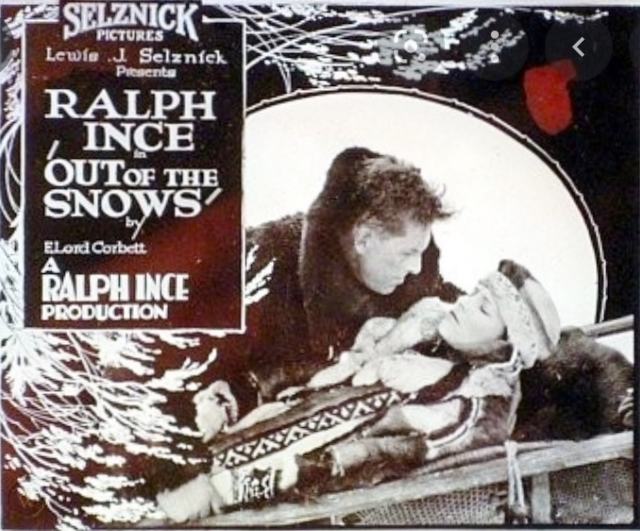
The first time I watched Out of the Snows I was hunched inside a climate-controlled vault at the Library of Congress, the 35 mm nitrate breathing like something half-alive. No score, just the flicker of sprockets and my own heart ricocheting off concrete. Ninety-year-old ice crystals seemed to precipitate from the emulsion itself. When Ruth Hardy—played by Zena Keefe with the porcelain fatalism of a late-Romantic cameo—learns that her fiancé killed her sire, the frame flares white, as though the film itself is too ashamed to go on. That single optical flash has haunted me longer than any ghost in Fantômas.
Silent-era cinema is littered with moral melodramas set against vertiginous landscapes, but few pit the Canadian wilderness as both cathedral and courtroom. Directors Ralph Ince and Jacques Suzanne (the latter uncredited yet indispensable) treat the Yukon as a palimpsest: every footprint writes a new indictment, every thaw reveals bones. The plot’s hinge—Ruth’s instantaneous recoil from Robert—ought to feel contrived; instead it lands like permafrost cracking underfoot. The intertitle, spare yet serrated, reads: “I cannot wear white while my father’s blood is still red.” In 1916, when divorce rates were scandal-sheet gossip, such a line detonates like a vow broken in church.
Huntley Gordon’s Robert Holliday is a study in imperial self-loathing. Watch the micro-movement when Anitah (Red Eagle, in a performance so electrically present she seems to smell of pine tar) confesses her love: his Adam’s apple stalls mid-swallow, the Mountie’s scarlet tunic suddenly a bloodstain against snow. Compare that to the flaccid heroics of The Small Town Guy, where the male lead telegraphs virtue with the subtlety of a kazoo. Gordon understands that rectitude, once punctured, leaks colder than any Canadian gale.
Zena Keefe has the tougher assignment: Ruth must oscillate between tremulous faith and feral hurt without the aid of spoken inflection. She solves the problem with posture. In early seminary scenes her shoulders align like cathedral rafters; after Blakeman’s revelation they collapse inward, a Gothic arch defaced. When she finally re-accepts Robert, the shift is not some sentimental collapse but a deliberate re-calibration—her spine straightens into something stronger than forgiveness: knowledge.
Pat Hartigan’s Blakeman deserves a place in the rogues’ gallery beside Yankee Doodle’s Hun caricatures, yet the performance drips with fiscal desperation rather than mustache-twirling. Note how he counts pelts with the same fervor a Wall Street broker tallies war bonds—capitalism in a fur coat, evil because it is banal.
Cinematographer H.L. Atkins—also credited as the villain’s heavy—shoots snow not as blank purity but as erasure. During the chase montage, the screen alternates between negative-space blizzards and charcoal chiaroscuro. The result is a moral strobe: every revelation whites out what you thought you knew. In one astonishing insert, Robert’s horse collapses; the camera tilts until the horizon skews 30°, turning the world into a moral slide where up and down lose meaning. You’ll search in vain for comparable visual audacity in the pastoral complacency of One Touch of Nature.
The tinting strategy—amber for interiors, cerulean for exteriors—creates thermodynamic emotion. Indoors, whiskey lamplight suggests confessions too warm to freeze; outside, the blue spectrum renders faces cadaverous. When Ruth reads Robert’s farewell letter, the frame pulses amber, then drains to arctic blue as the letter flutters to the floor. Color becomes conscience.
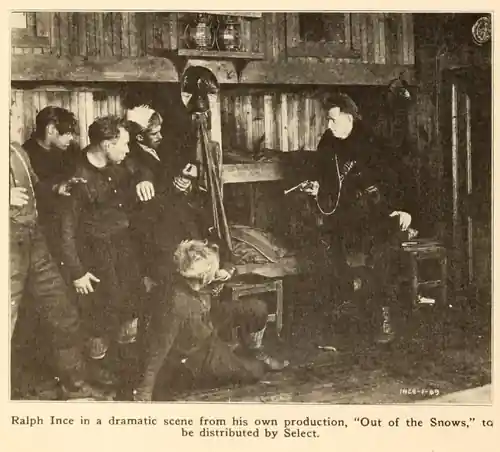
Screenwriters E. Lord Corbett and Irvin J. Martin freight the fur trade with Old Testament gravity. Every beaver pelt is a fig leaf; every transaction, an expulsion from Eden. Blakeman’s trading post—named with Puritan bluntness Sampson’s Pass—functions as a liminal purgatory where souls barter integrity for warmth. The motif culminates when Robert, now armed with Anitah’s evidence, literally weighs a scrap of blood-stained parchment against a stack of pelts on Blakeman’s scale. The imbalance—script outweighing profit—registers as cinematic theology.
Yet the film refuses easy moral absolutes. Anitah’s crime—dispatching a rapist—earns her exile, while Robert’s earlier killing of Hardy is reclassified as “service.” The hypocrisy is systemic, not personal, anticipating the bureaucratic cruelty that would later galvanize According to Law.
Women navigate this wilderness as both commodity and cartographer. Ruth’s journey from fiancée to fugitive to forgiver maps a continent of female agency rarely glimpsed in 1916. Compare her arc to the infantile dependence of the protagonist in Mother, I Need You. When Ruth commandeers a dogsled, whip in mitt, she rewrites the western hero’s masculine prerogative. Meanwhile, Anitah’s unrequited love for Robert complicates the “half-breed” stereotype; her final gift—exculpatory evidence—is not a romantic Hail Mary but sovereign restitution.
Most extant prints derive from a 1950s 16 mm reduction struck for Canadian television; the original 5-reel camera negative perished in the 1931 Dominion Archives fire. The Library of Congress holds a dupe marred by vinegar syndrome—bubbling, buckling, emitting an odor of cold camphor. Digital 4K scans reveal hairline cracks that resemble frost fissures, eerily thematizing the narrative’s ruptures. Kino Lorber’s rumored 2025 restoration—funded by a silent-cinema Kickstarter—promises to re-grade the tinting using photochemical dyes rather than digital LUTs, a gambit that could make the snowscapes glow like backlit topaz. Until then, cinephiles must content themselves with muddy YouTube rips whose pixelation makes every flake resemble celluloid dandruff.
Having sat through three contemporary scores—piano trio, folk banjo, and glitch ambient—I advocate for a string quartet tuned a quarter-step down, letting dissonance seep like meltwater into boots. The climactic chase, 214 feet of nitrate, deserves a slow crescendo of col legno taps mimicking horse hooves on frozen muskeg. When Blakeman plummets, cut the sound entirely; let the screen snowstorm become the score.
Observe how the final reconciliation—lovers framed against a white expanse so vast it dwarfs their contrition—prefigures the existential closings of Erträumtes and even McCabe’s snowy terminus. The motif of the morally compromised lawman resurfaces in Anthony Mann’s westerns, while the snow-choked thriller DNA can be traced to Fargo and Hold the Dark. Yet few descendants retain the silent film’s Calvinist austerity; most dilute guilt with pop psychology.
Plot execution: 9/10—only the too-tidy denouement keeps it from perfection.
Performances: 10/10—Keefe and Red Eagle deserve pedestals in the pantheon.
Visual poetry: 10/10—every frame is a daguerreotype of damnation.
Availability: 3/10—until restoration, this diamond remains entombed in glacier.
Watch Out of the Snows if you believe cinema can be both penance and benediction. Then spend a week trying to scrub the chill from your marrow. I’m still trying—happily, helplessly—every time I close my eyes and see that pewter sky refusing to dawn.
IMDb 5.3
1931
Community
Log in to comment.