DbcultAccessing Vault...
4.8/10
Senior Film Conservator
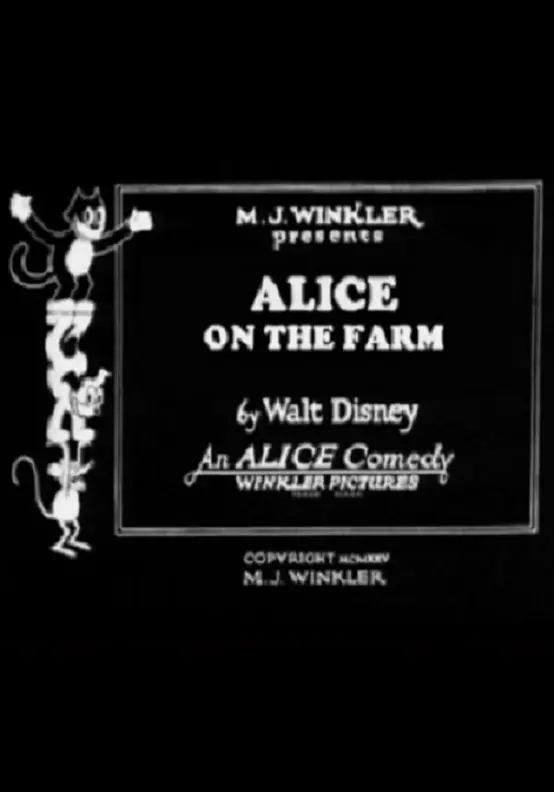
A definitive 4.8/10 rating for a film that redefined the boundaries of cult cinema. Alice on the Farm remains a cornerstone of transgressive art.
Is 'Alice on the Farm' worth watching today? Short answer: yes, but with significant caveats. This early animated short, a relic from a foundational era of cinema, offers a fascinating glimpse into the nascent stages of cartoon storytelling and hybrid live-action animation, making it essential viewing for historians, animation students, and those with a deep appreciation for the medium's origins. However, it is decidedly not for viewers seeking modern narrative complexity, sophisticated visual artistry, or a runtime that extends beyond a few minutes.
It's a foundational piece for anyone charting the evolution of animation, illustrating the primitive charm and bold experimentation that characterized the medium's infancy. For the casual viewer, its historical significance might not translate into engaging entertainment.
The magic of 'Alice on the Farm' isn't found in its intricate plot or deep character arcs – those simply didn't exist in this form yet. Instead, its charm lies in its sheer existence, a testament to the boundless imagination of early filmmakers. This short, likely a product of Walt Disney's pioneering 'Alice Comedies' series, showcases a pivotal moment where the lines between live-action and animation were playfully blurred, a technique that felt revolutionary at the time.
Margie Gay, the live-action Alice, acts as our anchor in a world populated by hand-drawn characters. Her interaction with the animated Julius, the resourceful cat, and the villainous Pete, while rudimentary by today's standards, was groundbreaking. This hybrid approach wasn't just a gimmick; it was a solution to the technical challenges of the era, allowing for a tangible human element to ground the fantastical animated antics.
The film’s simple premise – a kidnapping, a chase, and a duel – is a classic template, stripped down to its bare essentials. It reminds us that even at its most basic, storytelling relies on conflict and resolution, no matter how cartoonish the execution. The raw energy of the chase scene, for example, despite its visual simplicity, conveys a palpable sense of urgency, a credit to the animators' ability to imbue their drawings with motion and emotion.
This film works because it is a vital historical document. It offers a direct window into the creative ambition that defined early animation, pushing boundaries with limited resources. It fails because its narrative simplicity and dated visual style can alienate modern audiences accustomed to decades of animated refinement. You should watch it if you are fascinated by the origins of cinema and animation, and appreciate the foundational steps that led to the complex animated features we enjoy today.
Analyzing 'Alice on the Farm' through a contemporary lens requires a recalibration of expectations. The animation itself, while primitive, possesses a certain raw vitality. Characters move with a bouncy, almost rubber-hose fluidity, a hallmark of the era that prioritized exaggerated motion over anatomical accuracy. Julius, our feline hero, embodies this perfectly, his movements during the chase sequence displaying a kinetic energy that belies the simplicity of his design.
The performance of Margie Gay as Alice is crucial. Her live-action presence grounds the fantastical elements, providing a relatable human anchor. While her 'acting' is largely reactive – expressions of fear, surprise, or determination – it’s effective within the context of the film. Her wide-eyed innocence contrasts sharply with the cartoonish villainy of Pete, creating a dynamic that even a child audience could instinctively grasp.
It’s easy to dismiss these early shorts as mere curiosities, but to do so is to miss the pioneering spirit that pulsed through every frame. They were the wild west of filmmaking.
Pacing in 'Alice on the Farm' is brisk and to the point, a necessity for short-form cinema. There’s no wasted motion; the plot points unfold rapidly from Julius milking his cow, to Alice’s abduction, to the immediate pursuit. This efficiency ensures that despite the lack of dialogue (or perhaps because of it), the story remains clear and propulsive. The film understands its purpose: to deliver a concise narrative punch, culminating in a satisfying, if predictable, resolution.
Consider the duel between Julius and Pete. It's a quick, almost balletic exchange of blows, rendered with a simple elegance that prioritizes clarity of action over gritty realism. This brevity prevents the film from overstaying its welcome, a lesson many modern blockbusters could still learn.
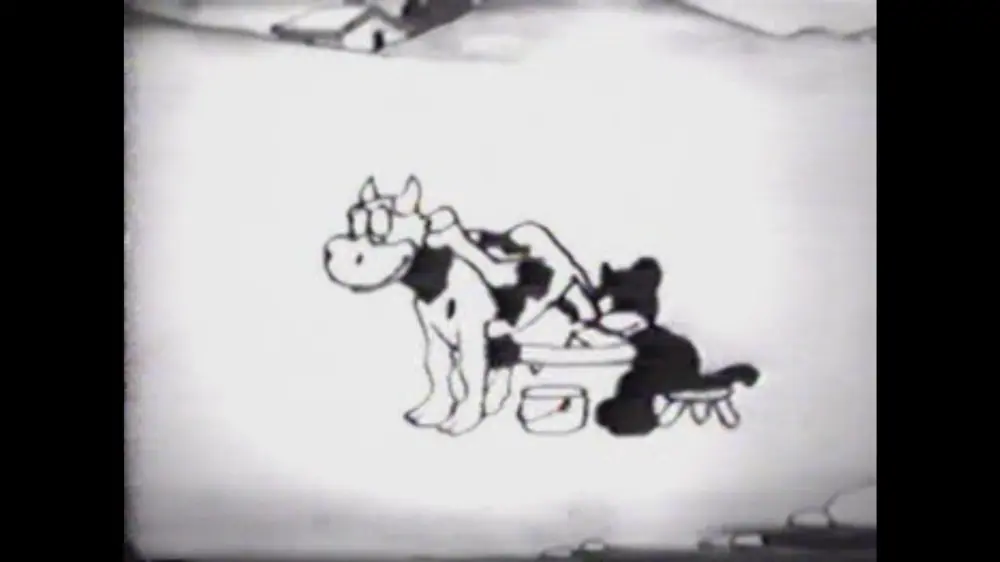
While specific directorial credits for such early shorts are often obscured by time, the guiding hand behind 'Alice on the Farm' demonstrates a clear understanding of visual storytelling. The framing, though static by today's standards, is always purposeful, ensuring that the audience's attention is directed precisely where it needs to be. There are no distracting flourishes, just clear, concise imagery designed to convey the narrative.
The use of scale, particularly in how Alice interacts with her animated environment, is an early example of visual ingenuity. When she is snatched by Pete, the stark contrast between her human form and his exaggerated cartoon menace amplifies the sense of danger. This simple visual trick is surprisingly effective, creating a sense of vulnerability that draws the viewer in.
One surprisingly effective moment comes during the chase. While the backgrounds are often rudimentary, the sense of forward motion is conveyed through repeated cycles and simple perspective shifts. It's not complex, but it works. This economy of design is a hallmark of early animation, forcing creators to be incredibly inventive with limited resources. It's a stark contrast to the layered, multi-plane animation that would become standard decades later.
The film’s tone is lighthearted and adventurous, even with the kidnapping at its core. There’s an inherent playfulness in the animation that prevents it from ever feeling truly menacing. This balance of mild peril and whimsical action sets a precedent for countless cartoons that would follow, establishing a genre where danger is always fleeting and good invariably triumphs.
'Alice on the Farm' belongs to a pivotal period in cinematic history, a time when film was still finding its voice, and animation was an experimental playground. It predates the golden age of Hollywood animation, existing in a space where rules were still being written. Its existence, alongside other early works like the live-action dramas Such a Little Queen or The Devil's Cargo, illustrates the diverse forms of entertainment captivating audiences in the early 20th century. While those films explored dramatic narratives, 'Alice on the Farm' carved out a niche for pure, unadulterated fantasy.
The significance of Margie Gay's involvement cannot be overstated. As one of the 'Alice' actresses, she was a direct participant in a pioneering animation technique that bridged two worlds. Her work, though brief, laid crucial groundwork for future live-action/animation hybrids, from 'Mary Poppins' to 'Who Framed Roger Rabbit', proving that the blend could be both magical and believable. She was a silent, yet expressive, counterpoint to the boisterous animated characters.
This film, and others like it, provided the foundational lessons in character design, movement, and comedic timing that would be refined by generations of animators. Without these early, often crude, experiments, the sophisticated storytelling and visual artistry of later animation might never have materialized. It’s not just a film; it’s a living artifact of evolution.
For the average moviegoer accustomed to the hyper-realistic CGI and intricate narratives of modern cinema, 'Alice on the Farm' will likely feel incredibly dated. Its visual simplicity, lack of dialogue, and straightforward plot may not hold their attention for its short runtime. It is a product of its time, and its appeal is largely academic.
However, for anyone with a genuine interest in animation history, film studies, or the early works of Walt Disney, this short is indispensable. It offers a rare opportunity to witness the birth of a genre, to see the raw ambition and ingenuity that defined the medium's infancy. It's a piece of living history, a direct connection to the pioneers who dreamt of bringing drawings to life. It’s a short, fascinating trip.
It's a foundational text, much like early literary works that might seem simple now but were revolutionary then. You wouldn't skip Chaucer if you were studying English literature, and you shouldn't skip 'Alice on the Farm' if you're studying animation.
'Alice on the Farm' is not a film you watch for pure, unadulterated entertainment in the modern sense. It’s an academic exercise, a journey back to the very bedrock of animation. Its importance lies not in its ability to thrill contemporary audiences, but in its profound historical weight. It stands as a vibrant, if rudimentary, testament to the audacious spirit of early filmmakers who dared to dream of bringing drawings to life and integrating them seamlessly with the real world.
For those willing to engage with it on its own terms, appreciating its place in the grand tapestry of cinematic history, 'Alice on the Farm' offers a unique and rewarding experience. It's a foundational text, a crucial stepping stone that illuminates the path from simple sketches to the sprawling animated epics we cherish today. It works. But it’s flawed. Essential for historians, a curiosity for everyone else. Watch it to understand where it all began.
IMDb 6.4
1923
Community
Log in to comment.