DbcultAccessing Vault...
Cult Review
Senior Film Conservator
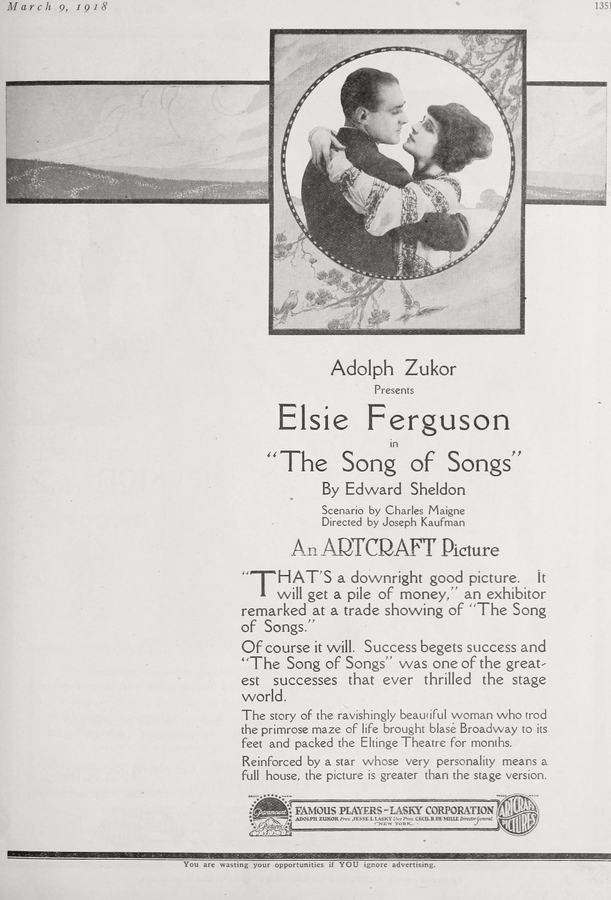
A Lyrical Journey Through Love's Labyrinth: Revisiting 'The Song of Songs'
In the annals of early cinema, certain films resonate not merely as historical artifacts, but as potent echoes of the human condition, their narratives transcending the limitations of their era. The Song of Songs, a 1924 silent drama, stands as one such cinematic utterance, a poignant exploration of ambition, vulnerability, and the relentless quest for an authentic self amidst societal strictures. Directed with a keen eye for emotional nuance, this film, based on Hermann Sudermann's novel and adapted by Charles Maigne and Edward Sheldon, unfurls a narrative tapestry rich with psychological depth and moral quandaries, positioning its protagonist, Lily, at the nexus of desire and despair.
The film opens not with grand pronouncements, but with a quiet tragedy: the departure of composer Anselm Kardos from a home shadowed by his wife's alcoholism. His legacy to his daughter, Lily, is twofold: an unfinished love ode, the titular "The Song of Songs," and a stark warning to temper her inherited artistic temperament. This initial scene, though brief, sets the stage for Lily's entire tumultuous journey. The melody, a symbol of unfulfilled passion and idealized love, becomes both a guiding star and a burdensome prophecy, while the caution against her own inherent nature foreshadows the internal and external conflicts that will define her path. It's a powerful metaphorical beginning, establishing the core tension between Lily's innate spirit and the world's expectations.
Lily, portrayed with an exquisite blend of innocence and burgeoning sensuality by Elsie Ferguson, is thrust into the world, navigating the opulent yet treacherous social landscapes of Palm Beach and Atlantic City as a salesgirl. Ferguson’s performance is a masterclass in silent film acting, conveying volumes with a glance, a subtle shift in posture, or the delicate tremor of a hand. Her beauty, undeniably captivating, becomes a magnet for the attention of a succession of wealthy, powerful men. This segment of the film functions as a stark commentary on the transactional nature of societal ascent for women in that era, where charm and appearance often served as currency in a marketplace of power and privilege. It brings to mind the societal pressures faced by protagonists in films like Sins of Ambition, where the pursuit of status often comes at a steep personal cost.
The narrative truly ignites with Lily's fateful decision to marry Senator Calkins, a man whose power is matched only by his unscrupulous nature. Robert Cummings imbues Calkins with a chilling gravitas, a figure whose charm barely conceals a calculating heart. The revelation of his past betrayal of Ann Merkle, his housekeeper, is not merely a plot point but a crucial character development, painting Calkins as a man capable of profound cruelty, foreshadowing the emotional wasteland Lily is about to enter. Ann Merkle, a character often relegated to the periphery in lesser narratives, is given a potent, if tragic, agency here. Driven by a corrosive jealousy and a desire for vengeance against Calkins, she impersonates Lily on the telephone, orchestrating a scandalous encounter with Dick Laird in Lily’s room. Gertrude Berkeley, in her portrayal of Ann, manages to evoke both pity and revulsion, making her a formidable, albeit misguided, antagonist.
The ensuing divorce, swift and brutal, leaves Lily utterly bewildered, her reputation shattered. This moment is a profound turning point, stripping her of the illusion of security and casting her into a moral wilderness. She becomes Laird's mistress, a relationship born not of love, but of circumstance and a desperate need for protection. This period of her life is depicted with a somber realism, avoiding sensationalism to instead focus on Lily’s internal struggle, her loss of agency, and the heavy societal judgment she endures. It’s a thematic echo found in other silent films exploring women's societal plight, such as Always in the Way, where female characters often grapple with scandal and the crushing weight of public opinion.
The narrative takes a redemptive turn with the introduction of Stephen Bennett, a musician whose artistic soul mirrors Lily's own. Henry Leone brings a refreshing idealism to the role of Stephen, offering Lily a glimpse of genuine connection untainted by avarice or social climbing. Their burgeoning romance is depicted with a tender authenticity, a stark contrast to Lily's previous entanglements. Stephen's willingness to look beyond her past, to see the woman beneath the layers of scandal, is a testament to his character and a beacon of hope for Lily. This relationship forms the emotional core of the film, highlighting the transformative power of unconditional love.

However, this fragile happiness is threatened by Stephen’s uncle, Phineas, a character who embodies the rigid moralism and class consciousness of the era. Frank Losee, as Phineas, delivers a compelling performance of a man convinced of his own righteousness, whose actions, though seemingly motivated by concern, are ultimately destructive. His resolve to break up the romance leads to a particularly cruel stratagem: plying Lily with champagne to expose her in an intoxicated state to the idealistic Stephen. This scene is masterfully executed, a moment of profound vulnerability for Lily and a devastating blow to Stephen’s innocent perception. It's a dramatic device that, while perhaps melodramatic by today's standards, perfectly captures the era's anxieties about female propriety and the fragility of reputation. The emotional fallout is palpable, leading to Stephen's departure for the West, leaving Lily once again abandoned and heartbroken.
The climax of The Song of Songs is a harrowing portrayal of despair and ultimate salvation. Lily, pushed to the brink by relentless misfortune and emotional devastation, contemplates suicide. This dark moment is not merely a plot device but a profound statement on the psychological toll of societal condemnation and personal betrayal. Elsie Ferguson's portrayal of Lily's desperation is raw and deeply moving, a powerful testament to the emotional depth silent film could achieve. It is Stephen’s dramatic return, a last-minute intervention, that saves her. His decision to marry her, despite all the societal obstacles and his uncle's machinations, is the ultimate act of love and redemption, completing the emotional arc of the film on a note of hard-won hope. This resolution, while perhaps fitting for the era, also prompts reflection on the extent to which Lily's agency is restored, or if she simply trades one form of dependence for another.
Beyond its compelling narrative, The Song of Songs is a fascinating study in early 20th-century filmmaking. The cinematography, while lacking the sophisticated techniques of later eras, effectively uses lighting and composition to enhance emotional impact. Close-ups on Ferguson’s expressive face are particularly effective, drawing the audience into Lily’s internal world. The pacing, characteristic of silent films, allows for prolonged moments of emotional intensity, relying heavily on the actors' physical and facial expressions to convey meaning. The film’s silent nature paradoxically amplifies its message; without dialogue, the visual storytelling and the emotional performances must carry the entire weight of the narrative, demanding a more active engagement from the viewer.
The cast, though perhaps less familiar to modern audiences beyond Ferguson, delivers solid performances that contribute to the film’s overall impact. Corene Uzzell, Ned Burton, Cecil Fletcher, and Charles Wellesley, alongside the aforementioned leads, form a cohesive ensemble that brings this tragic yet ultimately hopeful story to life. Their work underscores the collaborative nature of silent cinema, where every gesture, every movement, was meticulously crafted to communicate without the aid of spoken words. The dedication of these performers to their craft is evident in every frame, ensuring that the emotional beats of the story land with considerable force.
Thematically, The Song of Songs delves into several timeless concepts. The idea of an "artistic temperament" is central, presenting it as both a source of sensitivity and vulnerability. Lily's journey can be seen as a struggle to reconcile her innate passionate nature with a society that demands conformity and decorum, particularly from women. The film also explores the destructive power of jealousy and ambition, exemplified by Ann Merkle and Senator Calkins, respectively. It ponders the nature of true love – is it an ideal, a redemption, or merely another form of societal constraint? The unfinished ode, the "Song of Songs," remains a potent symbol throughout, representing the elusive, idealized love that Lily constantly seeks, a melody that only truly finds its harmony at the film's conclusion.
Comparing it to other films of its era, The Song of Songs stands out for its relatively nuanced portrayal of a fallen woman finding a path to redemption. Unlike some more overtly moralistic tales, it allows for a degree of empathy for Lily's choices, framing them as reactions to circumstance rather than inherent moral failings. While films like The Mystery Girl might offer a more straightforward adventure, The Song of Songs dives deeper into the psychological ramifications of a woman's journey through a judgmental world. It shares a thematic kinship with A Phantom Husband in its exploration of societal expectations and the complexities of relationships, albeit with a more dramatic and less comedic tone.
The film's enduring appeal lies in its ability to tap into universal anxieties about identity, reputation, and the search for belonging. Lily's transformation from an innocent girl to a jaded mistress, and finally to a woman embraced by genuine love, is a powerful arc that continues to resonate. It's a narrative that, despite its period setting, speaks to the timeless struggle of individuals caught between personal desires and external pressures. The question of whether Lily truly finds freedom or merely another form of societal acceptance is left somewhat open to interpretation, adding a layer of complexity to what could otherwise be a simple melodrama.
In conclusion, The Song of Songs is more than just a relic of the silent film era; it is a vibrant, emotionally charged drama that offers a compelling glimpse into the social mores and moral struggles of its time. Elsie Ferguson’s magnetic performance anchors a story that is both heartbreaking and ultimately uplifting, making it a film worthy of rediscovery. It is a testament to the power of early cinema to craft narratives of profound human experience, proving that even without spoken words, a story can sing with lyrical intensity and enduring resonance. This film invites us to reflect on the enduring power of love, the corrosive nature of jealousy, and the resilience of the human spirit in the face of overwhelming adversity. Its themes, though presented through the lens of a bygone era, remain strikingly relevant, offering a mirror to our own contemporary struggles with identity, societal expectations, and the pursuit of genuine connection in a world often too quick to judge.

IMDb —
1926
Community
Log in to comment.