DbcultAccessing Vault...
6.4/10
Senior Film Conservator
A definitive 6.4/10 rating for a film that redefined the boundaries of cult cinema. Beauty's Worth remains a cornerstone of transgressive art.
A nitrate whisper ignites the screen: Beauty's Worth opens on a slate sky pressing against clapboard, the austerity of Prudence Cole’s Quaker universe rendered in high-contrast chiaroscuro that makes even sunlight feel penitent. Directors Robert G. Vignola and Luther Reed—working from Sophie Kerr’s brisk scenario—never hurry the quiet; they let it pool until the silence itself becomes a kind of judgment day.
Marion Davies, often misremembered as Hearst’s showcase mannequin, here flexes comedic sinew. Her Prudence is no porcelain ingénue but a kinetic paradox: spine of steel, wrists that hesitate mid-gesture as though negotiating between piety and possibility. Watch the micro-shift in her gaze when Henry Garrison (Forrest Stanley, all enamel smirk and marcelline waistcoat) offers a gloved hand. Davies lets a pulse of suspicion flicker—half-second, lightning bug—before accepting. That flicker is the entire picture in embryo.
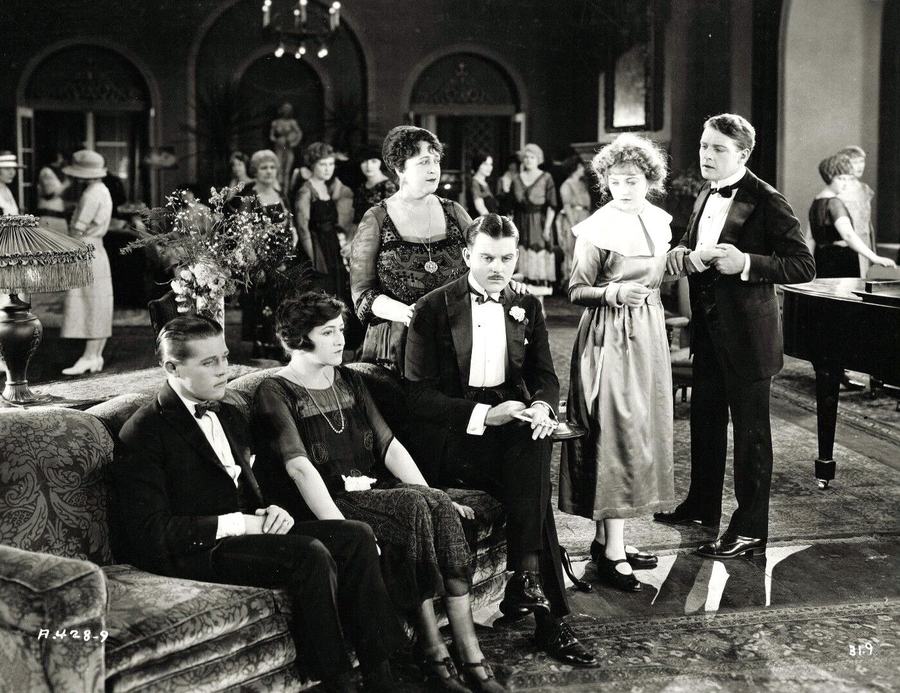
The resort sequence, a gilded aquarium of flappers and fops, is staged like a Rococo nightmare. Cameras glide past palms imported from Florida, past champagne coupes that catch electric sconces and throw amber coins across lacquered floors. Reed’s intertitles, peppered with slang that feels positively Jazz-Heart-adjacent, lampoon the leisure class with Wildean bite: “Chatter so shallow it could be forded in kitten heels.”
Prudence’s revenge is not a thunderclap but a slow thaw: she weaponizes etiquette, quoting George Fox until the beau monde choke on their own etiquette.
Visually the picture leans into two palettes: Quaker dun and ballroom helium. Cinematographer Allen G. Siegler bathes the farmstead in slate and umber, then explodes into citrus, sea-blue, and molten gold once Prudence steps into society. The chromatic pivot is so deliberate you can practically hear pigment speak. When Prudence finally dons a gown—sea-blue silk foaming around her ankles like a captured wave—the dress becomes manifesto: she has not surrendered her soul, merely translated it into silk.
Compare this chromatic grammar to the feverish monochrome of The Mad Woman or the patriotic reds and greens in El Grito de Dolores; here color is not patriotic but personal, a cartography of awakening.
Truly Shattuck and June Elvidge, as the resort’s resident mean girls, supply razor-edged support. They flutter their fans like semaphore flags of contempt, yet Davies undercuts them with the quiet confidence of someone who has spent Sundays contemplating damnation—hell holds no novelty for her. The comic timing is surgical: a misplaced dance card here, a deliberately mispronounced French phrase there, until the humiliation ricochets back to the oppressors.
One must tip the hat to screenwriter Sophie Kerr, a magazine satirist before Hollywood lured her west. Her intertitles crackle with flapper-era sprezzatura: “He mistook innocence for ignorance and found himself checkmated by both.” The epigrams land so cleanly you half-expect the words to remain on-screen and curtsy.
Yet beneath the froth lies a steely interrogation of commodification. Henry Garrison’s courtship is less romantic than transactional; he seeks a pastoral ornament, not a partner. Prudence’s countermove is to reveal the marketplace beneath the manners—she auctions her perceived naïveté for intellectual leverage, proving worth cannot be appraised by ballroom real estate. In that sense the film is cousin to Cash Customers, though where that picture scrutinizes consumer debt, this one dissects emotional credit.
Musically, the surviving prints often screen with a contemporary score—piano motifs that quote Shaker hymns, then pivot into minor-key rag. The juxtaposition mirrors the film’s thematic DNA: piety shaken by syncopation, austerity seduced by saxophone. When the final reel resolves, the cadence returns to modal simplicity, as though the universe exhales and reclaims its hush.
Restoration-wise, the 4K photochemical rescue by the Library of Congress reveals textures previously mummified: the herringbone of Henry’s waistcoat, the ghost-stitching on Prudence’s gray apron, the glint of celluloid rouge on Marion Davies’ cheeks. Scratches have been eased, yet the image retains a tremulous shimmer—appropriate for a narrative about surfaces and what lurks beneath.
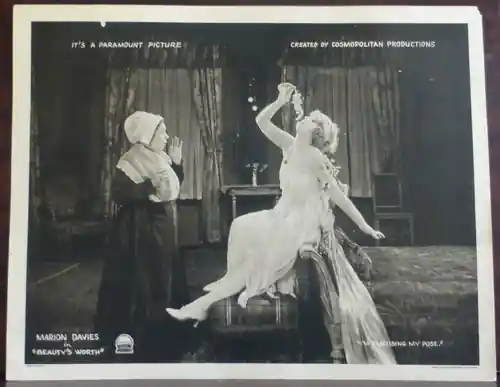
Some historians slot Beauty's Worth as a mere stepping-stone toward Davies’ later Speed or Voices, yet that undersells its singularity. The picture anticipates the social satire of 1930s screwball while remaining rooted in the moral binaries of silent melodrama. It is both antique and prenatal, a cinematic palimpsest.
Gender scholars will note that Prudence’s victory is not marital capture but epistemological: she rewrites the rules by which women are deciphered. The final tableau—Prudence striding down a boardwalk, sea-blue dress now swapped for sober Quaker gray, eyes blazing with unspent lightning—offers no conventional embrace. Love is implied, yet autonomy is confirmed. The camera cranes upward, relinquishing her to horizon, a gesture that feels closer to Varda than to Griffith.
Comparative footnote: the film’s class-conscious jabs prefigure the proletarian jousts of Zapugannii Burzhui by nearly a decade, though delivered with champagne flutes rather than sickles. Meanwhile its resort shenanigans echo the board-game plotting of Winning with Wits yet arrive at a more acid aftertaste.
Faults? A subplot involving a lost brooch dissipates like steam, and Johnny Dooley’s comic bellboy, while sprightly, could be excised without narrative hiccup. Yet these are quibbles against the film’s broader architectural integrity.
At a brisk five reels, Beauty's Worth never overstays its welcome; it is the cinematic equivalent of a perfectly mixed sidecar—bracing, aromatic, leaving a faint citrus burn. Contemporary streamers hungry for feminist prototypes could do far worse than champion this artifact, not as curio but as clarion.
Bottom line: seek it out, preferably on a big screen with live accompaniment. Let the sea-blue gown and the Quaker bonnet dialogue across the footlights. Let Davies’ eyes—equal parts mischief and manifest destiny—remind you that silence, when properly orchestrated, can be the loudest form of revolt.
—reviewed by a devotee of nitrate dreams and flicker-light revelations
IMDb 5.4
1934
Community
Log in to comment.