DbcultAccessing Vault...
5.3/10
Senior Film Conservator
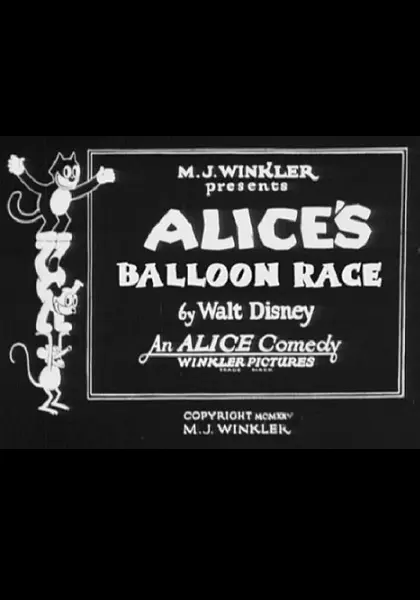
A definitive 5.3/10 rating for a film that redefined the boundaries of cult cinema. Alice's Balloon Race remains a cornerstone of transgressive art.
Is Alice's Balloon Race worth watching today? Short answer: absolutely, but with a significant caveat. This early animated short is a fascinating, frantic burst of creative energy, a must-see for animation historians and enthusiasts of the surreal, yet it will undoubtedly test the patience of those accustomed to more structured narratives.
It’s a film for anyone who appreciates the foundational anarchy of early cartoons, the raw, unbridled imagination that preceded Disney's polished narratives. However, it is decidedly not for viewers seeking sophisticated plot development, character depth, or even consistent internal logic. Prepare for delightful chaos, not a coherent story.
This film works because of its relentless, almost manic pace and its commitment to unadulterated visual gags. It’s a masterclass in early animation’s capacity for invention, where the rules of reality are gleefully ignored in favor of the next laugh or thrilling escapade. The sheer inventiveness of Julius’s solutions, from the hippo sneeze to the elephant balloon, is genuinely captivating.
This film fails because its narrative is less a cohesive story and more a series of escalating, disconnected incidents. The characters are archetypes, devoid of any real emotional arc, and the ending, while comically abrupt, offers little in the way of resolution. Its reliance on slapstick and surrealism over plot can feel exhausting if you're not in the right frame of mind.
You should watch it if you are an animation scholar, a fan of pre-code cartoons, or simply someone who enjoys witnessing the birth of cinematic imagination in its most unrefined, joyful form. It's a testament to the boundless creativity of its era, even if it feels jarringly unconventional by today's standards.
The plot of Alice's Balloon Race is less a carefully constructed narrative and more a breathless sprint through a series of increasingly absurd predicaments. From the moment the $10,000 prize is introduced, any pretense of a conventional storyline is abandoned. What follows is a relentless barrage of challenges and wildly inventive, often nonsensical, solutions.
The film establishes its central conflict with startling efficiency: a nefarious antagonist quickly eliminates one rival, setting the stage for a direct confrontation with Alice and Julius. This immediate escalation dictates the pace, which rarely lets up. Our protagonists are thrown from one crisis to the next, each more outlandish than the last.
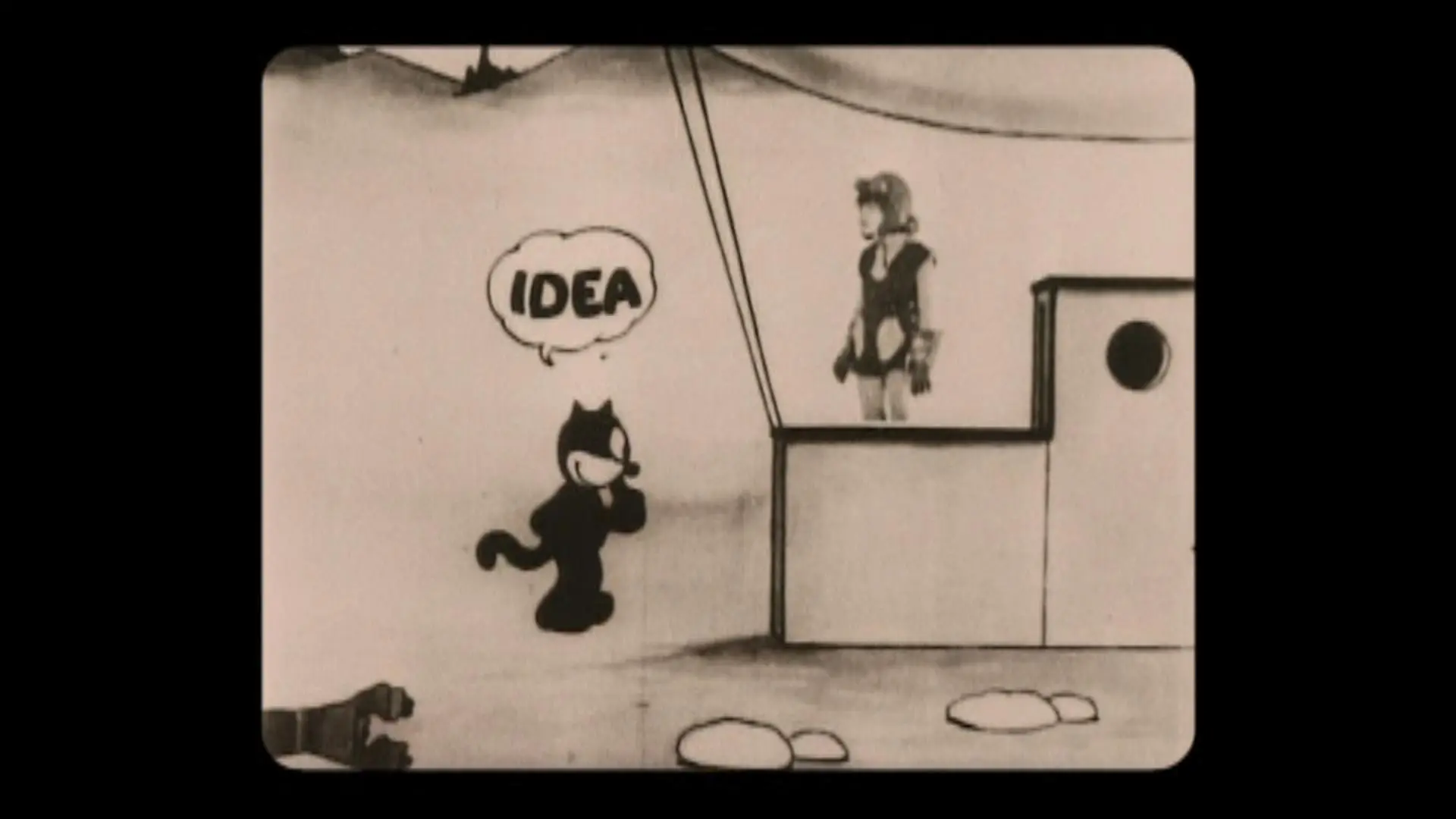
Julius’s desperate attempts to re-launch after their initial plummet—culminating in the surreal hippo-sneeze sequence—perfectly encapsulate the film's commitment to absurd solutions over logical ones. The internal logic is a delightful mess, a testament to an era of animation where visual gags reigned supreme, and the laws of physics were mere suggestions.
The pacing is frantic, almost exhausting. There’s no time for character development or quiet reflection. Every scene propels the action forward, often through sudden, violent shifts in fortune, such as the immediate transition from re-launch to a devastating lightning storm. It's a short film that feels packed to the brim, a dense confection of pure, unadulterated chaos.
For an early animated short, Alice's Balloon Race showcases a remarkable, if unrefined, visual energy. The hand-drawn lines vibrate with an almost palpable kineticism, a testament to the animators' dedication to constant motion. Characters stretch, squash, and distort with a rubber-hose fluidity characteristic of the era, bringing a vibrant elasticity to every frame.
The character designs are simple yet effective. Alice, portrayed by Margie Gay, is often a reactive observer, her expressions conveying the astonishment of the audience as Julius scrambles. Julius, on the other hand, is a whirlwind of frantic action, his inventive spirit driving the visual spectacle. The anonymous "bad guy" is less a character and more a persistent, shadowy force of antagonism, his actions serving purely to propel the conflict.
The direction, while perhaps rudimentary by modern standards, is incredibly effective in maintaining the film's breakneck pace. The camera rarely lingers, instead focusing on the immediate action and the unfolding gags. The visual storytelling relies heavily on exaggeration and slapstick, ensuring that even without dialogue, the narrative is perfectly clear in its intent: to entertain through sheer, unadulterated spectacle.
Consider the sequence where Julius substitutes the deflated balloon with a weiner dog and "thought balloons," then an elephant. This is not just a plot point; it's a visual manifesto. It declares, without words, that this film operates on its own unique, wonderfully deranged aesthetic. The absurdity is not a flaw; it's the very fabric of its charm. Frankly, the film’s internal logic is a delightful mess, and it’s all the better for it.
While the concept of "performance" in early animation, especially without extensive dialogue, differs greatly from live-action, the characters in Alice's Balloon Race nonetheless embody distinct roles that drive the film. Margie Gay, likely providing the voice and persona for Alice, imbues her with a sense of wide-eyed wonder and occasional exasperation, making her a
IMDb —
1919
Community
Log in to comment.