DbcultAccessing Vault...
5.9/10
Senior Film Conservator
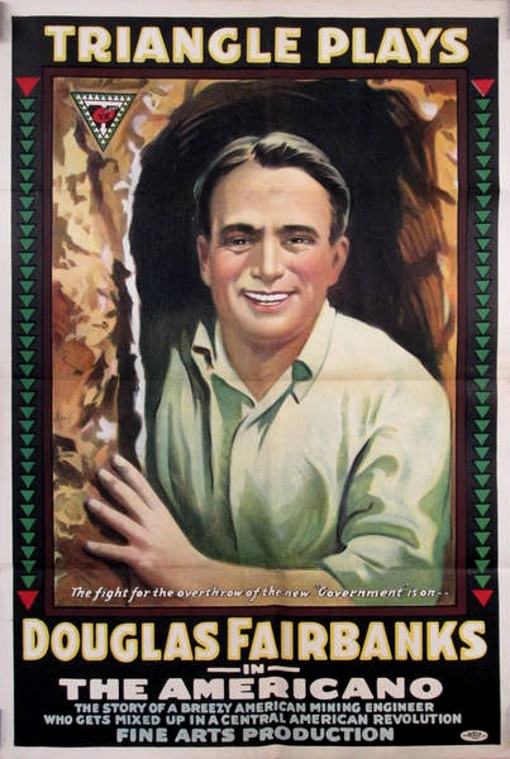
A definitive 5.9/10 rating for a film that redefined the boundaries of cult cinema. The Americano remains a cornerstone of transgressive art.
Stepping back into the golden age of silent cinema, one often finds themselves enchanted by the sheer dynamism and boundless charisma of its stars. Among them, Douglas Fairbanks reigns supreme as an icon of athletic grace and swashbuckling adventure. His 1916 vehicle, 'The Americano', is a vibrant testament to his early appeal, a film that encapsulates the era's fascination with exotic locales, political intrigue, and the irresistible allure of a dashing hero. Directed by John Emerson, who also co-wrote the screenplay with Anita Loos and Eugene P. Lyle Jr., this feature throws Fairbanks into a fictional South American republic, a setting ripe for the kind of derring-do that would define his career. It's a delightful romp, brimming with the kind of optimistic spirit and physical comedy that made Fairbanks a household name, even before his more elaborate productions like The Battle of the Sexes showcased broader social commentary. The film's energy is palpable, a direct reflection of Fairbanks's own vibrant personality, which practically leaps off the screen even a century later.
The narrative introduces us to Doug, an American mining engineer whose initial apathy towards reopening Paragonia's mines for President Valdez is quickly dispelled by the enchanting presence of Valdez’s daughter, Juana. It's a classic cinematic trope: the pragmatic man swayed by beauty, a theme explored in many films of the period, albeit with varying degrees of subtlety. But what begins as a potential romance swiftly escalates into a political maelstrom. Valdez's return to Paragonia is met not with accolades, but with a coup orchestrated by the nefarious Generals Sanchez and Garcia, who promptly imprison him in San Mateo. This abrupt shift from lighthearted flirtation to high-stakes political drama is handled with a swiftness characteristic of silent film storytelling, where visual cues and rapid intertitles drive the plot forward with relentless momentum. Fairbanks, as 'The Americano,' finds himself thrust into a foreign land, his initial business venture now secondary to a burgeoning sense of justice and, of course, a desire to protect the woman who has captured his attention. His journey into this tumultuous landscape is not unlike characters in other early adventures such as Wildfire or Vengeance of the Wilds, where protagonists are often outsiders navigating dangerous, unfamiliar territories.
Upon his arrival, Doug discovers his company's local office ransacked, a clear sign of the chaos gripping the nation. Yet, amidst the wreckage, he uncovers a loyal ally in the form of caretaker Dan, portrayed by the ever-reliable Tom Wilson. This dynamic of finding unexpected support in a hostile environment is a recurring motif in adventure narratives, adding depth to the hero's journey. The plot thickens considerably with the appearance of former Prime Minister Castille, now disguised as a humble peddler, an ingenious touch that injects an element of spy-thriller intrigue into the proceedings. This network of secret allies and hidden identities builds a compelling sense of urgency and danger, perfectly setting the stage for Fairbanks's heroic interventions. The film effectively uses these narrative devices to maintain a brisk pace, ensuring that the audience remains captivated by the unfolding events. The portrayal of Castille by an uncredited actor, possibly Tote Du Crow, adds to the film's texture, showcasing the depth of characterization even in supporting roles of the era.
The central mystery, however, revolves around President Valdez's desperate attempts to communicate from his prison cell. He scribbles the cryptic date '23 Noviembre 1899' onto scraps of paper, tossing them from his window as if mere garbage. This seemingly insignificant detail becomes the lynchpin of the entire escape plan. Juana, with a sharp mind and a keen sense of history, consults her father's diary, a repository of family secrets and historical events. There, she uncovers the profound significance of that precise date: it details a successful escape from San Mateo Prison, utilizing a long-forgotten secret tunnel. This revelation transforms the narrative from a simple rescue mission into a race against time, a puzzle to be solved with historical clues. The ingenuity of this plot device elevates 'The Americano' beyond a mere action film, imbuing it with an intellectual challenge that mirrors the physical obstacles faced by the characters. The tension is expertly ratcheted up when Garcia, the tyrannical general, issues a chilling ultimatum: Juana must marry him by the following day, or Valdez will face execution. This forces the hero and heroine into a desperate gambit, where every second counts and the stakes are impossibly high. The dramatic weight carried by Alma Rubens as Juana in these moments is commendable, her silent expressions conveying a potent mix of fear and resolve.
Fairbanks's performance as Doug is, as expected, a whirlwind of acrobatic feats, charming smiles, and unwavering resolve. He embodies the quintessential American hero – resourceful, brave, and driven by an innate sense of justice. His physical prowess is on full display, from daring escapes to impressive stunts, all executed with a natural grace that was his hallmark. This was an era when stars truly performed their own stunts, and Fairbanks set the gold standard. His distinctive style, blending athleticism with a lighthearted demeanor, made him incredibly relatable and aspirational to audiences. One can draw parallels to the spirited energy found in films like Over Night, where the pace and physical comedy are paramount. The chemistry between Fairbanks and Alma Rubens, who plays Juana, is palpable, adding a layer of romantic urgency to the political thriller. Rubens, with her striking beauty and expressive eyes, perfectly complements Fairbanks's energetic portrayal, creating a compelling romantic pairing that anchors the film's emotional core.
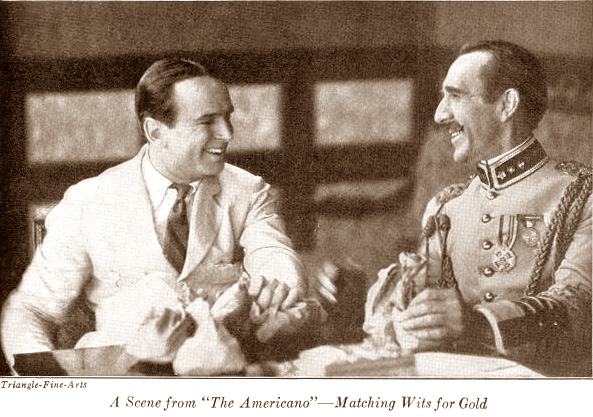
The supporting cast also deserves commendation for their contributions to the film's vibrant atmosphere. Spottiswoode Aitken as President Valdez brings a dignified vulnerability to his role, making his plight genuinely sympathetic. Alan Hale, a prolific character actor of the era, likely plays one of the generals or a key antagonist, lending his formidable presence to the forces opposing Fairbanks. Lillian Langdon and Carl Stockdale, though perhaps in smaller roles, contribute to the tapestry of Paragonia, populating the world with believable characters who react to the unfolding drama. Even minor roles, like those of Tote Du Crow and Charles Stevens, add texture and authenticity to the bustling scenes of revolution and intrigue. The collective efforts of this ensemble, under Emerson's direction, create a cohesive and believable world, despite the melodramatic conventions of the time. The narrative's pacing, a crucial element in silent film, is masterfully handled, building suspense and releasing it with well-timed action sequences and emotional beats.
Anita Loos and John Emerson, a formidable writing duo, crafted a screenplay that is both adventurous and surprisingly witty. Their ability to infuse the melodrama with moments of levity and clever plot twists is a testament to their skill. Loos, in particular, was known for her sharp wit and understanding of human nature, which shines through in the characterizations and dialogue (or rather, intertitles) of 'The Americano'. The film avoids being overly simplistic, instead offering a narrative that, while adhering to silent film conventions, possesses a certain depth in its exploration of themes like loyalty, freedom, and the fight against oppression. The political backdrop, though fictionalized, taps into contemporary anxieties and fascinations with Latin American politics, a common theme in early 20th-century American popular culture. This thematic richness is what elevates films like 'The Americano' beyond mere spectacle, giving them an enduring resonance that speaks to universal human experiences, much like the timeless tales found in Called Back or Saints and Sorrows.
The visual storytelling, a cornerstone of the silent era, is particularly strong in 'The Americano'. Director John Emerson utilizes dynamic camera angles and expressive mise-en-scène to convey emotion and drive the plot. The set designs, particularly those depicting the prison and the presidential palace, are effective in establishing the contrasting environments of oppression and power. The use of intertitles is judicious, providing necessary exposition without bogging down the visual flow. One can appreciate how the filmmakers relied on the actors' physicality and facial expressions to communicate nuanced emotions, a skill that is often overlooked in contemporary cinema. The film's action sequences, while perhaps less elaborate than later Fairbanks productions, are expertly choreographed, showcasing his remarkable agility and charisma. The climactic escape, leveraging the secret tunnel and the historical precedent, is a masterclass in silent film suspense, building to a thrilling crescendo that leaves the audience on the edge of their seats. This kind of meticulous planning and execution in action sequences is a hallmark that connects it to other adventure films of the era, such as Northern Lights, which also relied on dramatic tension in its setting.
Reflecting on 'The Americano' today, it serves as a fascinating artifact of early Hollywood, showcasing the formative years of one of cinema's greatest stars. It's a film that, despite its age, retains a remarkable freshness and energy, largely due to Fairbanks's magnetic presence. It reminds us of a time when cinema was still finding its voice, experimenting with narrative structures and visual language, yet already capable of producing captivating entertainment. The film's themes of foreign adventure, political upheaval, and romantic heroism continue to resonate, proving the timeless appeal of a well-told story. While it might not possess the grand scale of his later epics like 'The Mark of Zorro' or 'Robin Hood', it is a crucial stepping stone in his career, demonstrating the raw talent and boundless potential that would soon make him a global phenomenon. For silent film enthusiasts and newcomers alike, 'The Americano' offers a delightful glimpse into a bygone era of cinematic magic, a testament to the power of pure, unadulterated escapism. It's a film that embodies the spirit of adventure, inviting viewers to lose themselves in a world where courage, quick wits, and a dash of romance can conquer all odds, a sentiment echoed in many of Fairbanks's films, including the more lighthearted The Caprices of Kitty, which also relies on his charm. The enduring legacy of films like this lies not just in their historical significance, but in their continued ability to entertain and inspire, proving that true cinematic artistry transcends the boundaries of time and technological advancement.
The film's exploration of political corruption and the struggle for freedom, even within a melodramatic framework, adds a layer of social commentary that was often present in silent films, sometimes subtly, sometimes overtly. The depiction of a volatile South American nation, while undoubtedly a product of its time and potentially stereotypical by modern standards, serves as an effective backdrop for the hero's journey. It allows for the creation of clear antagonists in Generals Sanchez and Garcia, whose greed and ambition provide the necessary conflict. The ultimate triumph of good over evil, a staple of the genre, is particularly satisfying here, as it comes through clever planning and courageous action rather than sheer brute force alone. This blend of brains and brawn is a characteristic trait of Fairbanks's heroes, making them not just physically impressive but also intellectually engaging. The film, in its own way, touches upon the universal desire for self-determination and the inherent risks involved in challenging oppressive regimes. It's a testament to the power of individual agency, even when faced with overwhelming odds, a theme that resonates across various genres and periods, from the dramatic tension of The Typhoon to the more personal struggles in Ill Starred Babbie.
In conclusion, 'The Americano' is more than just a historical curiosity; it's a vibrant, engaging adventure film that stands as a strong example of early silent cinema. It captures Douglas Fairbanks at the height of his youthful vigor, showcasing the athletic prowess and irresistible charm that would define his legendary career. The clever plot, the compelling performances, and the sheer joy of watching Fairbanks in action make it a thoroughly enjoyable experience. It reminds us of the foundational elements of storytelling that continue to captivate audiences: a hero, a damsel in distress, a formidable foe, and a thrilling quest. The film, through its unique blend of romance, action, and political intrigue, cemented Fairbanks's status as a leading man and offered a template for countless adventure films to follow. It's a valuable piece of cinematic history that still pulses with life, offering a delightful escape into a world of daring rescues and heroic deeds, much like the captivating visual narratives in Lady Mackenzie's Big Game Pictures, which also transported audiences to exotic locales. For those seeking an authentic taste of silent film's golden age, 'The Americano' is an absolute must-see, a testament to the enduring power of classic storytelling and the unforgettable charisma of its star.
IMDb 4.1
1929
Community
Log in to comment.