DbcultAccessing Vault...
5.4/10
Senior Film Conservator
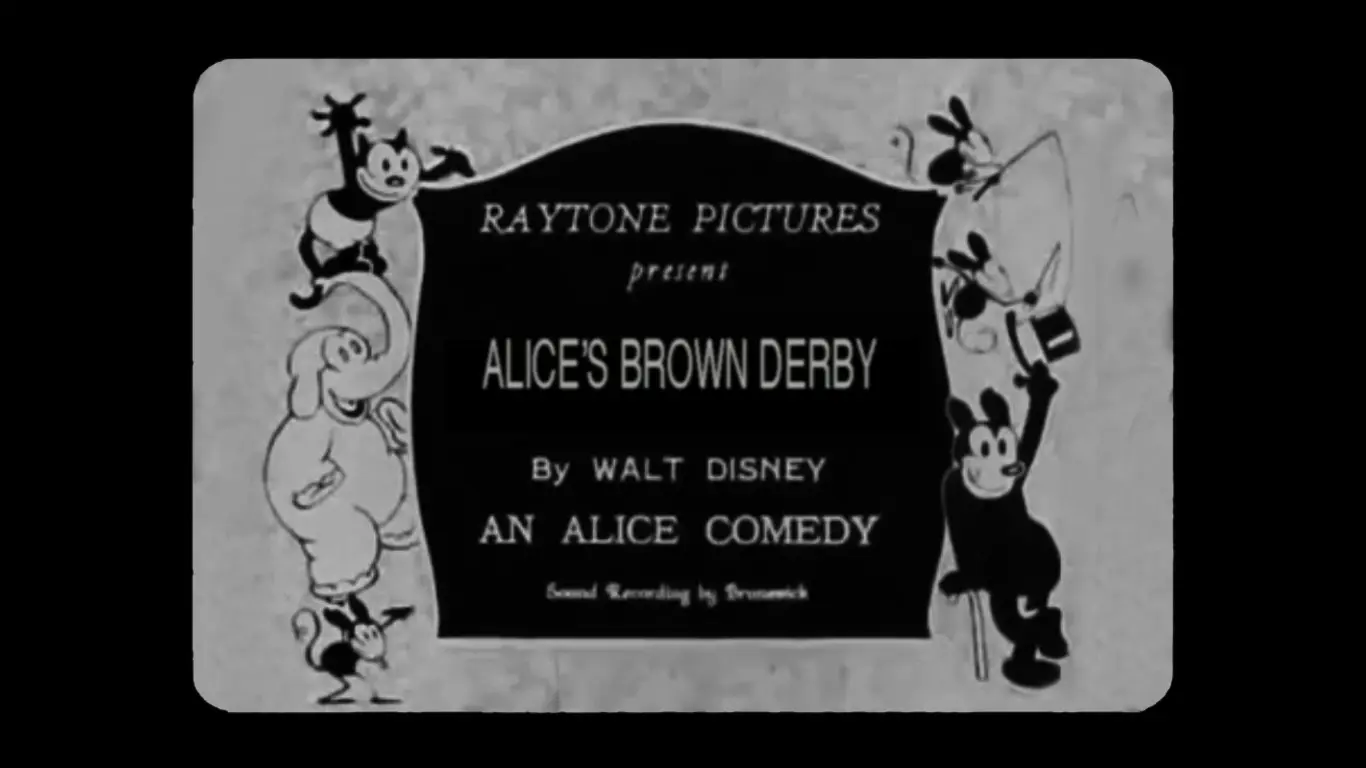
A definitive 5.4/10 rating for a film that redefined the boundaries of cult cinema. Alice's Brown Derby remains a cornerstone of transgressive art.
Is 'Alice's Brown Derby' worth watching today? Short answer: absolutely, if you appreciate the foundational quirks of early animation and the historical lineage of Walt Disney's formative years. For anyone seeking a polished narrative, intricate character development, or high-definition visuals, however, this 1926 short will likely feel like a quaint, albeit historically significant, curiosity.
It serves as a fascinating time capsule, a glimpse into the raw, experimental energy that defined the birth of a new art form. This film is unequivocally for animation historians, Disney aficionados, and anyone curious about the rudimentary building blocks that led to the animated spectacles we enjoy today. It is decidedly not for casual viewers accustomed to modern animation's complexities, nor for those who demand sophisticated storytelling or deep emotional resonance from their cinematic experiences.
This film works because of its undeniable historical significance, its pioneering blend of live-action and animation, and the sheer, unbridled inventiveness of its gags, rudimentary though they may be. It offers a crucial window into the origins of a global entertainment empire.
This film fails because its narrative is simplistic to the point of being almost non-existent by modern standards, its characterizations are broad, and its technical execution, while impressive for its time, pales in comparison to later animated works.
You should watch it if you are a student of animation history, a dedicated Disney fan tracing the studio's earliest steps, or someone who finds genuine joy in the charming, unpolished innocence of silent-era cartoons.
'Alice's Brown Derby' is more than just a cartoon; it's a vital artifact from the nascent days of Walt Disney's career, part of the 'Alice Comedies' series. These shorts, produced between 1923 and 1927, were groundbreaking for their innovative blend of live-action actress (first Virginia Davis, then Margie Gay, who features here) interacting with animated characters.
This fusion was a technical marvel for its time, a bold experiment that laid crucial groundwork for future animation techniques. It wasn't just about drawing; it was about integrating two disparate visual mediums into a coherent, if fantastical, reality.
The series predates the creation of Oswald the Lucky Rabbit and, of course, Mickey Mouse. Understanding 'Alice's Brown Derby' requires placing it within this historical context. It's not meant to compete with the narrative depth of a Pixar film or the visual richness of a Studio Ghibli production.
Instead, its value lies in its pioneering spirit. It’s a testament to the early animators' drive to simply make pictures move and tell stories, however simple, in a new and exciting way. The very existence of a film like this speaks volumes about the ambition of its creators.
The charm, for a modern viewer, isn't in its narrative sophistication, but in its audacious simplicity. It’s a window into a bygone era, where the magic was in the movement itself, not just the story it conveyed. This perspective is crucial for appreciating its unique place in cinematic history.
The plot of 'Alice's Brown Derby' is as straightforward as a single-panel comic strip: a horse race, a mechanical horse, and a villain trying to cheat. There's no complex character arc, no profound thematic exploration. It’s a vehicle for gags, pure and simple.
Julius the Cat, a clear precursor to Disney's later anthropomorphic stars, rides a mechanical horse, a concept that immediately sets a whimsical, almost absurd, tone. This isn't about the thrill of natural athleticism; it's about the spectacle of man-made contraptions battling it out.
Pete, the familiar pot-bellied antagonist, is the primary driver of conflict. His attempts to cheat are the film's comedic backbone. From trying to physically derail Julius’s mechanical mount to perhaps tampering with the track itself, each effort is met with cartoonish failure.
One can imagine Pete attempting to grease the gears of Julius's horse, or perhaps even trying to swap out parts mid-race, only to have his own efforts backfire spectacularly. These are the kinds of visual jokes that define early animation – physical comedy over verbal wit.
The pacing is brisk, driven by the rapid-fire succession of Pete's failed schemes and Julius's stoic, if mechanical, progress. There’s little time for reflection or character development; the film moves from one slapstick moment to the next, aiming for consistent, if predictable, laughs.
This episodic, gag-driven structure is characteristic of early shorts. They weren't designed for deep immersion but for quick amusement, often shown before a feature film. The repetition of the 'Pete tries to cheat, Pete fails' formula is not a flaw in this context, but rather the very essence of its comedic appeal.
The triumvirate of Alice, Julius, and Pete forms the core of the 'Alice Comedies.' Margie Gay, as the live-action Alice, serves as the grounding element in this animated world. Her role is often one of observation, reaction, and sometimes, gentle intervention.
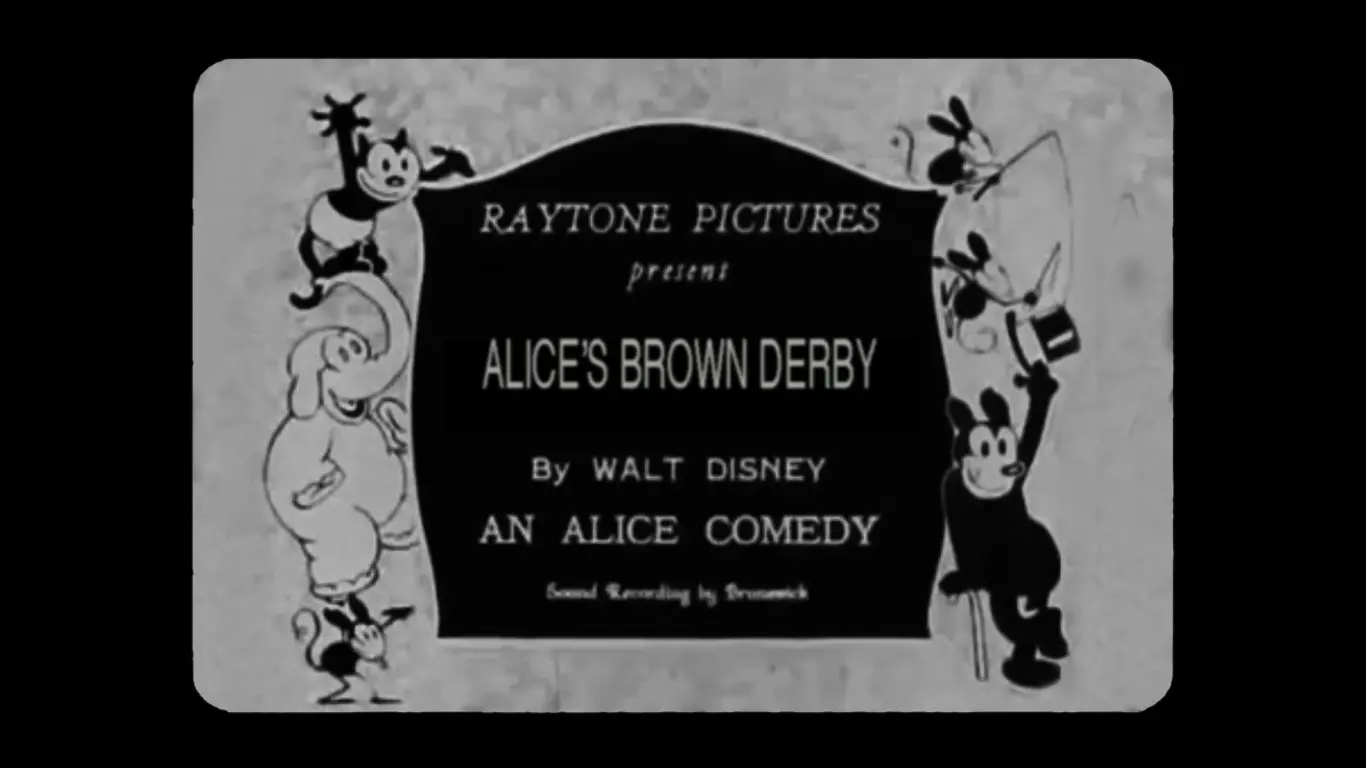
Alice acts as the audience's surrogate, her wide-eyed wonder or concern mirroring our own. While not a complex character, her presence provides a human anchor, making the cartoonish antics feel more tangible. Her expressions, though subtle, guide the viewer's emotional response to the zany events unfolding.
Julius the Cat, a character often overshadowed by his more famous successors, is surprisingly charismatic. He’s resourceful, resilient, and possesses a quiet determination. His expressions, limited by the animation technology of the time, convey much through simple gestures and body language.
Julius's mechanical horse, almost a character in itself, adds another layer of personality. Its jerky, deliberate movements are part of the humor, contrasting with the fluid, often exaggerated, actions of the animated characters around it.
And then there's Pete. Pete is the quintessential early cartoon villain: big, blundering, and perpetually thwarted. His villainy, while rudimentary, is undeniably effective in its slapstick execution, a testament to the era's understanding of comedic beats.
He doesn't need a complex backstory; his motivation is clear – to win by any means necessary, and his comeuppance is always satisfying. Pete’s exaggerated physicality, his bulbous nose, and his often-comical rage are all key elements that would be refined in later Disney antagonists.
To critique the animation of 'Alice's Brown Derby' by modern standards would be missing the point entirely. This is a film from 1926, a period when animation was still finding its feet, experimenting with techniques that would become industry standards.
The black-and-white visuals are stark, yet effective. The backgrounds are often simple, serving as a functional stage for the characters rather than immersive environments. The focus is squarely on movement, on bringing life to drawings.
The blend of live-action and animation, a hallmark of the 'Alice Comedies,' required meticulous planning and execution. The seamlessness, or occasional charming lack thereof, of Alice interacting with Julius and Pete was a technical challenge that Disney's team tackled with remarkable ingenuity.
Consider the scene where Alice might be seen reacting to Julius’s mechanical horse, perhaps reaching out to pat its metallic mane, or even trying to fix a loose gear. Such moments, however brief, were complex to achieve, demanding precise timing and perspective matching.
The direction, likely overseen by Walt Disney himself, emphasizes clear sightlines for the gags. The camera is largely static, allowing the action to unfold within the frame. Editing is functional, designed to maintain the comedic rhythm and advance the simple plot.
The energy of the film, despite its technical limitations, is palpable. There’s a raw, almost frenetic quality to the animation that captures the excitement of the era. It works. But it’s flawed. This isn't about polished artistry; it’s about the sheer joy of creation.
The implied musical accompaniment (as it was a silent film) would have been crucial, guiding the audience's emotional response and accentuating the comedic beats. A lively, upbeat score would have transformed the visual gags into a symphony of slapstick.
Yes, 'Alice's Brown Derby' is absolutely worth watching today, but with significant caveats. It is essential viewing for anyone interested in the foundational history of animation, particularly the early works of Walt Disney. It offers a unique window into the experimental phase of a medium that would revolutionize entertainment.
However, for a casual viewer accustomed to the narrative sophistication and visual polish of modern animation, it might feel rudimentary and slow. Its charm lies in its historical context and pioneering spirit, not in its ability to compete with contemporary storytelling.
Watch it to understand where it all began. Watch it to appreciate the humble beginnings of a studio that would define animated storytelling for generations. Do not watch it expecting a complex plot or deep character development.
'Alice's Brown Derby' is not a film to be judged by the standards of today's animation, nor should it be. It is a vibrant, if rudimentary, piece of cinematic history, a crucial stepping stone in the evolution of an art form. Its charm lies not in its polished execution but in its raw, experimental energy and its undeniable historical weight.
For those willing to approach it with an appreciation for its context, it offers a delightful, often amusing, glimpse into the foundational work of Walt Disney and his early team. It’s a testament to the fact that even the grandest cinematic empires began with simple ideas and boundless imagination.
Don't expect a revelation in storytelling, but do expect to witness the humble, yet ingenious, beginnings of a medium that would captivate the world. It’s a worthwhile watch for the curious and the committed, a genuine piece of animated heritage that continues to resonate with its pioneering spirit, even if the horses are made of metal and the gags are decidedly low-tech.
IMDb —
1936
Community
Log in to comment.