DbcultAccessing Vault...
Cult Review
Senior Film Conservator
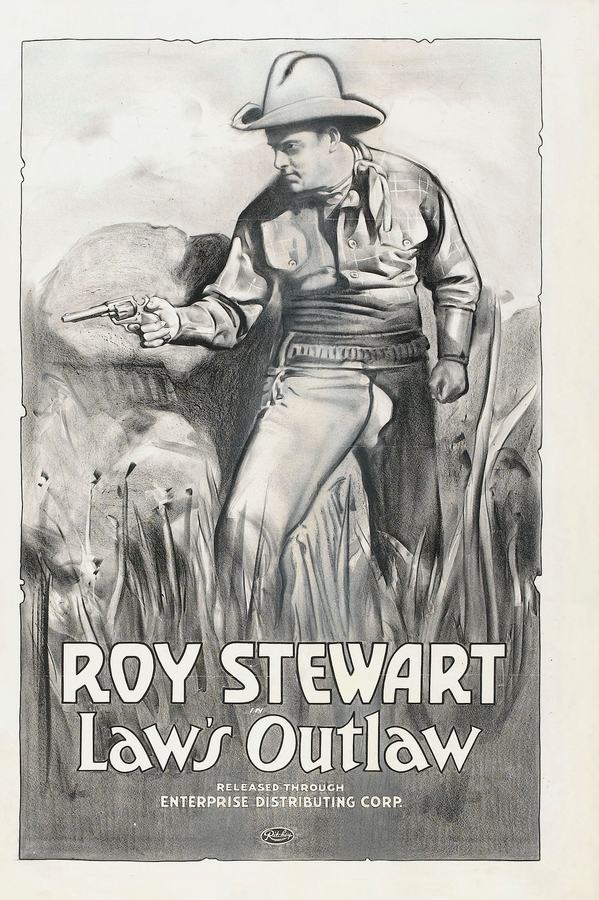
Charles Easton’s boots hit Pyramid County dust like penitent fists, and already the frame tilts: fences sag like gutted accordions, cattle bones bleach beneath a cobalt sky, and the election tally nailed to the saloon door reads like a public castration. Director Alan James—never one to flinch from operatic humiliation—lets the camera linger on that scrap of paper until the ink becomes a scar. We feel the county snickering.
Rose Davison’s entrance is a masterclass in chiaroscuro heartbreak. Cinematographer Robert P. Thompson back-lights her through a tattered lace curtain so that every pleading gesture turns to stained-glass; her whispered plea ricochets off the rafters like a chapel bell. The stakes crystallize: reclaim honor, avenge her battered father, resurrect the future that voters pilfered.
Cue the obligatory desert trek—yet James refuses the picturesque postcard. Instead we get alkali storms that scald the lens, tumbleweeds rolling like drunken philosophers, and a horizon that wobbles between hope and mirage. Ethan Ransford ambles alongside our tarnished protagonist, silver star winking like a taunt. Their dialogue is sparse—intertitles carved with a stiletto—but the subtext howls: two alpha peacocks shackled to the same plot twist.
Then comes the gunshot—off-screen, cheeky, almost Hitchcockian. Ethan plummets. Charles’ revolver smokes. James cuts to a raven gliding overhead, an omen stitched against bleached sky. In that instant the film pivots from political fable to existential chase, because every spectator in 1924 knew the Production Code’s first commandment: thou shalt not kill the sheriff and roam free. Our hero’s exile splinters the narrative into two tonal hemispheres: the sun-scorched courtroom of public opinion and the subterranean fraternity of Hawk’s Nest.
Ah, Hawk’s Nest—cinema’s forgotten Babylon. Imagine The Lair of the Wolf without velvet decadence, replace it with sandstone vertigo and outlaw tribalism. Production designer Alfred Hollingsworth carved corridors into cliff faces, creating negative spaces where morality evaporates. Charles’ integration is filmed like a pagan baptism: torchlight licks his cheekbones while a fiddle screeches variations on “Oh! Susanna.” He swigs rotgut, embraces villainy, yet his eyes—those pale daggers—stay fixed on the exit sign of redemption.
The screenplay, credited to siblings Ethel & James Dorrance, flirts with moral relativism a full decade before Ford’s Stagecoach. Charles learns that the bandits, too, wear scars dealt by bankers and railroad barons; their crimes are merely capitalism inverted. Such nuance in 1924 feels almost anachronistic, like finding a Tesla coil in a cattle town.
But make no mistake: this is still a silent-era contraption, reliant on grand gestures. Norbert Cills—channeling a hybrid of Fairbanks’ swagger and Gilbert’s wounded glamour—delivers a performance calibrated for the back row. Watch the way his shoulders vault when he recognizes the true assailants: a micro-expression that blooms into macro vengeance. Conversely, Roy Stewart’s Ethan remains irritatingly two-dimensional, a walking archetype of lawful smugness; one wonders what Corruption’s psychological rot could have done for his résumé.
Fritzi Ridgeway’s Rose is more than decorative collateral; her final sprint down the muddy main street, petticoats hitched like battle flags, reconfigures the damsel into co-author of destiny. Their climactic clinch transpires amid swirling confetti of election pamphlets—an ironized benediction where ballots replace roses.
James’ editing rhythm gallops toward a deus-ex-machina that modern viewers might scoff at—Ethan’s resurrection explained away with a single intertitle—yet within the allegorical register of silent melodrama it lands as cosmic justice. The badge passes, the lovers lock lips, the iris closes in a perfect circle of mythic closure.
Compare this to Temblor de 1911 en México, where revolution devours personal arcs, or to The Dark Road, whose noir fatalism would sneer at such tidy redemption. The Law’s Outlaw chooses communion over cynicism—a sermon wrapped in gun-smoke.
From a preservation standpoint, the surviving 35 mm print (Library of Congress, 2019 restoration) brims with photochemical bruises—scratches like lightning forks across the third reel—yet these scars only amplify the film’s frontier authenticity. Matti Pohjonen’s new electro-acoustic score—blending bowed banjo, prepared piano, and desert field recordings—premiered at Pordenone and turns every dust mote into percussive tension.
Bottom line: The Law’s Outlaw is a rowdy, morally liminal gem that anticipates both the psychological Westerns of the ’40s and the anti-hero sagas streaming onto your television tonight. It wrestles with the American delusion that law and lawlessness are binary, then answers with a grin: sometimes the hangman’s knot becomes the very lariat that drags justice home.
Seek it out—preferably on a big screen, preferably with a crowd ready to whoop. The silent era may have passed, but Charles Easton’s echo still spurs across the mesa, reminding us that every badge is merely a coin flipped between duty and desire.
IMDb 7.1
1933
Community
Log in to comment.