DbcultAccessing Vault...
6.2/10
Senior Film Conservator
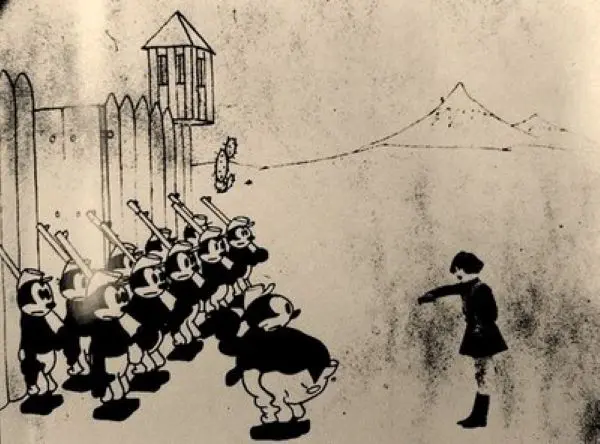
A definitive 6.2/10 rating for a film that redefined the boundaries of cult cinema. Alice's Three Bad Eggs remains a cornerstone of transgressive art.
Is 'Alice's Three Bad Eggs' worth your precious viewing time today? Short answer: yes, but with significant caveats that demand a particular kind of cinephile. This film is a fascinating, if imperfect, window into early Westerns, making it essential viewing for silent film enthusiasts and genre historians. Casual viewers seeking modern pacing or sophisticated narrative arcs, however, will find themselves struggling to connect with its raw, untamed spirit.
It's a relic, undoubtedly, but one that still pulses with a surprising amount of life for those willing to meet it on its own terms. This isn't a film designed for passive consumption; it asks for an active engagement with its historical context and its pioneering spirit. It works. But it’s flawed. It's a foundational text for understanding where the Western began, not a polished entertainment product for contemporary audiences.
This film works because of its historical significance, the undeniable, nascent charm of its young star, Lois Hardwick, and the raw, unpolished energy that characterized so much of early Western filmmaking. It offers a direct, unfiltered glimpse into the storytelling conventions of its era, a time when narrative economy was king and spectacle was often achieved through sheer, unadulterated action.
This film fails because of its simplistic plot, often problematic and culturally insensitive depictions of Native Americans, and the inherent technical limitations of its production era. The narrative, while direct, lacks the complexity and character development that modern audiences expect, often reducing motivations to cartoonish extremes.
You should watch it if you appreciate the unique artistry of silent cinema, are studying the evolution of the Western genre, or have a deep affection for early child stars and their foundational contributions to film history. It's a piece of cinema archaeology, rewarding for those with the right tools and mindset.
'Alice's Three Bad Eggs' plunges us directly into the heart of a classic Western predicament: a isolated fort, vulnerable and under siege. The premise is as straightforward as the title suggests, establishing a clear-cut conflict that pits the youthful protagonists, Alice and Julius, against two distinct forces of antagonism. On one side, we have the titular 'Three Bad Eggs,' a trio whose villainy is communicated more through their collective presence and implied nefariousness than through any intricate character development. They represent the archetypal outlaw, a force of chaos in a world striving for order.
The second, and arguably more potent, threat comes from a band of marauding Indians. This element immediately grounds the film in a deeply problematic, yet historically prevalent, trope of early Westerns. The narrative doesn't pause to offer nuance; it simply presents these groups as external dangers to be overcome, driving the plot forward with urgent, primal stakes. The fort itself becomes a character, a symbol of fragile civilization clinging to existence on the frontier.
The story’s strength lies in its unvarnished directness. There are no subplots to distract, no complex moral dilemmas to unravel. The goal is clear: survive. This simplicity, while a potential failing by contemporary standards, was a hallmark of silent-era storytelling, designed to be universally understood through action and broad emotional strokes. It’s a testament to the era’s filmmaking philosophy, where visual storytelling took precedence over intricate dialogue or character psychology.
The narrative flow is remarkably fluid for its time, moving from moments of quiet tension within the fort to bursts of intense action. We see the preparations for defense, the mounting anxiety of the besieged, and the inevitable clashes. This clear progression ensures that even without spoken words, the audience is never lost in the unfolding drama. It’s a masterclass in conveying information through purely visual means, a skill often overlooked in today's dialogue-heavy cinema.
At the tender age of five, Lois Hardwick carries a significant portion of this film's emotional weight, a truly remarkable feat. Her performance as Alice is not just competent for a child actor of her era; it's genuinely captivating. Hardwick possesses an innate screen presence, a natural charisma that cuts through the grainy black and white and the limitations of silent film acting. She isn't merely reciting lines or hitting marks; she embodies a spirit of youthful resilience.
Hardwick's expressions are key to her success. In moments of peril, her wide eyes convey genuine fear, drawing the audience into her predicament. Yet, she also projects a determined bravery, a spark of defiance that makes her a compelling protagonist. One particular scene, where she attempts to help Julius secure the fort's defenses, showcases her blend of childish innocence and burgeoning courage. It’s a delicate balance that few adult actors could manage, let alone a child.
Her interaction with Julius, presumably an older companion or guardian, feels authentic. Their bond is established through shared glances and collaborative efforts, making their fight for survival feel earned. This isn't a child simply reacting; it's a child actively participating in the narrative's central conflict. Her performance elevates what could have been a purely functional character into someone the audience genuinely roots for.
Comparing her to other child actors of the era, Hardwick stands out for her naturalism. While many silent film performances, even by adults, could lean towards exaggerated pantomime, Hardwick's portrayal feels remarkably grounded. She avoids the pitfalls of overacting, instead relying on subtle gestures and expressive facial work to communicate Alice's thoughts and feelings. This makes her performance feel surprisingly modern in its understated power.
The direction in 'Alice's Three Bad Eggs' is characterized by its utilitarian approach, prioritizing clarity and action over stylistic flourish. This isn't a criticism; rather, it speaks to the practical demands of early filmmaking, especially in the Western genre. The camera serves as a direct observer, positioning itself to capture the unfolding drama with minimal fuss. Long shots establish the isolated fort against the vast, unforgiving landscape, immediately conveying the vulnerability of its inhabitants.
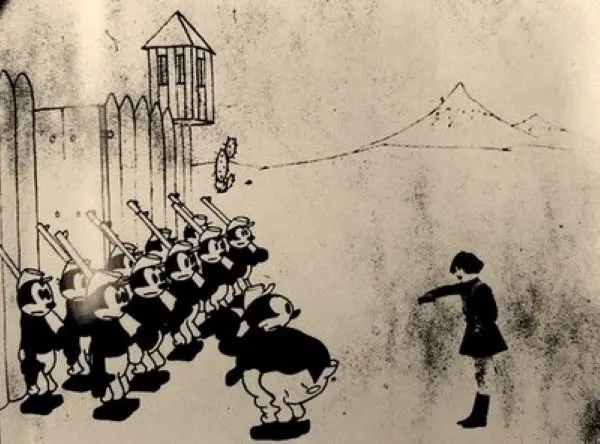
The cinematography, while lacking the sophisticated camera movements and lighting techniques of later eras, possesses a raw authenticity that is often missing from more polished productions. The outdoor locations are shot with a stark realism, making the dust, the sun, and the rugged terrain feel palpable. There's a particular shot of the 'Three Bad Eggs' approaching the fort on horseback, silhouetted against the horizon, that, despite its simplicity, effectively communicates menace and impending doom.
Action sequences, particularly the skirmishes at the fort, are staged with a clear understanding of spatial dynamics. We see the attackers attempting to breach defenses, and the defenders retaliating, allowing the audience to follow the ebb and flow of the battle. While the editing might feel abrupt by today's standards, it contributes to a sense of urgency and immediacy. The cuts are often functional, designed to propel the narrative forward rather than to create complex visual metaphors.
The limitations of the era, such as the fixed camera positions and the lack of deep focus, are not hindrances but rather define the film's aesthetic. They force the filmmakers to be inventive within their constraints, relying on strong blocking and actor positioning to convey meaning. It's a testament to the foundational principles of visual storytelling, demonstrating how much could be achieved with relatively simple tools. The film, in its own way, feels like a precursor to the gritty realism that would characterize some Westerns decades later.
The pacing of 'Alice's Three Bad Eggs' is remarkably brisk, especially for a silent film. There's little wasted time, as the narrative quickly establishes the premise and plunges into the central conflict. This efficiency is a definite strength, keeping the audience engaged through a constant sense of impending danger and immediate action. Unlike some silent features that could meander, this film knows its destination and moves towards it with purpose.
The tone is consistently one of adventure and peril. There are no moments of comedic relief or profound philosophical introspection. It's a straightforward tale of survival against external threats. This singular focus ensures that the tension, once established, rarely dissipates. From the first sighting of the 'Bad Eggs' to the final confrontation, the atmosphere remains charged with a sense of urgency, reflecting the life-or-death stakes for Alice and Julius.
The film maintains a relentless forward momentum, driven by the dual threats. Each sequence builds upon the last, escalating the danger. We witness the strategic attempts to breach the fort, the desperate defenses, and the constant vigilance required of the protagonists. This sustained intensity is a testament to the director's understanding of how to build suspense within the confines of silent cinema, utilizing visual cues and the unfolding events to keep the audience on edge.
While the lack of tonal variation might feel one-note to modern viewers accustomed to more complex emotional landscapes, it perfectly serves the film's core purpose: to deliver an exciting, uncomplicated Western adventure. It's a pure distillation of genre, focusing on immediate thrills and the primal struggle between good and evil. This unadorned approach allows the raw energy of the performances and the action to shine through without distraction.
To discuss 'Alice's Three Bad Eggs' without addressing its historical context, particularly regarding its portrayal of Native Americans, would be a disservice. The film, like countless Westerns of its era, defaults to the trope of 'marauding Indians' as an undifferentiated, hostile force. They are presented as a faceless threat, lacking individual agency or motivation beyond aggression against the white settlers. This is, unequivocally, a problematic and deeply regrettable aspect of early cinema, reflecting the prevailing prejudices and lack of understanding of the time.
It's a stark reminder that even as we appreciate the pioneering spirit of these films, we must critically engage with their cultural baggage. The depiction here contributes to a long history of dehumanizing indigenous peoples in media, reducing complex cultures to mere antagonists in a colonial narrative. This is not a nuanced portrayal; it is a simplistic and harmful one that demands acknowledgment and critique, even from a historical perspective.
However, it’s also crucial to understand this within the framework of the era it was produced. Early Westerns were often less about historical accuracy or cultural sensitivity and more about creating clear-cut heroes and villains for a mass audience. The 'Indian threat' was a convenient narrative device, a readily understood symbol of the untamed frontier that needed to be conquered. This doesn't excuse the portrayal, but it helps contextualize its origins.
For contemporary viewers, this aspect of the film will undoubtedly be uncomfortable and rightly so. It forces us to confront the uncomfortable truths embedded in the foundation of American cinematic history. Watching 'Alice's Three Bad Eggs' today becomes an exercise not just in appreciating early filmmaking, but also in critically dissecting the harmful narratives it unwittingly propagated. It’s a powerful lesson in how art reflects, and sometimes perpetuates, societal biases. It makes films like The End of the Road, which grappled with different societal issues, seem almost progressive in their attempts at social commentary.
For the average modern viewer accustomed to CGI, intricate plots, and sound design, 'Alice's Three Bad Eggs' will likely prove a challenging watch. Its silent nature, coupled with its straightforward narrative and dated cultural depictions, means it requires a significant shift in viewing expectations. It will not deliver the immediate gratification or sophisticated entertainment value of contemporary blockbusters or even many classic sound films.
However, for those with an interest in film history, particularly the genesis of the Western genre and the silent era, this film is absolutely worth seeking out. It offers invaluable insights into early production techniques, the evolution of visual storytelling, and the foundational performances that shaped cinema. Lois Hardwick's presence alone makes it a compelling artifact, showcasing the raw talent of a child star navigating a burgeoning art form.
It's also a significant piece for understanding how early cinema addressed themes of frontier life, conflict, and heroism, even with its problematic elements. Viewing it today is an educational experience, a chance to witness the building blocks of a genre that would dominate Hollywood for decades. It's a film that asks for patience and an open mind, but rewards with a unique historical perspective. It’s not for everyone, but for its niche, it’s essential.
Alice's Three Bad Eggs is a fascinating, if imperfect, artifact from the dawn of the Western genre. It's a film that demands to be viewed through a historical lens, appreciating its pioneering spirit while critically acknowledging its significant flaws, particularly its dated and problematic cultural portrayals. Lois Hardwick's surprisingly compelling performance is a genuine highlight, showcasing a nascent star power that transcends the technical limitations of silent cinema. The film's brisk pacing and straightforward action offer a raw, unvarnished look at early cinematic adventure. It holds up surprisingly well, yet it’s undeniably a product of its time. For dedicated film historians, silent film enthusiasts, and those curious about the roots of the Western, it's an essential, educational watch. For others, it might prove more of a historical curiosity than a source of entertainment. It’s not a masterpiece by any stretch, but it’s a vital piece of the cinematic puzzle, reminding us where we came from, for better or worse. Its value lies not in its perfection, but in its existence as a testament to the early ambition of filmmaking. It’s a film that speaks volumes about its era, making it a worthy, if challenging, journey for the discerning cinephile.
IMDb —
1933
Community
Log in to comment.