DbcultAccessing Vault...
Cult Review
Senior Film Conservator
Imagine, if you can, a nickelodeon in 1915, its projector clacking like an impatient typewriter while a single cello scrapes a warning. Onscreen, the tenement windows yawn open like blackened mouths and out spills Helen Fiske—a name that will soon taste of ash—played by Louise Glaum with the feline languor of a woman who already knows the ending and has decided to enjoy the prologue anyway. Her silhouette, back-lit by a streetlamp’s sodium halo, is the first lie the film tells us: it promises glamour in squalor, exactly the sleight-of-hand Helen will spend her life chasing.
Director Thomas H. Ince and scenarist C. Gardner Sullivan do not open with sermon but with fabric: Helen’s cheap dress, its hem drinking in gutter water, contrasted against the calico decency of sister Ruth (Enid Markey, all earnest freckles). One glance and you know which girl will marry the mechanic and which will auction herself to the highest bidder. Yet the film refuses to let us feel morally superior; the camera lingers on Helen’s eyes—two molten coins of want—until empathy becomes complicity.
Cut to Ward’s Manhattan palace: marble staircases that coil like albino pythons, chandeliers dripping crystal udders. Helen glides through these sets—clearly built by someone who had studied European prestige pictures—but Ince repeatedly frames her reflection in mirrors cracked by off-screen lighting rigs. The crack is prophecy. Each gift Ward bestows—opera cloak, rope of pearls, coupe of champagne—registers on Glaum’s face in micro-movements: nostril flare, half-blink, the tiniest sneer of victory that is also self-contempt. Silent acting at this strata risks mime excess, yet Glaum keeps her performance interior, a slow freeze-drying of the soul.
Meanwhile, Ruth’s reel-time is measured in quieter metrics: the price of potatoes, the hush when her husband’s toolbox thuds downstairs. Ince cross-cuts their Christmases—Ruth’s paper-wrapped thimble versus Helen’s ermine-lined muff—to orchestrate a symphony of social critique without a single title card preaching. The montage predates Soviet intellectual montage by a decade but already weaponizes juxtaposition: the same snow that powders Ruth’s mittens is, two blocks south, grey slush staining Helen’s silk slippers.
What’s radical for 1915 is how the film indicts not merely Helen’s rapacity but the market that grades women by shine. John Ward (Howard Hickman) is no mustache-twirling stage villain; he’s polite, even tender, buying her a Steinway she can’t play because “a pretty woman ought to have music around her.” The horror lies in his sincerity. When Helen later jumps to a steel magnate, then to a diplomat, each man is kinder than the last, each transaction more civil, proving the commodity itself—her beauty—has an expiry no amount of champagne can cork.
Enter James Kellerman (Harry Keenan), the film’s moral tuning fork: a sober-suited engineer who can quote Browning and fix boilers. His first proposal scene, staged on a windswept pier, is lit like a Rembrandt—amber sunset slicing through fog. Helen laughs, the laugh echoing out to sea, and Ince cuts to gulls wheeling overhead, scavengers that will outlive her. Kellerman’s eventual fiancée—barely sketched, unnamed—appears in gingham, hair unpinned, the visual antithesis of Helen’s lacquered grandeur. The film trusts us to understand that virtue, here, is not abstinence but authenticity, a currency Helen has counterfeited so long she can no longer tender the real thing.
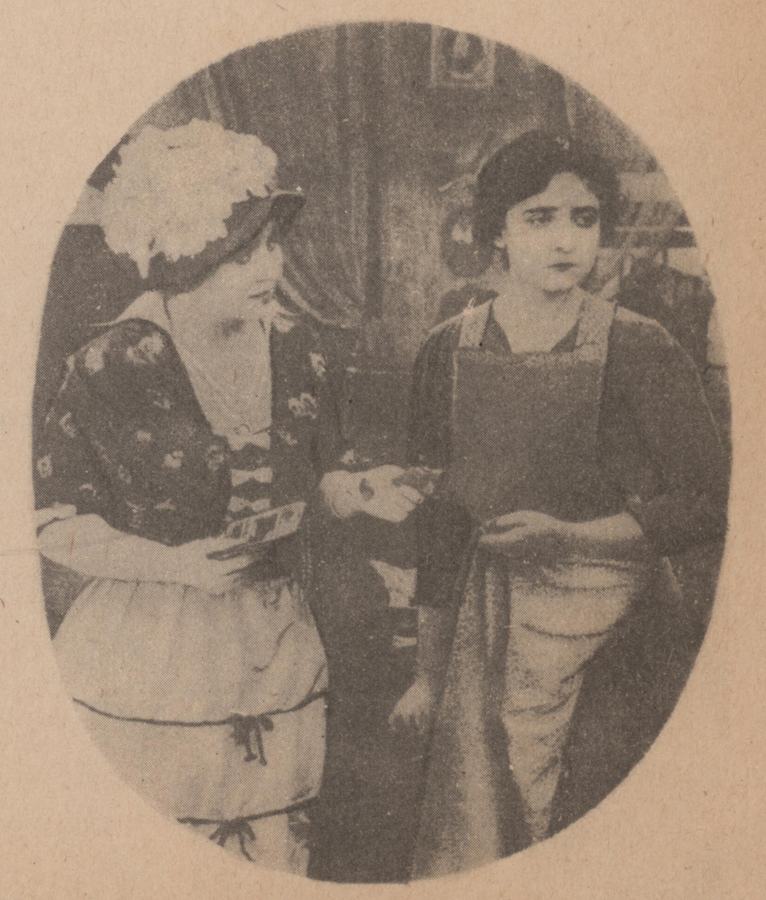
The continental interlude—rendered via stock travelogue and a few second-unit pans of Monte Carlo—feels perfunctory until you realize its entire purpose is narrative negative space. We do not see Helen’s conquests there; we see her return, hat veils like widow’s netting, steamer trunks stickered with labels that now read like diagnoses. Ince pulls back for a long-held close-up: Glaum removes her gloves finger by finger, each pause a decade. The woman who once strode into mansions now hesitates at a hotel threshold, afraid the doorman will bar her. Age is the one bribe her purse can’t cover.
Desperate, she rehearses re-entry: colognes, visiting cards, the practiced tilt of a smile she once deployed like artillery. But Kellerman’s eyes now glide past her to a girl who smells of bread flour. The scene is staged in a modest parlor, wallpaper roses browned by kerosene, and Ince blocks it so Helen must physically pivot to stay inside the frame’s center of gravity—an apt visual for a woman losing gravitational pull.
If the film has a moral fulcrum, it is Ruth’s cottage: white clapboard, morning-glory trellis, the off-key lullaby of a phonograph. When Helen steps inside—hat in hand like a traveling saleswoman—we expect sneers. Instead, Markey gives Ruth the serenity of a woman who has never needed to audition for happiness. Her children clamber over Helen’s lap, smearing jam on Parisian silk, and Helen’s expression curdles from envy into a wordless howl. Ince holds the shot until the jam becomes blood-bright metaphor, childhood’s stain more indelible than any couture label.
The final spiral is swift: laudanum furtively sipped, cigarettes cupped like tiny crematoria, a doctor who shakes his head in a scene silhouetted so we read only the shape of doom. When death arrives, it is off-screen, signified by a curtain fluttering open to reveal Ruth and Kellerman—now married—standing in sunlight with Helen’s niece between them. The child lifts a daisy chain toward the camera, an act of innocence that doubles as absolution. No title card announces moral; the film ends on the girl’s smile, which feels both tender and terrifyingly cyclical.
Louise Glaum, often dismissed as a “vamp” mannequin, here operates like a stealth tragedian. Watch her hands—at first fluttering like nervous doves around Ward’s gifts, later clenching into fists that know the exact price of each ruby. In the penultimate close-up, she relaxes those fists, fingers unfurling as if finally releasing expectation itself. It is a moment of abdication more harrowing than any scream.
Enid Markey’s Ruth could have been mere foil, yet she imbues every domestic chore with kinetic grace, humming while scrubbing, a woman who has discovered rhythm inside limitation. Her final glance at Helen’s coffin—tearless, steady—carries the weight of someone who recognizes the sister she might have become had want taken a slightly different shape.
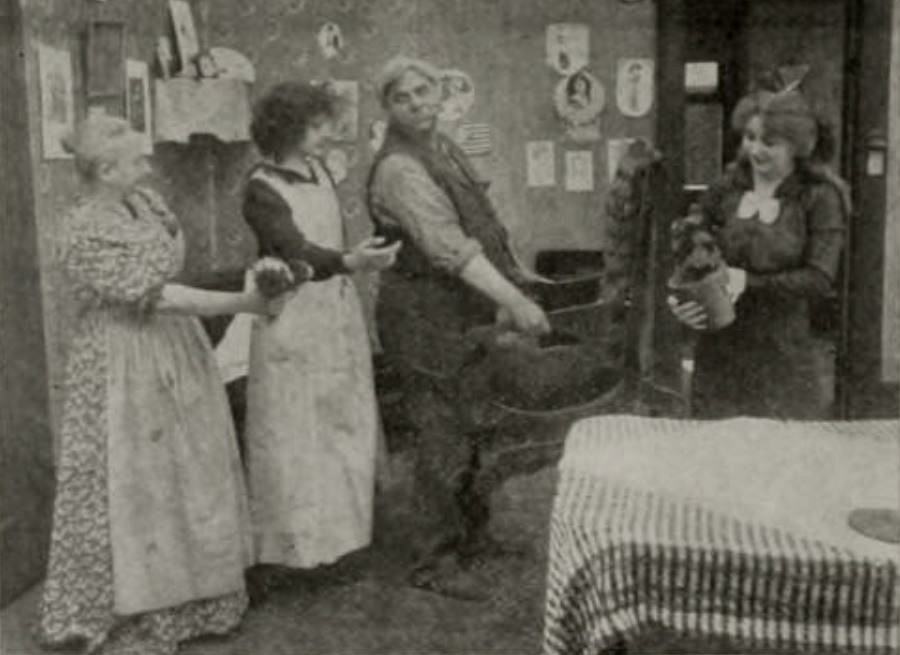
Among supporting men, Harry Keenan’s Kellerman sidesteps priggishness; his second proposal to the gingham girl is stammering, earthy, all the more moral for feeling accidental. Howard Hickman’s Ward exudes the velvet boredom of inherited wealth, the kind of man who tips hat to a mistress with the same detachment he’d show a horse.
Cinematographer Charles Stumar (uncredited in most archives) lights interiors with slanted chiaroscuro that anticipates 1940s noir; hallways are tunnels of ink, faces surfaced by single kerosene glints. Exterior snow scenes employ a blue tint on surviving prints, turning New York into a sodium-starved moon where every footstep writes regret.
Ince’s regular editor, Leigh R. Smith, experiments with overlapping dissolves—Helen’s face dissolving into a shop-window mannequin wearing her exact gown—suggesting the interchangeability of woman and merchandise. The effect is primitive by modern standards, yet emotionally jolting, a ghosted premonition of consumer culture’s coming century.
Compare this visual pessimism to Tillie’s Punctured Romance’s slapstick anarchy or The Exploits of Elaine’s serial derring-do, and you locate The Cup of Life in a liminal zone: too stern for comedy, too humanist for sermon, a melodrama that trusts the audience to connect its own ethical dots.
Written by men, shot by men, financed by the male-dominated New York Motion Picture Corp, the film nonetheless flirts with proto-feminist critique. Helen’s tragedy is not that she desires too much but that the economy allows women only two sanctioned currencies: marriage or mistresshood. When she tries to pivot mid-game—from ornament to entrepreneur by investing Ward’s “allowance” in a millinery—the film implies her venture collapses because male bankers refuse credit to a fallen woman. The off-screen failure is relayed by a single insert of an unpaid invoice, but it lands like a slammed gate.
Meanwhile, Ruth’s modest contentment is predicated on a husband whose union wages are themselves propped by wartime industry; the film hints that even this Eden trembles should the factories close. In 1915, such systemic awareness feels almost revolutionary, a whisper that personal choices are corseted by capital flows far beyond parlor morality.
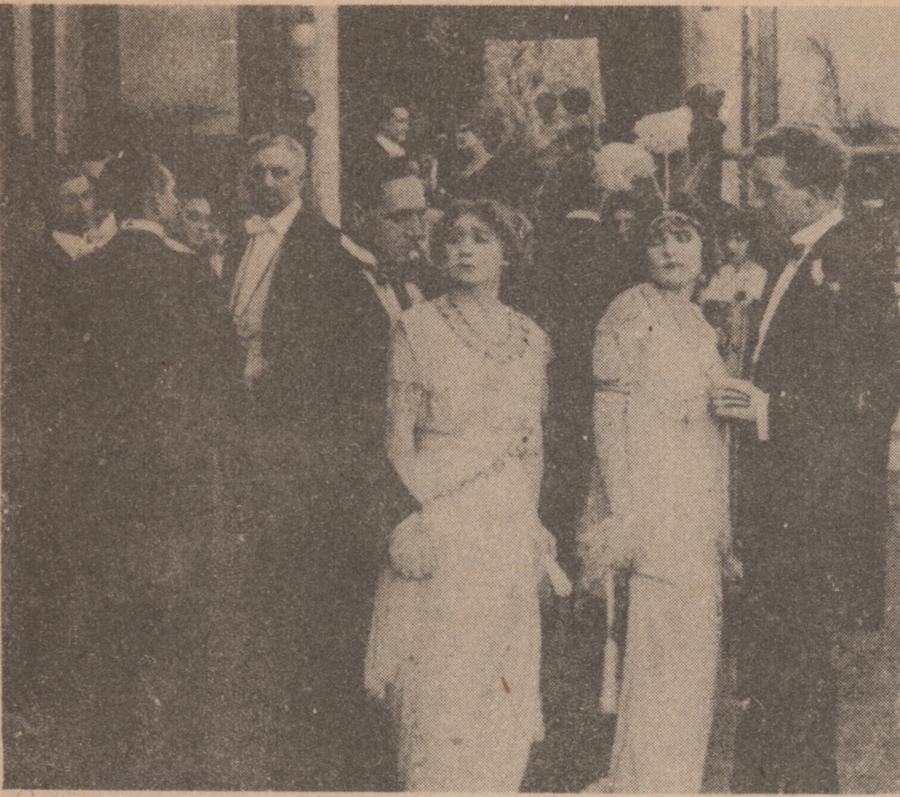
For decades, The Cup of Life languished on the Library of Congress’s “Missing, Presumed Lost” list until a 35mm nitrate reel—Spanish intertitles, Catalan censor stamps— surfaced in a Barcelona convent archive in 1998. The bilingual intrigue (nuns sheltering a courtesan’s tale) itself feels scripted. Digital restoration by the Giornate del Cinema Muto replaced Spanish cards with reconstructed English, using censorship records archived at Moving Picture World. Some frames still blister like eczema, but the decay paradoxically amplifies the film’s bruised beauty; emulsion scars resemble cigarette burns on silk.
Modern festival screenings often commission new scores. The 2019 Pordenone restoration featured a string quartet that quoted Satie’s Gymnopédies during Helen’s ballroom waltz, then slid into dissonant Bartók when she swallows laudanum. The juxtaposition—lyricism corroding into atonality—mirrors the narrative arc more elegantly than any intertitle could.
Place Helen alongside The Fox Woman’s predatory enchantress or One of Our Girls’ small-town ingénue, and you chart Hollywood’s early attempts to codify female archetypes. Yet Glaum’s performance complicates the taxonomy: her Helen never revels in cruelty; even her laugh at Kellerman is defensive, a shield against the abyss of actually being loved. The film’s refusal to punish her with scarlet-letter humiliation—instead letting disease and despair operate as slow mechanics—places it closer to naturalism than melodrama.
Contrast with Sodoms Ende’s Biblical retribution or The Double Event’s crime-doesn’t-pay didacticism, and The Cup of Life feels almost modern in its existential shrug: sometimes the only moral is that desire plus time equals entropy.
Trace Helen’s lineage and you find Gloria Swanson’s Norma Desmond, Bette Davis’s Margo Channing, even Elizabeth Taylor’s Gloria Wandrous: women who mistake attention for oxygen. Ince’s film plants the seed that glamour is a creditor that eventually collects flesh. When Wilder shot Sunset Blvd. thirty-five years later, he echoed the final image—aging star reflected in a broken mirror—knowing audiences had been primed by silent precedents like this.
Absolutely, provided you accept vintage aftertastes: some broad pantomime, a few creaky plot pivots, and intertitles that occasionally moralize. But the emotional archaeology is staggering. You will recognize your own social-media-era hunger in Helen’s pupils dilating at a diamond necklace; you will feel the chill of being ghosted when beauty’s stock dips. The film’s tacit warning—that to live as image is to die as commodity—feels ripped from today’s influencer obituaries.
Stream it if you can find it (alas, no DCP on major platforms as of 2024), or lobby your local cinematheque to book the restoration. Bring friends, debate afterward whether Ruth’s cottage idyll is merely another patriarchal consolation prize. Whatever verdict, the after-image lingers: a woman in a tarnished gown, arms outstretched, trying to clutch smoke.
In the end, The Cup of Life offers neither damnation nor absolution, only the bitter clarity of a mirror held steady. Drink carefully; the rim is cracked, the vintage potent, and the dregs taste of everything we still crave.
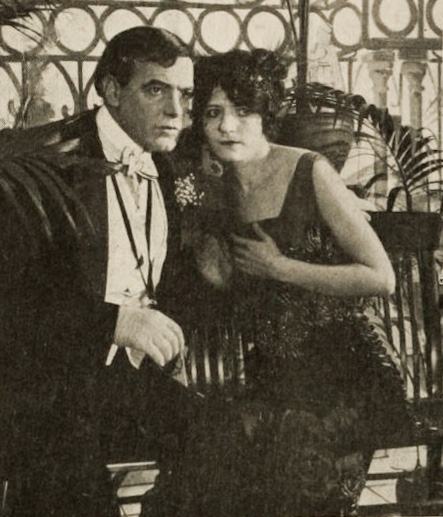
IMDb 5.8
1914
Community
Log in to comment.