DbcultAccessing Vault...
Cult Review
Senior Film Conservator
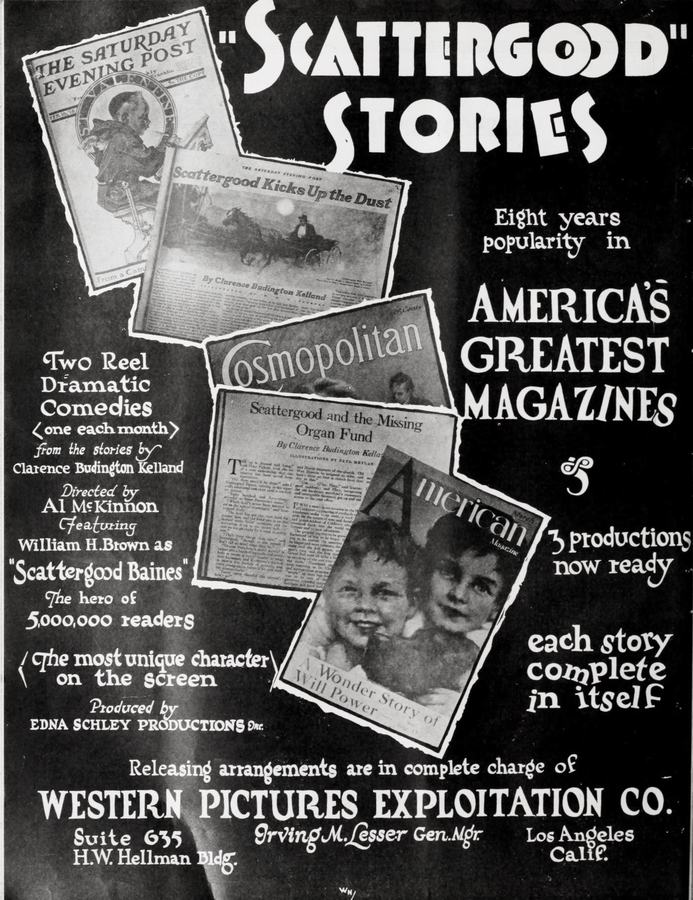
To understand the gravitational pull of Down the Line, one must first acknowledge the literary scaffolding provided by Clarence Budington Kelland. Kelland, a writer whose name was once synonymous with the quintessential American protagonist—the honest, slightly naïve, yet fundamentally incorruptible everyman—infuses this 1921 production with a narrative density that was rare for its time. Unlike the more flamboyant spectacles of the era, such as The Spirit of '76, Kelland’s work here is introspective, favoring the slow burn of character development over the rapid-fire editing of contemporaneous action reels.
The script operates on a dualistic plane. On the surface, it is a drama of logistics and legacy, but beneath the emulsion lies a scathing critique of the Gilded Age's lingering shadows. In Down the Line, we see the early blueprints for what would eventually become the 'Capra-esque' hero. The dialogue—rendered through evocative intertitles—possesses a rhythmic, almost biblical cadence that demands the viewer's undivided attention. It avoids the meretricious sentimentality found in lesser works like Sold, opting instead for a gritty, tactile realism that feels surprisingly modern.
Magda Lane delivers a performance of remarkable restraint. In an age characterized by the exaggerated gesticulations of the Delsarte method, Lane’s subtlety is a revelation. Her eyes carry the weight of the film’s emotional core, projecting a sense of weary resilience that anchors the more melodramatic plot points. When contrasted with the rugged, almost monolithic presence of William H. Brown, the chemistry is not one of romantic fervor, but of shared burden. Brown, who often played authority figures with a stern, paternalistic edge, finds a specific vulnerability here that was absent in his work in The Firing Line.
The supporting cast, including Ruth Handforth and Charles Gordon, provides a necessary texture to the film’s social milieu. Handforth, in particular, excels at portraying the quiet desperation of the rural matriarchy—a theme explored with less nuance in Bill Henry. Charles Gordon’s performance serves as the narrative’s kinetic engine, his youthful impetuosity clashing against the stagnant traditions represented by the older generation. This generational friction is the film's heartbeat, pulsing through every scene with a palpable tension.
The cinematography in Down the Line utilizes the limited technology of 1921 to create a visual language of stark contrasts. The use of natural light in the exterior shots captures a sense of vast, untamed Americana that rivals the scenic grandeur of The Duke of Chimney Butte. However, it is in the interior sequences where the film truly finds its aesthetic footing. The deep shadows and tight framing create a sense of claustrophobia, mirroring the protagonist's psychological entrapment.
There is a recurring motif of the railroad tracks—long, converging lines that stretch toward an uncertain horizon. This imagery is far more than a setting; it is a visual synecdoche for the characters' predestined paths. While The Voice in the Fog used atmosphere to obscure truth, Down the Line uses clarity to expose the harshness of reality. The director’s refusal to shy away from the grime and dust of the industrial landscape lends the film a documentary-like verisimilitude that was often sacrificed for glamour in other 1920s dramas.
Released in the wake of the Great War, Down the Line reflects a nation in the throes of an identity crisis. The film grapples with the obsolescence of the individual in the face of corporate expansion, a theme that resonates as strongly today as it did a century ago. It lacks the overtly nationalist fervor of Ireland, a Nation, opting instead for a more localized, intimate examination of displacement. The 'Line' is not just a commercial venture; it is a force of nature that uproots lives and redefines boundaries.
This thematic exploration places the film in conversation with other works of the era that questioned the cost of progress, such as Burning Daylight. However, where Burning Daylight focuses on the individual's triumph over the elements, Down the Line is more interested in the compromises one must make to survive within a system that views human beings as mere fuel for the furnace of industry. It is a cynical, yet ultimately humanistic, perspective that elevates the film above the standard 'railroad melodrama' tropes.
Modern audiences might find the pacing of Down the Line deliberate, perhaps even languid. Yet, this temporal expansion is intentional. It allows the viewer to inhabit the spaces between the actions—to feel the heat of the sun on the tracks and the chill of the evening air in the valley. It is a far cry from the frenetic energy of Home Talent or the slapstick rhythms of A Good Scout. Here, the silence is not an absence of sound, but a presence in itself, a canvas upon which the viewer projects their own anxieties and hopes.
The film’s structure is cyclical, returning to key locations to show how they have been altered by time and the encroaching railroad. This repetition emphasizes the inevitability of change, a concept also touched upon in The Marshal of Moneymint, though with far less philosophical depth. In Down the Line, the transformation of the landscape is a mirror for the transformation of the soul. The protagonist who begins the journey is not the same man who reaches the final station; he has been forged, tempered, and ultimately hardened by the journey.
When we look at the landscape of 1921 cinema, Down the Line stands as a bridge between the simplistic morality of the past and the complex psychological dramas of the future. It lacks the overt diabolism of Satana, preferring to find its 'devils' in the mundane greed of men. It avoids the marital farces of Why Trust Your Husband or the domestic tribulations of His Divorced Wife, focusing instead on the broader canvas of the American experience.
Ultimately, Down the Line is a testament to the power of silent storytelling. It proves that without the crutch of synchronized sound, a film can still articulate the most profound human dilemmas. It is a work of austere beauty, a cinematic relic that continues to shine with a steady, unblinking light. For those willing to look past the surface-level simplicity of its plot, it offers a rich, rewarding experience that challenges our perceptions of progress, heritage, and the high cost of the 'straight and narrow' path. It is, quite simply, an essential piece of the silent era's mosaic, a film that deserves to be pulled from the shadows of obscurity and viewed with the reverence it so clearly warrants.
IMDb —
1922
Community
Log in to comment.