DbcultAccessing Vault...
Cult Review
Senior Film Conservator
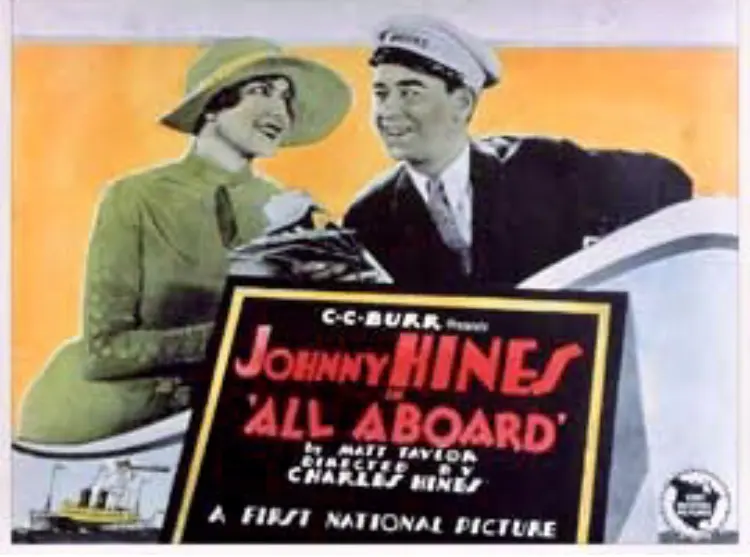
Is 'All Aboard' worth watching today? Short answer: yes, but with significant caveats that demand a specific kind of viewer engagement. This 1927 silent film is a curious relic best suited for ardent silent cinema enthusiasts, film historians, and those with an appreciation for early slapstick comedy; it is decidedly not for viewers seeking modern pacing, nuanced character development, or easily digestible narratives.
This film works because of its relentless, almost manic energy, Johnny Hines's undeniable physical comedy, and its surprisingly ambitious desert setting that provides a unique backdrop for its absurdities. This film fails because its narrative is often disjointed, the humor can feel dated and repetitive to a contemporary audience, and its supporting characters are largely underdeveloped caricatures serving primarily as foils for Hines's antics. You should watch it if you're curious about the evolution of cinematic comedy, enjoy the specific brand of silent-era physical gags that prioritize movement over dialogue, or want to see a forgotten star like Johnny Hines in action, showcasing a style distinct from Chaplin or Keaton.
Johnny Hines, in a role perfectly tailored to his energetic persona, starts his journey in a rather ignominious fashion: fired from a shoe store and simultaneously rejected by the object of his affections, May. This double blow sets the stage for a classic escapist premise, as Johnny flees his mundane American troubles for the exotic allure of Egypt. What begins as a simple tour guide gig quickly spirals into a labyrinth of mistaken identity and unexpected obligations, a common trope in silent comedies, yet here given a distinctly Arabian Nights twist.
The central conceit, where Johnny is conned into exchanging places with an itinerant sheik, is where the film truly leans into its comedic potential. Suddenly, our unassuming hero finds himself not only adorned in flowing robes but burdened with a host of new responsibilities, including property and, most comically, a rather formidable and unappealing wife. This abrupt shift from a carefree guide to a reluctant desert chieftain is the engine of much of the film's early humor, as Hines navigates his new, unwanted status with a blend of bewilderment and slapstick desperation.
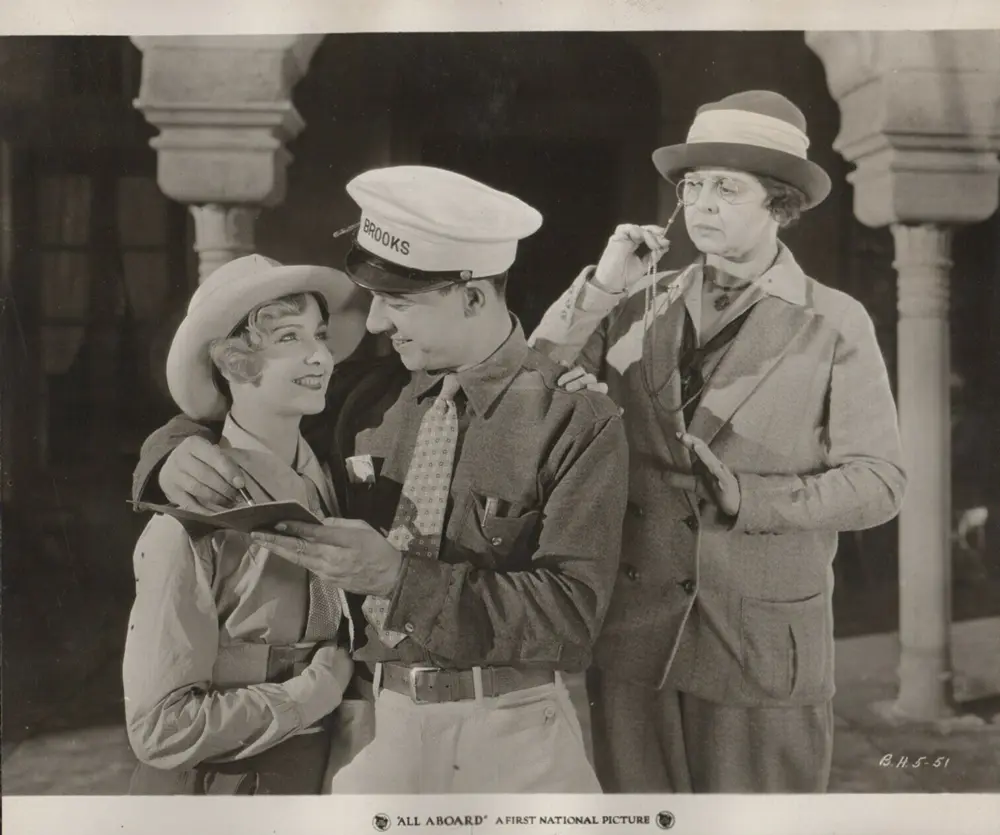
The narrative then takes a sharp turn from personal farce to a more adventurous rescue mission. The discovery that May, the very woman he sought to escape from and then yearned for, has fallen into the hands of desert bandits introduces a dramatic urgency. Johnny, despite his own predicament, must now assume the unlikely role of hero. The climax, a frantic escape under the chaotic cover of a sandstorm, epitomizes the film's willingness to blend broad comedy with genuine peril, creating a final act that is both thrilling and utterly ridiculous. It’s a testament to the era’s storytelling that such disparate elements could be woven into a single, cohesive (if at times nonsensical) narrative thread.
Johnny Hines, the driving force behind 'All Aboard', was a silent-era comedian whose star, while bright, never quite reached the stratospheric heights of a Chaplin or a Keaton. Yet, watching him in this feature, one is struck by his unique brand of physical comedy: less poetic than Chaplin, less stoic than Keaton, and perhaps more overtly frantic than Lloyd. Hines possessed an almost relentless energy, a perpetual motion machine whose every gesture seemed to convey a delightful, if slightly unhinged, desperation. His performance here is a masterclass in sustained comedic effort, even if the material sometimes struggles to match his output.
Consider the scenes where Johnny, now disguised as the sheik, attempts to shirk his new marital duties. Hines’s flailing arms, wide-eyed terror, and exaggerated facial contortions as he tries to evade his 'fat, awful wife' are genuinely amusing. There's a particular sequence where he attempts to scale a wall to escape her advances, only to comically slide back down, his robes tangling around him. This isn't subtle humor; it's broad, physical farce, executed with a precision that belies its apparent chaos. He doesn’t just fall; he tumbles with purpose, his body a rubbery instrument of comedic despair.
However, Hines's performance, while energetic, occasionally veers into repetition. The sheer volume of his gags, while impressive, sometimes blurs together, leading to moments where the audience might wish for a brief respite, a beat of genuine pathos to ground the relentless silliness. Unlike the layered emotionality often found in Chaplin's tramp, or the quiet ingenuity of Keaton’s engineering genius, Hines’s characters often feel like pure vehicles for slapstick. This isn’t necessarily a flaw, but it does place 'All Aboard' firmly in the camp of pure entertainment rather than profound cinematic art.
His comedic style, arguably, finds more modern echoes in performers like Jim Carrey, particularly in Carrey's early, more uninhibited roles. The commitment to the bit, the willingness to push physical boundaries for a laugh, is palpable in both. Hines never breaks character, even when the
IMDb —
1921
Community
Log in to comment.