DbcultAccessing Vault...
Cult Review
Senior Film Conservator
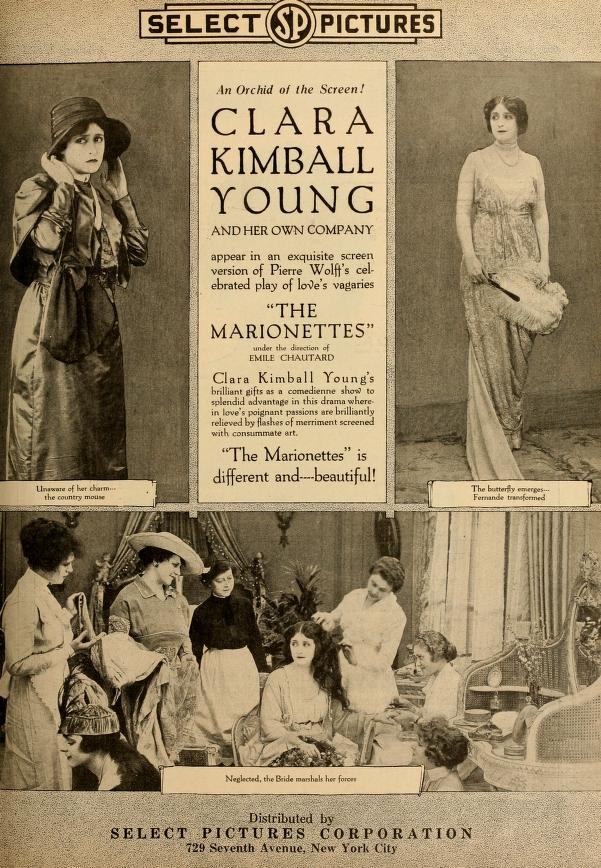
Stepping into the world of early 20th-century silent cinema, one occasionally unearths a gem that, despite the passage of time, resonates with a startling immediacy. Such is the case with The Marionettes, a film that, even a century removed, speaks volumes about societal expectations, the delicate dance of marital dynamics, and the transformative power of self-reinvention. It’s more than just a period piece; it’s a profound exploration of agency, particularly for women navigating a world often dictated by patriarchal structures and financial imperatives. This isn't merely a story of a woman scorned, but a meticulously crafted narrative of strategic resurgence, a testament to the idea that sometimes, the most profound changes begin with a calculated performance.
At its core, The Marionettes introduces us to Fernande de Ferney, portrayed with nuanced brilliance by Clara Kimball Young. Fernande is initially presented as a figure of innocence, her convent-bred sensibilities a stark contrast to the sophisticated, often cynical, world she is thrust into. An orphan, her summers are spent in the quiet academic refuge of her uncle, Professor de Ferney, a setting adjacent to the opulent, yet financially troubled, estate of the Marquise de Monclars. This geographical proximity quickly becomes a metaphor for the social collision awaiting Fernande. The Marquise, a formidable matriarch, holds the purse strings tightly, wielding them as leverage against her profligate son, Roger, embodied by the dashing yet morally ambiguous John Dudley. Roger's debts are staggering, and the Marquise, with a pragmatism bordering on cruelty, decrees a solution: he must marry Fernande. This isn't a union born of affection or even mutual respect, but a cold, calculated transaction. Fernande, in her guileless devotion, accepts, perhaps mistaking Roger's reluctant acquiescence for genuine sentiment.
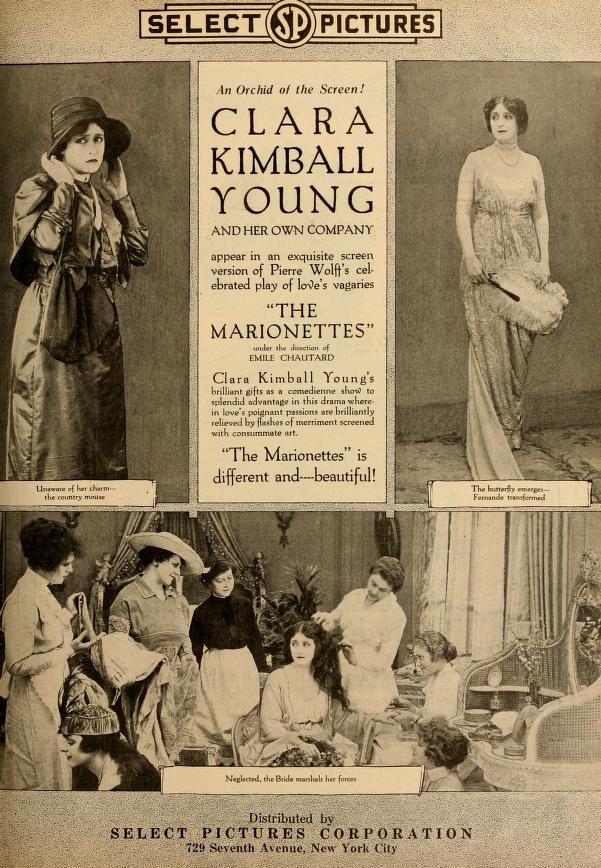
The early days of their marriage paint a bleak picture. Roger, already entangled in a passionate affair with the enigmatic Madame de Jussy (a role that, even in its limited scope, hints at a deeper, more complex world beyond Fernande's initial understanding), treats his new wife with a dismissive indifference that borders on cruelty. He is rarely home, leaving Fernande isolated in a gilded cage, her youthful idealism slowly eroding under the weight of his neglect. This setup is a classic trope, certainly, but The Marionettes elevates it beyond mere melodrama. It sets the stage for Fernande’s awakening, a realization that her passive acceptance of her fate will lead only to perpetual sorrow. The film masterfully builds this tension, allowing the audience to feel Fernande's quiet desperation before her pivotal transformation.
The turning point arrives not through a grand confrontation or a whispered confession, but through the unassuming artifice of a puppet show. This scene is arguably the film's most ingenious narrative device, offering a meta-commentary on the nature of performance and perception. Fernande witnesses a miniature drama unfold: a dowdy, overlooked wife, whose husband, captivated by her newfound flirtatious charm and exquisite adornments, rediscovers his affection for her. It’s a moment of profound revelation for Fernande, a sudden clarity that the world, and indeed her marriage, operates on a stage where appearances and carefully orchestrated acts can dictate reality. The irony is palpable: a simple, rustic entertainment provides the sophisticated blueprint for navigating the complexities of high society and a troubled marriage. This isn't merely about superficiality; it's about understanding the mechanisms of desire and influence. It’s a bold statement on how even the most genuine emotions can be manipulated or, conversely, reawakened through a change in presentation.
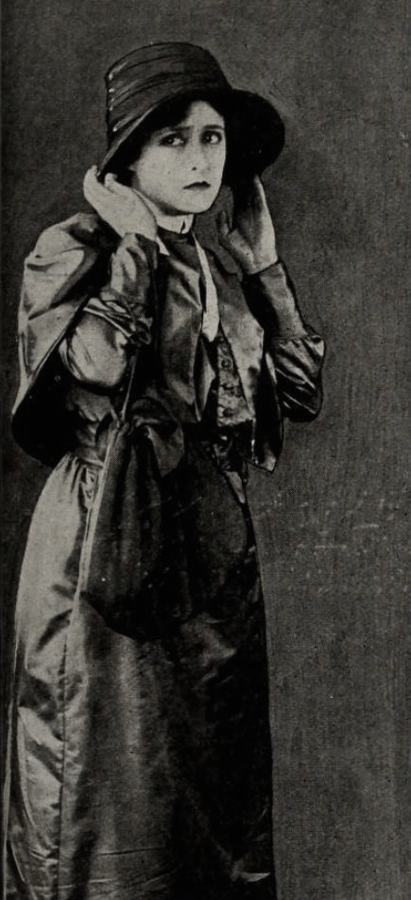
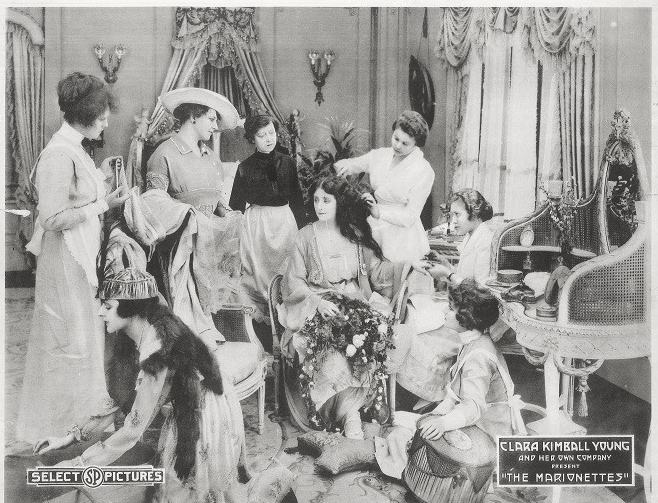
Inspired, emboldened, and perhaps a touch desperate, Fernande embarks on her radical transformation. She sheds the vestiges of her former self, embracing a new persona with calculated precision. Jewels, stunning gowns, and an air of alluring confidence become her new armor. Clara Kimball Young’s portrayal of this metamorphosis is nothing short of captivating. Her posture shifts, her gaze sharpens, and her entire demeanor exudes a newfound self-possession. She doesn't just change her clothes; she transforms her very essence, becoming the quintessential 'butterfly of Paris' – a socialite whose elegance and enigmatic charm make her the cynosure of every gathering. This isn't simply about vanity; it's an act of reclamation, a strategic maneuver to regain control over her own narrative. The film, through its visual storytelling, makes this transformation utterly convincing and deeply satisfying.
The strategy proves remarkably successful. Roger, initially oblivious to the woman he married, finds himself increasingly drawn to this dazzling new socialite. The woman who now commands attention, whose wit and charm captivate Parisian society, is, unbeknownst to him, his own neglected wife. The film deftly portrays Roger's growing fascination, his abandonment of Madame de Jussy, and his eventual, fervent pursuit of Fernande. It’s a fascinating inversion of power dynamics. Where once he held the emotional upper hand, Fernande now orchestrates their interactions, manipulating his desire with the finesse of a seasoned puppeteer. The title, The Marionettes, becomes profoundly resonant here: who truly is the puppet, and who the master? Fernande, by becoming a 'marionette' of society's expectations of glamour, paradoxically gains the strings to control her own fate and her husband's affections.
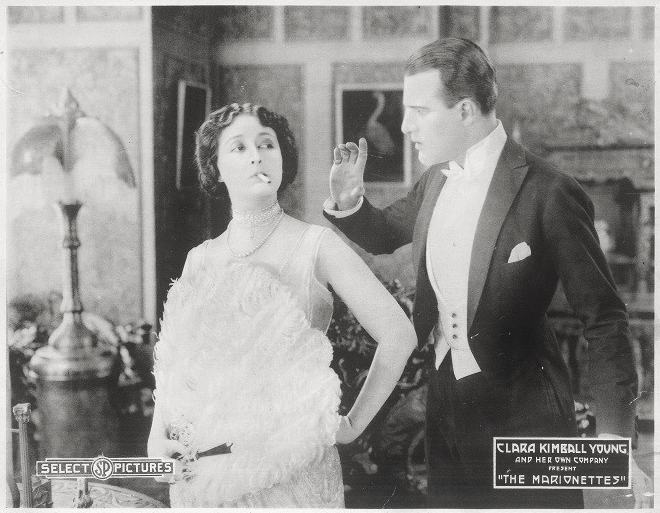
The resolution, with Roger abandoning his romantic interests to become her adoring husband, might strike some modern viewers as overly simplistic or even problematic. Does genuine love blossom from such a calculated deception? The film, however, doesn't necessarily endorse the deception as an ideal, but rather presents it as a pragmatic solution within the constraints of its era. It's a commentary on the superficiality of certain social circles and the power of perception. Fernande doesn't just win Roger back; she forces him to see her, truly see her, for the first time. Her transformation is not just external; it's an internal blossoming of confidence and self-worth that ultimately makes her irresistible.
Beyond Clara Kimball Young’s central performance, the film benefits from a capable supporting cast. John Dudley, as Roger, manages to convey both the initial arrogance and the eventual vulnerability of a man ensnared by his own desires. Robert White, Nigel Barrie, and Edward Kimball contribute to the rich tapestry of Parisian society, each playing their part in the social milieu that Fernande so masterfully navigates. The subtle interplay between characters, a hallmark of well-executed silent drama, is evident throughout. The writers, Frederick Chapin and Pierre Wolff, deserve considerable credit for adapting a narrative that, while potentially conventional, imbues it with layers of psychological complexity and social commentary. Their ability to craft a story that hinges on such a specific, yet universal, human experience—the desire for recognition and love—is commendable.
When considering The Marionettes, it's impossible not to draw parallels with other cinematic explorations of female agency and marital strife from the silent era. Films like Alimony (1917) often depicted women navigating restrictive legal and social frameworks, fighting for independence or fair treatment within a failing marriage. While Alimony focuses more on the legal battles, The Marionettes delves into the psychological warfare of a relationship, a more subtle, yet equally potent, form of struggle. Similarly, one might compare Fernande's journey to the grand, almost operatic transformations seen in films like The Empress, where women rise to power, often through strategic alliances and a formidable will. However, Fernande’s transformation is more intimately personal, less about political power and more about reclaiming emotional territory within her domestic sphere.
The theme of a woman's reinvention for love or social standing is a recurrent one in early cinema. Consider Wildflower (1914) or even The Wishing Ring: An Idyll of Old England (1914), where heroines often shed their humble origins or perceived flaws to become worthy of affection or status. What sets The Marionettes apart is the deliberate, almost Machiavellian, nature of Fernande's transformation, driven not by a desire to conform to an ideal, but to manipulate her husband's perceptions. This strategic depth gives it a more modern, psychological edge. It’s less about becoming 'good enough' and more about becoming 'irresistible.' The film also shares thematic threads with dramas that explore the disillusionment of marriage and the complexities of human desire, such as Obryv or even the social commentary found in films like Storstadsfaror (1916), albeit with different cultural backdrops.
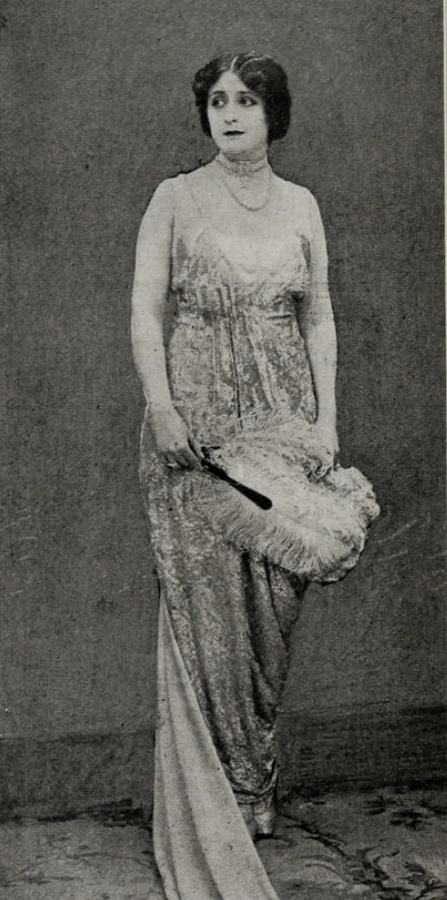
The exploration of identity and its performative aspects also finds resonance in films like Madame d' Ora, which often deals with the construction of public persona. While The Marionettes doesn't delve into the darker, more existential crises of identity, it certainly touches upon the idea that one's external presentation can profoundly alter internal and relational realities. The film's nuanced portrayal of a woman taking control of her destiny, even if through unconventional means, makes it a fascinating companion piece to other narratives of female empowerment, such as The Silent Lady or The Heart of Midlothian, though these often explore different facets of moral integrity and social justice. The common thread is the strength and resilience of women in challenging circumstances.
While specific directorial credits are often less emphasized in early silent film records compared to star power, the visual storytelling in The Marionettes is remarkably effective. The transformation of Fernande is not just told through intertitles but shown through careful costuming, lighting, and Clara Kimball Young's expressive performance. The film uses visual contrasts effectively: the austere quiet of Fernande's initial life versus the dazzling vibrancy of Parisian high society. The camera lingers on her expressions, allowing the audience to witness her internal journey, from heartbreak to cunning resolve. The production values, for its time, would have been considerable, particularly in showcasing the luxurious gowns and settings that become integral to Fernande's new persona. This visual opulence serves not just as a backdrop but as a crucial component of the narrative, underscoring the power of material presentation in influencing perception.
The lasting appeal of The Marionettes lies in its universal themes. The desire for love, the pain of neglect, the struggle for self-worth, and the lengths one might go to secure happiness are timeless. Fernande's story, while rooted in a specific historical context, transcends it. Her journey from a passive victim to an active architect of her own destiny resonates with contemporary audiences who still grapple with issues of identity, relationships, and self-empowerment. It challenges us to consider the nature of attraction and the roles we play in our own lives and relationships. Are we all, to some extent, marionettes, dancing to the strings of societal expectations or personal desires, or can we seize those strings and become the puppeteers of our own narratives?
The Marionettes, like many silent films, exists as a crucial piece of cinematic history, offering a window into the storytelling sensibilities and cultural values of its era. Its rediscovery and preservation are vital for understanding the evolution of film as an art form and a social mirror. For those interested in the complexities of early 20th-century gender roles and the burgeoning narratives of female strength, this film provides rich material for analysis. It stands as a testament to the enduring power of silent cinema to convey deep emotional truths without a single spoken word, relying instead on the artistry of performance, visual composition, and evocative intertitles.
In a world where appearances often dictate realities, The Marionettes serves as a poignant reminder that while external transformations can be powerful tools, true agency ultimately stems from an internal shift—a decision to stop being a passive figure and to actively shape one's own destiny. Fernande de Ferney's journey from a forlorn bride to the dazzling 'butterfly of Paris' is not just a tale of romantic redemption, but a compelling narrative of self-discovery and strategic empowerment. It's a silent film that speaks volumes, echoing through the decades with its timeless message about the intricate dance of human relationships and the art of living.
IMDb 7.3
1935
Community
Log in to comment.