DbcultAccessing Vault...
6.1/10
Senior Film Conservator
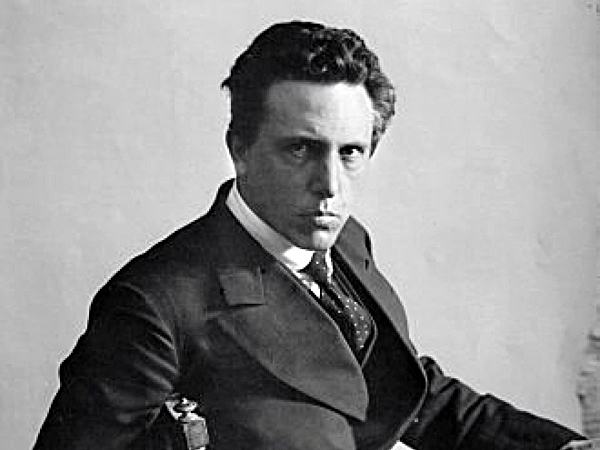
A definitive 6.1/10 rating for a film that redefined the boundaries of cult cinema. Chlen parlamenta remains a cornerstone of transgressive art.
In the pantheon of silent cinema, few performances resonate with the visceral intensity of Ivan Mozzhukhin in Chlen parlamenta. This adaptation of Katherine Cecil Thurston’s seminal novel, The Masquerader, serves as a haunting crucible for the exploration of human fragility, political artifice, and the terrifying elasticity of identity. While many films of the era dallied with the notion of the doppelgänger as a mere plot device, this work—penned by Aleksandr Litvinov—elevates the concept to a metaphysical crisis, fueled by the agonizing grip of morphine addiction.
Mozzhukhin, often hailed as the 'Russian Kean,' brings a phantasmagoric energy to the dual roles of John Chilcote and John Loder. His ability to distinguish between the two characters through subtle shifts in posture and the haunted depth of his gaze is nothing short of miraculous. Unlike the more theatrical approach found in Der Eid des Stephan Huller - II, Mozzhukhin opts for an internalised agony. When he portrays Chilcote, the Member of Parliament, we see a man being hollowed out from the inside. The morphine isn't just a vice; it is an invading force that has colonized his very soul.
The cinematography captures this disintegration with a stark, chiaroscuro elegance. The shadows in the halls of Westminster are not merely aesthetic choices; they represent the encroaching darkness of Chilcote’s mind. The film bypasses the melodramatic trappings often seen in Mrs. Slacker, favoring instead a psychological realism that feels jarringly modern. The 'double' is not a twin or a supernatural entity, but a biological coincidence that provides a convenient shroud for a man’s moral and physical collapse.
The portrayal of morphine dependency in Chlen parlamenta is unflinching. At a time when cinema often treated drug use with either moralistic hysteria or exoticized intrigue, this film presents it as a tedious, soul-crushing routine. It shares a thematic kinship with the later explorations of memory and loss in The Man Who Forgot, yet it remains more grounded in the immediate physical consequences of the habit. The way Mozzhukhin’s hands tremble, the way his eyes dart in search of his next fix—these are the hallmarks of a performer who understood the somatic reality of the addict.
The masquerade itself—the swapping of lives between the powerful Chilcote and the destitute Loder—functions as a critique of class and the performative nature of power. Loder, despite his lack of pedigree, proves to be a more effective politician than the 'genuine' article. This subversion suggests that the 'Member of Parliament' is merely a costume, a role that can be filled by any man with the right face and a steady hand. It is a far more cynical take on social mobility than one might find in The Fortunate Youth.
The pacing of the film is deliberate, mirroring the lethargic drift of an opiate dream. Litvinov’s screenplay avoids the frantic editing of contemporary action-dramas like Mutiny or the suspense-driven mechanics of The Fatal Night. Instead, it lingers on the moments of quiet desperation. The scenes featuring Nathalie Lissenko are particularly poignant; her performance provides a grounded emotional anchor to the film's more abstract psychological flights. Her confusion and eventual suspicion regarding her husband’s 'transformation' add a layer of domestic suspense that rivals the tension found in The Burden of Proof.
Technically, the film utilizes double exposures and clever framing to place both Mozzhukhins in the same shot. While these techniques were nascent at the time, they are executed here with a seamlessness that prevents the viewer from being pulled out of the narrative. Unlike the somewhat clunky visual metaphors in Denn die Elemente hassen, the visual effects in Chlen parlamenta are always subservient to the emotional truth of the scene.
When placed alongside other works of the era, such as Les chacals or The Hidden Hand, Chlen parlamenta stands out for its lack of a traditional villain. The antagonist is not a person, but a chemical compound and the protagonist's own fractured psyche. This internal conflict makes it a much more sophisticated piece of storytelling than the morality plays of Pay Dirt or the sentimentalism of The Valley of Decision. Even the domestic strife portrayed in Bought and Paid For feels somewhat superficial compared to the existential dread that permeates every frame of this film.
The film also shares an interesting aesthetic thread with Mouchy and Mellem de yderste Skær in its use of isolation as a narrative tool. Chilcote is isolated by his addiction, Loder by his poverty, and together they are isolated by their secret. It is a masterclass in the cinema of loneliness.
In conclusion, Chlen parlamenta is a staggering achievement that deserves a prominent place in the history of world cinema. It is a film that refuses to offer easy answers, choosing instead to dwell in the uncomfortable grey areas of the human condition. Ivan Mozzhukhin’s performance remains a benchmark for psychological depth, and the film’s exploration of the 'double' continues to haunt the viewer long after the final reel has stopped spinning. It is a dark, orange-hued sunset of a film, signaling the end of an era of innocence and the beginning of a much more complex, and much more terrifying, cinematic language.
IMDb 5.9
1920
Community
Log in to comment.