DbcultAccessing Vault...
6.5/10
Senior Film Conservator
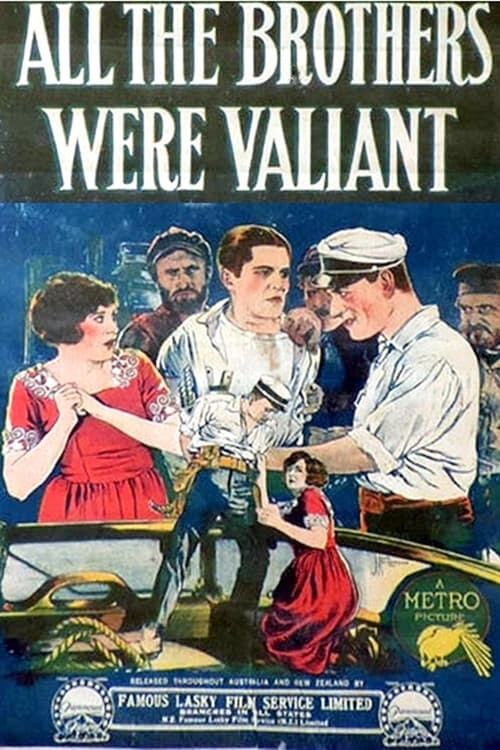
A definitive 6.5/10 rating for a film that redefined the boundaries of cult cinema. All the Brothers Were Valiant remains a cornerstone of transgressive art.
In the annals of silent cinema, where grand narratives often unfolded with sweeping gestures and profound emotional resonance, certain films stand out not just for their technical ambition but for their enduring exploration of the human condition. 'All the Brothers Were Valiant', a 1923 masterpiece directed by Irvin Willat and Frank Lloyd (uncredited, but significant), based on Ben Ames Williams' compelling novel, is precisely one such cinematic journey. It's a film that plunges its audience into the unforgiving world of 19th-century whaling, but more profoundly, into the turbulent waters of sibling rivalry, perceived cowardice, and the relentless pursuit of honor. From the outset, this picture establishes itself as more than a mere adventure yarn; it is a psychological drama masquerading as a high-seas epic, a testament to the era's storytelling prowess.
The premise is deceptively simple yet laden with dramatic potential: Joel Shore, portrayed by the earnest Malcolm McGregor, is thrust into the captaincy of the whaling schooner 'Nathan Ross' after his revered older brother, Mark, seemingly vanishes at sea. Mark, a figure of almost mythical courage and boundless charisma, casts a long, formidable shadow, one that Joel struggles to emerge from. This struggle is intensified by the presence of Joel's new bride, Priscilla Alden, played with captivating grace by Billie Dove. Priscilla, like many, holds Mark in almost idolatrous esteem, and her initial perception of Joel is tinged with doubt, even suspicion, regarding his mettle. She suspects a vein of timidity in his heart, a stark contrast to the legendary bravery of his predecessor. This emotional entanglement forms the beating heart of the narrative, propelling the characters across vast oceans and through profound internal conflicts.

The ensemble cast, a hallmark of many silent productions, contributes significantly to the film's texture. While Malcolm McGregor and Billie Dove carry the central romantic and psychological burden, the true magnetic force, even in a role that initially appears to be a haunting memory, is Lon Chaney as Mark Shore. Chaney, already a titan of the screen, brings an almost spectral intensity to Mark, making his absence a palpable presence that dictates much of the action and emotional turmoil. His eventual appearance, a moment of profound revelation, is handled with the kind of theatricality and nuanced menace that only Chaney could command. Other notable performances come from Otto Brower, William V. Mong, and J.P. Lockney, whose weathered faces and authentic portrayals lend credibility to the harsh maritime environment. The writers, Julien Josephson and Ben Ames Williams, adeptly distill the novel's essence, crafting a screenplay that, despite the lack of spoken dialogue, conveys complex motivations and escalating tension with remarkable clarity.
The visual storytelling of 'All the Brothers Were Valiant' is nothing short of breathtaking for its time. The cinematography captures the immense scale and raw power of the ocean with an authenticity that belies the technical limitations of early 20th-century filmmaking. The whaling sequences, in particular, are executed with a visceral intensity, conveying the danger and brutality of the hunt. These scenes are not merely spectacle; they serve to underscore the constant peril faced by the crew and, more importantly, to test Joel's perceived courage. The film uses dramatic lighting and carefully composed shots to highlight the isolation of the characters at sea, the claustrophobia of the ship, and the vast, indifferent expanse of nature. One can almost feel the spray and hear the creak of the timbers, a testament to the filmmakers' skill in immersing the audience in this perilous world.
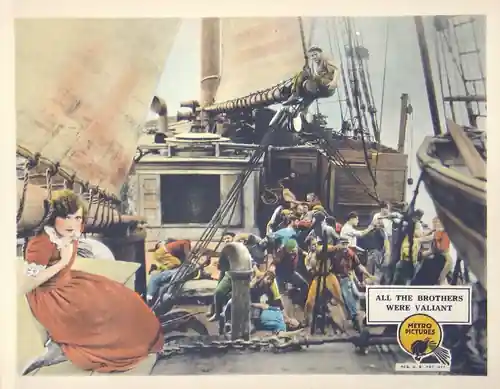
Themes of courage and cowardice are intricately woven throughout the narrative. Joel's internal struggle is central. He is not merely trying to fill his brother's shoes; he is fighting to define his own identity, to prove his worth not just to his crew and his wife, but to himself. Priscilla's initial skepticism, while hurtful, acts as a catalyst for his self-discovery. Her journey, too, is significant; she must learn to see beyond the idealized image of Mark and recognize the quiet strength, or perhaps a different kind of bravery, in Joel. This dynamic elevates the film beyond a simple adventure, transforming it into a compelling study of character under immense pressure. The film subtly suggests that valor isn't always a flamboyant display, but often a quiet, persistent resilience in the face of fear and adversity.
The role of Lon Chaney, though perhaps not as extensive as his more famous portrayals in films like 'The Hunchback of Notre Dame' or 'The Phantom of the Opera', is utterly pivotal. As Mark Shore, he is the ghost in the machine, the absent presence that drives the plot. When he finally appears, his character is complex, embodying both the magnetism of a natural leader and a darker, more volatile edge. Chaney's ability to convey a multitude of emotions through subtle facial expressions and body language, even without spoken words, is on full display here. His performance complicates the simplistic hero/coward dichotomy, introducing shades of gray that enrich the narrative considerably. Mark's return isn't a simple rescue; it’s a disruption, a challenge to the established order, and a test of Joel's burgeoning self-confidence.
The film also touches upon the broader societal expectations of masculinity and heroism prevalent in the early 20th century. Mark embodies the archetypal hero – strong, fearless, decisive. Joel, initially, struggles with this ideal. The film implicitly asks what it truly means to be a man, a leader, or a valiant individual. Is it the ability to conquer external threats, or the fortitude to overcome internal demons and earn respect through actions rather than reputation? This contemplation gives the film a depth that resonates beyond its adventure trappings. The narrative arc allows Joel to forge his own path to heroism, distinct yet no less potent than his brother's legendary exploits.
Comparing 'All the Brothers Were Valiant' to other films of its era, one finds fascinating parallels and distinctions. While it shares the dramatic intensity and emotional sweep of romantic dramas like Ruined by Love or The Sacrifice of Pauline, its maritime setting and focus on male rivalry set it apart. The sense of adventure and grand scale might be vaguely echoed in epics like Attila, the Scourge of God, though the latter operates on a much different historical and mythological canvas. The psychological undercurrents and the struggle for identity, particularly for a woman navigating a man's world, could draw comparisons to a film like Fedora, which also explores complex emotional landscapes and societal constraints. The suspenseful elements, particularly the mystery surrounding Mark's disappearance and subsequent reappearance, might remind one of the intriguing narratives found in The Tenth Case or Die Stimme des Toten, where hidden truths gradually come to light, often challenging preconceived notions.
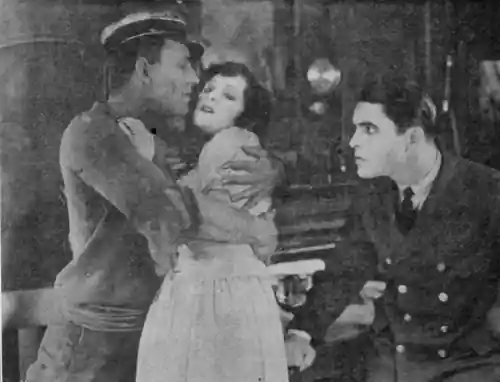
The film's exploration of perception versus reality is also a key strength. Priscilla's initial judgment of Joel is based on rumor and comparison, not on direct experience. The arduous journey and the life-threatening encounters at sea force her to re-evaluate her husband, peeling back the layers of societal expectation and familial legend. This narrative arc, where character is forged in the crucible of adversity, is a timeless storytelling trope, but it is handled here with a particular poignancy. It highlights the often-unseen struggles that individuals endure, and the importance of looking beyond superficial appearances. The silent film format, ironically, often amplified these internal struggles, forcing actors to convey profound emotion through gesture and expression, inviting the audience to project their own understanding onto the characters' silent torment.
The historical context of whaling itself adds another layer of grim authenticity. The film does not shy away from depicting the harsh realities of the industry, a stark contrast to more romanticized portrayals. This grounded approach lends gravitas to the characters' struggles. Their lives are constantly on the line, not just from the colossal whales, but from the unpredictable elements, the dangers of mutiny, and the sheer isolation of being thousands of miles from home. This palpable sense of danger ensures that every act of heroism, every moment of fear, feels earned and genuine. The film serves as a historical document of sorts, capturing a bygone era of industry and exploration that shaped many coastal communities.

In terms of its technical achievements, the scale of production for 'All the Brothers Were Valiant' is impressive. Filming at sea, especially in the early 1920s, presented immense logistical challenges. The ability to capture convincing whaling scenes, storms, and the vastness of the ocean with the equipment available at the time speaks volumes about the dedication and ingenuity of the filmmakers. The editing, crucial in silent cinema for pacing and conveying narrative, is taut and effective, building suspense and maintaining a steady dramatic momentum. The use of intertitles is judicious, providing necessary exposition and dialogue without overwhelming the visual narrative, allowing the powerful imagery to speak for itself. This balance between visual storytelling and textual guidance is a hallmark of well-crafted silent films.
The film's legacy, while perhaps overshadowed by some of Chaney's more iconic horror roles, is significant in its own right. It demonstrates the versatility of silent film to tackle complex themes within an adventure framework. It's a reminder that silent cinema was not a monolithic entity but a vibrant, evolving art form capable of producing works of profound emotional depth and visual grandeur. For those interested in the evolution of cinema, particularly the maritime adventure genre, 'All the Brothers Were Valiant' offers a compelling case study. It showcases how character-driven drama can be elevated by an epic backdrop, and how the absence of dialogue can, paradoxically, intensify the internal monologues of its protagonists. Its influence can be seen in later maritime dramas, which often grapple with similar themes of man versus nature, and man versus his own perceived limitations. The enduring appeal of stories set against the backdrop of the sea, from Melville to modern blockbusters, owes a debt to films like this one.
In conclusion, 'All the Brothers Were Valiant' is a captivating journey into the heart of courage and the depths of the sea. It's a film that demands attention, rewarding viewers with a rich tapestry of human emotion, breathtaking spectacle, and a nuanced exploration of what it truly means to be valiant. The performances, particularly from McGregor, Dove, and the incomparable Chaney, anchor the drama, making the stakes feel profoundly personal. Its technical prowess for the era, combined with a compelling narrative, ensures its place as a significant entry in the silent film canon. It's a powerful reminder of cinema's ability to transport us to different worlds and challenge our perceptions, even a century after its initial release. If you're seeking a silent film that transcends mere historical curiosity and delivers a truly immersive and thought-provoking experience, then this maritime epic is an essential watch. It's a testament to the enduring power of classic storytelling, where the vastness of the ocean mirrors the complexities of the human soul.
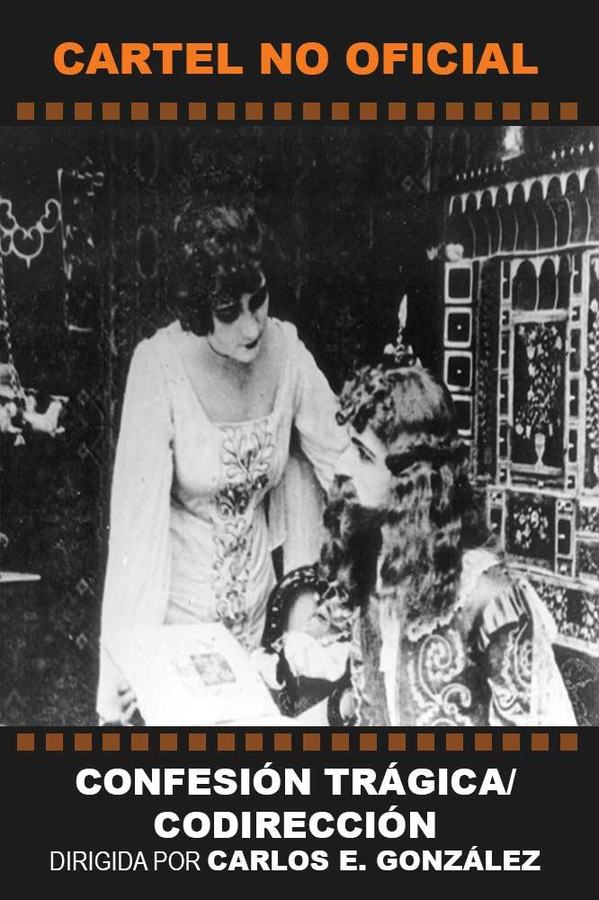
IMDb —
1918
Community
Log in to comment.