DbcultAccessing Vault...
4.3/10
Senior Film Conservator

A definitive 4.3/10 rating for a film that redefined the boundaries of cult cinema. Makkhetes remains a cornerstone of transgressive art.
To watch Makkhetes in the modern era is to engage in a form of cinematic archaeology, brushing away the dust of a century to find a beating, anxious heart beneath the nitrate. Released in 1917, a year defined by global upheaval and the slow-motion collapse of old worlds, this Hungarian gem stands as a staggering achievement of silent storytelling. While many films of the era clung to the histrionics of the stage, Makkhetes—penned with a sharp, cynical nib by István Lázár—presents a psychological complexity that feels startlingly avant-garde. It is not merely a movie; it is a fever dream of social mobility and the crushing weight of the 'tell.'
The narrative architecture Lázár constructs is one of mirrors and trapdoors. We see Sándor Virányi’s character navigating a landscape where every drawing room is a battlefield and every glance is a gambit. Unlike the moral clarity found in The Stain, which deals with the rot of the soul through a more traditional lens, Makkhetes suggests that the rot is not in the individual, but in the very fabric of the deck they are forced to play with. Virányi’s performance is a masterclass in restraint. In an era where 'big' acting was the currency, his ability to convey a mounting sense of dread through the subtle tightening of his jaw is nothing short of revolutionary.
The film’s visual language, though limited by the technology of 1917, utilizes shadow with a precision that predates German Expressionism’s peak. The way the light catches Eugenia Della Donna is particularly noteworthy. She does not simply walk into a scene; she haunts it. Her presence acts as the North Star for our protagonist, a beacon of high-society legitimacy that remains perpetually out of reach. In comparing her role to the titular character in Zaza, one finds a similar magnetism, yet Della Donna imbues her performance with a specific, fragile melancholy that is uniquely Hungarian.
What strikes the contemporary viewer most is the film's refusal to offer a comfortable sanctuary. There is an atavistic quality to the conflict here. While The Wild Olive explores the reclamation of honor in a rugged landscape, Makkhetes finds its wilderness in the velvet-lined corridors of the elite. The 'Knave' is a predator, yes, but he is also prey to a system that views him as a temporary amusement. The tension is palpable in every frame, a staccato rhythm of social interactions that feel like a series of escalating wagers.
Consider the scene at the gambling table—a sequence that should be studied in film schools for its economy of movement. The camera doesn't need to move to capture the kinetic energy; it is all in the editing and the desperate eyes of the players. It lacks the exoticism of Der Thug. Im Dienste der Todesgöttin, but it replaces that spectacle with a far more terrifying intimacy. The stakes aren't just money; they are the very right to exist in the light of day.
István Lázár’s contribution cannot be overstated. His writing avoids the saccharine pitfalls of many early melodramas. Where a film like Pamela Congreve might lean into the theatricality of its lead, Lázár keeps the screws turning on the plot. There is a clockwork precision to the way the Knave’s lies begin to overlap and eventually collapse. It reminds me of the intricate plotting in Zelyonyy pauk, though Makkhetes feels more grounded in a tangible, aching reality.
The film also engages in a fascinating dialogue with the concept of 'the outsider.' Much like The Alien, there is a sense of profound displacement. Virányi’s protagonist is a man without a country, even while standing in the heart of Budapest. He is a citizen of the 'underworld,' trying to purchase a passport into the 'overworld' with the only currency he has: deception. This thematic depth elevates Makkhetes above the standard fare of 1917, turning it into a sociological document of a world about to be torn apart by the Treaty of Trianon.
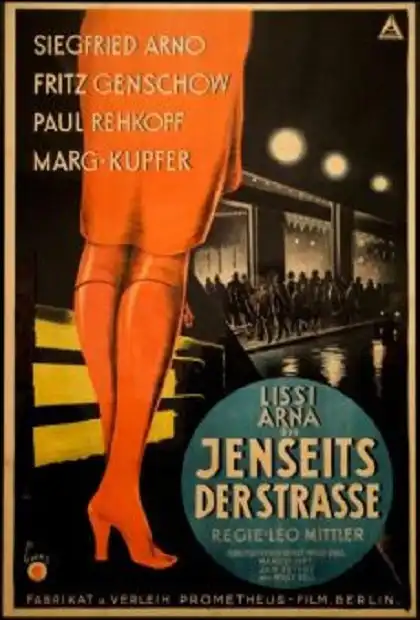
There is a raw, unvarnished beauty to the surviving prints of Makkhetes. The scratches on the celluloid act as a secondary layer of narrative, reminding us of the passage of time. The film possesses a certain 'grit' that you don't find in the polished productions like Die Tangokönigin. It is more akin to the atmospheric density of The Face in the Moonlight, where the environment seems to conspire against the characters.
The set design, though likely modest by Hollywood standards of the time, is used with immense intelligence. The heavy drapes, the ornate furniture, the oppressive ceilings—they all serve to hem the characters in. There is no 'outdoors' in Makkhetes that feels safe. Even when the characters venture out, the world feels like a painted backdrop for their internal turmoil, much like the stylized isolation seen in Undine.
The central tension between Sándor Virányi and Eugenia Della Donna is the film's true engine. Their chemistry is not one of romantic longing, but of mutual recognition. They are both players in a game they didn't invent. Virányi’s stoicism acts as a foil to Della Donna’s expressive, almost panicked elegance. When they share the screen, the air seems to thin. It is a far cry from the more traditional pairings in God's Country and the Woman, where the roles are clearly defined by the landscape. Here, the roles are defined by the propinquity of their secrets.
Virányi, in particular, deserves a modern reappraisal. His face is a landscape of suppressed emotion. He manages to make the 'Knave' sympathetic, not through his actions, but through the sheer exhaustion of his performance. You feel the weight of every lie he tells. It is a performance that anticipates the modern 'anti-hero' by decades. Compare his trajectory to the protagonist in Jack, and you see a much darker, more cynical take on the 'man on the make.'
Makkhetes is often overshadowed by the later giants of Hungarian cinema, but it contains the DNA of everything that followed. It is a film that understands the inherent cruelty of the camera—how it strips away the artifice of the upper class and reveals the desperation beneath. It shares a certain DNA with A Continental Girl in its obsession with European manners, but it lacks that film's occasional lightness. Makkhetes is a heavy film, in the best possible way.
The film’s pacing is also surprisingly modern. It doesn't linger on unnecessary transitions. Like the card game it is named after, it moves with a swift, sometimes brutal efficiency. It has the narrative drive of The Cub, but with a much more sophisticated thematic payload. By the time we reach the final act, the sense of inevitable tragedy is overwhelming. There is no 'deus ex machina' here, no easy escape. The Knave has played his hand, and the house always wins.
In the final analysis, Makkhetes is a triumph of mood over artifice. It captures a specific moment in time—the dying gasps of an empire—and distills it into a story of personal failure. It is as haunting as After the Ball, but with a sharper political edge. For anyone interested in the history of cinema, or simply in a damn good story well-told, Makkhetes is essential viewing. It is a reminder that even in the infancy of the medium, filmmakers were already exploring the deepest, darkest corners of the human psyche with a sophistication that we often struggle to match today.
The Knave of Clubs remains on the table, a permanent fixture of our cinematic heritage, waiting for the next generation to pick it up and realize just how high the stakes really were.
IMDb 7.2
1936
Community
Log in to comment.