DbcultAccessing Vault...
Cult Review
Senior Film Conservator
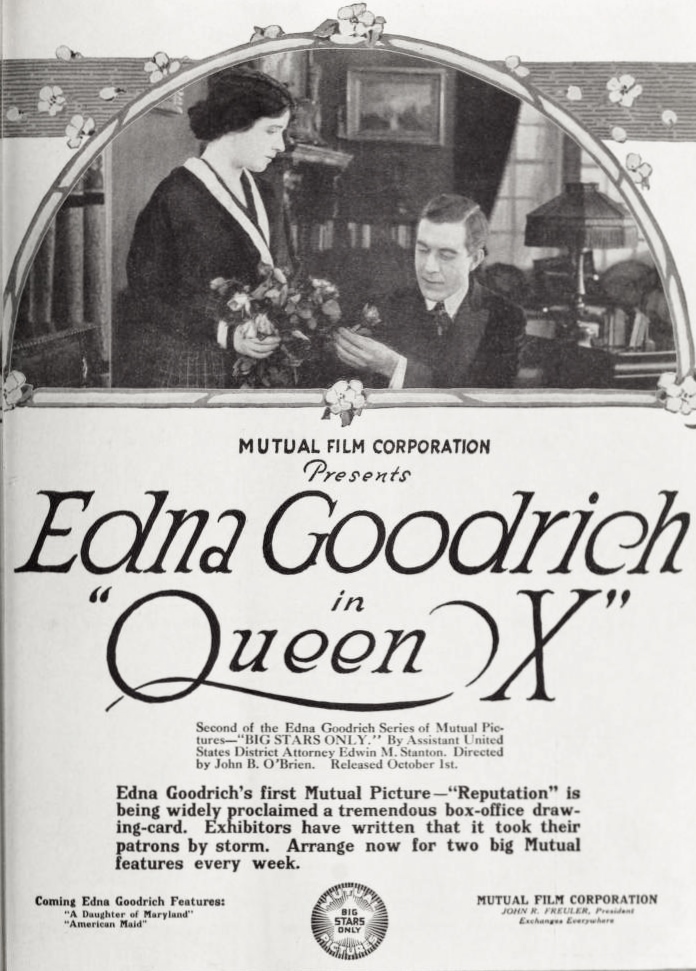
Stepping back into the sepia-toned grandeur of early cinema, we encounter Queen X, a 1917 silent film that plunges viewers into a surprisingly gritty and morally complex narrative for its era. Directed by the uncredited visionaries of the time and penned by Edwin M. Stanton, this cinematic artifact transcends mere historical curiosity, offering a potent cocktail of social commentary, personal redemption, and the insidious grip of addiction. It’s a film that, even a century later, retains a certain magnetic pull, not least due to the compelling performance of its lead, Edna Goodrich, whose portrayal of the titular Queen X, or Janice Waltham, is nothing short of captivating.
The narrative unfurls in the shadowy, labyrinthine alleys of New York’s notorious Pell Street district, a setting synonymous with vice and clandestine operations. Here, amidst the swirling mists of opium fumes and the hushed whispers of illicit trade, the enigmatic figure known only as "The Queen of Chinatown" reigns supreme. Her apprehension by U.S. District Attorney Arnold Somers' relentless men marks the opening salvo of a drama steeped in unexpected revelations. The discovery of a distinctive cross-shaped birthmark on her wrist serves as a crucial identifier, peeling back the layers of her criminal alias to reveal Janice Waltham—a name that once resonated with the prestige of high society. This dramatic unveiling immediately establishes the film's central tension: the stark dichotomy between past grandeur and present degradation. Janice's fall from grace is depicted not merely as a moral failing but as a tragic enslavement, trapped in subterranean opium dens where her suppliers deliberately keep her addicted, ensuring her silence and preventing any possibility of recovery or betrayal. The film, therefore, doesn't just present a criminal; it presents a victim, albeit one with agency in her initial choices, now caught in a cycle of dependency. This nuanced portrayal of addiction, rather than a simplistic demonization, sets Queen X apart from some of its more didactic contemporaries.
Despite the merciless third-degree questioning, Janice remains an inscrutable enigma, her resolve unyielding, her lips sealed against naming her associates. This defiance elevates her character beyond a mere pawn, imbuing her with a stoic strength even in her weakened state. Just as her fate seems sealed, poised for a lengthy prison sentence, a twist of serendipity intervenes. Miriam Evans, whose brother George holds the position of Assistant District Attorney, recognizes Janice. The recognition isn't born of the present squalor but from a shared past—Janice, the heroic schoolmate, had once rescued Miriam from the raging inferno of a convent fire. This moment of recognition is pivotal, introducing a thread of humanity and a glimmer of hope into an otherwise bleak scenario. Somers, ever the pragmatist, seizes upon this unexpected connection, orchestrating a calculated maneuver. He permits Miriam to take Janice into her home, a seemingly compassionate gesture that masks a deeper, more cynical agenda. George, Miriam's brother, is tasked with a morally dubious mission: to court Janice, to cultivate an intimacy that will ultimately serve to extract the crucial names of the elusive gang leaders. This ethical tightrope walk forms the crux of the film's second act, exploring the blurry lines between duty, manipulation, and burgeoning affection.
The subsequent dynamic between George and Janice is a fascinating study in mutual transformation. As George diligently aids Janice in her arduous and often agonizing battle against her drug habit, a remarkable pact forms between them. George, in a gesture of solidarity and perhaps a burgeoning empathy, commits to forsaking his own vices: cigarettes and coffee. This shared journey of self-discipline and recovery creates an unexpected bond, demonstrating the profound impact of mutual support. Janice, through sheer willpower bolstered by George's unwavering presence, gradually reclaims her sobriety, her mind clearing from the narcotic fog. The initial, calculated deception by George yields its intended fruit; he secures the crucial names, fulfilling his part of Somers' bargain. However, the delicate edifice of their relationship is threatened by a brutal revelation. A menacing Chinese cohort, aware of George's original manipulative intent, exposes the truth to Janice. Yet, by this point, George's initial cold calculation has given way to genuine love. He confesses his original deceit, laying bare his soul. In a culmination that defies the cynical origins of their relationship, their complex and morally compromised courtship blossoms into a marriage, binding them in a union forged amidst shadows, redemption, and the surprising triumph of genuine human connection over calculated stratagem. It's a resolution that, while perhaps a touch idealistic, speaks to the film's underlying belief in the power of love and personal transformation.
At the heart of Queen X lies Edna Goodrich’s remarkable performance as Janice Waltham. Goodrich, a prominent figure in early cinema, imbues Janice with a layered complexity that elevates the film beyond a simple crime drama. Her initial portrayal of "The Queen of Chinatown" is one of hardened cynicism, a woman whose eyes reflect the weary resignation of life in the underworld. Yet, beneath this veneer, Goodrich subtly conveys the vestiges of Janice’s former self—the society woman, the rescuer, the individual capable of profound human connection. The challenge of portraying addiction in the silent era, relying solely on physical expression and pantomime, is immense, but Goodrich rises to it with compelling authenticity. Her trembling hands, the haunted look in her eyes, the desperate struggle against withdrawal are all rendered with a visceral power that resonates deeply.
As Janice undergoes her arduous journey to recovery, Goodrich’s performance shifts, gradually revealing a flicker of hope, a return of her inherent dignity. It’s a testament to her skill that the audience witnesses not just a physical transformation but a spiritual one, as Janice sheds the shackles of her addiction and the moral compromises she was forced to make. Her scenes with Hugh Thompson, who plays George, are particularly poignant. The evolution of their relationship, from a manipulative arrangement to genuine affection, is communicated through subtle glances, shared silences, and the gradual softening of Janice’s guarded demeanor. Goodrich ensures that Janice is never simply a damsel in distress or a one-dimensional villain; she is a complex woman, a product of her circumstances, but also a survivor with an indomitable spirit. This nuanced portrayal is reminiscent of other strong female leads of the era who navigated challenging moral landscapes, such as Mary Pickford in The Little American, though Janice's fall is far more precipitous and her redemption more hard-won.
Queen X is far more than a simple melodrama; it’s a film that bravely tackles significant social issues of its time, particularly drug addiction and the societal forces that contribute to it. The depiction of opium dens, while perhaps sensationalized for dramatic effect, nonetheless highlights a very real public health crisis. The film doesn't shy away from showing the devastating physical and psychological toll of addiction, making Janice's struggle for sobriety all the more impactful.
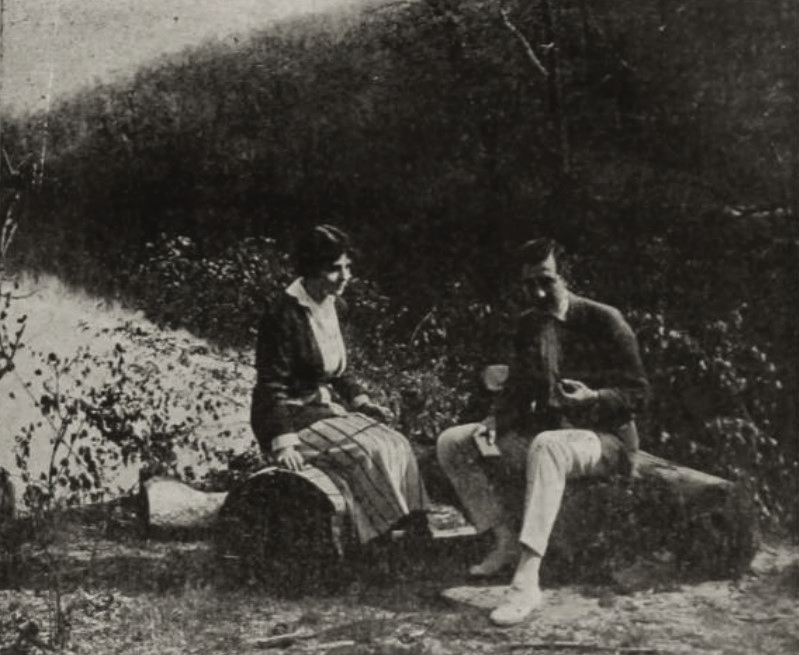
Beyond addiction, the film delves into profound moral quandaries. The character of George, initially driven by duty and a calculated manipulation, embodies the ethical complexities of justice. His mission to exploit Janice's vulnerability for the greater good raises questions about the means justifying the ends. This moral ambiguity is a refreshing departure from simpler good-versus-evil narratives often found in early cinema. His eventual fall in love with Janice complicates his mission, forcing him to confront his own principles and ultimately choose between his professional obligations and his personal feelings. This internal conflict adds a layer of psychological depth to his character, making him more than just a heroic figure. The film invites the audience to ponder whether George's actions, however well-intentioned, were truly ethical, or if love ultimately redeemed a morally dubious beginning. This kind of ethical exploration can be seen in other silent films that grappled with societal norms and individual choices, though perhaps not always with the same raw intensity as seen here.
The theme of redemption is central to Queen X. Janice's journey from the depths of addiction and criminality back to a semblance of respectability and love is a powerful narrative arc. It suggests that even those who have fallen furthest can find a path to recovery and forgiveness, a message that would have resonated strongly with audiences then, and continues to do so today. The "cross-shaped birthmark" itself can be interpreted as a symbolic device, perhaps hinting at a preordained destiny or a mark of suffering and eventual salvation. It’s a subtle touch that adds a layer of allegorical meaning to Janice’s tumultuous life.
As a product of the silent era, Queen X relies heavily on visual storytelling, expressive acting, and intertitles to convey its narrative. The film's pacing, while sometimes deliberate by modern standards, allows for a meticulous build-up of tension and character development. The scenes set in the opium dens, with their hazy atmosphere and shadowy figures, are particularly effective in establishing a mood of decadence and despair. The contrast between these grim settings and the relative serenity of Miriam's home highlights Janice's journey and the stark choices before her.
The use of close-ups, though less prevalent than in later silent films, is employed effectively to capture the emotional nuances of the actors' performances. Goodrich’s ability to convey a wide range of emotions—from despair and defiance to longing and eventual peace—without uttering a single word is a testament to the power of silent acting. The film's cinematography, while not groundbreaking, is competent and serves the story well, creating a visual distinction between the squalor of Pell Street and the more refined environments. The subtle interplay of light and shadow is used to great effect, particularly in scenes where Janice is struggling with her addiction, emphasizing her internal torment. This visual language is a hallmark of the era, seen in other dramatic films like The Tenth Case, where atmosphere and performance carried the narrative weight.
The supporting cast, including Hugh Thompson as the conflicted George and Lucile Taft as the compassionate Miriam, provide solid performances that anchor Goodrich’s central role. Thompson navigates George's moral tightrope walk with conviction, evolving from a man of duty to a man of love. Taft’s Miriam acts as a crucial bridge, a symbol of unwavering kindness that helps facilitate Janice's redemption. Even the more villainous roles, like the unnamed Chinese cohort, contribute to the film's sense of danger and consequence, reminding the audience of the ever-present threat lurking in Janice's past.
Queen X, while perhaps not as widely known as some of its more celebrated contemporaries, stands as an important example of early American cinema that dared to explore complex themes. It predates the Hays Code era, allowing it a certain freedom in depicting vice and moral ambiguity that would later become more constrained. Its focus on a strong, albeit flawed, female protagonist navigating a challenging world makes it a compelling watch even today. The film challenges conventional notions of heroism and villainy, presenting characters who are shades of grey rather than stark black and white.
For modern viewers, Queen X offers a fascinating glimpse into the social concerns and cinematic techniques of the early 20th century. It reminds us that even in the nascent stages of filmmaking, storytellers were grappling with profound human experiences—addiction, betrayal, redemption, and the transformative power of love. The film’s boldness in depicting a fallen woman finding her way back, and the morally compromised hero who helps her, speaks to a progressive sensibility that sought to understand rather than merely condemn. It's a narrative that explores the human capacity for both great error and profound change, a timeless struggle that continues to resonate.
In conclusion, Queen X is a captivating silent drama that deserves a place in the discussion of significant early films. Edna Goodrich’s performance is a masterclass in silent acting, anchoring a story that is both thrilling and emotionally resonant. It's a testament to the enduring power of cinema to reflect and question the human condition, even without the benefit of spoken dialogue or advanced special effects. This film serves as a poignant reminder of the enduring power of narrative, demonstrating how a compelling story, coupled with powerful performances, can transcend the limitations of its medium and time. It’s a journey worth taking, a silent echo from a bygone era that still speaks volumes about the complexities of life and the persistent hope for redemption.
IMDb —
1936
Community
Log in to comment.