Summary
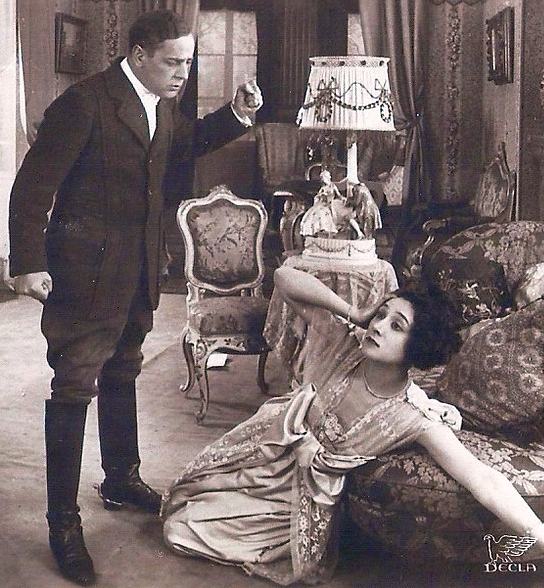
A cryptic chiaroscuro of guilt and spectral obsession, Die Stimme des Toten unspools like a fever dream etched on nitrate: in a crumbling Baltic villa, the recently acquitted sculptor Gregor Heidenreich hears the gramophone voice of the man he once drove to suicide, a crackling cylinder that breathes his crime back into the corridors of night. The dead man’s niece, played by Lotte Müller with the porcelain fragility of a Käthe Kollwitz etching, arrives to catalogue the estate; her lantern jawed fiancé (Berthold Rose) suspects blackmail and begins to shadow Heidenreich through linden alleys whose leaves whisper like unpaid debts. Meanwhile Alwin Neuß’s tormented artist smears clay across his face until he resembles a living funerary mask, convinced the voice issues from his own hollowed-out breastbone. Robert Reinert’s script fractures chronology so that every flashback arrives like a shard of mirror: a séance in Weimar Berlin where a medium traced the dead man’s handwriting on soot-blackened paper; a courtroom where the gramophone itself sat in the dock, its horn a mute scream; a childhood memory of ice skating on a frozen estuary, the skates’ etching a premonition of the scratch of the recording stylus. As the cylinder spins, the villa’s balustrades seem to sweat coal dust; servants vanish into dumbwaiters; Lia Borré’s housekeeper hums the dead man’s favorite lullaby in reverse. The final reel is a single ten-minute dolly shot: Neuß drags the apparatus to the cliff’s edge, the horn now a baptismal font for the wind; he threads the wax disc one last time, and as the voice confesses not his guilt but the world’s, the sea below swallows the sound whole. No fade-out, merely the white iris of a dead man’s eye closing on a cosmos that has learned to eavesdrop on itself.
Review Excerpt
"
A gramophone that won’t shut up about murder: how Robert Reinert’s 1922 phantasmagoria Die Stimme des Toten turns a piece of wax into the most chilling confessor cinema has ever conjured.
There are films you watch; then there are films that watch you back, their sprocket holes blinking like the eyelids of some sleepless deity. I stumbled across Die Stimme des Toten in a damp Berlin archive, the can labeled only with a faded death’s-head stamp and a date scrawled by a trembling hand. Ninety-ei..."