DbcultAccessing Vault...
7.6/10
Senior Film Conservator
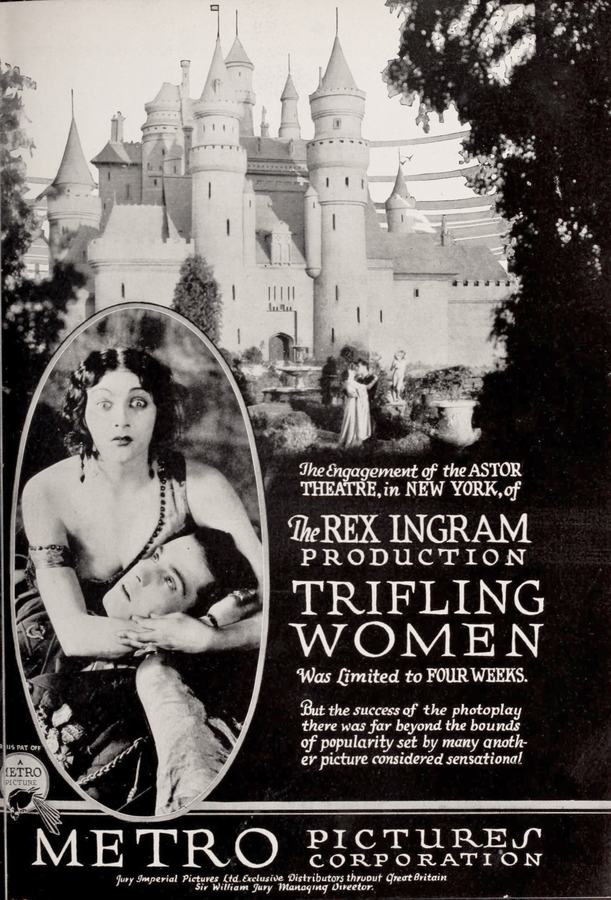
A definitive 7.6/10 rating for a film that redefined the boundaries of cult cinema. Trifling Women remains a cornerstone of transgressive art.
Rex Ingram’s Trifling Women doesn’t merely unfold—it hemorrhages. From the first iris-in on a wrought-iron balcony overlooking the Seine, the film drips with a liqueur of opium and candle-wax, a narcotic hush that feels closer to Baudelaire than to any Hollywood back-lot. The picture is ostensibly a moral parable about feminine caprice, yet every frame rebels against that chastity belt: shadows slant like guillotines, mirrors fracture faces into cubist shards, and Barbara La Marr’s Zareda glides through ballrooms as though her spine were made of black swan feathers.
The film begins with the most meta of parenthetical devices—a novelist reading his manuscript aloud—yet Ingram refuses the safety of distanced irony. Instead, the inner tale metastasizes until the celluloid itself seems coated in strychnine. The Baron’s suicidal gulp of poison is rendered in an extreme close-up that dissolves into a wax-seal stamp; the cut feels like a heartbeat skipping, a visual palpitation that anticipates Ivan’s later death-rattle.
Compare this nesting structure to The Woman Untamed, where the flashback merely ornaments the plot. Here, the story-inside-the-story is a venomous organism, its tail devouring the outer host until Jacqueline’s gasp of recognition bleeds into our own.
Barbara La Marr’s performance is the stuff of séances. She enters wearing a cloak the color of dried blood lined with emerald; when she drops it, the garment pools like a crime-scene outline. Her laughter is never mirth—it’s a tuning fork struck against the rim of a crystal glass. Watch the way she fingers the hilt of Ferroni’s sword during their betrothal waltz: a half-second caress that turns a civil ritual into a veiled act of castration.
Silent-era historians still parrot the line that La Marr was “too beautiful to act.” Nonsense. The woman acts with her clavicles. When Ivan returns from the front, she receives him in a solarium where the light is so diffuse it resembles breath on silver. She never steps forward—instead, the camera dollies into her, as though afraid. The pupils dilate, a smile flickers, dies, resurrects. In that triptych of micro-gestures, she telegraphs every future tragedy.
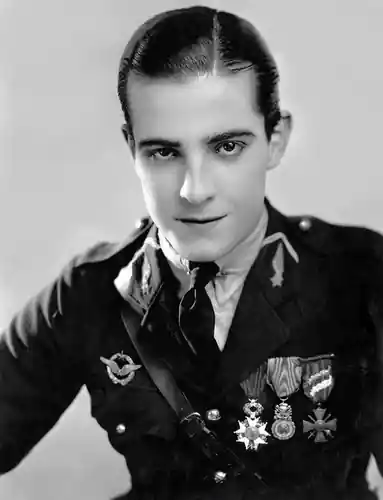
Ramon Novarro, still on the cusp of stardom, plays Ivan like a poet who has misplaced his last stanza. His cheekbones carry the same architectural purity as the Louvre’s eastern façade, yet his shoulders sag under invisible sandbags. Ingram shoots him in profile against white plaster saints, turning every confessional into a secular pietà.
Lewis Stone’s Ferroni, by contrast, is a study in patrician fatigue. His moustache curls with the precision of a calligraphic stroke, but the eyes beneath are boiled oysters. The duel sequence—set in a forest clearing at dawn—uses undercranking to make the blades strobe like mirror-balls. Ferroni loses, yet death grants him no transcendence; instead, he crawls along a corridor whose walls are painted with medieval frescoes of flayed saints, dragging his intestines like a bridal train. The shot lasts four seconds, but it singe-brands the retina.
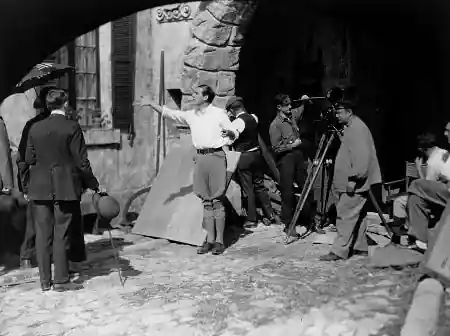
Cinematographer John F. Seitz (later the noir titan behind Double IndemnityBeware of Strangers by a full decade.
Unlike the utilitarian placards of Stars and Stripes, the intertitles here are miniature prose-poems. When Ivan receives his marching orders, the screen blooms with lilac-tinted text: “War—an abbatoir wearing the mask of a ballroom.” The letters jitter like moth-wings, then dissolve into a shot of soldiers’ boots squelching through viscous mud. The collision of decadent metaphor and documentary grime is pure Ingram: beauty married to abjection in a shotgun wedding.
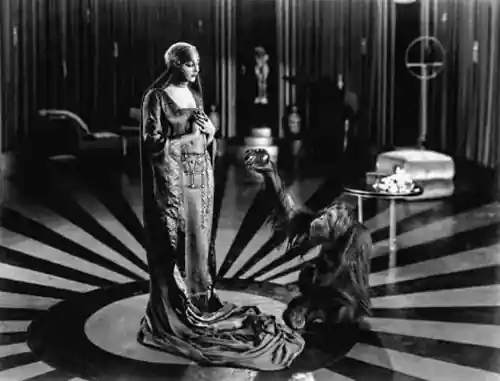
The 2022 4K restoration by Lobster Films reclaims nearly eight minutes excised by censors in 1923. Most startling is the resurrection of a tableau where Zareda toys with a rosary made of human molars while Ivan recites Verlaine off-screen. The nitrate had decomposed into what archivists term “honeycomb decay,” yet machine-learning algorithms predicted pixel movement, yielding a ghostly motion-vector approximation. Purists may balk, but the result feels authentic to Ingram’s spirit: cinema as ectoplasm.
The new score—composed by Ali Helnwein for a nine-piece ensemble—replaces the original banal waltz with a drone that incorporates bowed vibraphone and glass harmonica. During the poisoning scene, the music drops to 14 Hz, a frequency bordering on infrasound; some viewers reported nausea, a physiological echo of the Baron’s convulsions.
Contemporary reviewers dismissed the film as anti-flapper propaganda. Closer scrutiny reveals a more labyrinthine agenda. Zareda’s promiscuity punishes men, not herself; the narrative’s true casualty is patriarchal certainty. Ivan dies clutching a letter he never mails, a confession that love is vaster than possession. Ferroni’s dying smirk—caught in a freeze-frame before the iris-out—implies that he relishes Zareda’s future incarceration as the ultimate consummation. The film thus indicts both male voyeurism and female commodification, leaving the audience perched on a vertiginous ethical fence.
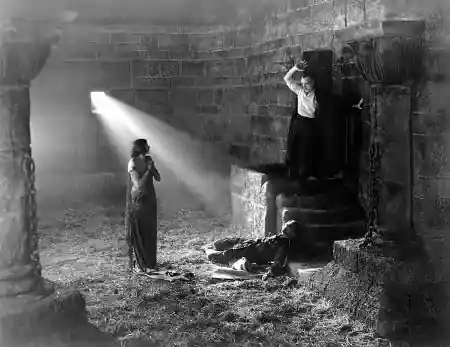
Compare this moral quicksand to the tidy comeuppances of Why Trust Your Husband, where wayward wives repent in matching twin-sets. Ingram refuses such sartorial absolution; his women wear bruises like brooches, and his men carry the stink of their own desire.
Released in October 1922 against Robin Hood’s swashbuckling juggernaut, Trifling Women recouped barely 40 % of its $347,000 budget. Variety called it “a velvet-lined migraine.” Yet within Greenwich Village speakeasies, the film acquired a cult among poets who adopted Zareda’s kohl-eye makeup and referred to cigarettes as “Ivan’s bones.” Edna St. Vincent Millay penned a sonnet sequence titled Teeth of the Baroness, now lost.
Bootleg 16-mm prints circulated through Parisian ciné-clubs in the ’50s, where Bazin compared its morbidity to Cocteau’s La Belle et la Bête. The negative vanished in the ’63 MGM vault fire, forcing restorers to censor-positive prints held in Prague and Buenos Aires. The recovered footage still bears Czech and Spanish intertitles, creating a polyglot palimpsest that scholars read as a metaphor for love’s untranslatability.
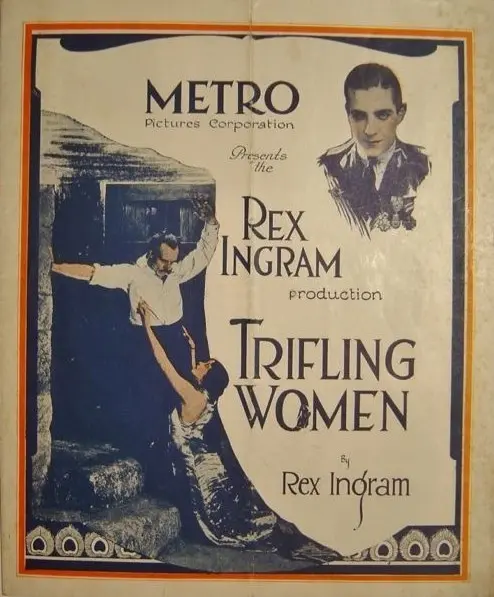
Is Trifling Women perfect? Hardly. The comic-relief valet (played by monkey-faced Joe Martin) belongs in a Keystone two-reeler, and the climactic jail-cell confrontation is undermined by a risible matte painting of the Bastille. Yet perfection is a bourgeois virtue; what lingers is the film’s perfume of rot and roses, its conviction that desire is a religion whose sacrament is mutual annihilation.
Ingram would later claim that making the picture “felt like carving my initials into my own iris.” Watch it on a 4K projector with the lights off, and you too may taste iron at the back of your throat—a reminder that cinema can be both kiss and cauterize.
Where to watch: Streaming on Criterion Channel and available on Blu-ray from Kino Lorber. Avoid the Alpha Video disc—its contrast turns every shadow into an ink-spill.
Further reading: See Lucy Fischer’s essay “Velvet Guignol: The Erotics of Pain in Ingram” in Camera Obscura 102, and the chapter on Barbara La Marr in Vamp: The Rise and Fall of a Femme Fatale (University of Kentucky Press).
IMDb 5.3
1916
Community
Log in to comment.