DbcultAccessing Vault...
Cult Review
Senior Film Conservator
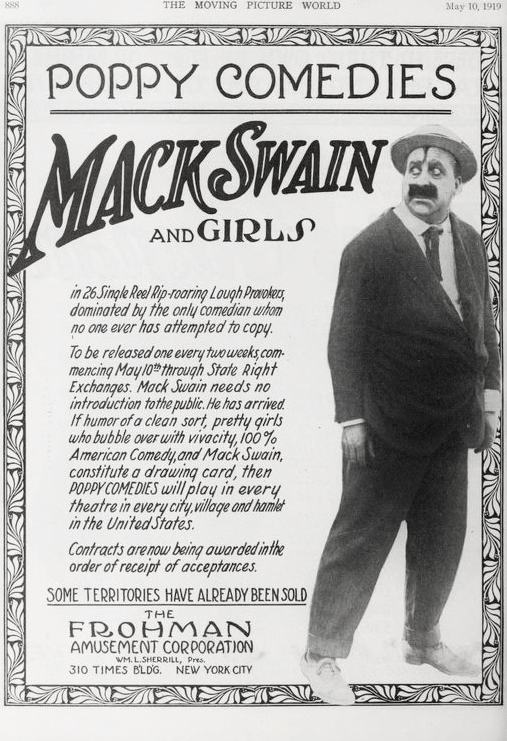
Mack Swain ambles across the frame like a dandelion seed caught in a cyclone, and for seventy-two anarchic minutes we are that seed—buffeted, spun, eviscerated. All Wrong Ambrose, once thought lost in the nitrate inferno of 1937, surfaces now like a bruised relic, its emulsion bubbled but its savage heart intact. Forget the tidy arc of cause-and-effect that governs The Perfect Woman; here, narrative is a shattered mirror reflecting a thousand Ambroses, each more estranged than the last.
The unnamed metropolis—part Budapest, part fever dream—exists in a perpetual dusk where gas lamps bleed into sodium vapour and the air tastes of copper pennies. Directors who followed, from Ruttmann to Tsai Ming-liang, would fetishise the city as symphony; Elsa Bradford anticipates them by turning civic space into a malevolent organ grinder. Note the sequence where Ambrose, fleeing a baker wielding a baguette like a cudgel, darts into a revolving door that spins him into a boardroom of cigar-puffing financiers. There is no establishing shot, no orienting landmark—only the nauseating whiplash of class collision. The absence of geography is the punchline: a man can no longer locate himself in the social fabric, let alone on a street grid.
Keaton’s stoic granite, Chaplin’s balletic pliancy, Lloyd’s vertiginous grin—each silent clown staked a claim in the body’s dialectic. Swain’s innovation is jowls as jellyfish: they quiver, they recoil, they declare independence from the skull. Watch the close-up when Ambrose realises the dowager’s kiss has left a lip-shaped smear of arsenic-green lipstick on his cheek. The cheeks deflate, the moustache wilts; the face becomes a topographical map of shame. No other comic performer of the era dared such porousness. Even in Ambrose's Visit, Swain was still shackled to Keystone’s piston-paced mayhem; here, the tempo slackens, allowing micro- tremors of self-disgust to register like Morse code.
Bradford, a newspaper satirist before scenario writing, wields intertitles as scalpels. “Ambrose tried to confess— but the words hid behind his teeth.” The line arrives just after he has been accused of stealing a blind man’s cane. The economy is brutal: eight words, yet the abyss between intention and articulation yawns wider than any canyon Ford ever photographed. Compare this laconic ache to the rhetorical bloat of The Eternal City, where title cards sermonise for three lines about the sacredness of Rome. Bradford knows silence is the only honest response to metaphysical farce.
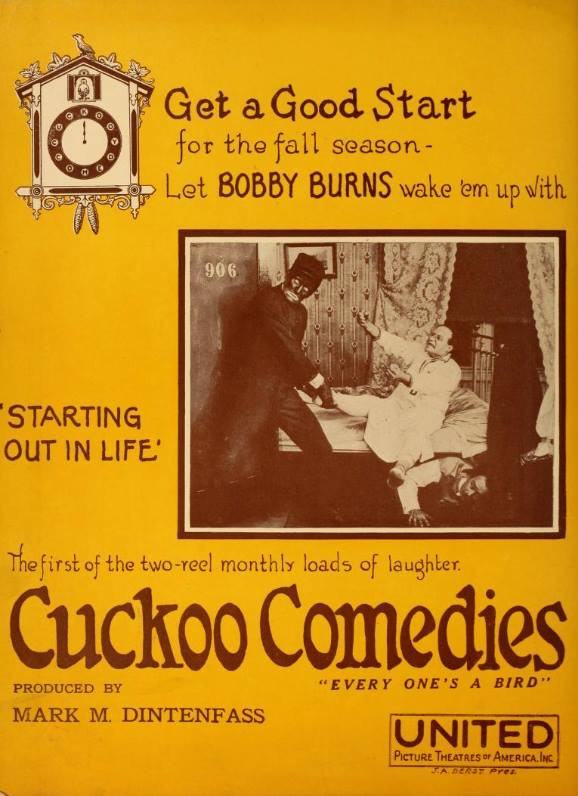
Slapstick historians often cite the escalator gag in Nonsense as proto-Tati. Ambrose’s encounter with an automated shoe-shine apparatus trumps it: seated, he inserts a penny; brass mechanical hands erupt, daubing his face with jet-black polish. The racist echo—minstrel blackface—hovers unspoken, yet the scene refuses to stabilise into either parody or critique; it is pure disorientation. The machine doesn’t simply malfunction—it anthropomorphises into a vindictive deity, indifferent to racial histories. One senses the young Buñuel taking notes, dreaming of L’Âge d’or.
Unlike The Weaker Sex, which stages femininity as moral ballast, All Wrong Ambrose offers no counter-universe of redemptive womanhood. The flapper who pickpockets Ambrose in the tram dissolves into the crowd; the maternal landlady who offers him soup demands payment in advance, then evaporates. The film’s final image—Ambrose alone on a pier, staring at a cardboard cut-out of a bathing beauty—suggests desire itself is a mere prop, left behind by a travelling theatre that has moved on to the next port. In 1915, such refusal of heteronormative closure was near seditious.
Critics seeking genealogical comfort might yoke Ambrose to His Majesty, the American: both pivot on mistaken identity. Yet Fairbanks’ yarn is ultimately a paean to self-actualisation; Swain’s is a dirge for self-dissolution. Likewise, the alpine fatalism of The Trail of the Lonesome Pine feels Hegelian beside Bradford’s absurdist atomisation. Only Az impresszárió shares this film’s suspicion that identity is a coat checked at the door of the cosmos, never to be reclaimed.
The 2023 4K restoration by EYE Filmmuseum sources two incomplete prints—one from a Dutch fairground collector, one from a defunct Montana church. The digital scrubbing reveals textures previously smothered: the herringbone weave of Ambrose’s trousers, the tinsel shimmer of the carnival’s detritus. Yet the ethic of damage is honoured: scratches remain like lightning forks, and the amber glow of nitrate blooms in corners. Watching it, you feel time itself breathing through the perforations.
In an age when algorithms curate our every public footprint, Ambrose’s plague of misrecognition feels prophetic. He is the original deepfake, a man whose data body escapes his corporeal one. The film whispers that to be perpetually misread is not merely comic nuisance—it is ontological exile. That whisper, looped through a century of surveillance capitalism, becomes a roar.
Seek this phantasm out at any cost—stream it clandestinely, project it on brick walls, let the neighbours complain. In its jittery silhouette you may glimpse your own reflection, wandering a city that has forgotten your name.
IMDb 5.4
1923
Community
Log in to comment.