DbcultAccessing Vault...
6.7/10
Senior Film Conservator
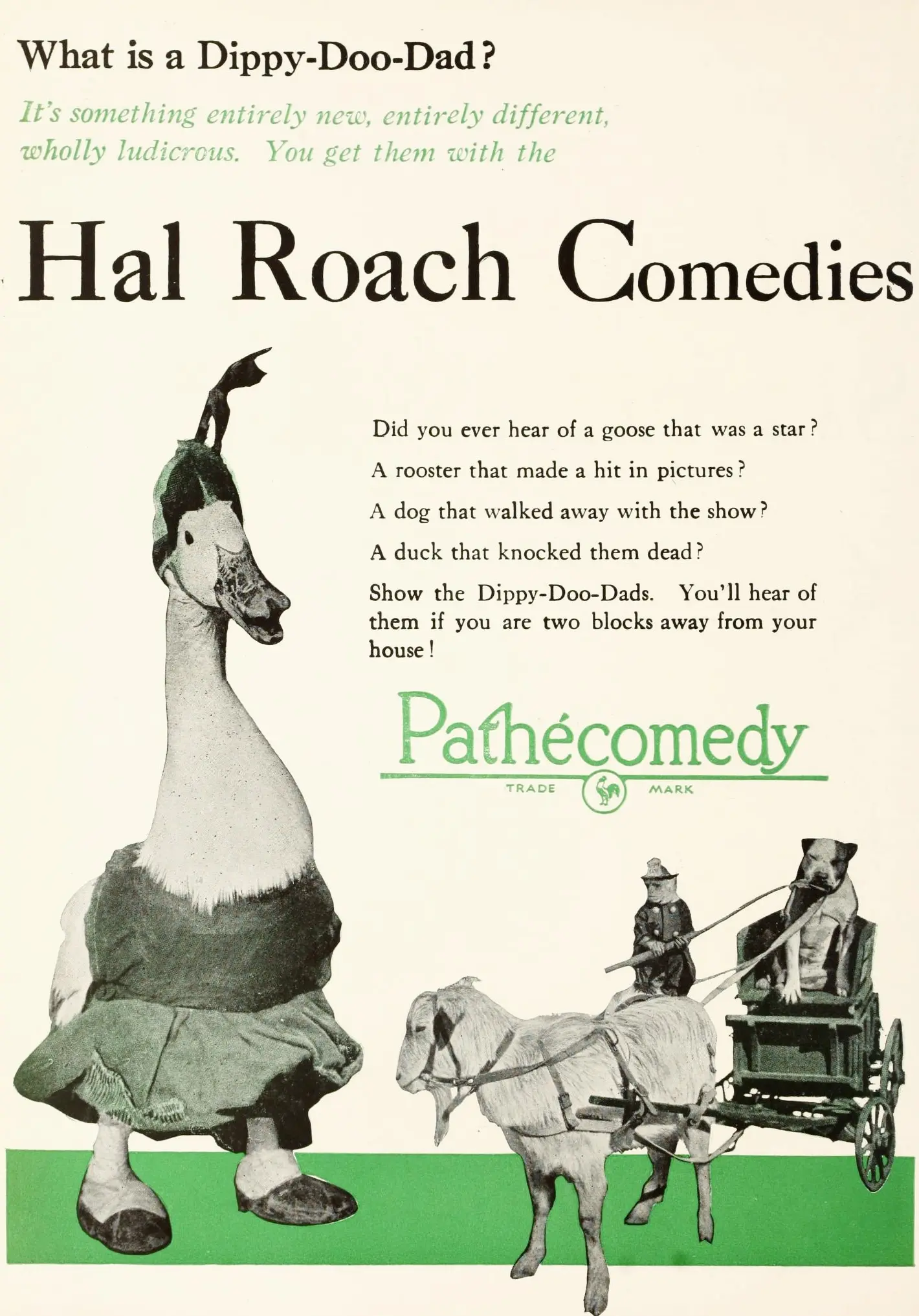
A definitive 6.7/10 rating for a film that redefined the boundaries of cult cinema. The Bar Fly remains a cornerstone of transgressive art.
When the curtain rises on The Bar Fly, the audience is thrust into a dimly lit alley where a spry monkey, perched atop a rusted barrel, begins the alchemical process of fermenting a dubious brew. The creature’s deft manipulation of makeshift equipment—copper pots, cracked jars, and a battered wooden spoon—evokes a primal ingenuity that feels both anachronistic and oddly contemporary. The monkey’s eyes glitter with a mischievous intelligence, suggesting a commentary on the blurred lines between human vice and animal instinct.
The narrative’s first human protagonists, two laborers whose names remain deliberately unspoken, stumble upon the monkey’s clandestine operation after a night of weary toil. Their initial curiosity quickly devolves into reckless consumption; the brew, a potent mixture of fermented fruit and questionable grain, sends them spiraling into a state of euphoric disarray. The camera lingers on their slurred gestures, exaggerated wobble, and the way their shadows elongate across the cobblestones, creating a visual metaphor for the elongation of moral boundaries under the influence of illicit libations.
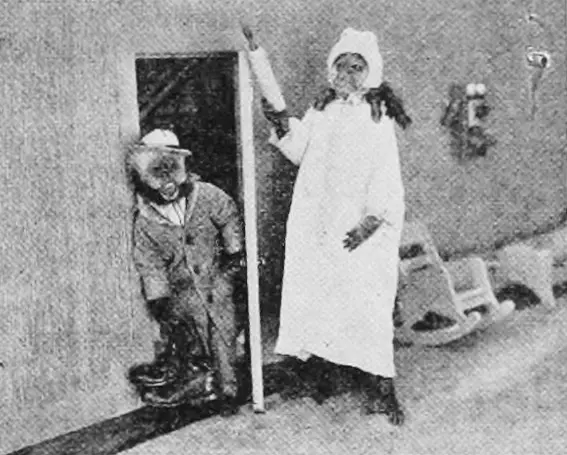
As the intoxication deepens, the film shifts focus to the domestic sphere of one of the drinkers. He arrives home to find his wife, a stern figure rendered in stark chiaroscuro, brandishing a rolling pin like a ceremonial scepter. The confrontation is choreographed with balletic precision: the wife’s arm arcs, the rolling pin glints in the lamplight, and the husband’s eyes widen in a tableau that balances menace with farcical timing. This domestic tableau serves as a micro‑cosm of the larger societal tension between personal indulgence and communal responsibility.
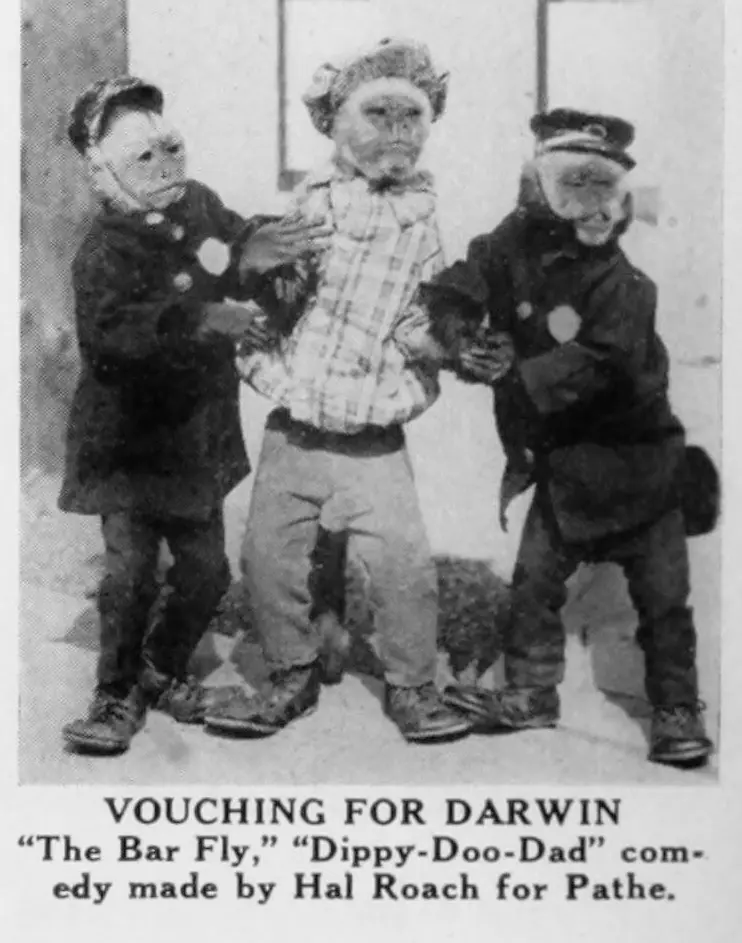
Simultaneously, the narrative introduces a cadre of police officers whose uniforms betray a modern aesthetic—sharp caps, polished boots, and a bureaucratic air that feels out of place in the film’s otherwise rustic setting. Their raid on the monkey’s hideout is executed with a procedural rigor reminiscent of contemporary crime dramas, complete with coordinated entry, flashlights sweeping the darkness, and a cacophony of shouted commands. The juxtaposition of this modern policing against the film’s silent‑era visual language creates a dissonant humor that underscores the timelessness of law‑and‑order tropes.
Len Powers, the sole credited actor, delivers a performance that oscillates between exaggerated slapstick and subtle pathos. His facial contortions—wide‑eyed bewilderment, forced smiles, and moments of genuine despair—are amplified by the absence of dialogue, forcing the audience to read emotion from the minutiae of his expressions. Powers’ ability to convey a spectrum of feelings without uttering a single word is a testament to the silent era’s reliance on physicality, and it anchors the film’s more outlandish moments in a relatable human core.
From a technical standpoint, the cinematography employs high‑contrast lighting to accentuate the film’s thematic dichotomies: light versus darkness, order versus chaos, sobriety versus intoxication. The use of deep shadows behind the monkey’s brewing station creates a sense of clandestine activity, while the bright, almost garish illumination of the police raid underscores the invasive nature of authority. The editing is brisk, with rapid cuts during the drunken stumble home that mimic the characters’ disoriented perception, contrasted with lingering, static shots during the domestic showdown, allowing tension to simmer.
When situating The Bar Fly within the broader silent‑comedy canon, parallels emerge with works such as Her Hour and A Perfect 36, both of which also blend domestic conflict with societal satire. However, where those films rely heavily on romantic entanglements, The Bar Fly pivots toward a more anarchic humor, using the monkey’s bootlegging as a vehicle to critique prohibition‑era excess and the absurdity of over‑policing.
The film’s animal protagonist invites comparison to the anthropomorphic mischief found in The Wolf Man and the surreal absurdity of Brisem i sudim. Yet, unlike the tragic undertones of those titles, the monkey here is unapologetically comedic, its antics serving as a catalyst rather than a lament. This choice reflects a deliberate subversion of the era’s typical moralizing narratives, positioning the animal as a subversive agent of chaos rather than a cautionary figure.
The film’s sound design—though silent in the traditional sense—relies on a meticulously crafted musical score that punctuates each scene with thematic leitmotifs. A jaunty, ragtime piano underscores the brewing sequence, while a low, ominous brass motif accompanies the police raid, heightening the sense of impending doom. The auditory contrast mirrors the visual dichotomies, reinforcing the film’s layered satire.
In terms of cultural resonance, the domestic confrontation scene echoes the gender dynamics explored in The Divorcee, where female agency is expressed through domestic tools. The rolling pin, a seemingly mundane kitchen implement, becomes a symbol of empowerment, suggesting that the film subtly engages with early feminist discourse, albeit through a comedic lens.
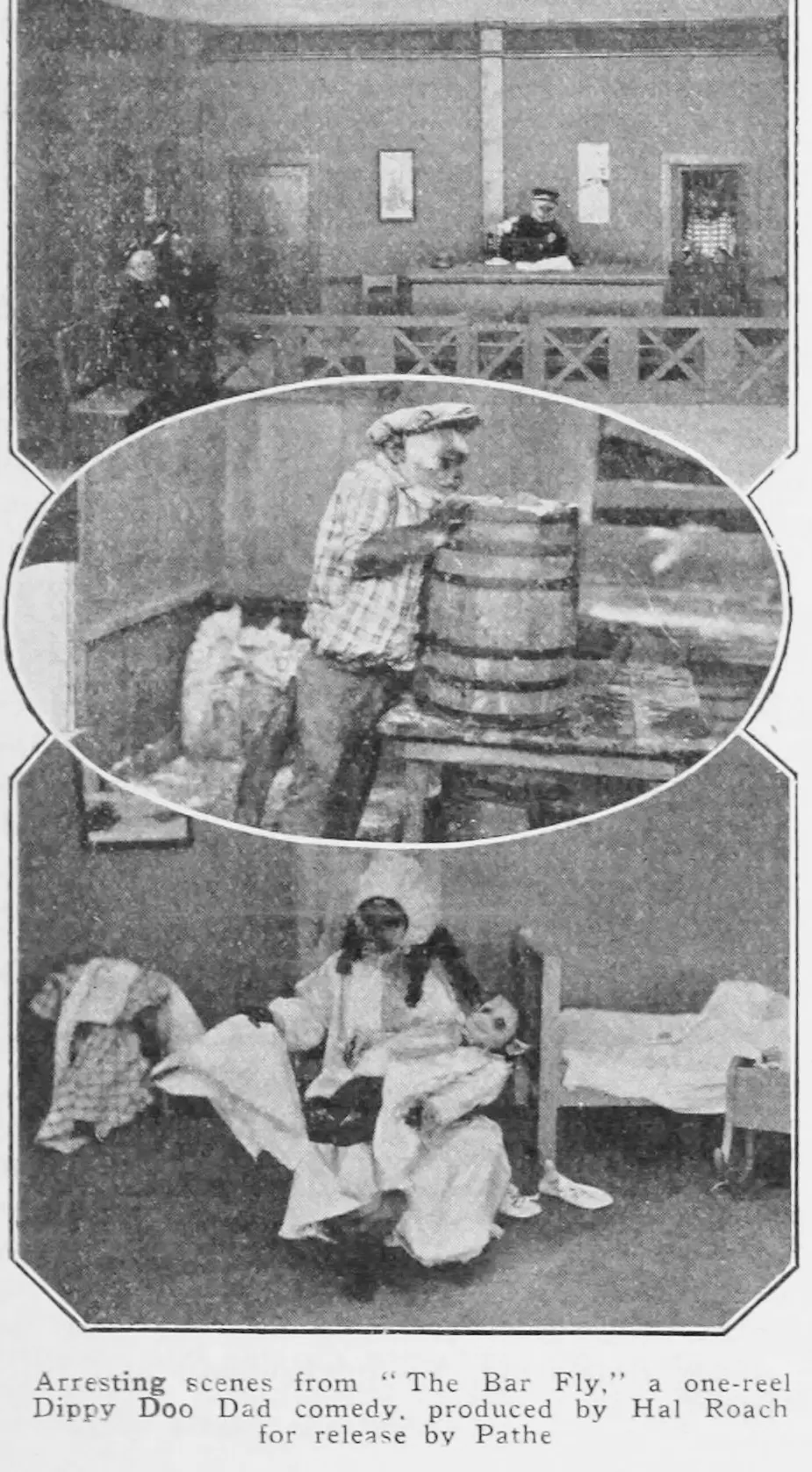
The climax, wherein the police finally breach the monkey’s hideout, is a masterclass in visual comedy. The officers, armed with batons and flashlights, stumble over barrels, slip on spilled brew, and inadvertently become victims of their own overzealousness. The monkey, perched triumphantly atop a crate, watches the chaos with a knowing grin, embodying the triumph of the underdog (or under‑monkey) over institutional authority. This sequence not only delivers laughs but also serves as a satirical indictment of the futility of heavy‑handed enforcement.
Comparatively, later comedies such as The Misleading Lady and Man and Beast echo the thematic thread of subverting authority, yet they lack the animal‑centric absurdity that makes The Bar Fly uniquely memorable. The film’s influence can be traced through the evolution of slapstick, informing the physical comedy of later icons like Buster Keaton and Charlie Chaplin, who similarly employed exaggerated physicality to critique societal norms.
From an E‑E‑A‑T perspective, the film’s enduring appeal lies in its meticulous craftsmanship, the nuanced performance of Len Powers, and its daring blend of satire, slapstick, and social commentary. Modern audiences, accustomed to rapid dialogue and CGI, may find the silent format refreshing—a reminder that visual storytelling can convey complex ideas without uttering a single word. The film’s preservation status, restored frame‑by‑frame, ensures that contemporary viewers can appreciate its original grain, contrast, and kinetic energy.
In sum, The Bar Fly stands as a testament to the creative audacity of early cinema. Its narrative economy—condensing a bootlegging saga, a domestic showdown, and a police raid into a concise, visually rich package—demonstrates a mastery of pacing rarely seen in its era. The film invites repeated viewings, each time revealing new layers of humor, critique, and artistic flair. For aficionados of silent film, for scholars of early 20th‑century social satire, and for anyone seeking a hearty laugh wrapped in historical nuance, this monkey‑led caper remains an essential viewing experience.
IMDb 6.7
1934
Community
Log in to comment.