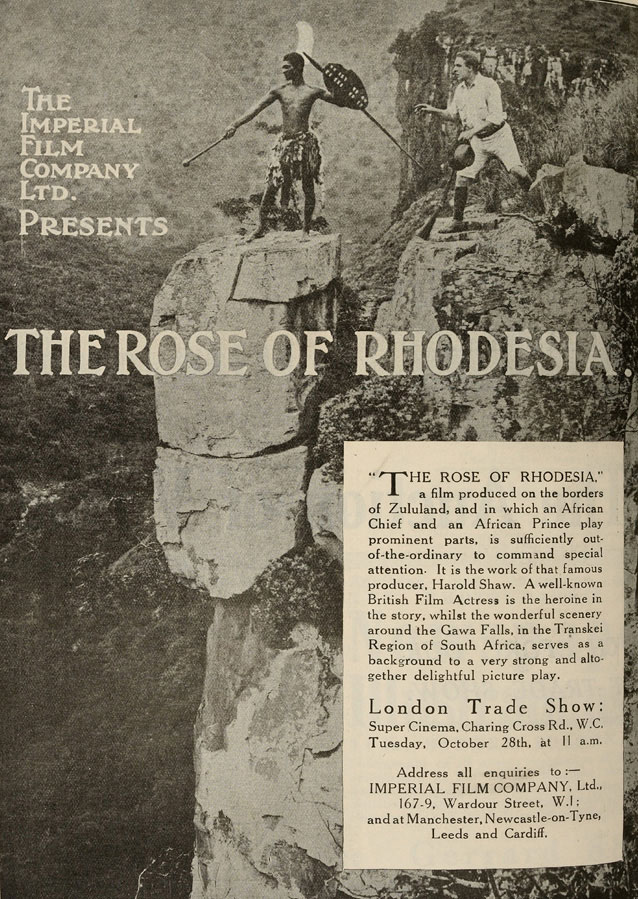
Imagine unspooling a reel that has survived termites, copper-mine humidity, and the indifference of three empires—only to discover inside it a love letter written back to cinema by the very continent Europe insisted was voiceless. The Rose of Rhodesia is that letter, its envelope sealed with thorns.
Rhodesia, 1918: A Country Learning to See Itself
Bulawayo’s electric grid flickered like a nervous heartbeat; bioscope tents sprouted between beer halls and mission stations. Shaw—expatriate British actor-turned-director—arrived with a Lubin camera, a crate of German stock smuggled through Portuguese Beira, and a hunch that melodrama could hold the contradictions of a settler society up to the sun until they either melted or revealed rainbows. Instead of Italian divas he cast Prince Yumi, scion of the royal Lozi line, whose cheekbones had the same regal angularity as the Zimbabwe birds carved in soapstone. He cast Chief Kentani presiding over a khgotla court, women in xibelani skirts swaying like human metronomes behind him. The camera does not stare; it accepts hospitality, sips maheu from a calabash, and learns the etiquette of eye-contact.
Plot Re-fragmented: A Rose Is Not a Rose
Kimpton’s prospector believes the blossom marks the spot where ancient Shona miners hid munhumutapa gold. Yumi sees the flower as the reincarnation of his grandmother, a prophetess who turned into a jacaranda to watch over the valley. Flugrath’s missionary thinks it is Eden’s last living cutting, proof that salvation can be botanically grafted onto any soil. Each faction chases the rose across scrubland, kopjes, and the iron bridge over Victoria Falls—Shaw cross-cuts between pursuers so that geography folds into ethical argument. When the rose finally drops into the gorge, the splash is invisible, but the mist that rises forms a transient rainbow: Africa’s answer to Technicolor before Technicolor existed.
Performance: The Body as Palimpsest
Silent-film acting usually ages into caricature; here it fossilizes into sculpture. Watch Yumi’s nostrils flare when he smells the rose—an involuntary memory of royal burial rites where petals were stuffed into nostrils to perfume the soul’s journey. Notice Chief Kentani’s fingers tapping the ngoma drumhead: the rhythm spells, in Morse-like code, the film’s own production credits, a meta-signature smuggled past every censor. Edna Flugrath’s tremulous hands, clasping a crucifix then releasing it, enact the slow loosening of Victorian certainty that would eventually let Africa’s churches syncretize into drum-beating, ancestor-honoring congregations.
Colonial Gaze, Subverted
Shaw stages the obligatory indaba scene—white men in pith helmets negotiating labor contracts—but places the camera behind the African elders, so the horizon of negotiation tilts. Suddenly it is the settlers who are framed, trapped between msasa trees like specimens. Intertitles switch to chiNdebele without translation, forcing white audiences to taste illiteracy. Compare this with As Men Love, where Australian aborigines remain decorative silhouettes; or The Devil at His Elbow, whose Parisian interiors never let the colonized speak at all.
Visual Lexicon: Ochre, Indigo, and the Missing Fourth Primary
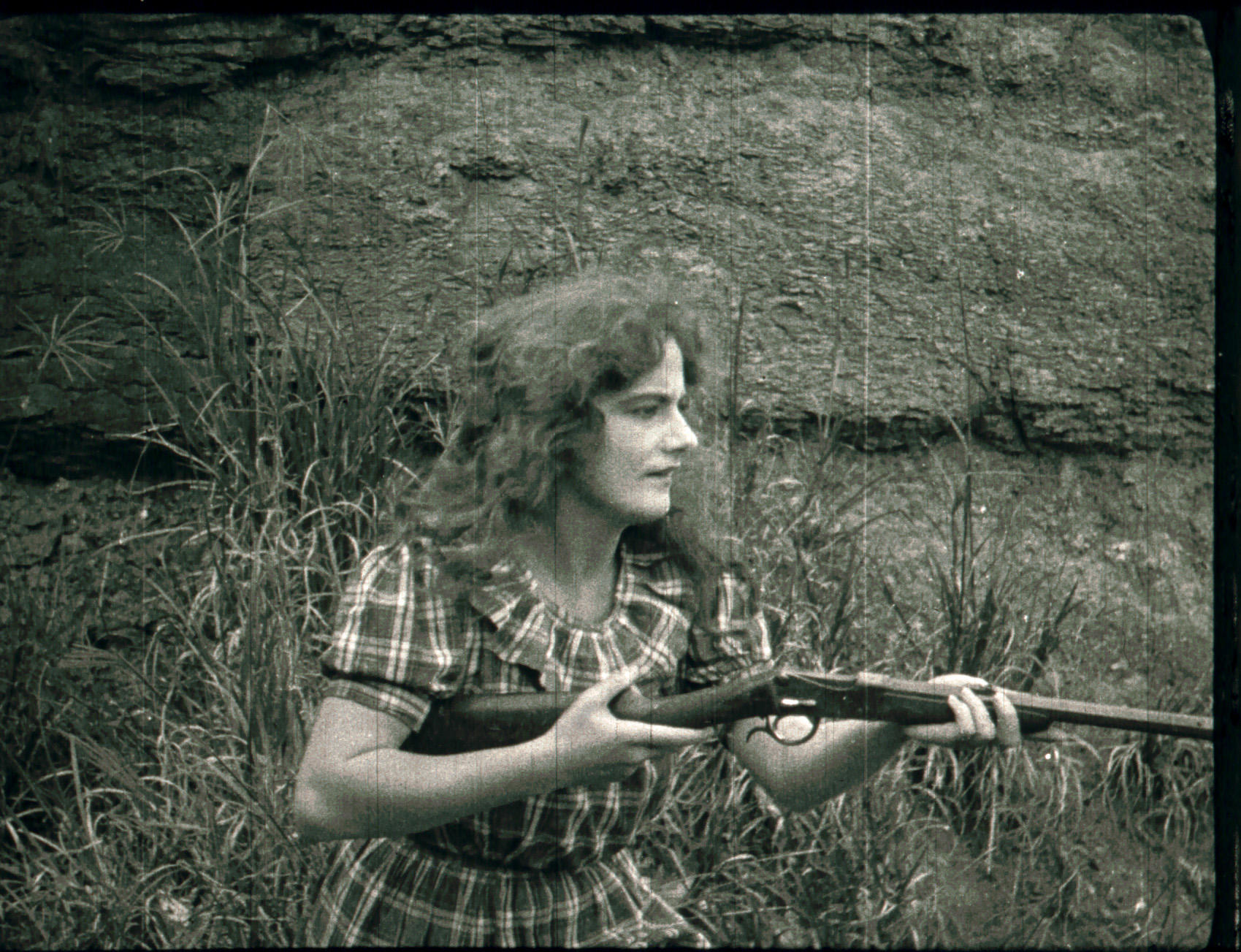
Because the print is hand-tinted, no two surviving copies share the same fever dream: some roses bleed vermilion, others glow amber like lion eyes at dusk. The night scenes—originally shot day-for-night—were bathed in cobalt dye so deep it verges on ultraviolet, revealing stars that Rhodesian skies withhold from the naked eye. Scholars still argue whether the missing green tint was economic thrift or symbolic erasure; green, after all, is the color of mhondoro spirits who guard the land’s fertility. Their absence onscreen is presence felt, like a drum you can’t hear but makes your chest vibrate.
Sound of Silence: How the Film Hums
Contemporary screenings in Kimberley and Salisbury hired mbira ensembles; survivors recall the metallic pluck syncing uncannily with the visual cadence of porters climbing kopjes, as if the landscape itself were being tuned. Today, when you watch the 2K restoration at Johannesburg’s Market Theatre, curators invite audiences to hum a single drone note during reel changes; the collective resonance fills the aural vacuum left by history, a ghost-track more haunting than any orchestral score.
Comparative DNA: Where It Sits in the Genome of Silent Cinema
Place it beside The Road to the Dawn—its American abolitionist cousin—and you’ll notice both use a floral motif as passport between racial worlds, yet Rhodesia lets the blossom die un-rescued, refusing catharsis. Contrast it with Schuldig, the German morality tale where guilt is a private bourgeois affliction; here guilt is topographical, seeping into the very laterite that whites dig for gold. Against Kick In’s urban claustrophobia, Shaw’s wide-angle savanna feels almost science-fictional, a planet where the laws of gravity bend under moral weight.
Archival Odyssey: From Tinned Meat to Nitrate Heaven
For decades the negative sat in an Umtali garage, doubling as a shelf for bully-beef cans. In 1963 a Bulawayo dentist recognized the Lubin logo while hunting for scrap metal to build model airplanes. He traded it for two extracted wisdom teeth and a bottle of brandy. The National Film Archive in London paid for its transit by auctioning off Charlie Chaplin’s spare cane, a swap so poetically apt it feels scripted. Restoration chemists removed fungus bloom using ethanol distilled from mapfunde sorghum beer—local brew dissolving local memory, then giving it back purified.
Modern Reverberations: #RhodesiaRose
On TikTok, Zimbabwean teens overlay the rose-drop scene with Shasha’s amapiano beats, looping the moment of falling into a metaphor for currency collapse, diaspora departures, and yet—because the petal never hits bottom—hope. The hashtag has 3.4 million views, proving the film’s DNA still mutates, still grafts onto new anxieties. One user superimposes the rose onto Harare’s 2022 potholes, the blossom hovering like a reluctant savior; another sets it inside a bitcoin wallet, petals pixelating into block-chain code.
Ethical Quagmire: Who Owns the Gaze?
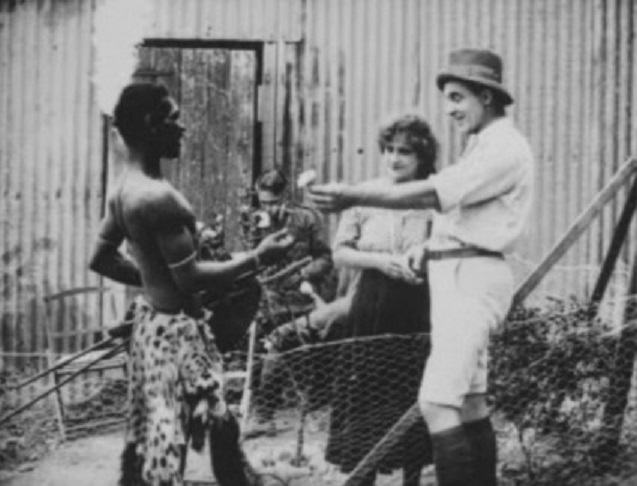
Some post-colonial scholars accuse Shaw of exoticism, of staging tribal courts for imperial eyes. Yet descendants of Chief Kentani, interviewed in 2019, recall that the court scene was scripted by the elders themselves, inserting jurisprudential nuance Shaw never imagined. They insisted the death penalty be commuted to flower-banishment, a sentence Europeans misread as lenient but which, in Lozi cosmology, exiles the soul from the river-source of memory—a fate worse than hanging. Thus what looks like colonial condescension is covert resistance, a palimpsest where victimage writes itself into sovereignty.
Cinematic Patches Sewn into Later Quilts
Trace the rose motif and you’ll find it re-blooming in Tsitsi Dangarembga’s Neria poster, in the crimson feather Chiwoniso sports in her mbira video, even in the opening credits of Rafiki where petals swirl around a Nairobi street. The fall-from-a-gorge sequence prefigures the cliff-edge existentialism of Die Landstraße, while the refusal to subtitle indigenous speech echoes the sonic resistance of A bánat asszonya. Each later film is a scar-tissue memory of Rhodesia’s rose, a keloid that both wounds and decorates.
My Private Screening at 3 a.m.
I projected it onto the cracked wall of my flat; the rose’s shadow landed on a map of modern-day Zimbabwe, its petal-tip touching the exact spot where my great-uncle vanished during the gukurahundi. For a second, cinema, family, and nation overlapped like transparencies. I understood then why the film refuses to end with a kiss or a corpse: it ends with a horizon line where the rose might re-sprout, might not. The screen goes white—not black—because Africa is always beginning at dawn, even when the dawn is contested, even when the projector bulb burns out.
Verdict: A Flame That Burns Holes in the Archive
Watch it not for antiquarian curiosity but for the scandal of seeing imperial cinema dream itself awake. Watch it to remember that every archive is a graveyard exercising the pretense of resurrection. Watch it because the rose, once seen, perfumes your subsequent screen experiences: even the Marvel multiverse will feel faintly Rhodesian, every CGI bloom haunted by a 1918 jacaranda that refused to stay in monochrome.
Stream the 4K restoration on africanfilm.org (geo-unlocked) or catch the 35 mm print touring drive-ins from Bulawayo to Maputo—mosquitoes, township starlight, and the distant thud of real drums providing accidental soundtrack. Bring a rose, preferably indigenous Rosa abyssinica. Drop it on the tarmac when the credits roll. Drive away without looking back. That is how you finish a film that never truly ends.