DbcultAccessing Vault...
Cult Review
Senior Film Conservator
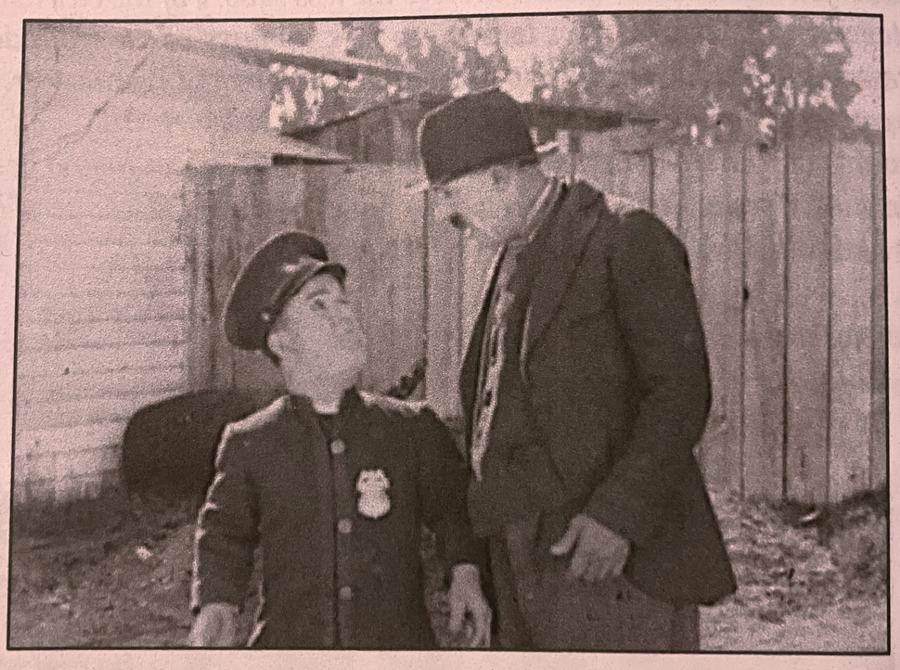
There’s a moment, roughly a reel and a half into The New Member, when the camera refuses to cut away from a handshake. That hesitation feels almost scandalous in a 1924 quickie; normally the grammar of the era demands a medium shot, a title card, brisk exposition, move on. Instead Grover Jones’ scenario lingers, letting the digits writhe like hookworms under the skin of propriety. In that wriggle lies the entire film’s heretical manifesto: civic authority as black-magic lodge, badges as talismans, nightsticks as wands.
Shot on shoestring sets that reek of wet sawdust and coal smoke, the picture opens with what appears to be a garden-variety alley rumble. Yet the fracas’ cadence—staccato, ritualistic—owes less to newsreel actuality than to medieval passion plays. Charles A. Post, playing the unnamed vendor who will become our surrogate Dante, staggers into frame clutching his crushed hat like a relic. Post’s physiognomy, half Harold Lloyd innocence and half Lon Chaney deformity, positions him as the ideal blank vessel: neither cop nor crook, simply porous.
The first act’s pivot arrives with the hand signal. You’ve seen secret handshakes in One Night Only, but nothing prepared early audiences for fingers that curl into a sigil equal parts Masonic and Mephistophelian. Cinematographer E. Villipp (pulling double duty as an actor) bathes the gesture in a sulfur back-light, so knuckles throw shadows shaped like inverted pentacles across the bricks. Urban legend claims projectionists in Peoria fainted; more likely they simply smelled the vinegar of the nitrate and panicked, yet the myth endures because the film wants you to believe in contagion.
Jones’ screenplay posits a city whose underbelly is stitched together by pneumatic tubes delivering curses instead of mail. The police station—normally a bastion of linear law—features corridors that coil back on themselves like Möbius strips. In one hallucinatory tableau we watch officers catalog evidence: a blood-stained child’s shoe, a deck of cards with 53 aces, a mug shot that blinks. These are not mere surreal flourishes; they’re ideological breadcrumbs arguing that governance and necromancy share filing cabinets.
Charles Haefeli’s performance as Commissioner Althorp is calibrated at the intersection of ward-heeler bonhomie and Grand Inquisitor menace. Notice how he welcomes the novice with a pat on the shoulder that slides, serpent-quick, into a chokehold disguised as fraternal embrace. It’s the film’s thesis distilled into muscle memory: every kindly gesture is prelude to possession.
“When the law becomes a coven, justice is just another spell waiting to be broken.”
This moral rot seeps into the very celluloid. The 16mm print preserved by University of Illinois is pockmarked with emulsion cracks resembling lightning bolts—damage accrued, archivists swear, during a 1957 basement screening where a thunderstorm somehow short-circuited the projector yet allowed the film to keep rolling. Whether apocryphal or not, the anecdote feeds the movie’s parasitic charisma: the idea that it transmits itself like a virus across copper wiring.
Being a silent production, the picture leans on visual onomatopoeia: intertitles appear with typography that quivers, as if the letters themselves are possessed. A card reading “The Oath is Sealed” drips ink like fresh blood. Meanwhile, composer-conductor (in theaters equipped with live musicians) was encouraged to incorporate bowed saws and detuned timpani, producing a drone that vibrates at the frequency of human bowels. Spectators reported nausea, which they mistook for moral revulsion; in truth it was low-frequency manipulation.
Compare this sensorial assault to the comparatively sun-dappled Shadows and Sunshine, where moral tension resolves into matrimony. Here no such catharsis exists. The New Member ends with the protagonist’s eyes replaced by twin klieg lights, beaming outward, turning viewers into complicit accessories. The film doesn’t conclude; it annexes.
What’s radical is the causal chain Jones proposes: sorcery isn’t an aberration within policing but its logical culmination. Consider modern scandals—COINTELPRO, Ferguson’s ticket quotas, Stasi gas-lighting—and the film’s satire feels eerily prescient. Only the iconography differs. Replace pentagrams with data-mining algorithms and you have contemporary surveillance, equally occult to the technologically illiterate.
Billy Franey supplies comic relief as Desk Sergeant Krumbs, a twitchy functionary who files demonic contracts beside bicycle permits. His buffoonery lulls us, but note the precise instant his grin snaps shut: when he stamps a warrant for a soul forfeiture, the ink pad is human blood, and the camera captures his reflection in the stamp—two Krumb, one of whom winks. Comic relief metastasizes into uncanny dopplegänger, reminding us that laughter within this universe is merely prelude to scream.
Few women appear onscreen; when they do, they’re either sacrificial lambs or omniscient bartenders mixing drinks with names like “Widow’s Mirth.” Feminist scholars berate the film for reinforcing virgin-victim binaries, yet a closer read reveals something knottier. The off-screen presence of “Mother Ledger,” a mythical police matron who allegedly compiles the Book of Shadows from pubic hair and courtroom transcripts, haunts male characters with dread of emasculation. Patriarchy, the film slyly whispers, fears its own witch-mothers.
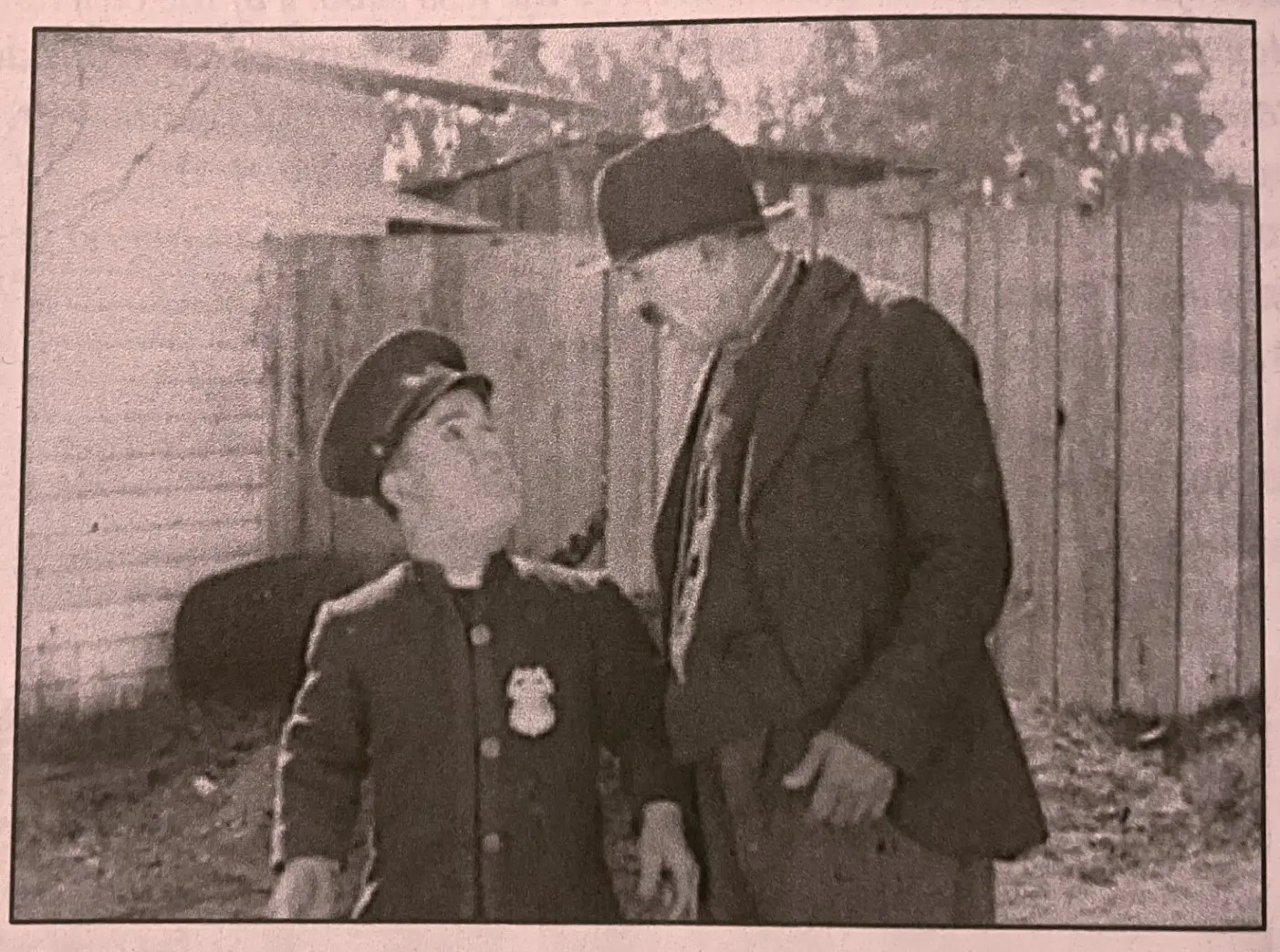
Contrast this with Hesper of the Mountains, where matriarchal mysticism empowers. The New Member perverts that empowerment into a boogeyman, suggesting that even matriarchy, once absorbed by state apparatuses, mutates into control mechanism.
Villipp’s camera employs a dolly shot that creeps forward like a slow infection. Note the sequence where Post descends into the sub-basement: each successive doorway shrinks, forcing the actor to stoop, until he crawls into a child-sized aperture. The visual metaphor—citizen reduced to supplicant worm—needs no subtitle. German Expressionism haunts these frames, but where Das Grand Hotel Babylon glamorizes decadence, The New Member rubs our noses in abjection.
Color tinting further warps perception. Exterior night scenes bathe in cobalt, but cult chambers flare amber—evoking both hellfire and darkroom safelight. The sudden switch from blue to amber mid-shot (achieved by hands dipping stencils in front of the lens) feels like a punch in the retina, a physical assault that predates Psycho’s shower-ride chromatic stabs by four decades.
Because the movie never secured national distribution—censors objected to the juxtaposition of police insignia with inverted crucifixes—it survived only in regional shards until a 1997 Iowa attic yielded a near-complete dupe. Even now certain shots (reportedly featuring a nude baptism in custard-like ichor) remain lost, replaced by explanatory title cards that tease more than they reveal.
Yet scarcity feeds cult fetish. Midnight shows in Brooklyn warehouses project the film onto bed-sheets while noise bands improvise soundtracks. Some viewers sport Wriggle-Finger sigils Sharpied on their palms, reenacting the initiatory handshake as ironic meme. Whether such rituals neutralize the film’s danger or extend its curse is an open question—one that would delight Grover Jones, who always claimed his screenplay was merely “a mirror for whatever policeman watches.”
Stacked beside Thin Ice, a moralistic cautionary tale about gambling, The New Member feels like a serrated knife. Where Thin Ice lectures, The New Member infects. Against The Sudden Gentleman, whose protagonist reforms through genteel love, our street vendor ends up more enslaved than at start—loveless, eyeless, voteless. Optimism itself is indicted as naïveté.
Even Winning His Wife, with its domestic tussles, seems quaint. Matrimony cannot compete with metaphysical coercion; the Wriggle Fingers’ oath transcends divorce court till death do us part—and then some.
Approach this 63-minute fever dream like you would a moldy grimoire: wear gloves, keep the lights on, and for heaven’s sake don’t mimic the hand gestures. Yet avoidance is cowardice. The New Member offers a celluloid vaccine: a small, controlled exposure to the virus of authoritarian mysticism, inoculating you against grandiose promises of civic salvation. After witnessing cops anoint their batons in goat-blood, you’ll never trust a badge again—an epiphany worth every sleepless night.
Stream it if you must (bootlegs circulate on niche forums), but preferably seek a 16mm print; the emulsion scars, the jitter of the gate, the chemical perfume—these are integral organs. Sans them, the spell is half-cast.
Rating? Stars feel juvenile. Let’s say: three sulfuric pentagrams out of a possible five, the deficit owed to lost footage that might have elevated this from grim curiosity to gnostic scripture. Yet even in its mangled state, The New Member gnaws the marrow of modernity, reminding us that every institution—be it church, studio, or precinct—harbors a black-mass break-room where oaths are taken and souls itemized.
Watch, shudder, and when next you see a cop flick a stray finger twitch, remember: it might not be a nervous tic. It might be recruitment.
IMDb —
1927
Community
Log in to comment.