DbcultAccessing Vault...
6.6/10
Senior Film Conservator
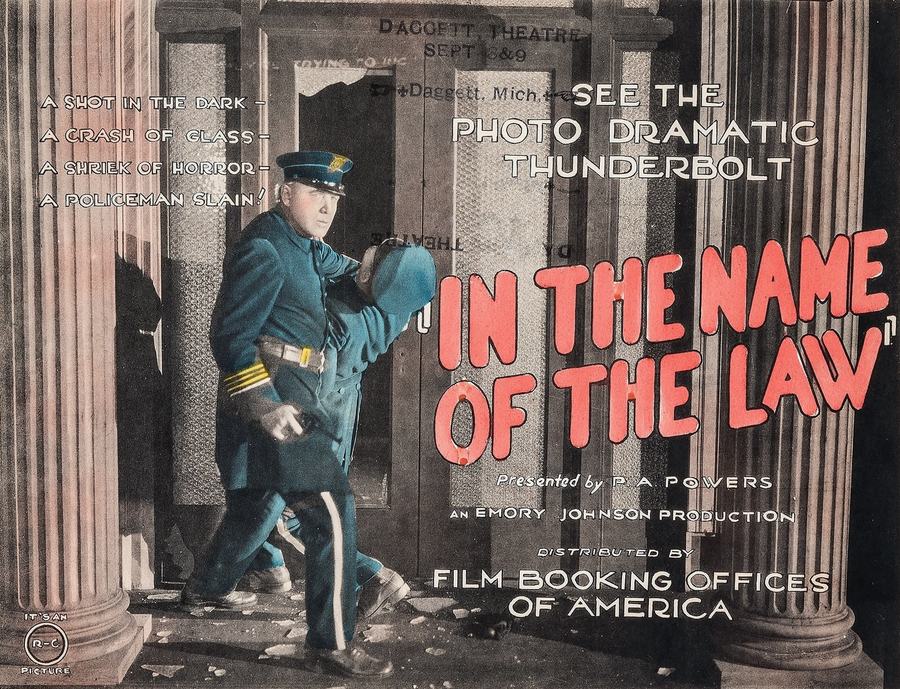
A definitive 6.6/10 rating for a film that redefined the boundaries of cult cinema. In the Name of the Law remains a cornerstone of transgressive art.
The flickering shadows of the past often hold profound truths, and few silent films articulate the intricate tapestry of human experience with the raw power of Emory Johnson’s 1922 drama, In the Name of the Law. It is a cinematic endeavor that transcends its era, offering a timeless exploration of familial loyalty, moral compromise, and the relentless machinery of justice. This is not merely a period piece; it is a visceral examination of a family’s descent into a maelstrom of misfortune, culminating in an almost Shakespearean tragedy, yet somehow, finding its way to a glimmer of hope.
At its core, the film presents us with the O'Hare family, anchored by a dedicated, if financially struggling, San Francisco police officer. Their existence, already stretched taut by the demands of urban life and a modest income, is suddenly ripped asunder when their eldest son becomes entangled in an accusation of theft. This initial tremor sends shockwaves through the household, compelling the officer’s steadfast wife, his supportive brother, and his empathetic step-sister to embark on a desperate quest to amass the necessary funds for restitution. This shared burden, a testament to their unbreakable familial bonds, inadvertently sets them on a perilous trajectory, each well-intentioned effort seemingly drawing them deeper into a quagmire of escalating woes. The writers, Carroll Owen and Emilie Johnson, craft a narrative that deftly navigates the complexities of love, duty, and the crushing weight of societal expectation, all without uttering a single spoken word.
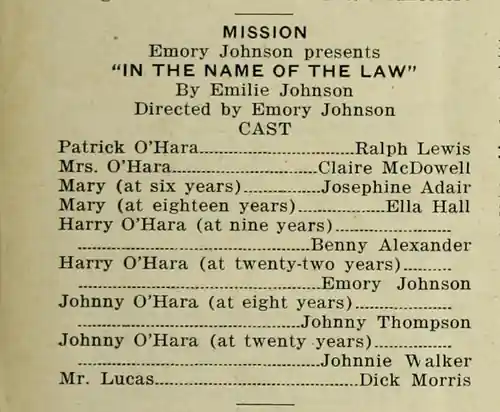
What begins as a domestic drama of financial strain and fraternal support quickly morphs into something far more harrowing. The film’s narrative engine truly ignites during a pivotal bank robbery sequence, a masterclass in silent film suspense. Here, the lines between right and wrong, duty and devotion, blur with agonizing clarity. Officer O'Hare, portrayed with understated gravitas by Ralph Lewis, finds himself in an impossible position. In the chaotic maelstrom of the heist, he discharges his firearm, an act of professional duty that tragically strikes his own second son, Johnny, played by Johnnie Walker, who is revealed to be a participant in the robbery. This moment, a breathtaking collision of personal and professional spheres, elevates the film from a mere melodrama to a profound meditation on the human cost of allegiance. It’s a gut-wrenching scene, rendered with a stark realism that belies the film’s age, forcing the audience to confront the unimaginable agony of a father who must choose between his badge and his blood.
The immediate aftermath of this incident plunges the O'Hare family into an abyss of despair and public scrutiny. Johnny, gravely wounded, must face trial, a public spectacle that threatens to utterly dismantle what remains of their shattered lives. The film masterfully builds tension around this impending legal battle, transforming the courtroom into a crucible where the very essence of justice is tested against the fierce, unyielding love of a family. The performances here are particularly noteworthy. Ralph Lewis as the tormented Officer O'Hare conveys a profound sense of internal conflict, his stoic demeanor barely concealing a world of pain. Claire McDowell, as the mother, embodies the quintessential suffering matriarch, her every gesture and expression radiating grief and unwavering support for her sons. Johnnie Walker, as Johnny, manages to elicit both sympathy and condemnation, portraying a young man caught in a terrible web of his own making, or perhaps, circumstance.
The trial itself is nothing short of spectacular, a testament to director Emory Johnson’s ability to orchestrate high drama within the confines of silent cinema. The courtroom scenes are meticulously staged, brimming with tension as arguments unfold through intertitles and the expressive physicality of the actors. The film explores the nuances of intent, responsibility, and the societal pressures that can drive individuals to desperate acts. It forces the audience to ponder: Is justice merely the strict application of the law, or does it encompass a deeper understanding of human frailty and the complex tapestry of circumstance? In this regard, In the Name of the Law resonates with the thematic depth found in other films exploring the moral gray areas of justice, such as The Circular Staircase, which similarly delves into intricate legal and ethical puzzles, albeit from a mystery perspective. The film avoids simplistic answers, instead immersing us in the agonizing process of legal deliberation, where the fate of a young man, and indeed, an entire family’s honor, hangs precariously in the balance.
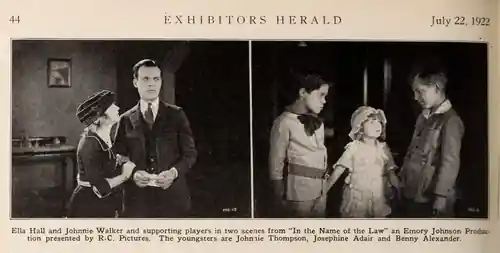
The cast delivers compelling performances, a crucial element in silent film where every glance, every gesture, carries immense narrative weight. Ben Alexander, as the oldest son whose initial transgression sets the plot in motion, portrays the burden of guilt and the desperation to make amends. Jean Adair and Josephine Adair, though in supporting roles, contribute to the familial atmosphere, their presence underscoring the collective trauma endured by the O'Hares. Emory Johnson, beyond his directorial duties, also appears in the cast, a common practice of the era, though his primary contribution here is the masterful shaping of the narrative flow. The film’s strength lies in its ensemble, each actor contributing a vital thread to the overall emotional fabric. The interplay of their silent expressions, particularly during the trial, creates a powerful sense of empathy and suspense, drawing the viewer deeply into their plight.
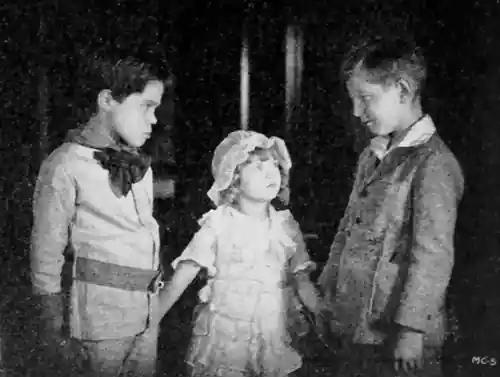
The cinematography, while typical of the era, effectively uses close-ups to capture the raw emotions of the characters and wider shots to establish the urban setting and the grandeur of the courtroom. The visual language of the film is articulate, relying on strong compositions and evocative lighting to convey mood and meaning. The film’s thematic explorations are remarkably sophisticated for its time. It grapples with the concept of inherited shame, the corrosive effects of poverty, and the often-unseen sacrifices made by those who uphold the law. Officer O'Hare’s internal struggle, caught between his oath to the community and his primal instinct to protect his son, forms the moral backbone of the narrative. This internal conflict is reminiscent of the profound dilemmas faced by characters in films like The Dawn of Understanding, which often explored how individuals navigate personal ethics within broader societal frameworks.
The writers, Carroll Owen and Emilie Johnson, deserve immense credit for crafting a story that is both emotionally devastating and ultimately uplifting. They weave a tale that, despite its melodramatic flourishes, feels grounded in a believable reality. The pacing is deliberate, allowing the emotional weight of each misfortune to settle before introducing the next, building a cumulative sense of dread and anticipation. The screenplay skillfully uses intertitles not just to convey dialogue, but to provide crucial insights into the characters' inner thoughts and the societal context of their struggles. This careful balance ensures that the audience is not merely observing events, but actively participating in the emotional journey of the O'Hare family.
The film's ultimate resolution, a “happy ending” as described, is not cheaply earned. It arrives after a period of intense suffering and profound moral reckoning. It suggests that even in the face of insurmountable odds and the most painful of choices, there is a path to forgiveness and a chance for renewal. This hard-won redemption makes the conclusion all the more impactful, leaving the audience with a sense of catharsis rather than a simplistic sentimentality. It speaks to the enduring human capacity for resilience and the power of love to heal even the deepest wounds. The film, in its quiet power, stands as a testament to the enduring appeal of stories that explore the complexities of the human heart and the intricate dance between individual fate and the dictates of society.
While In the Name of the Law might not possess the grandiosity of some epic silent films, its strength lies in its intimate portrayal of a family under siege. It's a film that asks difficult questions about the nature of justice, the limits of loyalty, and the price of redemption. It’s a compelling piece of cinematic history that continues to resonate, demonstrating that the profound emotional impact of storytelling requires neither sound nor color, but rather, a keen understanding of the human condition and the courage to explore its darkest corners and brightest hopes. For those interested in the evolution of legal dramas or films depicting intense familial struggles, this movie offers a rich historical precedent. It stands alongside other compelling narratives of the era, such as Forbidden Paths, in its exploration of the challenging moral landscapes faced by ordinary people. Its dramatic arc and the powerful performances solidify its place as a significant achievement in silent era filmmaking, a reminder of the raw, unadulterated emotion that cinema could evoke even a century ago.
This film is more than just a historical artifact; it is a vibrant narrative that speaks to universal themes. The performances by Ralph Lewis, Johnnie Walker, Claire McDowell, Ben Alexander, and the entire supporting cast, including Johnny Thompson, Emory Johnson, Richard Morris, Josephine Adair, Jean Adair, Jeanne Carpenter, John C. Calhoun, and Ella Hall, contribute to a cohesive and emotionally resonant experience. Their ability to convey such depth of character and feeling through mime and expression is a true art form, reminding us of the unique demands and triumphs of silent acting. The film’s longevity in critical discussion is well-deserved, offering a rich viewing experience for anyone interested in the foundational elements of cinematic storytelling and the timeless appeal of a truly gripping human drama. It is a powerful reminder that sometimes, the most profound stories are told not with a roar, but with a whisper, or in this case, with the eloquent silence of a flickering image.

IMDb —
1923
Community
Log in to comment.