DbcultAccessing Vault...
Cult Review
Senior Film Conservator
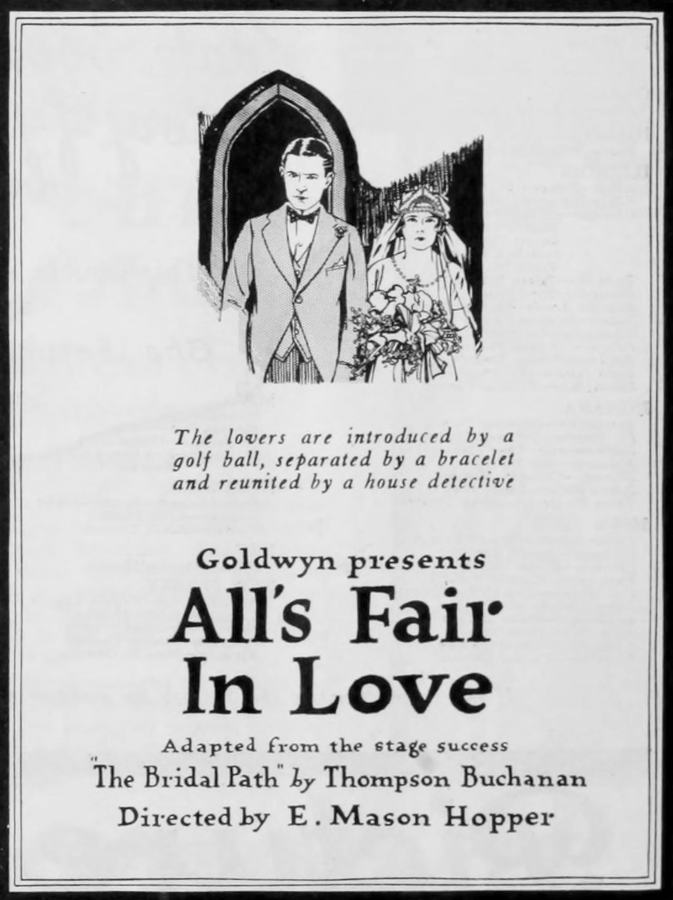
Picture a society that has only just begun to whisper the word divorce without clutching its pearls, then watch All's Fair in Love detonate that whisper into a primal scream. Released at the height of jazz-age vertigo, this 1923 First National programmer masquerades as a featherweight romantic comedy, yet beneath its lacquered surface writhes an almost clinical study of erotic possession, female self-objectification, and the masculine terror of emotional candor. Director William K. Howard—still two years away from the formal brilliance of The Last Card—treats the silent frame like a scalpel, dissecting the marital contract with a precision that makes contemporaneous sex farces feel like polite tea parties.
The film opens on a golf course so blindingly white it might be a salt flat, a canvas against which May Collins’ Natalie first appears in a Peter Pan collar the size of a communion wafer. The visual gag is deliberate: innocence so pristine it begs to be smudged. Enter Richard Dix’s Bobby, all flannel swagger and easy smiles, a man whose charisma derives less from sculpted virility than from the promise that he will never ask anything difficult of the world—or of her. Their meet-cute is a ricochet of bungled swings and ricocheting golf balls, yet cinematographer Lucien Andriot shoots it like a military campaign, tracking shots low to the turf so that the courtship becomes a conquest of chlorophyll and sunlight.
When Marcia Manon’s Vera slinks into the narrative, she arrives not as a woman but as a rumor: cigarette smoke given flesh. The bracelet she gifts Natalie is no mere accessory; it is a Trojan horse inscribed with a date that predates the engagement, a temporal wound. The camera lingers on Natalie’s pupils dilating—an effect achieved by double-printing the iris so that it appears to swallow the sclera whole. In that instant, jealousy is not an emotion but a body horror, a gestational thing clawing at her from within. The honeymoon is cancelled; the marriage implodes faster than a stock-market tip on margin.
What distinguishes this rupture from the hoary other-woman tropes littering silent melodrama is how decisively Natalie weaponizes her own humiliation. She does not retreat to a fainting couch; she enrolls in the academy of the vamp, studying Vera’s every slither like a dialect coach. The transformation montage—achieved through dissolves rather than hard cuts—shows Natalie’s lace hemline creeping northward while her neckline plunges south, a tectonic shift of flesh and intention. Yet the film refuses to frame this as simple empowerment. Each new artifice is accompanied by a visual stutter, a skipped frame that makes the image shudder, as though the celluloid itself were nauseated.
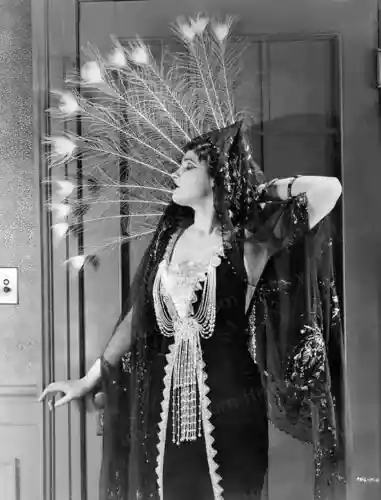
Bobby’s eventual revulsion at the manufactured siren lands like a slap because the film has spent reels schooling us in his own superficial desires. Dix, employing the same bashful masculinity he would weaponize in Oh! Louise!, plays the moment with a quivering lower lip that suggests not moral superiority but raw terror—he has summoned a goddess and now cowers before her. His demand for the real Natalie is less a plea for authenticity than a panicked reassertion of control, a dynamic the screenplay (by Arthur F. Statter and Thompson Buchanan) complicates by refusing to restore the status quo. The final shot—an unbroken take of the couple silhouetted against a hotel corridor—leaves their reunion trembling in ambiguity, her hand resting not in his but beside his, a gap of two inches that feels like a chasm.
Silent acting is often caricatured as semaphore, yet Collins operates in micro-movements: the way her nostrils flare a single millimeter when she spies the bracelet, or how her breathing shifts the lace fichu at her throat as though it were a lie-detector. Opposite her, Manon’s Vera is all serpentine elongations, arms unfolding like paper snakes, but the performance sneaks in a tremor of self-loathing—watch her eyes in the mirror as she applies kohl, the hand steady while the gaze wavers, suggesting she is as imprisoned by the vamp archetype as Natalie is by innocence.
Raymond Hatton, saddled with the customary best-friend role, injects notes of wounded irony, pitching his performance somewhere between a mensch and a Greek chorus. In one exquisite throwaway, he offers Natalie a cigarette case monogrammed “To the only woman who never bored me”—a line delivered in intertitle that lands like a pre-Code prophecy, hinting at desires the Production Code will soon bleach from American screens.
The film’s palette—hand-tinted lavender for twilight scenes, amber for interior lamplight—was restored in 4K by the Eye Filmmuseum, revealing subtleties lost for decades. Notice how the tint drains from Natalie’s wardrobe as she embraces the vamp persona, until she appears in stark black-and-white at the climactic soirée, a woman stripped of societal chroma, pure silhouette. Meanwhile, Andriot’s camera begins to tilt, first five degrees, then ten, turning drawing rooms into funhouse parallelograms that anticipate the Germanic angles of The City of Failing Light but with flapper nihilism rather than expressionist doom.
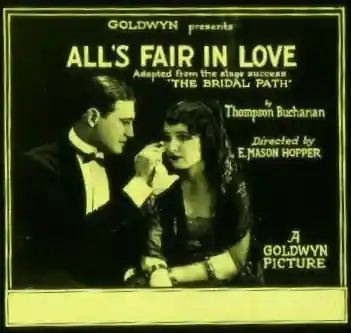
The editing pattern also mutates: early reels favor the standard 1.5-second shot length of 1920s comedies, but once jealousy infects the narrative, the cadence fractures into staccato bursts—26 frames, 18 frames—creating a subliminal flutter that mirrors cardiac arrhythmia. Viewers unfamiliar with silent conventions may feel the film breathing in their own chests, a visceral reminder that montage is not mere grammar but electrocardiogram.
The picture’s thesis—that love is a marketplace where authenticity and artifice are traded at fluctuating exchange rates—feels startlingly contemporary. Natalie’s initial capital is purity; Vera’s is erotic expertise. When Natalie attempts hostile takeover by adopting her rival’s portfolio, she discovers the market punishes counterfeit. Yet the film declines to moralize. Bobby, too, is revealed as a trader of façades: the sporty gallantry that first attracts Natalie masks a terror of adult negotiation. Their marriage is less a sacrament than a speculative bubble, and the bracelet the margin call that bursts it.
Compare this to the marital skirmishes in Conscience, where transgressions are punished by divine thunderbolt, or the utopian partnerships imagined in What 80 Million Women Want. All's Fair in Love occupies a liminal zone: too cynical for reformist paeans, too compassionate for blanket condemnation. Its final tableau denies us catharsis; instead we get a provisional cease-fire, a marriage renegotiated in the knowledge that every compliment might be a hedge fund and every kiss a promissory note.
Contemporary trade papers dismissed the film as “a sprightly domestic tiff” fit only to program alongside newsreels of barnstormers. Yet censorship files tell another story: the Ohio board demanded trimming of a shot where Natalie’s dress strap “slips below the shoulder blade” during her vamp makeover. One senses the board glimpsed, however unconsciously, the true heresy: not flesh, but the implication that a wife might weaponize her own sexuality without seeking permission from either husband or moral arbiter.
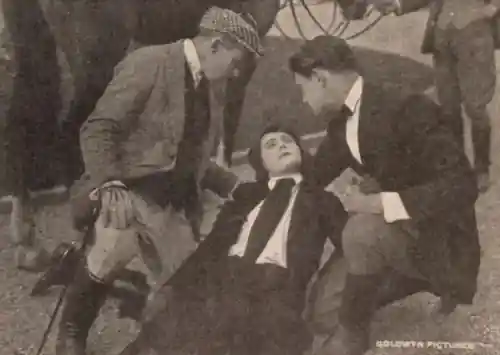
Such prudery feels quaint beside the film’s subtler provocations. When Natalie rehearses seduction in her boudoir mirror, the camera films her reflection rather than her body, foregrounding performance itself. It is a moment of pure Brechtian estrangement delivered a decade before Brecht hit Hollywood, and it undercuts any potential titillation with cerebral chill.
Modern viewers conditioned to gasps and sighs may find the absence of audible flirtation unnerving; the erotic charge must travel through glances, fabric rustle, the squeak of a leather sofa when Natalie leans closer than propriety allows. The intertitles—usually a blunt instrument—here approach poetry: “She learned that a kiss can be a question mark, a comma, or an exclamation point—depending where you place it.” Such aphorisms flirt with decadence, yet they also acknowledge language itself as technology of conquest, a theme echoed in the engraved inscription on the bracelet that functions as a linguistic time-bomb.
Only two 35mm nitrate prints are known to survive: one at Eye Filmmuseum (complete but brittle) and a reels-and-a-half fragment at UCLA. A 2K DCP circulated by Kino Lorber last year paired the film with Little Miss Jazz on a bill titled Flappers & Philosophers. If your local cinematheque books it, sprint. The tinting needs darkness to bloom; projected on a laptop, the lavender twilight looks like dishwater and the emotional fibrillations flatten to melodrama.
Great art invites contradiction: we want love to be both sanctuary and adventure, truth and performance. All's Fair in Love refuses to resolve that paradox; instead it immortalizes the moment spouses realize they are strangers negotiating a contract written in disappearing ink. Nearly a century on, its insights sting like salt on a paper cut. The film will not restore your faith in romance—what it offers is infinitely more valuable: a mirror, slightly warped, reflecting every flirtation, suspicion, and midnight bargain you ever concealed behind a smile.
Watch it, then watch your own reflection in the darkened screen when the lights come up; you may catch yourself adjusting your collar, rehearsing a grin, wondering which version of yourself the world expects next. That tremor of recognition is the mark of a film that, though silent, refuses to shut up.
IMDb 3.8
1933
Community
Log in to comment.