DbcultAccessing Vault...
7/10
Senior Film Conservator
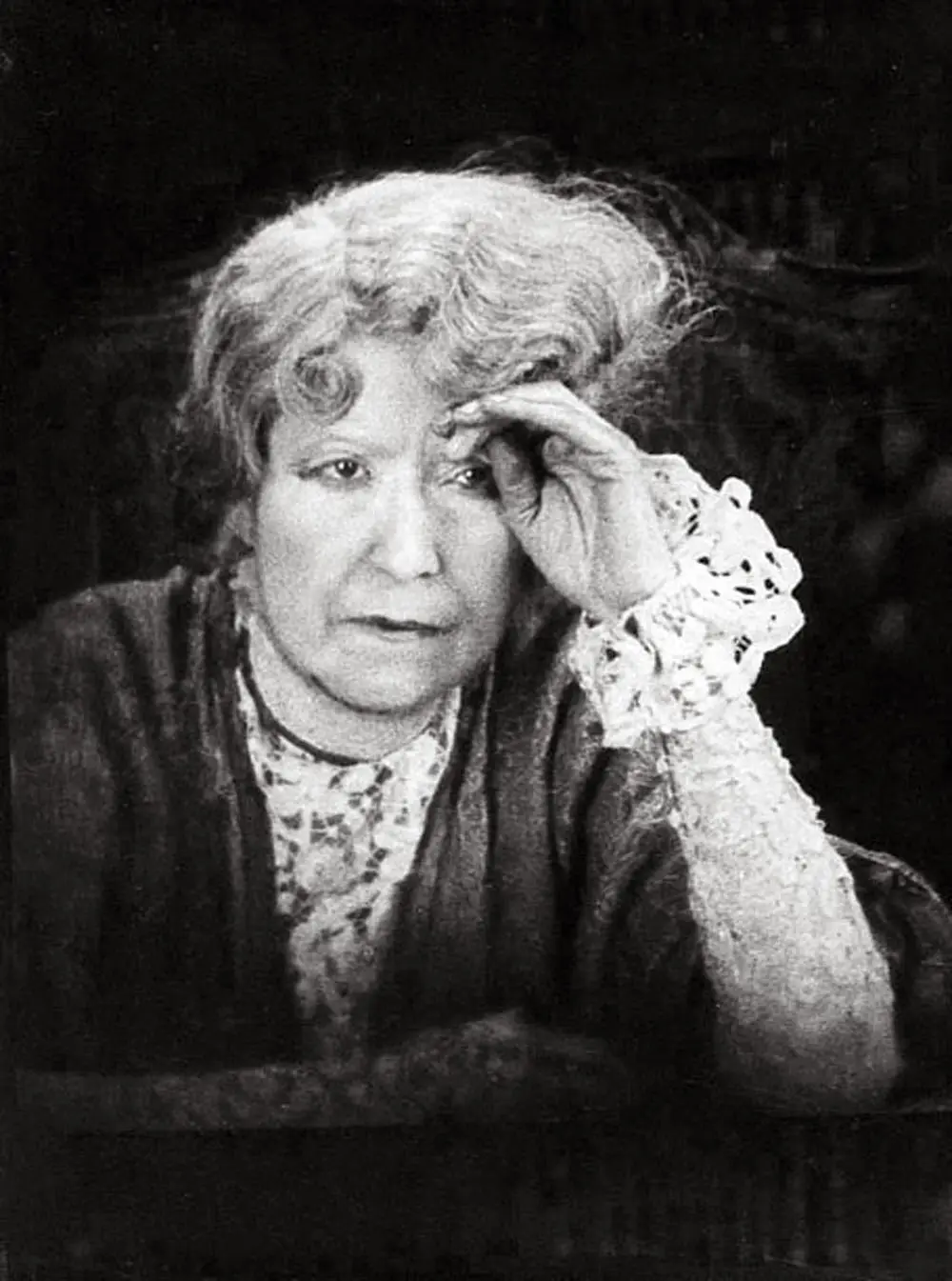
A definitive 7/10 rating for a film that redefined the boundaries of cult cinema. La voyante remains a cornerstone of transgressive art.
To truly appreciate Sacha Guitry’s cinematic endeavors, one must often look beyond the conventional lens of film criticism and embrace the theatricality, the wit, and the sheer audacity that defined his artistic persona. In 1923, as the silent era was reaching its zenith, Guitry, a titan of French theatre, ventured into the nascent world of film with La voyante. This isn't merely a film; it's a meticulously crafted theatrical experience translated to the silver screen, a fascinating early artifact that showcases a nascent medium grappling with the grand narratives and intricate character studies more commonly found on stage. It's a testament to a period when the very grammar of cinema was still being written, yet masters like Guitry were already pushing its boundaries, infusing it with their unique vision.
The narrative itself, deceptively simple at first blush, unravels with the precision of a well-oiled clockwork mechanism. We are introduced to Jean, a young man whose life is abruptly upended by the tyrannical, almost pathological, jealousy of his politician father. This isn't just paternal disapproval; it's an almost Oedipal possessiveness, ignited by Jean's innocent camaraderie with his stepmother’s mother. The absurdity of the premise, a son banished for a friendship with his grandmother-in-law, immediately signals Guitry’s penchant for dramatizing the idiosyncrasies of human behavior, often with a satirical undertone that bubbles beneath the surface of the melodrama. It forces us to question the foundations of familial love and the often-fragile nature of social standing in a society obsessed with appearances.
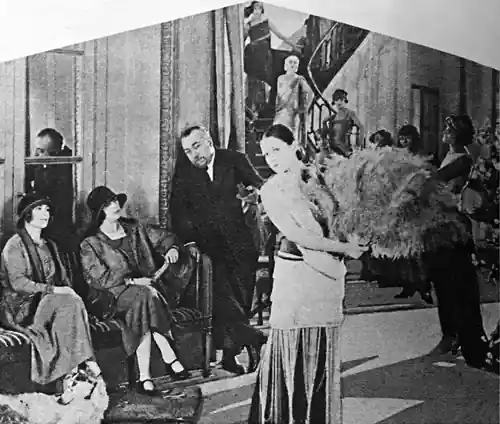
Jean’s exile leads him to a bohemian refuge, an artist's apartment, a stark contrast to the sterile, politically charged environment he was forced to abandon. This shift in setting is more than just a change of scenery; it’s a thematic pivot. The world of art, with its freedom and unconventional spirit, offers a momentary solace, a visual metaphor for the protagonist's search for authenticity amidst the duplicity of his family's world. It's in this very building, by a delightful stroke of narrative serendipity, that the titular fortune teller, the 'Voyante,' resides. This famed clairvoyant, a figure of fascination and mystery, becomes the fulcrum upon which the plot's delicate balance rests. Her presence introduces an element of the supernatural, or at least the preternatural, into a story firmly rooted in social realism, blurring the lines between human agency and predetermined destiny.
The brilliance of Guitry’s construction lies in how these seemingly disparate elements coalesce. The mother-in-law, perhaps seeking solace or guidance in her own right, consults the seer, unknowingly setting in motion the very events that will reconcile her family. It's a masterful stroke of dramatic irony, a dance between what is known, what is revealed, and what is fated. The fortune teller’s pronouncements, often veiled and open to interpretation, serve not merely as plot devices but as philosophical interrogations into the nature of choice and consequence. Are these characters merely puppets of destiny, or do their actions, however small, contribute to the unfolding prophecy? This existential quandary imbues La voyante with a depth that transcends its melodramatic veneer.
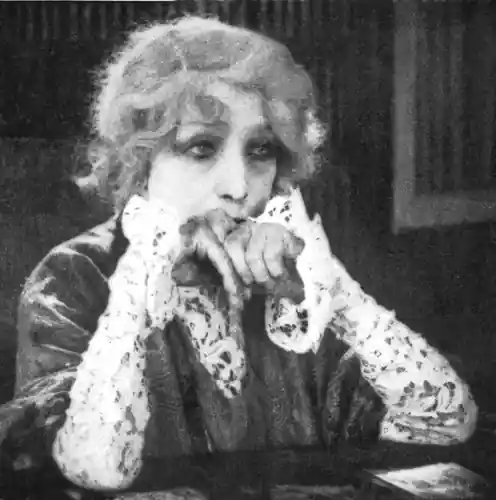
The cast assembled for La voyante is nothing short of extraordinary, a veritable who's who of French stage and screen talent from the era, underscoring Guitry’s ability to attract the finest artists. Harry Baur, a towering figure of French cinema, brings a formidable presence to the role of the jealous politician father. His portrayal, even in the silent medium, conveys a palpable sense of internal conflict and overbearing authority. Baur’s physical acting, his expressions, and gestures, speak volumes, painting a portrait of a man consumed by his own insecurities and societal pressures. It’s a performance that anchors the film’s dramatic core, making the father's irrationality strangely compelling rather than merely villainous.
And then there is the legendary Sarah Bernhardt. Her appearance in La voyante, even if brief, is a monumental event in cinematic history. To witness 'The Divine Sarah,' a theatrical icon whose career spanned the 19th and 20th centuries, gracing the silent screen, is to observe a living legend adapting her immense stage presence to a new, burgeoning art form. Her very presence elevates the film, lending it an air of gravitas and historical significance. It’s a poignant reminder of the transitional period of cinema, where stage giants lent their considerable weight to legitimize and popularize the fledgling medium. Her iconic allure would have undoubtedly drawn audiences, much like other star-driven features of the time, such as The Man Who Won, which relied on the charisma of its lead to carry the narrative.
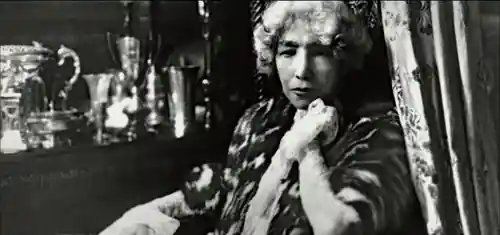
Sacha Guitry himself, ever the multi-hyphenate, not only penned the screenplay but also took on an acting role, imbuing his character with his characteristic blend of charm, wit, and subtle theatricality. His dual role as writer and performer provides a unique insight into his artistic intentions, allowing him to shape the narrative from both sides of the camera. The film also features Paul Poiret, a name synonymous with revolutionary French fashion. His inclusion in the cast is a fascinating detail, blurring the lines between the worlds of art, design, and cinema. One can imagine his presence adding a certain stylistic flair or a knowing nod to the aesthetics of the period, perhaps even influencing the visual presentation of the characters, much like the meticulously curated visuals of A Pair of Pink Pajamas or The Cambric Mask, which used sartorial choices to define character and era.
The supporting cast, including Pâquerette, Jean Wells, François Fratellini, Georges Melchior, Lili Damita, Jean-François Martial, Baudry, Mary Marquet, Jeanne Brindeau, and Philippe Richard, each contribute to the rich tapestry of Parisian society that Guitry so skillfully depicts. Their collective performances, though often understated in the silent film tradition, create a vibrant and believable world, filled with the nuances of human interaction and societal expectation. The ensemble work is commendable, ensuring that the central drama is always supported by a convincing backdrop of characters and their interwoven lives.
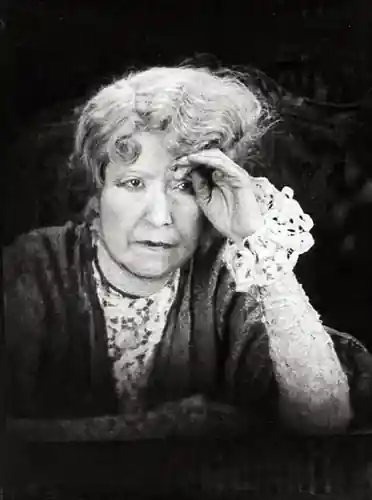
At its core, La voyante is a profound exploration of human folly and the intricate dance between fate and free will. The father's jealousy, an almost theatrical flaw, serves as a potent symbol of the irrationality that can govern human actions, particularly within the confines of a rigid social structure. Guitry, a master satirist, uses this domestic drama to subtly critique the hypocrisies and absurdities of the upper echelons of society. The politician, outwardly respectable, harbors a deeply unsettling insecurity that threatens to unravel his personal and public life. This theme of hidden vulnerabilities within powerful figures resonates with the societal commentaries found in films like Peanuts and Politics, albeit with Guitry's unique dramatic flair.
The fortune teller, far from being a mere plot device, embodies the film's central philosophical question: can our destinies be altered, or are we merely following a script written by unseen forces? Her interventions, while seemingly miraculous, often rely on the characters' interpretations and subsequent actions, suggesting a delicate balance between predestination and individual choice. This ambiguity is one of the film's enduring strengths, inviting viewers to ponder the nature of their own agency. The way the seer's prophecies gradually bring about Jean's marriage and resolve the father's political predicaments suggests a cosmic order, yet one that still requires human participation to manifest. It's a more nuanced take on destiny than a simple, magical resolution, perhaps akin to the subtle influence of external forces seen in Camera Obscura, if that film similarly explores hidden truths.
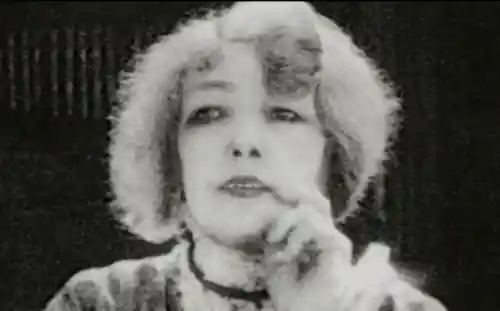
As a silent film from 1923, La voyante relies heavily on visual storytelling, expressive performances, and intertitles to convey its intricate plot and emotional depth. Guitry, coming from a theatrical background, understood the power of staging and dramatic pacing. While early cinema was still developing its unique visual language, Guitry’s direction demonstrates a keen awareness of how to use camera placement, editing, and mise-en-scène to enhance the narrative. The film likely employs a blend of static shots to capture the theatrical performances and more dynamic techniques to build tension and reveal character. The visual contrast between the opulent, rigid world of the politician and the more fluid, artistic environment of Jean’s refuge would have been skillfully rendered, using light, shadow, and set design to communicate these thematic differences.
The film also stands as a fascinating document of its time, capturing the fashion, mannerisms, and societal anxieties of early 20th-century France. The costumes, possibly influenced by Paul Poiret's presence, would have been exquisite, reflecting the haute couture of the era. The depiction of Parisian life, from its grand salons to its bohemian enclaves, offers a rich historical snapshot. This attention to detail and authentic portrayal of a specific milieu is a hallmark of Guitry's work, whether on stage or screen. It's a film that not only tells a story but also immerses the viewer in a bygone era, much like the evocative settings of Markens grøde or The Mother Heart, which deeply root their narratives in their cultural landscapes.
La voyante, while perhaps not as widely known today as some of Guitry's later, sound-era masterpieces, remains a crucial piece of his oeuvre and an important entry in early French cinema. It showcases his nascent talent for film direction and his unwavering commitment to sophisticated storytelling. The film’s blend of domestic drama, social commentary, and a touch of the mystical creates a unique flavor that is distinctly Guitry. Its ability to weave a complex web of relationships and resolve them through an unconventional, almost fated, intervention speaks to a timeless appeal.
What truly resonates is the film's intelligent script, a characteristic feature of Guitry's writing. Even without spoken dialogue, the narrative clarity and character motivations shine through. The unfolding of events, guided by the seer's prophecies, offers a satisfying dramatic arc, where justice, or at least a form of equilibrium, is ultimately restored. Jean finds his happiness, and his father, through a series of machinations and revelations, manages to navigate his political troubles, perhaps learning a subtle lesson about the true cost of his own emotional excesses. This resolution, achieved through a blend of human action and mystical intervention, leaves the audience with a sense of wonder and satisfaction.
For cinephiles and historians alike, La voyante is more than just an early film; it’s a window into the evolution of cinematic art and the enduring power of a well-told story. It's a testament to the fact that even in its infancy, cinema possessed the capacity to explore complex human emotions, societal structures, and the perennial questions of fate and free will. Guitry, with his theatrical sensibilities and keen understanding of human nature, helped chart this course, leaving us with a film that continues to intrigue and entertain, proving that true artistry transcends the limitations of any medium or era. It stands as a vibrant, if sometimes overlooked, testament to the creative ferment of the early 1920s, a period rich with experimentation and bold artistic statements that continue to influence filmmaking today.
IMDb 6.8
1935
Community
Log in to comment.