DbcultAccessing Vault...
Cult Review
Senior Film Conservator
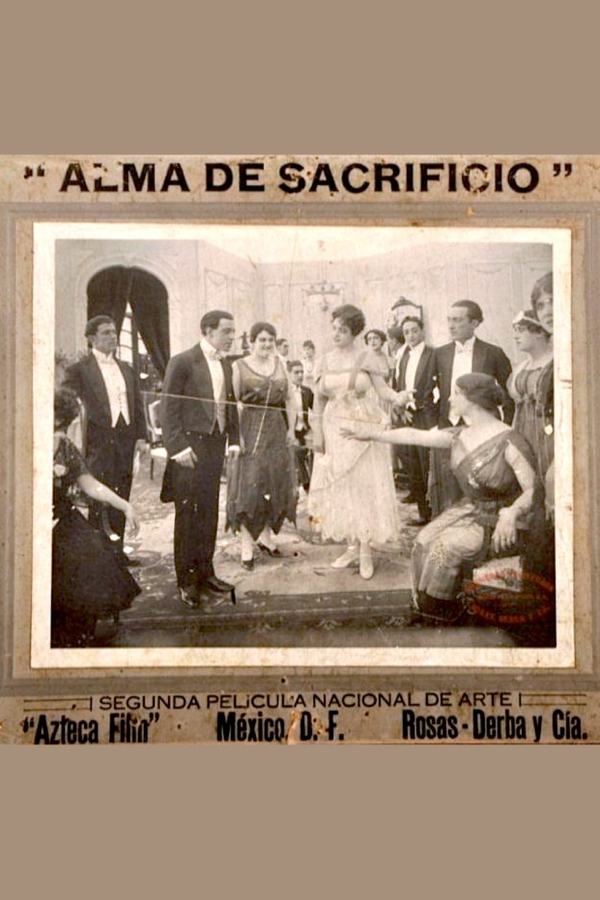
There is a moment—roughly twelve minutes in, if your 35 mm print hasn’t warped—when the camera forgets its obligation to narrative and simply caresses the pendulum of a cathedral clock, its brass disc stained with verdigris like oxidized blood. Time, the film whispers, is the first cannibal; it devours the lungs of the living so that art might breathe. Alma de sacrificio never recovers from that revelation, and neither do we.
Manuel Arvide embodies Alejandro with the skeletal elegance of a man who has already become a ghost in his own lifetime. His cheekbones carve shadows so deep they appear sutured; each cough reverberates like a broken metronome. Watch how he removes his hat: the gesture unfolds in four discrete beats, a pantomime of courtliness performed for an absent jury. Arvide refuses pathos; instead he gifts us the chill of self-erasure, the way a candle forgets itself in the act of illumination.
María Caballé’s Estrella is no naïve ingénue. In the conservatory sequence she practices a Liszt rhapsody while a vendor outside sells pan de muerto; the contrapuntal din seeps through cracked shutters, and her left eye flickers—half irritation, half complicity. She senses the transaction underwriting her ascent yet calculates the moral arithmetic with preternatural sangfroid. Caballé lets that knowledge leak through her fingertips rather than her facial muscles: her trills grow colder, more metallurgic, as if striking iron.
Sara García’s madam—listed only as "La Celestina" in the surviving intertitles—presides over a salon wallpapered with faded circus posters. García plays her like a retired Pierrette who has memorized every sin and prices them by weight. In one astonishing shot, she counts silver coins while a ceiling fan slices the air above her head; the blades spin so slowly the shadows seem to decapitate her every three seconds, a visual rhyme for a country amputating its own memory.
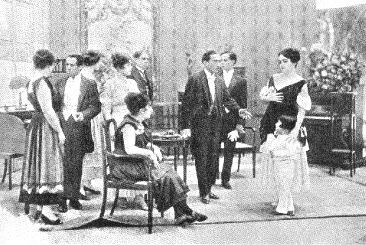
Morales’s organ broker, Dr. Mora, arrives in a top hat lined with newspaper clippings of missing persons. He speaks in silken euphemisms—"redistribution of breath," "the algebra of altruism"—while his scalpel glints the color of a cigarette cherry. The performance is calibrated somewhere between Murnau’s Nosferatu and a Wall Street wolf; Morales understands that horror thrives when it masquerades as bureaucracy.
Cinematographer Pedro de la Torre (also playing the orchestra’s concertmaster) shoots interiors like Caravaggio staging a coup. Candle flames nibble the edges of the frame, leaving the center submerged in tenebrism. Note the scene where Estrella signs her first contract: the quill dips into ink so black it erases the words the instant they are written, a sly nod to contracts that annul their signatories.
The surviving intertitles—white on obsidian—often fade mid-sentence, compelling the viewer to hallucinate closure. One card reads: "He gave her the moon, but kept the tide." The next reel is lost; we are left to imagine an ocean that no longer answers lunar summons, much like a populace severed from its revolutionary promises.
Modern screenings sometimes append a solo piano score, but the true soundtrack is the rustle of your own clothes, the arterial throb behind your ears. That absence becomes a character: the unheard symphony Alejandro composes in his fever, a cadence that will never reach Estrella’s bow. The film weaponizes silence the way Spartacus weaponized the gladius—less as instrument than as wound.
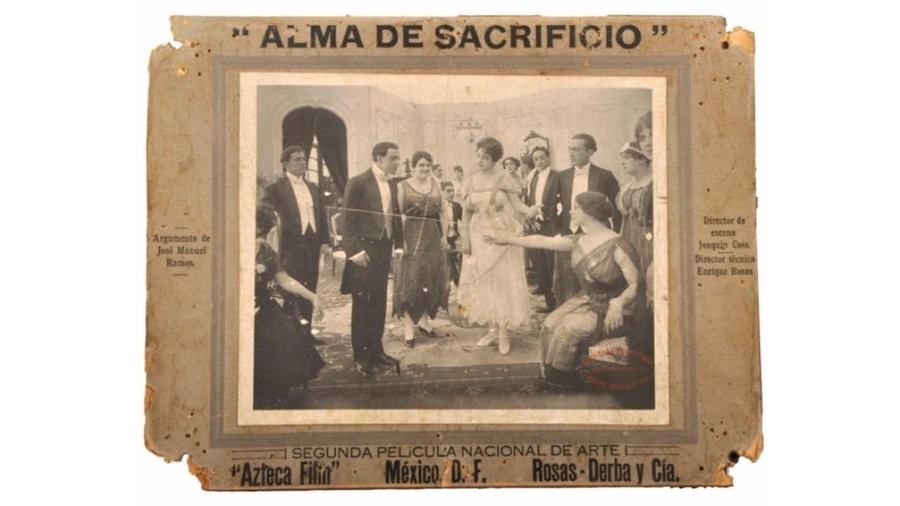
Where Hans Faders Ære sanctifies filial debt through Lutheran stoicism, Alma de sacrificio profanes paternalism by monetizing viscera. Both films hinge on sacrificial substitution, yet the Nordic narrative baptizes debt in icy fjords while the Mexican text scalds it in pulque and altar candles. Likewise, Conscience externalizes guilt as spectral stalker; here guilt is introjected, metastasized into spongy lung tissue.
The film enacts a perverse inversion of the Orpheus myth: the male artist dismembers himself so that the female voice may survive. But Estrella is no Euridice; she does not follow Alejandro into the underworld. Instead she ascends, transmuted into auratic commodity, while he descends into the mine of his own pathology. The misogyny is flagrant yet complicated: the market that weaponizes her talent is the same one that dissected his body. Both are feedstock for capital’s minotaur.
Watch for the sequence inside the mercado de organos (shot in the catacombs beneath the Palacio de Bellas Artes). Arches of colonial stone drip limestone tears; indigenous vendors offer hearts wrapped in huipil fabric. The camera tilts upward to reveal a Spanish coat-of-arms vandalized with a Zapatista bandana. In thirty wordless seconds the film collapses three centuries of extraction economics.
Post-revolutionary Mexico wanted myths that could outrun its civil trauma. Alma de sacrificio delivers an anti-myth: progress bought with pulmonary hemorrhage. Alejandro’s tubercular blood becomes the ink with which the new constitution is calligraphed in the public imagination; Estrella’s soaring aria is the soundtrack to a country that has learned to sing with someone else’s breath.
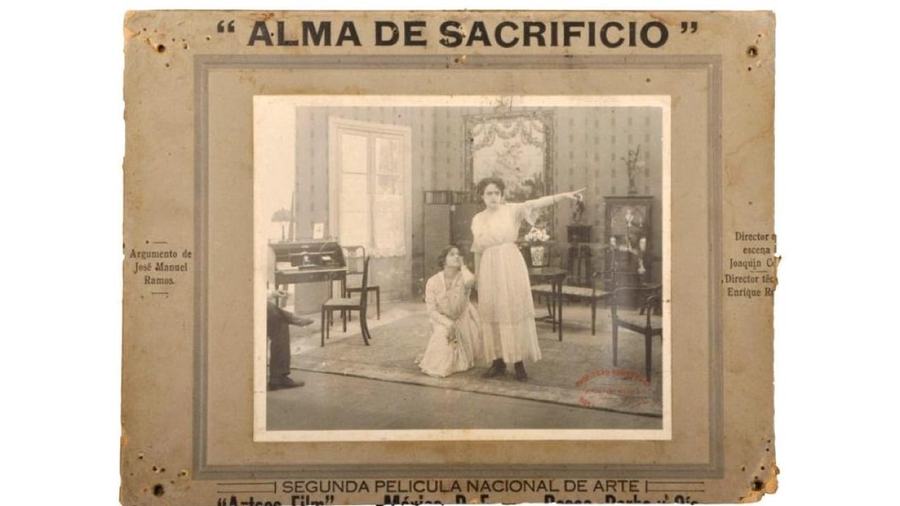
Only 47 of the reputed 82 minutes survive. Nitrate decomposition chewed the wedding scene; what remains is a single frame: Estrella’s hand, bereft of ring, pressed against a cracked mirror that reflects nothing. Restorationists debate whether to interpolate stills or embrace lacunae. I side with the abyss: let the missing reels serve as the film’s own evacuated lung.
Contemporary Mexican auteurs—from Escalante to FrancoThe Hidden Spring’s commodified miracles and even the operatic cruelties of Gypsy Love. Yet unlike those descendants, Alma never romanticizes abjection; it simply tallies the invoice.
Currently streaming in 2K on Cineteca Nacional’s portal, albeit geo-blocked. VPN to Mexico City, dim all lights, and keep a glass of mezcal handy—not for comfort, but to feel the slow scorch of someone else’s sacrificed tomorrows at the back of your throat.
The film ends not with Estrella’s triumph but with a close-up of the theater chandelier being extinguished, bulb by bulb, until the screen resembles a night sky bereft of constellations. You exit into your own city, lungs involuntarily inhaling diesel, and realize Alejandro’s organ was never his to barter; it was always yours, on permanent loan.
Art, the film insists, is the only commodity whose consumer simultaneously becomes its raw material.
Seventeen reels, forty-seven minutes, one cavity in the national chest: that is Alma de sacrificio, beating on borrowed breath.

IMDb 7.2
1933
Community
Log in to comment.