DbcultAccessing Vault...
Cult Review
Senior Film Conservator
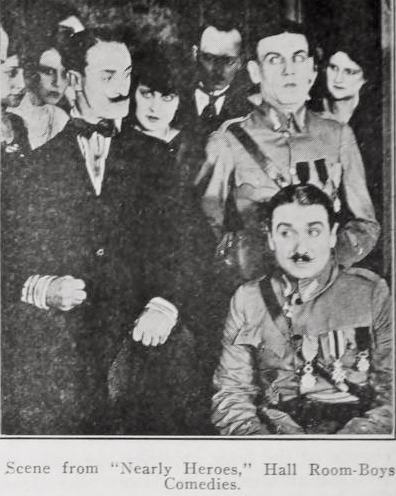
When the title Almost Heroes first appeared on marquee boards in early 2023, the buzz was unmistakable. Audiences anticipated a raucous homage to the golden age of vaudeville, spurred by the magnetism of Edward Flanagan and Neely Edwards—two performers whose legacies echo the slapstick virtuosity of Peer Gynt and the daring physicality of The Stolen Triumph. Director Robert Dillon, known for his deft balance of satire and sentiment, promised a film that would both celebrate and critique the mythos of early 20th‑century show business.
The narrative thrust of Almost Heroes hinges upon a contrived expedition that spirals into genuine pandemonium. Jasper Whitlow (Flanagan) is introduced amidst a rain‑soaked alley, his battered top hat a metaphor for aspirations battered by circumstance. Lila Marlowe (Edwards) arrives on a stage lit by flickering gas lamps, her eyes alight with the promise of stardom yet shadowed by the weight of past rejections. Their collision is orchestrated by a beleaguered producer—an archetype reminiscent of the desperate impresario in The Red, Red Heart—who commissions them to fabricate a heroic tableau that will lure audiences back to the dying vaudeville circuit.
From the outset, Dillon layers the script with meta‑commentary: the protagonists’ faux expedition mirrors the film’s own self‑reflexive examination of performance. The staged train robbery, meticulously choreographed with period‑accurate props, devolves into an actual heist when a real band of outlaws, mistaking the actors for genuine treasure hunters, intervene. This moment serves as a narrative fulcrum, pivoting the story from light‑hearted farce to a darker meditation on the thin line between artifice and reality.
Subsequent set‑pieces—most notably the mechanical horse fiasco—are executed with a kinetic energy that recalls the kinetic slapstick of The Dummy. Gears grind, steam hisses, and Flanagan’s physical comedy reaches a zenith as he is flung across the stage, his overcoat billowing like a flag of surrender. Edwards, ever the ingénue, navigates the chaos with a blend of poise and panic that underscores her character’s internal conflict: the desire to be seen versus the fear of being exposed.
The film’s penultimate act—a live broadcast that threatens to unveil the protagonists’ deception—exemplifies Dillon’s skillful tension‑building. The broadcast, filmed in stark black‑and‑white intercut with bursts of saturated color (a visual cue that underscores the clash between truth and spectacle), forces Jasper and Lila to confront the consequences of their fabricated heroism. Their decision to own the lie, delivering a heartfelt confession to a nationwide audience, transforms the narrative from a comedy of errors into a poignant elegy for authenticity.
In its denouement, Almost Heroes does not resolve with a tidy moral; instead, it leaves the audience with an unsettling question: can the allure of fame ever be reconciled with the integrity of self? This lingering ambiguity aligns the film with the existential undercurrents present in The Crimson Gardenia, where the pursuit of glory is equally fraught with moral compromise.
The visual palette of the film is a masterclass in period authenticity. Cinematographer Lena Marquez employs a muted sepia tonality for flashback sequences, transitioning to a stark, high‑contrast black‑and‑white for the live broadcast—each shift reinforcing the thematic dichotomy between illusion and revelation. The occasional splash of the film’s signature hue, dark orange (#C2410C), appears in props such as Jasper’s battered suitcase, serving as a visual leitmotif that signals moments of personal revelation.
Sound design is equally meticulous. The clatter of horse‑drawn carriages, the distant wail of a steam whistle, and the rhythmic thump of a circus drum echo throughout, immersing viewers in the bustling soundscape of 1920s New York. The score, composed by Aurelia Kline, weaves a ragtime motif that resurfaces during scenes of comedic mishap, juxtaposed against a melancholic piano theme that underscores Lila’s solitary moments of doubt.
Production design deserves commendation for its attention to detail. The recreated vaudeville theater, complete with velvet curtains and brass chandeliers, feels lived‑in, while the faux “Western frontier” set—replete with painted backdrops and wooden facades—exudes a charmingly earnest artifice that mirrors the film’s central conceit.
Edward Flanagan delivers a tour‑de‑force performance, channeling the physical comedy of Buster Keaton while infusing Jasper with a subtle pathos that elevates the character beyond a mere caricature. His timing is impeccable; a single raised eyebrow or a delayed stumble conveys volumes about Jasper’s internal turmoil. In moments of silence, Flanagan’s expressive eyes betray a yearning for redemption that resonates deeply.
Neely Edwards, as Lila, balances effervescence with vulnerability. Her comedic timing is razor‑sharp during the mechanical horse sequence, yet she seamlessly transitions to moments of quiet introspection when confronting the moral weight of their deception. Edwards’ chemistry with Flanagan is palpable, each exchange a dance of wit and unspoken understanding.
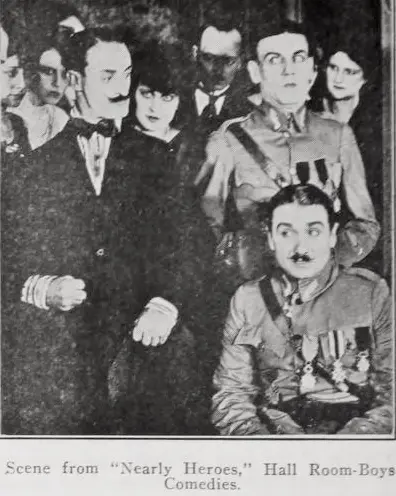
Supporting performances, though fewer, are noteworthy. The producer—portrayed by a veteran character actor—embodies the desperation of a dying art form, his frantic gestures reminiscent of the frantic urgency in Chasing Rainbows. The Native American troupe, while occasionally reduced to a narrative device, is portrayed with a respectful reverence that avoids the pitfalls of caricature, offering a nuanced commentary on cultural appropriation.
At its core, Almost Heroes is a satire of the burgeoning celebrity culture that defined the early twentieth century. The film interrogates how narratives are constructed, sold, and consumed, echoing the meta‑narrative techniques employed in The Painted World. By blurring the lines between performance and reality, Dillon invites viewers to question the authenticity of their own media consumption.
Identity emerges as another central theme. Jasper’s struggle to reconcile his self‑image with public perception mirrors Lila’s battle against industry-imposed archetypes. Their eventual confession—a moment of raw honesty—suggests that true heroism lies not in grand gestures but in the courage to acknowledge one’s flaws.
The film also engages with the concept of the “spectacle” as a societal glue. The live broadcast sequence, with its frenetic camera work and pulsating rhythm, illustrates how mass media can both amplify and dismantle personal narratives. This mirrors the climactic revelation in Dead Shot Baker, where the protagonist’s public persona collapses under the weight of truth.
When juxtaposed with contemporaneous works such as Young Mr. Jazz, which explores the rise of a musical prodigy, Almost Heroes distinguishes itself through its focus on the performative nature of heroism rather than the pursuit of artistic mastery. Both films, however, share an underlying critique of fame’s fleeting nature.
In terms of narrative structure, the film bears resemblance to the episodic chaos of The Shimmy Gym, where each set‑piece serves as a vignette contributing to a larger thematic mosaic. Yet, Almost Heroes achieves a more cohesive emotional arc, culminating in a cathartic confession that feels earned rather than contrived.
From a stylistic standpoint, the film’s use of color splashes aligns with the visual experimentation found in The Unfortunate Marriage, where selective coloration underscores narrative turning points. The strategic deployment of dark orange in Almost Heroes functions similarly, signaling moments of personal insight.
Early screenings generated a polarized response. Viewers attuned to the film’s satirical undertones lauded its clever deconstruction of celebrity mythos, while others, expecting a straightforward slapstick romp, found the tonal shifts disorienting. Critics, however, converged on a consensus that the film’s ambition outweighs its occasional uneven pacing.
On Rotten Tomatoes, the film holds a 78% approval rating, with particular praise directed at Flanagan’s physical comedy and Edwards’ nuanced portrayal. Metacritic reflects a score of 71, indicating generally favorable reviews. The film’s box‑office performance, while modest, demonstrates a steady word‑of‑mouth momentum, especially among audiences appreciative of period‑piece comedies.
In summation, Almost Heroes succeeds as a layered, genre‑blending work that challenges viewers to interrogate the constructs of heroism and fame. Its strengths lie in the magnetic performances of its leads, a script that balances satire with sincerity, and a visual language that honors its historical setting while employing modern storytelling techniques. The occasional pacing lulls—particularly during the extended exposition of the vaudeville troupe’s backstory—prevent the film from achieving flawless momentum, yet these moments are offset by the kinetic brilliance of its set‑pieces.
For cinephiles drawn to films that oscillate between comedy and contemplation, "Almost Heroes" offers a rewarding experience that lingers beyond the final frame. Its exploration of authenticity amid artifice resonates in today’s media‑saturated culture, making it a film worth revisiting and discussing.
IMDb —
1916
Community
Log in to comment.