DbcultAccessing Vault...
6.2/10
Senior Film Conservator
A definitive 6.2/10 rating for a film that redefined the boundaries of cult cinema. The Brute Breaker remains a cornerstone of transgressive art.
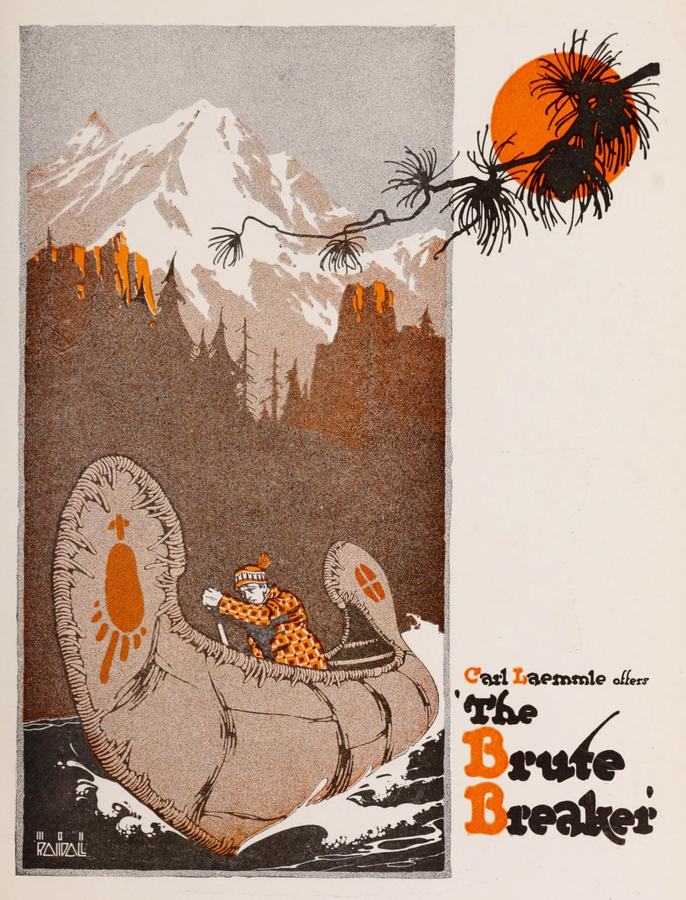
The Brute Breaker plunges viewers into the raw, unforgiving heart of a French Canadian logging camp, a realm where the very air crackles with the scent of pine and the unspoken tension of a society teetering on the edge of lawlessness. This is a world defined by its towering trees and the brute force required to fell them, a landscape that mirrors the rugged, often brutal, nature of its inhabitants. It's into this crucible that Louis Graintaire, embodied with a stoic intensity by Frank Brownlee, arrives, his entrance a breathtaking ballet of man against nature as he guides his canoe through rapids widely deemed impassable. This initial spectacle isn't just an action sequence; it's an immediate declaration of Graintaire's exceptionalism, a visual metaphor for his ability to navigate and conquer the treacherous currents of human injustice that plague the camp.
The profound despair of Little Jean, a crippled boy whose fragile existence is a constant target for the camp's tyrannical bully, Baptiste Navet (Jack Curtis, delivering a performance of chilling menace), forms the poignant emotional bedrock of the narrative. Jean's silent suffering and his desperate, almost prayer-like hope that Graintaire will be his champion, imbue the newcomer with a purpose far grander than mere adventurism. Navet is not just a physical threat; he represents the psychological oppression that stifles the spirit of the entire community, a petty despot whose cruelty is born of his own insecurity and fear. The film brilliantly uses Jean's vulnerability to magnify the stakes, making Graintaire's subsequent actions resonate with a universal yearning for protective justice. It's a stark portrayal of the powerlessness of the weak against unchecked aggression, a theme that remains tragically relevant.
The narrative truly ignites during an evening’s revelry, where the simple act of dancing becomes a catalyst for profound conflict. Graintaire’s choice to dance with Annette Bosseut, brought to life with spirited grace by Kathryn Adams, the daughter of the camp superintendent, is more than a romantic gesture; it’s an audacious challenge to Navet’s presumed dominion. This scene is a masterclass in silent film tension, the unspoken rivalry crackling between the two men as Annette, initially perhaps an object of desire, becomes a symbol of contested power. Navet’s furious jealousy isn't just about Annette; it's about his authority being undermined, his self-image as the alpha male shattered by an outsider. The challenge to a fight, therefore, isn't just a personal slight but a public declaration of war for the soul of the camp.
The subsequent disappearance of Graintaire and Little Jean on the day of the anticipated confrontation adds a layer of intricate mystery. This plot device cleverly subverts audience expectations, transforming a straightforward challenge into a suspenseful enigma. The accusations of kidnapping leveled against Louis by Annette and her father, superintendent Bosseut (Burwell Hamrick), further complicate his heroic image, casting a shadow of doubt over his intentions. This narrative twist is particularly effective, forcing the audience to grapple with Graintaire’s ambiguous morality before his true purpose is revealed. It’s a sophisticated move for a film of its era, demonstrating a willingness to explore shades of grey rather than simplistic black and white characterizations.
The film then spirals into a series of brutal confrontations, expanding the scope of Graintaire’s mission beyond the confines of a single camp. The deaths of three bullies from neighboring logging operations, each attempting to eliminate Graintaire, paint him not just as a defender, but as a force of nature, an unstoppable agent of change. These episodes, while violent, serve to underline the pervasive nature of the tyranny Graintaire seeks to dismantle. It's a testament to the film's thematic ambition that it portrays this as a systemic problem, rather than an isolated incident. The brutality is depicted with a raw, visceral quality that, even without modern special effects, conveys the harsh realities of the frontier.
Baptiste Navet’s descent into pure villainy, culminating in his desperate act of setting the forest ablaze, marks a critical turning point. Repulsed by Annette, his wounded pride manifests as destructive rage, threatening not just individuals but the entire environment, the very livelihood of the community. This act elevates the stakes to an existential level, transforming a personal feud into a communal disaster. The inferno itself, a visually stunning and terrifying sequence, serves as a powerful metaphor for the chaos unleashed by unchecked malice. It's here that the film truly earns its title, as Graintaire must break not just the man, but the destructive force he embodies. This scene could draw parallels with the dramatic environmental threats seen in later films like Who Is to Blame?, where human actions have far-reaching consequences, or even the heightened stakes of a crisis in The Cavell Case, albeit with different contexts.
The climax is a breathtaking fusion of physical prowess and moral fortitude. Graintaire’s decisive action—knocking Navet unconscious, thus neutralizing the immediate threat—is followed by a heroic dash through the burning forest. His subsequent rescue of Annette, once again navigating the perilous rapids that first heralded his arrival, brings the narrative full circle. This second journey through the rapids is laden with symbolic weight; it's a testament to his unwavering courage and his commitment to protecting the innocent. The imagery of the canoe battling both fire and water creates a powerful juxtaposition of elemental forces, with Graintaire standing as the singular force of order amidst the chaos.
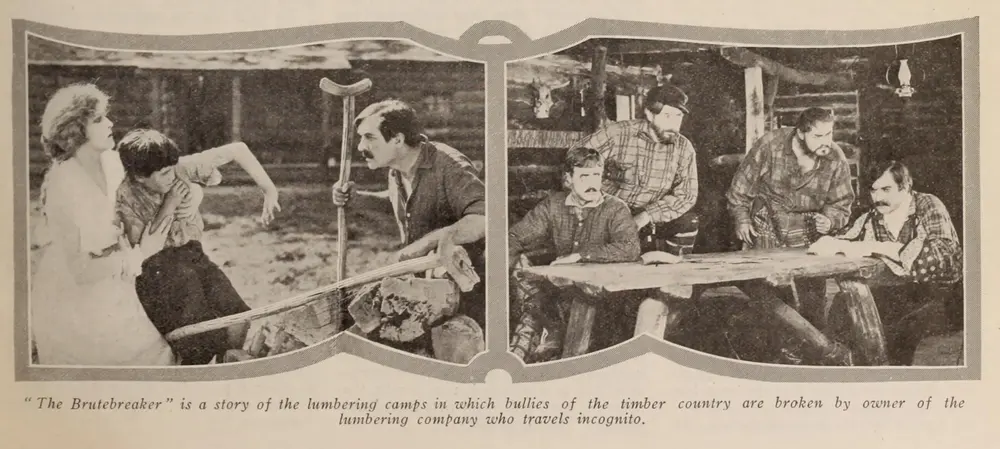
The seismic revelation that Graintaire is, in fact, the clandestine proprietor of the entire network of logging operations, and that his journey is a calculated mission to dismantle systemic bullying, is a stroke of narrative genius that elevates The Brute Breaker far beyond a typical adventure yarn. This twist reframes every punch thrown, every perilous journey undertaken, as a deliberate act of institutional reform. It positions Graintaire not as a vigilante, but as a visionary leader committed to ethical governance, actively purging corruption from the very foundation of his enterprise. This nuanced approach to justice, where power is wielded not for personal gain but for the collective good, offers a surprisingly progressive message for its time, suggesting that true authority comes with a profound responsibility to protect the vulnerable. The narrative sophistication here is remarkable, presenting a hero who isn't just physically strong, but strategically brilliant and morally unwavering. One might even see echoes of the underlying social commentary found in films like The Strength of the Weak, where societal structures and individual power are examined.
Frank Brownlee's portrayal of Louis Graintaire is nothing short of iconic. He imbues the character with a quiet strength, a brooding intensity that speaks volumes without a single word. His physical presence is commanding, yet there's an underlying compassion that makes his acts of "brute breaking" feel justified, even noble. He is the quintessential strong, silent type, a figure of unwavering moral compass in a lawless land. Kathryn Adams, as Annette Bosseut, injects a vital spark of independence and grace into this otherwise masculine domain. Her initial interactions with Graintaire are tinged with a cautious curiosity, evolving into a respect born of witnessing his inherent nobility. Annette is not merely a prize to be won; she possesses an inner strength and a discerning eye, capable of seeing beyond superficial appearances. Her presence elevates the central conflict beyond a simple brawl, transforming it into a battle for dignity and the prospect of a more civilized future. The chemistry between Brownlee and Adams, though conveyed through the nuanced gestures of silent cinema, is palpable, lending weight to their eventual union.
Jack Curtis’s Baptiste Navet is a truly memorable villain, his performance a masterclass in silent era malevolence. He manages to convey a complex blend of arrogance, cowardice, and simmering rage, making him a formidable antagonist whose defeat feels truly earned. The supporting cast, including Burwell Hamrick as the superintendent and the poignant performance of the actor playing Little Jean, all contribute significantly to the film's rich tapestry. The ensemble creates a believable community, making the stakes of Graintaire’s mission all the more real.
The film’s thematic explorations extend beyond simple heroism. It delves into the nature of justice, questioning whether it can only be achieved through force in environments where legal structures are weak or absent. Graintaire’s method, while violent, is presented as a necessary evil to restore balance and protect the vulnerable. This moral ambiguity adds a layer of depth that prevents the film from becoming a mere action spectacle. It asks us to consider the responsibility of power, and how one might wield it for the greater good. This exploration of justice and its multifaceted application can be seen as a precursor to themes explored in films like Kick In, which often deals with societal order and individual defiance.
The resolution, with Little Jean returning cured and prancing joyously, accompanied by a priest who officiates the marriage of Louis and Annette, provides a deeply satisfying conclusion. Jean’s cure is a symbolic representation of the healing Graintaire has brought to the community, both physically and morally. It’s a powerful image of hope and renewal, suggesting a future where compassion and order prevail over cruelty and chaos. The marriage of Louis and Annette not only provides a romantic closure but also signifies the establishment of a new, just order, with Graintaire at its helm, no longer a mysterious outsider but an integral part of the community he has saved.
The film’s visual language, a cornerstone of silent cinema, is particularly effective. The cinematography captures the imposing scale of the wilderness, from the roaring rapids to the towering, vulnerable forest, making the environment an active participant in the drama. The use of shadow and light, the subtle shifts in facial expressions, and the dynamic staging of action sequences all contribute to a powerful narrative flow that transcends the absence of spoken dialogue. The director's keen eye for composition ensures that every frame is laden with meaning, from the intimate despair on Jean’s face to the wide shots of the inferno consuming the forest. This mastery of visual storytelling is what gives The Brute Breaker its timeless quality, allowing its emotional impact to resonate decades later.
In its entirety, The Brute Breaker is more than a relic of a bygone cinematic era; it is a vibrant, compelling narrative that speaks to enduring human truths. It champions the courage of the individual against systemic oppression, celebrates the triumph of justice, and reminds us of the profound impact a single principled person can have. Its pioneering spirit in storytelling, character development, and visual spectacle solidifies its place as a foundational work in the action-adventure genre, influencing countless films that would follow. For enthusiasts of early cinema and anyone seeking a powerful tale of heroism and redemption, this film remains an essential viewing experience, a testament to the power of the moving image to captivate, inspire, and provoke thought. It truly is a compelling piece of cinematic history, a robust and impactful narrative that holds its own even when viewed through a contemporary lens. The careful construction of its plot, the compelling performances, and its unwavering moral compass make it a classic that continues to inspire and engage.
IMDb —
1925
Community
Log in to comment.