Summary
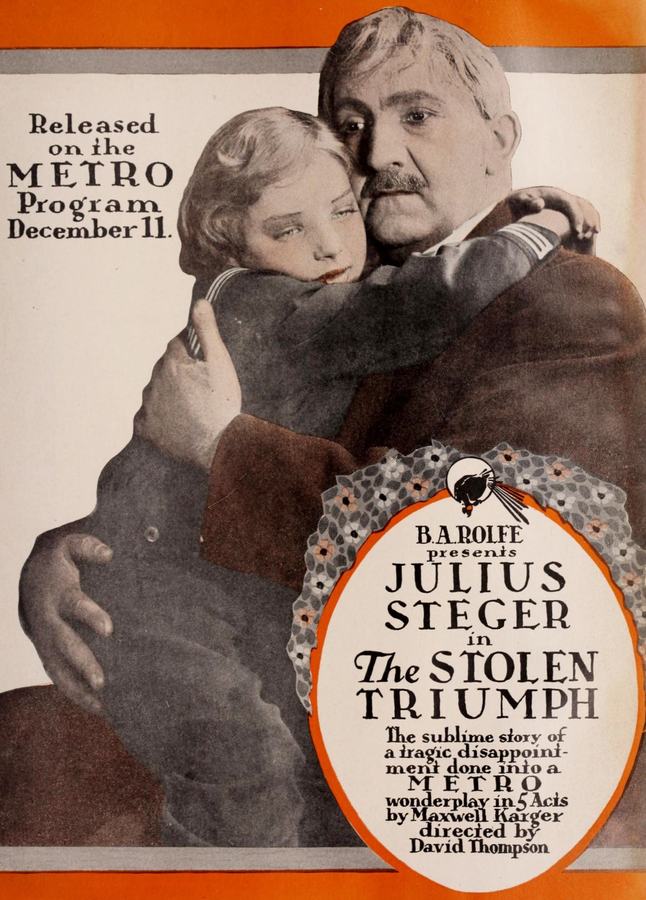
A poignant exploration of artistic integrity clashing with commercial ambition, The Stolen Triumph meticulously chronicles the tragic descent of Edwin Rowley, a playwright of profound genius, whose visionary works remain unappreciated by the market. His erstwhile college confidant, Stephen Hunt, a shrewd theatrical impresario, finds himself entangled in a web of deceit, spurred by his wife's yearning for him to garner literary acclaim. When Rowley, in dire straits, entrusts his magnum opus to Hunt for counsel, the latter, recognizing its unparalleled brilliance and exploiting Rowley's lack of a copy, succumbs to an irresistible impulse, appropriating the manuscript as his own. The ensuing rejection shatters Rowley, precipitating a catastrophic spiral into destitution, the tragic demise of his devoted wife from privation, and his own presumed death by suicide.
Haunted by the specter of his betrayal, Hunt confesses his perfidy to his wife, who, driven by a profound moral compass, insists upon rectifying the egregious wrong. They embrace Rowley's orphaned son, Edwin, nurturing him alongside their own daughter, Alice, bestowing upon him every conceivable advantage. As years unfurl, a tender romance blossoms between Edwin and Alice, culminating in their betrothal. In a profound act of belated contrition, Hunt stages an earlier work by the long-presumed-dead Rowley. This public acknowledgment acts as a catalyst, partially reawakening Rowley's shattered psyche. His return to the Hunt household, precisely as toasts are raised to the engaged couple, orchestrates a climactic unveiling. Edwin, in a moment of poignant irony, begins to recite a poem attributed to his "gifted father," faltering mid-verse. The elder Rowley, his memory now fully restored by the familiar cadence, steps forth to complete the verses, a poignant echo of past brilliance and a harbinger of eventual reconciliation, bringing a lifetime of turbulent artistry to a serene, redemptive twilight.
Synopsis
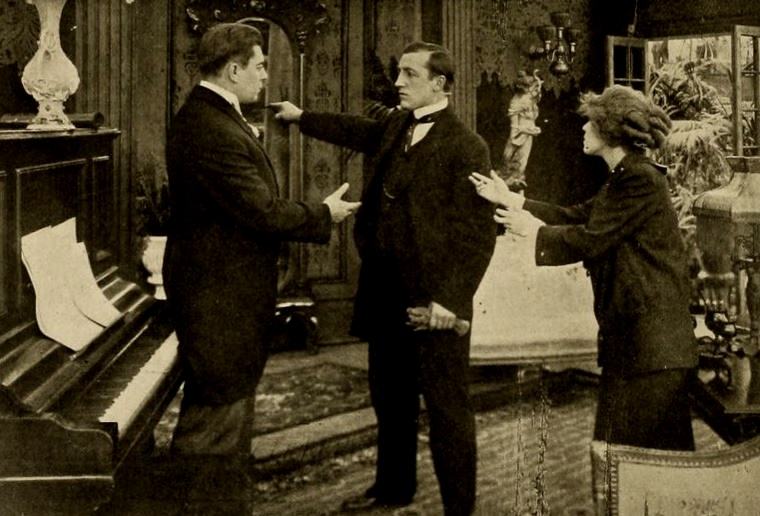
Success and failure meet in the persons of Edwin Rowley and Stephen Hunt, college chums. Rowley has marked ability as a playwright, but he is a visionary, and has not the commercial instinct necessary to market his wares. Hunt is a prosperous theatrical manager. Hunt's wife is ambitious for him to be known not only as a manager but as a dramatist. She urges him to try his powers in that direction. He promises to try, and she tells a reporter, who calls for an interview, that her husband is engaged in writing a great play. An item to this effect appears in the paper. Rowley, meantime, has finished a play which is a masterpiece. Noticing the item in the paper, his wife suggests that he go to Hunt for advice about his play. Hunt welcomes the impecunious Rowley, who tells him of his struggles for recognition. Hunt says he will be glad to read the play. Rowley leaves his precious manuscript with him. Hunt makes him a loan to tide him over his immediate difficulties, and the money is spent at once for necessities for his wife and little boy, Edwin. Hunt takes Rowley's play home and upon reading it recognizes it as a work of genius. When he has finished reading it, overwhelmed by its gripping power, he is irresistibly tempted to steal the play and present it as his own, knowing that he is safeguarded by the fact that Rowley has no copy. He begins copying the manuscript, only changing the title. After anxious days of waiting to hear from Hunt, Rowley goes again to the manager's office to ask about bis play. Hunt tells him that he has rejected it and mailed the manuscript to him several days ago. The loss of the play accentuates Rowley's sense of utter failure. Having come to the last of his resources, he gets a job at addressing envelopes. His faithful wife falls ill as the result of starvation. Hunt engages a company and starts rehearsals of the stolen play. On the opening night Rowley buys a ticket and attends the performance. He recognizes the new play as the child of his own brain, creates a disturbance and is put out of the theater. Finding Hunt afterward he denounces him as a thief. He is threatened with arrest, and half-crazed, goes home to tell his wife the disheartening news. The shock kills her. Rowley, now entirely insane, jumps into the river. He is rescued by a passing boat, but his hat and coat are found, and he is reported drowned. Hunt reads of the supposed suicide, and confesses to his wife that the great play was not his, but Rowley's. She says the wrong must be righted, and she takes Rowley's son into their home to bring him up with their little girl, Alice. Rowley becomes a wanderer on the face of the earth, his mind a blank. As the years pass, Hunt tries to make reparation by giving Edwin every advantage. Edwin and Alice grow up into young manhood and womanhood, fall in love with each other and are betrothed. Hunt produces a play written by the missing man, to make belated amends for his misdeed, and Rowley seeing it announced, partially regains his reason. He reaches the Hunt home while the guests are toasting the bride and bridegroom. In response to the toast, Edwin begins reciting a poem, the work, as he tells them, of his gifted father. He falters in reciting it, and Rowley, his memory now completely returned, finishes it for him. The past is forgiven, and the playwright's reclining years are spent in peace and happiness.
Review Excerpt
"
In the annals of early cinema, few narratives unfurl with the intricate moral tapestry and profound emotional resonance of The Stolen Triumph. This cinematic endeavor, a poignant melodrama from the pens of Maxwell Karger and Julius Steger, delves into the harrowing chasm between artistic brilliance and commercial exigency, charting a course through ambition, betrayal, and, ultimately, a hard-won redemption. It is a story that, despite its vintage, reverberates with timeless questio..."